In today’s digital-first world, businesses are creating and managing an ever-growing volume of digital assets. From images and videos to presentations, PDFs, and design files, digital content is essential to marketing, sales, and overall business operations. As the volume of digital content increases, the need for effective storage solutions becomes more critical. Two common approaches to managing digital assets are traditional storage and Digital Asset Management (DAM) systems. While both serve the purpose of storing digital assets, there are significant differences in how they function and support business operations.
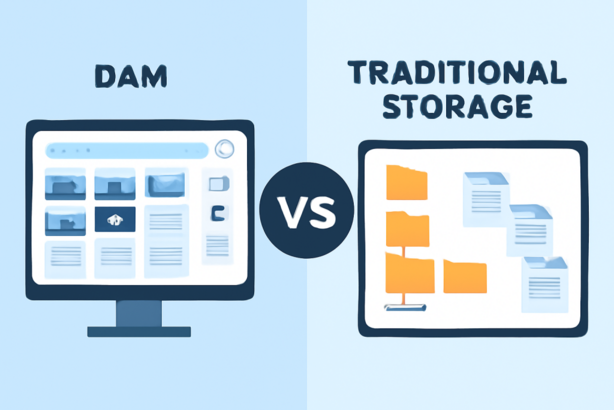
This blog will explore the differences between DAM software and traditional storage solutions, highlighting how a Wizbrand DAM system can provide superior benefits for your growing assets. Whether you’re a digital marketer, content team, or SEO professional, understanding these differences is crucial to making an informed decision about how to best manage your digital assets.
What is Traditional Storage?
Traditional storage refers to the use of physical or basic digital storage methods, such as local hard drives, network-attached storage (NAS), or cloud storage services like Google Drive, Dropbox, or OneDrive. These systems typically store digital assets in folders and subfolders, with limited organizational features or functionality beyond basic file saving and retrieval.
While traditional storage can be effective for small-scale operations with minimal assets, it begins to show its limitations as the volume of digital content grows. As businesses expand, traditional storage solutions often become cumbersome, leading to inefficiencies in asset retrieval, organization, collaboration, and security.
What is Digital Asset Management (DAM)?
Digital Asset Management (DAM) systems, on the other hand, are specialized platforms designed to organize, store, and retrieve digital assets more efficiently. DAM systems offer robust tools for asset tagging, categorization, version control, metadata management, and collaboration features, all within a centralized repository.
DAM software like Wizbrand provides businesses with a comprehensive solution for managing digital content throughout its lifecycle, from creation to distribution. With Wizbrand’s DAM platform, digital marketers, content creators, and SEO professionals can manage large volumes of digital assets, improve collaboration, and ensure faster asset retrieval.
DAM vs Traditional Storage: Key Differences

1. Organization and Metadata Management
One of the most significant differences between DAM and traditional storage is the level of organization. In traditional storage systems, files are stored in directories, and finding a specific asset often requires browsing through multiple folders. As your digital assets grow, this system becomes inefficient and hard to manage, leading to wasted time spent searching for files.
DAM systems, such as Wizbrand, provide advanced organizational features that allow businesses to categorize assets based on various attributes, such as type, date, campaign, or product. Moreover, DAM systems automatically attach metadata (tags, descriptions, keywords) to each asset, making it much easier to search for and retrieve specific content.
For example, with Wizbrand, you can quickly filter assets by type (e.g., images, videos, PDFs), metadata, or keywords. This efficiency allows teams to save valuable time and focus on more important tasks, such as content creation and marketing strategy, rather than searching for digital files.
2. Collaboration and Access Control
Collaboration is another area where DAM systems outshine traditional storage solutions. In traditional systems, assets are typically stored on a local hard drive or a shared folder, where only one person can access and modify a file at a time. If multiple team members need to work on the same asset, they may have to deal with file duplication, conflicting versions, and delays in communication.
In contrast, DAM systems like Wizbrand are designed for real-time collaboration. Multiple team members can access and work on the same assets simultaneously, with the system automatically tracking changes and updates. This reduces the risk of mistakes, ensures that everyone is working with the most recent version of an asset, and streamlines the approval and review processes.
Additionally, Wizbrand’s DAM system offers access control features that allow businesses to set user permissions. This ensures that only authorized personnel can modify or view certain assets, enhancing security and maintaining control over sensitive content.
3. Search and Retrieval Efficiency
As businesses grow and accumulate a larger library of digital assets, searching for specific files in traditional storage can become increasingly difficult. Traditional storage systems typically rely on folder structures that lack advanced search capabilities. As a result, finding the right asset can be time-consuming, leading to inefficiencies.
DAM systems, like Wizbrand, offer powerful search functionality, enabling users to quickly locate files using keywords, tags, file types, and other metadata. With a DAM system, you can locate the right asset in seconds, even if your digital library contains thousands of files.
Wizbrand’s search engine ensures that SEO professionals and marketers can easily retrieve the right assets for campaigns, website content, or social media posts. This quick retrieval process saves time, reduces frustration, and enhances productivity.
4. Version Control and Asset Tracking
When working with digital content, especially in marketing or design, assets go through multiple revisions. In traditional storage, keeping track of different versions of an asset can be challenging, leading to confusion and potential errors. Files might be overwritten, duplicated, or lost, resulting in the need to manually track and organize versions.
DAM systems like Wizbrand offer version control, allowing users to store and manage multiple versions of a single asset. This ensures that all edits and revisions are tracked, and the latest version is easily accessible. Additionally, version control eliminates the risk of accidental overwriting or loss of important data, providing a more reliable and organized system for managing content.
5. Security and Backup
Security is always a concern when managing digital assets, especially sensitive or proprietary content. While traditional storage methods often lack robust security features, DAM systems like Wizbrand offer advanced security options, including encrypted file storage, role-based access control, and audit trails.
Wizbrand ensures that your digital assets are securely stored and backed up, reducing the risk of data loss due to hardware failures or unauthorized access. By maintaining a secure and reliable backup system, DAM solutions help safeguard your assets against potential threats.
DAM vs Traditional Storage: Which is Better for Your Growing Assets?
For businesses with a large volume of digital content, DAM software provides a superior solution compared to traditional storage methods. As your assets grow in size and complexity, a DAM system like Wizbrand allows you to stay organized, improve collaboration, and streamline workflows. By offering powerful features such as metadata management, real-time collaboration, advanced search, and version control, DAM software supports the needs of modern businesses, particularly in industries where digital content plays a central role.
Traditional storage may work well for small-scale operations with limited assets, but as your business grows, a more robust solution is required. Wizbrand stands out as one of the Best Digital Asset Management Software available today, providing businesses with the tools they need to manage their growing digital libraries efficiently.
Conclusion

In conclusion, when it comes to managing your growing assets, Digital Asset Management (DAM) software is the superior choice compared to traditional storage methods. By using a DAM system like Wizbrand, businesses can optimize workflows, enhance team collaboration, and ensure that digital content is well-organized, secure, and easily accessible.