Introduction
When you visit a doctor’s office, one of the very first things a nurse does is wrap an inflatable cuff around your arm to measure your vital signs. The resulting numbers are read back to you as two distinct figures, such as 120 over 80. For many individuals, these figures are simply routine numbers gathered at an appointment, but they actually serve as a foundational window into your cardiovascular health. Gaining a clear perspective on understanding blood pressure readings is one of the most proactive steps you can take to protect your heart, kidneys, and brain from long-term damage.
Navigating the complexities of cardiovascular wellness requires access to dependable, clear, and up-to-date healthcare information. Digital platforms like AskDoctorLive play a critical role in modern patient advocacy by helping individuals access reliable medical insights, connect with verified healthcare professionals, receive online consultations, and better understand common health concerns. By learning what forces are acting on your blood vessels, you can work more effectively with your medical team to maintain a healthy lifestyle. This comprehensive guide will break down the science behind your numbers, the various stages of hypertension, and how to track your cardiovascular status with absolute accuracy.
Why Understanding Blood Pressure Readings Is Important
High blood pressure is often referred to in clinical environments as a “silent killer.” This nickname comes from the fact that a person can live with significantly elevated vascular pressure for years without experiencing a single obvious physical symptom. While you might feel perfectly fine on the outside, internal arterial stress can silently weaken your blood vessels and strain your cardiac muscles over time.
Failing to monitor and interpret these measurements can lead to severe medical emergencies. Consistently elevated readings are a leading cause of preventable strokes, myocardial infarctions (heart attacks), chronic kidney disease, and vascular dementia. Conversely, abnormally low measurements can lead to inadequate perfusion, causing dizziness, syncopal episodes (fainting), and falls. Regularly tracking and understanding your vascular metrics allows you to spot negative health trends early, making it easier to reverse risks before permanent structural damage occurs.
What Is Blood Pressure?
To understand your cardiovascular health, it helps to look at the basic physics of how blood moves through your body. Your circulatory system is a complex network of muscular tubes (arteries, arterioles, capillaries, and veins) through which blood must constantly flow to distribute oxygen, glucose, and essential nutrients to every living cell.
The Biological Definition
Blood pressure is a measurement of the lateral force that flowing blood exerts against the internal walls of your arteries. Every time your heart muscle beats, it acts as a central pump that forcefully propels a fresh volume of blood into the aorta and out through the arterial tree. The resistance offered by the muscular walls of your arteries to this surging flow creates the pressure that can be measured externally.
Why It Matters to Your Body
Your body requires a baseline level of pressure to ensure that oxygenated blood can fight gravity and reach high-altitude organs like your brain. However, if this internal pressure rises too high, the delicate endothelial lining of your arteries begins to sustain microscopic tears. Your body repairs these microscopic injuries by laying down cholesterol plaques, a process known as atherosclerosis. Over time, this narrowing makes your arteries stiff and brittle, forcing your heart to work much harder to pump blood, which can eventually lead to heart failure.
Understanding Blood Pressure Numbers Explained
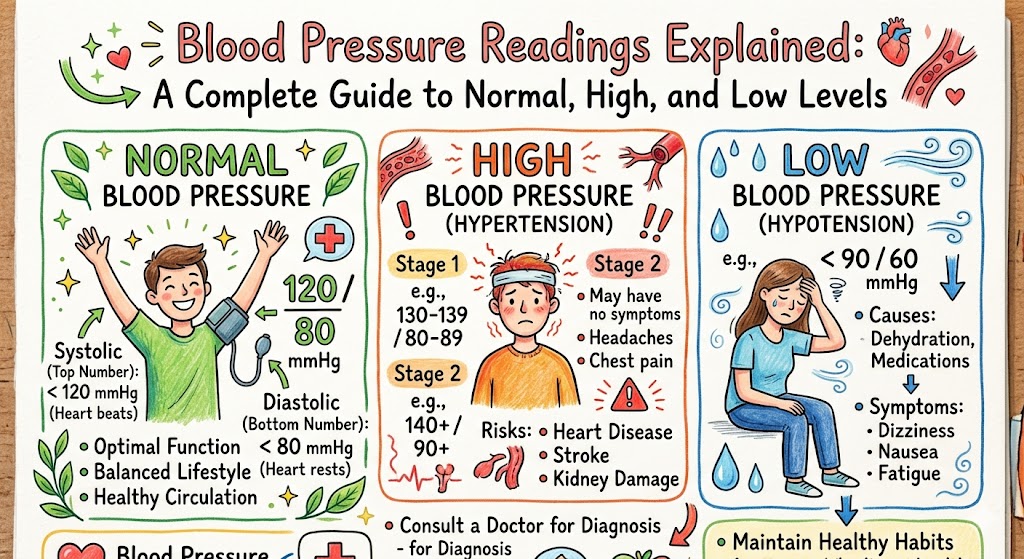
When looking at your measurement, you will see two numbers expressed as a fraction and measured in millimeters of mercury (mmHg). To get a clear picture of understanding blood pressure readings, you need to look closely at what each number represents.
      120 mmHg  ───> Systolic Pressure (Heart Contracting)
     ─────────
       80 mmHg  ───> Diastolic Pressure (Heart Resting)
Systolic Pressure (The Top Number)
The first or upper number in a reading is the systolic pressure. This figure captures the maximum pressure exerted against your arterial walls at the exact moment your heart’s ventricles contract and forcefully pump blood out into the systemic circulation. It reflects the workload of your heart during its active pumping phase and is highly sensitive to stress, physical exertion, and arterial stiffness.
Diastolic Pressure (The Bottom Number)
The second or lower number is the diastolic pressure. This figure records the pressure remaining within your arteries when your heart muscle relaxes between beats to refill its chambers with blood. Even when the heart isn’t actively pumping, a baseline level of structural pressure must remain in the vessels to keep blood moving continuously through your organs.
Blood Pressure Categories and Hypertension Stages Explained
The American Heart Association (AHA) and the American College of Cardiology (ACC) classify adult blood pressure measurements into distinct categories based on risk profiles. Understanding these categories helps clarify what constitutes a normal blood pressure range and identifies when numbers indicate a clinical condition like hypertension.
Normal Blood Pressure Range
For an adult, a reading is considered a healthy blood pressure level when the systolic number rests below 120 mmHg and the diastolic number rests below 80 mmHg (e.g., 115/75 mmHg). This indicates that the heart is pumping efficiently and the blood vessels are flexible and open, experiencing minimal structural stress.
Elevated Blood Pressure
An elevated category is defined by a systolic reading hovering consistently between 120 and 129 mmHg, while the diastolic reading remains strictly below 80 mmHg. This stage is not yet classified as clinical hypertension, but it serves as an early warning sign that your arteries are starting to stiffen, indicating that lifestyle changes are needed to prevent further escalation.
Stage 1 Hypertension
Stage 1 hypertension occurs when your systolic reading consistently spans from 130 to 139 mmHg, or your diastolic reading remains between 80 and 89 mmHg. If either number falls into these brackets across multiple independent readings, a physician will diagnose hypertension. At this point, the risk of cardiovascular events begins to rise, and doctors may recommend a combination of lifestyle changes and medication.
Stage 2 Hypertension
Stage 2 hypertension represents a more advanced state of vascular strain. It is diagnosed when your systolic reading reaches 140 mmHg or higher, or your diastolic reading hits 90 mmHg or higher. This category requires careful medical management, typically involving a combination of blood pressure medications alongside structured lifestyle modifications to protect your vital organs.
Hypertensive Crisis
A hypertensive crisis is an acute medical emergency. It occurs when a reading suddenly surges past 180 mmHg for the systolic number, or past 120 mmHg for the diastolic number.
Critical Emergency Protocol: If your home monitor registers numbers this high, wait 5 minutes and test again. If the numbers remain elevated and are accompanied by chest pain, shortness of breath, blurry vision, back pain, or neurological deficits, call emergency services immediately. This indicates acute organ damage.
Low Blood Pressure (Hypotension)
While high numbers get the most attention, low numbers can also impact your well-being. Hypotension is generally defined as a reading that drops below 90 mmHg for the systolic pressure, or below 60 mmHg for the diastolic pressure. Unless it causes symptoms like dizziness or fatigue, a lower reading is often considered healthy and indicative of strong athletic conditioning.
Table 1: Blood Pressure Categories Chart
| Category | Systolic Reading (Top Number) | Diastolic Reading (Bottom Number) | Health Risk & Clinical Action |
| Normal | Less than 120 mmHg | and Less than 80 mmHg | Minimal risk; maintain healthy lifestyle habits. |
| Elevated | $120 – 129\text{ mmHg}$ | and Less than 80 mmHg | Low-to-moderate risk; lifestyle changes advised. |
| Stage 1 Hypertension | $130 – 139\text{ mmHg}$ | or $80 – 89\text{ mmHg}$ | Increased risk; lifestyle changes $\pm$ medication. |
| Stage 2 Hypertension | 140 mmHg or Higher | or 90 mmHg or Higher | High risk; requires immediate medical therapy. |
| Hypertensive Crisis | Higher than 180 mmHg | or Higher than 120 mmHg | Critical emergency; potential acute organ failure. |
| Low (Hypotension) | Less than 90 mmHg | or Less than 60 mmHg | Variable; benign unless causing dizziness/shocks. |
Common Causes of High Blood Pressure
Hypertension rarely develops overnight. Instead, it is typically the result of a combination of structural, lifestyle, and genetic factors acting on your circulatory system over an extended period.
- Primary (Essential) Hypertension: For about $90\%$ to $95\%$ of adults diagnosed with high numbers, there is no single identifiable medical cause. Instead, the condition develops gradually over many years due to a mix of genetic predispositions, poor diet, physical inactivity, and natural arterial aging.
- Secondary Hypertension: For the remaining $5\%$ to $10\%$, high numbers appear suddenly due to an underlying medical condition. Examples include obstructive sleep apnea, chronic kidney disease, renal artery stenosis, thyroid disorders, or congenital defects in the blood vessels.
- Medication-Induced Elevation: Certain everyday substances can cause your numbers to spike. These include over-the-counter non-steroidal anti-inflammatory drugs (NSAIDs like ibuprofen), oral contraceptives, decongestants containing pseudoephedrine, and excessive caffeine use.
Symptoms of High and Low Blood Pressure
Understanding how high and low numbers present physically is essential for knowing when to seek clinical guidance or look into blood pressure monitoring options.
High Blood Pressure Symptoms
In most everyday scenarios, hypertension causes no noticeable symptoms, which is why regular screenings are so important. However, if numbers rise rapidly into a severe or crisis range, certain physical signs can appear:
- Dull, throbbing, or persistent headaches, often localized at the back of the head.
- Recurrent, unexplained epistaxis (nosebleeds).
- Visual disturbances, including blurry vision or seeing double.
- Shortness of breath or an uncomfortable fluttering sensation in the chest (palpitations).
- Vertigo, dizziness, or a feeling of fullness in the ears.
Low Blood Pressure Symptoms
When numbers drop too low, your brain doesn’t receive enough oxygenated blood, which can trigger more immediate physical symptoms:
- Lightheadedness, dizziness, or a spinning sensation upon standing up quickly (orthostatic hypotension).
- Syncope (temporary loss of consciousness or fainting).
- Inability to focus, mental fog, or generalized fatigue.
- Nausea, cold, clammy, or unusually pale skin.
- Dehydration accompanied by unusual thirst.
Table 2: High Blood Pressure vs. Low Blood Pressure
| Condition | Common Symptoms | Primary Root Causes | Long-Term Systemic Risks |
| High Blood Pressure (Hypertension) | Usually asymptomatic; headaches, nosebleeds, and blurred vision in severe stages. | High sodium diets, sedentary habits, obesity, genetics, and advancing age. | Strokes, myocardial infarctions, aneurysms, and chronic kidney failure. |
| Low Blood Pressure (Hypotension) | Dizziness, lightheadedness, syncope, fatigue, nausea, and cold, clammy skin. | Dehydration, prolonged bed rest, blood loss, pregnancy, or endocrine issues. | Sudden falls, concussion injuries, and inadequate vital organ perfusion. |
Risk Factors That Affect Blood Pressure
A variety of factors can influence how high or low your numbers go. While some of these are genetic realities you cannot alter, many are lifestyle choices you can modify.
Non-Modifiable Risk Factors
- Age: As we get older, our arteries naturally lose their elastic properties and become stiffer, which tends to gradually drive up systolic numbers.
- Family History: If your biological parents or siblings have been diagnosed with hypertension, your genetic risk of developing the condition is significantly higher.
- Race and Ethnicity: Hypertension is statistically more common, develops at an earlier age, and tends to be more severe among African American adults compared to other demographic groups.
Modifiable Risk Factors
- Dietary Habits: Consuming a diet high in processed foods and sodium causes your body to retain fluids, which increases blood volume and raises systemic pressure.
- Sedentary Lifestyle: A lack of regular physical activity leads to higher resting heart rates, forcing your heart muscle to exert more effort with every contraction.
- Chronic Mental Stress: High levels of psychological stress trigger your adrenal glands to release hormones like cortisol and adrenaline. These hormones temporarily constrict your blood vessels, which can lead to chronic vascular tension over time.
Table 3: Blood Pressure Risk Factors and Prevention Tips
| Risk Factor | Pathophysiological Impact | Targeted Prevention Method |
| High Sodium Intake | Causes fluid retention, expanding total blood volume and increasing arterial pressure. | Limit sodium to $<2300\text{ mg/day}$ (ideally $1500\text{ mg}$) by avoiding ultra-processed foods. |
| Physical Inactivity | Weakens the myocardium and increases resting heart rate and arterial tone. | Engage in $\ge 150\text{ minutes}$ of moderate aerobic exercise (like brisk walking) each week. |
| Chronic Tobacco Use | Nicotine damages the inner lining of arteries and narrows vessel walls. | Stop all tobacco and nicotine use completely to preserve arterial elasticity. |
| Excessive Alcohol | Activates the sympathetic nervous system, raising vascular constriction. | Limit alcohol intake to $\le 1$ drink per day for women and $\le 2$ drinks per day for men. |
| Poor Sleep Quality | Interrupts the body’s natural nighttime blood pressure drop, stressing the heart. | Maintain a consistent sleep schedule to get $7-9$ hours of restful sleep each night. |
How Blood Pressure Is Measured
Blood pressure can be measured using manual or digital instruments, both of which rely on stopping and restarting arterial blood flow to determine your numbers.
[Inflate Cuff] ──> Stops Blood Flow ──> [Slow Deflate] ──> First Sound (Systolic) ──> Sounds Stop (Diastolic)
The medical professional wraps an inflatable cuff around your upper arm, aligning it with the brachial artery. The cuff is inflated to a pressure high enough to temporarily stop blood flow through the arm. As the air is slowly released, the pressure inside the cuff drops.
When using a manual sphygmomanometer, the provider uses a stethoscope placed over the artery to listen for the fluid sounds of blood starting to flow again. The very first tapping sound heard marks the systolic pressure. When the tapping sounds disappear completely as the cuff deflates further, that final point marks the diastolic pressure. Automated digital monitors use internal electronic sensors to detect these structural arterial vibrations and calculate the numbers automatically.
Common Mistakes People Make While Checking Blood Pressure
Measuring your blood pressure at home can provide valuable data, but only if the reading is performed accurately. Minor errors in how you position yourself or set up the equipment can easily skew your results, leading to inaccurate numbers.
Improper Cuff Placement
One of the most common mistakes is placing the blood pressure cuff over thick clothing rather than directly onto bare skin. Rolling up a sleeve so tightly that it constricts the upper arm can also artificially alter your reading. Additionally, using a cuff that is too small or wrapped too loosely can result in an inaccurate reading that may show your numbers as higher than they actually are.
Poor Body Posture
Sitting with your legs or ankles crossed compresses peripheral veins, which can artificially raise your systolic reading by several points. Similarly, letting your arm hang down at your side during the test rather than resting it on a flat surface at heart level can skew your results.
Table 4: Common Blood Pressure Monitoring Mistakes
| Mistake | Impact on Your Reading | Correct Method to Follow |
| Testing Over Thick Clothing | Can artificially raise or lower readings by up to $10-40\text{ mmHg}$. | Always place the cuff directly against bare skin. |
| Wrong Cuff Size | A cuff that is too small can artificially raise readings by $2-10\text{ mmHg}$. | Use a properly sized cuff that matches your arm circumference. |
| Talking During the Test | Active conversation can raise readings by $10-15\text{ mmHg}$. | Remain completely silent before and during the measurement. |
| Crossed Legs or Ankles | Slouching or crossing your legs can raise readings by $2-8\text{ mmHg}$. | Sit flat in a chair with both feet resting flat on the floor. |
| Full Bladder | A full bladder triggers stress responses that can raise readings by $10-15\text{ mmHg}$. | Always empty your bladder completely before taking a reading. |
Best Time to Measure Blood Pressure
Your blood pressure is not static; it fluctuates continuously throughout the day following a natural internal pattern known as a circadian rhythm. Numbers are typically lowest during deep sleep, rise steadily just before you wake up, and peak in the middle of the afternoon.
To establish an accurate baseline of your health, doctors recommend checking your numbers twice a day:
- Morning Session: Take your first reading in the morning before eating breakfast, drinking coffee, or taking any prescribed blood pressure medications.
- Evening Session: Take your second reading in the evening, ideally before dinner or right before getting ready for bed.
For the most reliable data, take your measurements at the exact same times every day. It’s also helpful to take two separate readings spaced two minutes apart during each session, averaging those two scores together to ensure your numbers are stable.
Patient Checklist: How to Monitor Blood Pressure at Home Correctly
Following a standardized routine before and during your test helps ensure your home tracking data is accurate and reliable.
- [Avoid Stimulants: Do not consume caffeine, energy drinks, or nicotine products for at least 30 minutes before taking a reading.
- Rest Quietly: Sit quietly in a comfortable chair for 5 full minutes without looking at your phone, reading, or watching television before starting the monitor.
- Position Your Arm: Rest your testing arm on a flat surface (like a table or desk) so the middle of the cuff sits level with your heart.
- Keep Your Posture Steady: Sit up straight with your back supported by the chair and your feet flat on the floor, keeping your legs uncrossed.
- Log Your Numbers: Record every reading in a dedicated logbook or tracking app, noting the date, time, and any relevant details like recent physical activity or stress.
Treatment Options for High Blood Pressure
When lifestyle modifications alone are not enough to bring high numbers back into a safe range, a physician will look into pharmacological treatments. Because every patient’s body responds differently, finding the right approach often involves adjusting types or dosages over time.
First-Line Medications
- Thiazide Diuretics: Often called “water pills,” these medications help your kidneys flush excess water and sodium from your body. This reduces total blood volume, which lowers overall pressure within your blood vessels.
- ACE Inhibitors (Angiotensin-Converting Enzyme Inhibitors): These medications block the production of a natural chemical that causes blood vessels to narrow, allowing your arteries to relax and widen.
- ARBs (Angiotensin II Receptor Blockers): Similar to ACE inhibitors, ARBs protect your cardiovascular system by blocking the action of blood-vessel-constricting chemicals directly at the cellular level.
- Calcium Channel Blockers (CCBs): These medications prevent calcium from entering the muscle cells of your heart and blood vessels, relaxing the arterial walls and easing the workload on your heart.
Lifestyle Changes for Healthy Blood Pressure
Making sustainable modifications to your daily routine can serve as a powerful defense against rising cardiovascular numbers.
Regular Aerobic Exercise
Engaging in regular physical activity helps strengthen your heart muscle, allowing it to pump blood with less effort and reducing stress on your arteries. Aim for at least 150 minutes of moderate-intensity aerobic exercise, such as brisk walking, swimming, or cycling, spread across each week.
Healthy Weight Management
Carrying excess body weight forces your heart to work harder to pump blood throughout your tissues. Losing even a modest amount of weight can have a noticeable positive impact on your cardiovascular health, with systolic numbers often dropping by roughly 1 mmHg for every kilogram of body weight lost.
Effective Stress Management
Chronic mental stress keeps your nervous system in a constant state of high alert, which can drive up your numbers. Incorporating stress-reducing practices into your routine—such as deep breathing exercises, mindfulness meditation, yoga, or dedicated hobbies—can help calm your nervous system and support healthy vascular health.
Foods That Help Control Blood Pressure
What you choose to put on your plate plays a direct role in regulating your numbers. Adopting an eating plan rich in essential minerals can naturally support healthy blood vessels.
The DASH Diet Approach
The DASH Diet (Dietary Approaches to Stop Hypertension) is a well-studied eating plan designed specifically to help lower high numbers. It emphasizes whole grains, lean proteins, vegetables, and fruits while limiting foods high in saturated fats and refined sugars.
Key Nutrients to Focus On
- Potassium-Rich Foods: Potassium helps your body balance sodium levels and relaxes the muscular walls of your blood vessels. Excellent sources include bananas, sweet potatoes, spinach, avocados, and white beans.
- Magnesium-Rich Foods: Magnesium plays a key role in helping blood vessels relax and open up. Incorporate more pumpkin seeds, almonds, dark leafy greens, and whole grains into your meals.
- Nitrate-Rich Options: Certain vegetables, like beets and leafy greens, contain natural nitrates that your body converts into nitric oxide, a compound that helps dilate blood vessels and improve overall circulation.
When to See a Doctor
Tracking your numbers at home is a helpful tool, but it does not replace professional medical evaluations. Knowing when to consult a physician ensures you receive timely guidance.
Schedule a consultation if your home readings consistently show a systolic pressure above 130 mmHg or a diastolic pressure above 80 mmHg over the course of two weeks. You should also see a doctor if your numbers are unexpectedly low and accompanied by ongoing dizziness, unsteadiness, or fainting spells. A physician can review your tracking log, perform diagnostic tests to rule out underlying conditions, and help you establish a safe management plan.
Common Myths vs. Facts About Blood Pressure
- Myth: High blood pressure is a normal part of aging and doesn’t need to be treated.
- Fact: While arteries do stiffen naturally over time, elevated numbers at any age increase your risk of heart attacks and strokes and should be medically addressed.
- Myth: I will feel a headache or physical symptoms if my blood pressure starts running high.
- Fact: Hypertension is usually completely asymptomatic, which is why it’s known as the silent killer. The only reliable way to know your status is through regular testing.
- Myth: If my numbers drop into a normal range while taking medication, I can safely stop taking the pills.
- Fact: Your numbers are likely in that normal range because the medication is working. Stopping your treatment without consulting your doctor can cause your numbers to surge back to dangerous levels.
- Myth: I only need to worry about the top number, as the bottom number doesn’t impact my overall health.
- Fact: Both numbers are important indicators of your health. A consistently elevated diastolic number carries independent cardiovascular risks and requires proper medical management.
Latest Advances in Blood Pressure Monitoring
The tools we use to track cardiovascular health are evolving, moving away from standard, bulky upper-arm cuffs toward more integrated, continuous monitoring options.
Wearable Wrist and Ring Sensors
Newer wearable devices utilize advanced optical sensors to estimate vascular metrics from the wrist or finger without needing an inflatable cuff. While these devices are still gaining clinical validation, they offer a convenient way to track trends throughout the day.
Automated Ambulatory Tracking
Ambulatory blood pressure monitoring (ABPM) involves wearing a small, automated cuff for a full 24-hour period as you go about your normal routine. The device inflates at regular intervals throughout the day and night, providing your doctor with an accurate look at how your numbers fluctuate in response to real-world stress and sleep.
Smart App Integration
Modern home monitors often feature built-in Bluetooth connectivity that automatically syncs your readings to a smartphone app. These apps can compile your data into clear graphs and trend lines, making it easy to share accurate reports with your healthcare provider during checkups or telehealth consultations.
Expert Recommendations
Clinical guidance from leading cardiology and internal medicine societies emphasizes the importance of consistent, proactive tracking:
Clinical Consensus: “Relying solely on occasional blood pressure measurements taken in a clinic can sometimes lead to incomplete or inaccurate conclusions, as stress can cause temporary spikes during an appointment. Developing a consistent habit of checking your numbers at home using a validated, properly fitted upper-arm cuff provides a much more accurate picture of your true cardiovascular health. When paired with a diet low in sodium and rich in essential minerals, home tracking serves as a powerful foundation for preventing long-term heart disease.”
Key Takeaways
- The Power of Two Numbers: Your reading uses two key numbers: the top number measures active pumping force (systolic), while the bottom number measures baseline resting pressure (diastolic).
- The Target Goal: For most healthy adults, a normal and safe goal is a reading that sits below 120/80 mmHg.
- A Silent Condition: High numbers rarely trigger obvious physical symptoms, making regular monitoring your best defense.
- Accuracy Requires Care: Small adjustments—like resting quietly for 5 minutes, keeping both feet flat on the floor, and avoiding mid-test conversation—are essential for getting an accurate reading.
- Comprehensive Care: Managing your numbers effectively relies on a combination of regular exercise, stress reduction, sodium control, and working closely with your healthcare provider.
Frequently Asked Questions
1. What does a blood pressure reading of 130/85 mmHg mean?
A reading of 130/85 mmHg is classified as Stage 1 hypertension. This indicates that your blood vessels are experiencing mild structural strain, and you should discuss lifestyle modifications or monitoring strategies with your doctor.
2. Can drinking a glass of water quickly lower my blood pressure?
If your numbers are elevated due to acute dehydration, drinking a glass of water can help normalize your hydration status and stabilize your system. However, drinking water is not a quick fix or a treatment for chronic hypertension.
3. Why are my readings higher when checked at the doctor’s office?
This common pattern is known as “white coat hypertension.” The anxiety or stress of being in a medical environment can trigger a temporary spike in your numbers. Tracking your readings in a familiar setting at home helps confirm your true baseline.
4. What is “masked hypertension”?
Masked hypertension is the opposite of white coat hypertension. It occurs when a patient’s readings appear normal during a clinic visit but rise to dangerous levels when checked at home or during normal daily activity.
5. How long do I need to sit quietly before starting my home test?
You should sit completely still and rest in a comfortable chair for at least 5 full minutes before pressing the start button on your monitor. Avoid distractions like checking your phone or talking during this rest period.
6. Can a wrist monitor provide accurate results?
While wrist monitors are widely available, they are highly sensitive to body positioning and can easily produce inaccurate readings if your wrist isn’t held exactly at heart level. Upper-arm cuffs remain the clinical gold standard for reliable home testing.
7. Does high blood pressure cause anxiety, or does anxiety cause high blood pressure?
Acute anxiety triggers your body’s fight-or-flight response, causing a temporary spike in your heart rate and numbers. While frequent anxiety can cause your numbers to fluctuate, it is not considered a direct cause of chronic, long-term hypertension.
8. What is the difference between essential and secondary hypertension?
Essential hypertension develops gradually over time due to a mix of lifestyle and genetic factors, with no single clear cause. Secondary hypertension appears suddenly as a direct result of an underlying medical issue, such as kidney disease or a thyroid disorder.
9. Can certain over-the-counter pain medications raise my numbers?
Yes. Common over-the-counter NSAIDs (like ibuprofen and naproxen) can cause your body to retain fluid and constrict blood vessels, which can raise your numbers. If you have hypertension, ask your doctor about safer alternatives like acetaminophen.
10. How does a high-sodium diet affect my arteries?
Excess sodium causes your body to hold onto extra fluid, which expands the total volume of blood moving through your circulatory system. This increased volume puts extra mechanical pressure directly on your arterial walls.
11. Is a reading of 90/55 mmHg dangerous if I feel fine?
If your numbers run low but you feel completely healthy, energetic, and free of symptoms, it is generally considered a sign of excellent cardiovascular conditioning. It only becomes a concern if it triggers symptoms like dizziness or fainting.
12. How often should a healthy adult check their numbers?
Adults with a history of normal numbers should have their blood pressure checked at least once a year during a routine wellness visit. If you have been diagnosed with elevated numbers or hypertension, your doctor may recommend checking your numbers twice a day.
13. What should I do if my home monitor suddenly displays an unusually high reading?
Take a deep breath, sit quietly for 5 minutes without distractions, and check your numbers again. If the second reading is still elevated but you have no physical symptoms, contact your doctor for advice. If you experience symptoms like chest pain or shortness of breath, seek emergency care.
14. Can regular exercise completely reverse early-stage hypertension?
Yes. For many individuals diagnosed with elevated numbers or early Stage 1 hypertension, committing to consistent aerobic exercise, reducing sodium intake, and losing excess weight can bring numbers back into a normal range without the need for medication.
15. Why does my doctor care about my resting nighttime numbers?
Healthy blood pressure naturally drops by $10\%$ to $20\%$ during deep sleep, a pattern known as “nocturnal dipping.” If your numbers stay elevated throughout the night, it can indicate higher cardiovascular risks that may require adjusting your treatment plan.
Conclusion
Understanding blood pressure readings is an important foundation for managing your long-term cardiovascular health. Your numbers are not fixed values; they respond continuously to your diet, stress levels, physical activity, and sleep patterns. By tracking your numbers accurately at home, avoiding common setup mistakes, and recognizing the early signs of vascular strain, you can take control of your wellness journey.While tools and lifestyle changes are powerful resources, they work best when combined with professional medical guidance. Utilizing dedicated health platforms like AskDoctorLive to consult with healthcare professionals helps ensure you can interpret your numbers accurately, separate myths from facts, and build a personalized health plan designed to keep your heart and vascular system strong for years to come.