Introduction
Diabetes is a prevalent metabolic condition that affects how your body turns food into energy. When left unmanaged, it can lead to serious health challenges. Recognizing early signs of diabetes is the most effective way to catch the condition early, allowing for lifestyle adjustments that can prevent or delay long-term complications.
At AskDoctorLive.com, we help users access health information, connect with healthcare professionals, explore symptoms, and make informed medical decisions. This guide is designed to provide you with a clear understanding of the warning signs, risk factors, and actionable steps you can take to maintain optimal blood sugar health.
Why Early Detection of Diabetes Matters
Early detection allows for timely intervention. When identified in the prediabetic stage, many individuals can reverse their condition through diet and exercise alone. Prompt action prevents the gradual damage high glucose levels cause to blood vessels and nerves over time.
What Is Diabetes?
Diabetes is a chronic condition characterized by elevated blood glucose levels.
- Type 1 Diabetes: An autoimmune reaction where the body stops producing insulin.
- Type 2 Diabetes: The body becomes resistant to insulin or fails to produce enough to maintain normal levels.
- Gestational Diabetes: A form of high blood sugar that develops during pregnancy.
Understanding Blood Sugar and Insulin
Insulin is a hormone secreted by the pancreas that acts like a key, allowing blood sugar (glucose) into your cells to be used for energy. When this system fails, glucose remains in the bloodstream, leading to hyperglycemia—the root cause of diabetes symptoms.
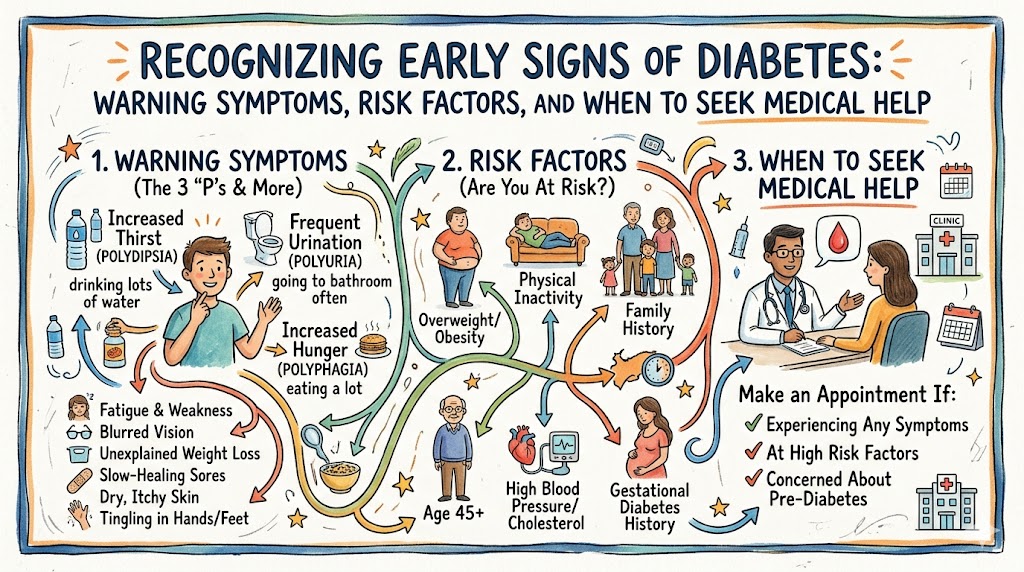
Recognizing Early Signs of Diabetes
While some people show no symptoms initially, others may experience:
- Frequent urination: Especially at night.
- Increased thirst: Constant dehydration.
- Constant hunger: Even after eating.
- Fatigue: Feeling lethargic due to poor energy utilization.
- Blurred vision: High sugar levels cause fluid to shift in the eyes.
- Slow wound healing: High glucose impairs the body’s ability to repair tissues.
- Unexplained weight loss: Commonly seen in Type 1.
- Tingling in hands and feet: A sign of nerve damage (neuropathy).
Common Risk Factors for Diabetes
- Weight: Carrying excess body weight.
- Activity Level: A sedentary lifestyle.
- Family History: A strong genetic predisposition.
- Age: Risk increases as you get older.
Prediabetes Warning Signs
Prediabetes is the “danger zone” where blood sugar levels are higher than normal but not yet high enough for a diabetes diagnosis. Often, the only sign is slightly darkened skin in areas like the neck or armpits (acanthosis nigricans).
Symptoms of Diabetes in Men, Women, and Children
While the core symptoms remain the same, some nuances exist:
- Men: May experience decreased libido or erectile dysfunction.
- Women: May experience frequent yeast infections or urinary tract infections.
- Children: Rapid onset of weight loss or bedwetting in previously trained children.
When to Seek Medical Attention
You should consult a professional if you notice persistent changes in thirst, urination, or unexplained fatigue. Do not ignore these signals; a simple blood test can provide clarity.
How Diabetes Is Diagnosed
- Fasting blood sugar test: Measures glucose after an overnight fast.
- HbA1c test: Shows your average blood sugar level over the past 2–3 months.
- Oral glucose tolerance test: Checks how your body handles a sugary drink.
Lifestyle Changes That May Help Reduce Risk
- Healthy Eating Habits: Prioritize fiber, whole grains, and lean proteins.
- Role of Exercise: Aim for 30 minutes of moderate activity daily to increase insulin sensitivity.
Tables for Reference
Table 1: Early Signs of Diabetes and Their Possible Meaning
| Symptom | Possible Cause | Why It Happens |
| Excessive Thirst | High blood sugar | Body pulls water from tissues to flush sugar |
| Frequent Urination | Kidney filtration overload | Excess sugar must be excreted in urine |
| Fatigue | Cellular energy deficit | Glucose cannot enter cells efficiently |
Table 2: Type 1 Diabetes vs Type 2 Diabetes
| Feature | Type 1 Diabetes | Type 2 Diabetes |
| Cause | Autoimmune | Insulin Resistance |
| Onset | Rapid | Gradual |
| Treatment | Requires Insulin | Diet, Exercise, Medication |
Table 3: Diabetes Risk Factors
| Risk Factor | Impact on Health | Prevention Tips |
| Obesity | Increases resistance | Weight management |
| Sedentary Habits | Lowers glucose uptake | Regular movement |
| Poor Diet | Spikes blood sugar | Focus on low-GI foods |
Table 4: Blood Sugar Warning Signs and Medical Attention Guide
| Symptom | Severity Level | When to See a Doctor |
| Blurry vision | Moderate | As soon as possible |
| Unexplained numbness | High | Immediate medical exam |
| Excessive fatigue | Moderate | Within one week |
Potential Complications of Untreated Diabetes
- Heart disease and stroke.
- Nerve damage (neuropathy).
- Kidney damage (nephropathy).
- Eye damage (retinopathy).
Common Myths vs Facts About Diabetes
- Myth: “Eating too much sugar causes diabetes.” Fact: It is a combination of genetics, lifestyle, and environment.
- Myth: “People with diabetes cannot eat fruit.” Fact: Fruits are healthy in controlled, measured portions.
Latest Advances and Future Technology
We are entering an era of continuous glucose monitors (CGMs) and AI-driven insulin pumps that make management more precise and less intrusive than ever before.
Expert Recommendations and Patient Health Checklist
- Schedule an annual blood glucose screening.
- Track your daily water intake.
- Increase intake of leafy greens.
- Monitor your energy levels throughout the day.
Key Takeaways
- Recognizing early signs of diabetes saves lives.
- Type 2 diabetes is often manageable through lifestyle changes.
- Routine screenings are your best defense.
Frequently Asked Questions
- Can I reverse diabetes?
You can often reverse prediabetes and put Type 2 into remission. - Is diabetes hereditary?
It has a strong genetic component. - How do I test at home?
Many people use portable blood glucose monitors. - Are there natural cures?
No, diabetes requires clinical management. - What is a normal A1C?
Below 5.7% is considered normal. - Does stress impact diabetes?
Yes, stress hormones can raise blood sugar. - Can I have diabetes without symptoms?
Yes, which is why testing is vital. - Is thirst always a sign?
No, but persistent thirst is a red flag. - Should I stop eating carbohydrates?
Focus on complex, not refined, carbohydrates. - How often should I test my blood sugar?
Depends on your doctor’s recommendation. - Can exercise lower blood sugar immediately?
Yes, it increases glucose usage. - Is diabetic neuropathy permanent?
Early management can stop or slow its progression. - Do children get Type 2?
Yes, incidence is rising due to lifestyle factors. - Is diabetic ketoacidosis an emergency?
Yes, it requires immediate hospital care. - Where can I find more help?
Visit AskDoctorLive.com to connect with professionals.
Conclusion
Empowering yourself with knowledge is the first step toward a healthier future. By recognizing early signs of diabetes, you take control of your long-term health. Remember to stay consistent, listen to your body, and utilize professional resources like AskDoctorLive.com to stay informed and healthy.