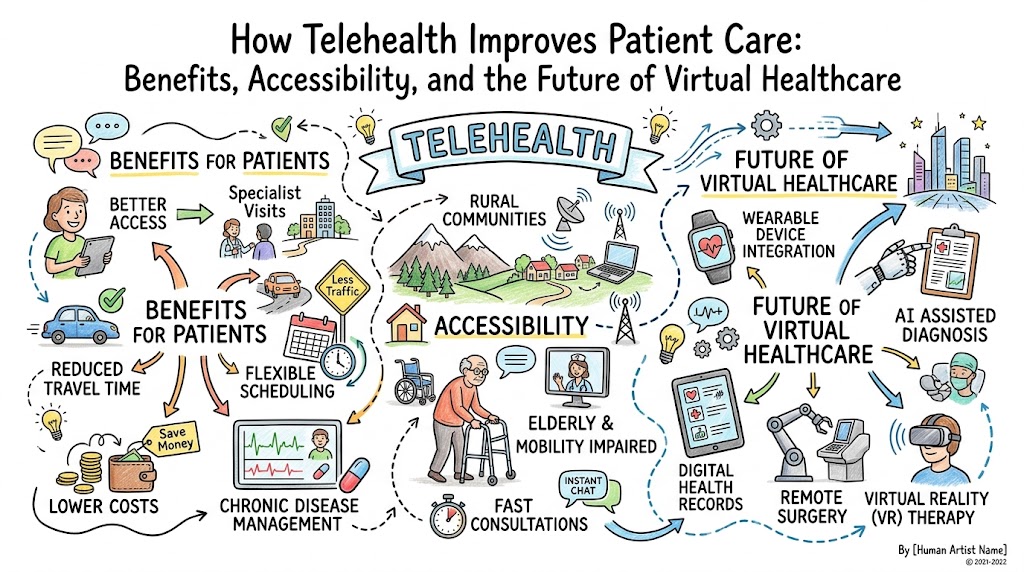
The landscape of modern medicine is undergoing a profound transformation. Gone are the days when a minor ailment or a routine follow-up required hours of commuting, sitting in crowded waiting rooms, and navigating complex appointment schedules. Today, the digital revolution has brought healthcare directly to your fingertips. By leveraging advanced technology, virtual care has become a cornerstone of modern medicine.Understanding how telehealth improves patient care is essential for anyone looking to take control of their health in the digital age. Whether you are managing a chronic condition, seeking specialized advice, or simply need a quick consultation for a common illness, virtual platforms are bridging the gap between patients and medical professionals.This is where platforms like AskDoctorLive.com play a pivotal role. AskDoctorLive helps patients connect with healthcare professionals through convenient online consultations and healthcare information resources, ensuring that expert medical advice is never more than a few clicks away. In this guide, we will explore the multifaceted benefits of virtual care, how it enhances patient outcomes, and why it represents the future of accessible medicine.
Understanding Telehealth and Virtual Healthcare
Telehealth is often misunderstood as a simple video call. In reality, it encompasses a broad spectrum of technologies and services designed to deliver health-related information and medical care from a distance. It is not just about convenience; it is about extending the reach of healthcare to ensure that quality services are available to everyone, regardless of geography or physical mobility.
What Is Telehealth?
At its core, telehealth refers to the distribution of health-related services and information via electronic information and telecommunication technologies. This includes:
- Synchronous Telehealth: Real-time, two-way interaction between a patient and a clinician, typically through video conferencing or audio calls.
- Asynchronous Telehealth (“Store-and-Forward”): The transmission of recorded health information (such as digital images, lab results, or messages) to a practitioner for later review.
- Remote Patient Monitoring (RPM): Using digital devices to collect medical data from patients in one location and electronically transmitting that data to healthcare providers in another.
Evolution of Telemedicine and Digital Healthcare
Telemedicine began as a tool for rural outreach, connecting remote clinics to specialists in urban centers. Over the past decade, and accelerated significantly by global events, it has evolved into a standard component of healthcare systems worldwide. The transition from physical paper charts to electronic health records (EHRs) paved the way for seamless digital integration, allowing doctors to review medical history, prescribe medications, and track progress—all through a secure virtual interface.
How Telehealth Improves Patient Care
The primary goal of any healthcare innovation is to improve the patient experience. Telehealth achieves this by dismantling traditional barriers. When we examine how telehealth improves patient care, we see a significant shift from reactive, episodic care to proactive, continuous health management.
- Removing Geographical Barriers: Patients in remote or underserved areas no longer need to travel hundreds of miles to see a specialist.
- Optimizing Time Management: Patients can fit a medical consultation into their workday without the burden of travel or long waits.
- Encouraging Continuity of Care: Virtual follow-ups are much easier to schedule, ensuring that patients stay on track with their treatment plans.
- Reducing Exposure: Patients with compromised immune systems can receive necessary care without entering a clinical environment where they might be exposed to contagious illnesses.
Benefits of Telehealth for Patients
The convenience of virtual care is self-evident, but the clinical benefits are equally compelling.
- Faster Access to Care: Many minor conditions—like allergies, rashes, or sinus infections—can be diagnosed and treated within minutes.
- Improved Medication Adherence: Virtual check-ins allow providers to quickly address concerns about side effects or dosing, which prevents patients from abandoning their medication.
- Lower Healthcare Barriers: For individuals with limited transportation, mobility issues, or caregiver responsibilities, virtual visits are often the only viable way to access consistent medical attention.
- Better Follow-Up Care: Virtual platforms make it simple to conduct post-operative reviews, monitor wound healing, and discuss lab results.
Benefits of Telehealth for Healthcare Providers
It is not only patients who benefit. Providers also experience a more efficient practice:
- Workflow Optimization: Telehealth allows for more efficient scheduling, reducing the overhead costs associated with maintaining a large physical waiting room.
- Better Patient Insight: Seeing a patient in their home environment can provide context that is often lost in a sterile clinic, such as understanding their lifestyle habits or medication storage.
- Reduced Burnout: Flexible working hours and the ability to conduct consultations from a dedicated office or remote location can lead to higher professional satisfaction for physicians.
Improved Access to Specialists Through Telehealth
One of the most life-changing aspects of virtual healthcare is the ability to consult with sub-specialists who might not be located in your local area. From endocrinologists and dermatologists to neurologists and behavioral health experts, geography no longer limits your access to the best clinical expertise.
Telehealth and Chronic Disease Management
Chronic conditions like diabetes, hypertension, and heart disease require frequent monitoring. Telehealth allows for consistent, low-burden check-ins that prevent complications. By integrating wearable technology, providers can receive real-time data, allowing them to adjust treatment plans before a condition escalates into an emergency.
Telehealth for Mental Health Support
Virtual care has been a breakthrough for mental health. Many patients find it easier to open up to a therapist from the comfort and safety of their own home. It removes the social stigma associated with walking into a mental health clinic, potentially increasing the number of people who seek the care they need.
Role of Telehealth in Rural and Underserved Communities
In many rural regions, there is a severe shortage of primary care providers. Telehealth acts as a lifeline, ensuring that even the most isolated communities have access to life-saving medical advice. It empowers local community centers to function as “hubs” for virtual consultations, connecting local patients with national networks of expertise.
Patient Safety and Privacy in Telehealth
Patient privacy is paramount. Reputable telehealth platforms utilize end-to-end encryption to ensure that medical conversations remain confidential. Compliance with regulations like HIPAA (in the U.S.) or local data protection laws ensures that patient data is handled with the same security as in-person records.
Challenges and Limitations of Telehealth
While the benefits are vast, it is important to acknowledge limitations:
- Physical Examination Limits: Some conditions require a hands-on physical exam.
- Technology Gap: Not all patients have high-speed internet or the digital literacy required for virtual platforms.
- Technical Glitches: Poor connectivity can disrupt a consultation.
Mandatory Comparison Tables
Table 1: Benefits of Telehealth
| Benefit | Impact on Patients | Impact on Providers |
| Increased Accessibility | Easier access to top specialists. | Broader patient reach beyond local area. |
| Time Efficiency | Zero travel time required. | Streamlined scheduling and reduced wait times. |
| Cost Reduction | Savings on transport and childcare. | Lower office facility maintenance costs. |
Table 2: Telehealth vs Traditional Healthcare Visits
| Feature | Telehealth | In-Person Visit |
| Travel | None | Required |
| Waiting Room | Virtual/None | Often crowded |
| Physical Exam | Limited/Observation-based | Extensive/Tactile |
| Suitability | Best for routine, chronic, minor care | Best for physical exams, acute trauma |
Table 3: Common Conditions Managed Through Telehealth
| Condition | Telehealth Suitability | Follow-Up Requirements |
| Allergies | High | Low |
| Hypertension | High (with home monitoring) | Monthly/Quarterly |
| Minor Infections | High | As needed |
| Severe Injuries | Low (Emergency only) | Immediate physical triage |
Table 4: Telehealth Preparation Checklist
| Requirement | Why It Matters | Patient Tips |
| Stable Internet | Prevents call drops | Use Wi-Fi or hardwired connection |
| Private Space | Ensures confidentiality | Find a quiet room with no interruptions |
| Medical History | Essential for diagnosis | Keep a list of current meds and symptoms |
| Good Lighting | Helps doctor observe skin/throat | Sit facing a window or light source |
Patient Telehealth Checklist
Before your next virtual visit, ensure you are fully prepared:
- Device Check: Ensure your laptop, tablet, or phone is fully charged.
- App Readiness: Download any necessary software and test the microphone/camera beforehand.
- Documentation: Have your insurance details, a list of current symptoms, and a record of any medications you are taking ready to share.
- Environment: Choose a quiet, well-lit area where you will not be interrupted for at least 30 minutes.
- Note-Taking: Keep a pen and paper handy to jot down the doctor’s instructions.
Common Myths vs Facts About Telemedicine
- Myth: Telemedicine is less effective than in-person care.
- Fact: Studies show that for chronic disease management and routine issues, virtual outcomes are statistically equivalent to in-person care.
- Myth: It is only for young people.
- Fact: Many senior citizens now use telehealth frequently to manage long-term conditions without needing to travel to a clinic.
- Myth: Privacy is not guaranteed.
- Fact: Modern platforms are strictly regulated and use encryption that meets, or often exceeds, standard clinical data protections.
Expert Recommendations
For the best experience, choose a platform that allows you to review the credentials of the healthcare professionals beforehand. Always maintain a digital or physical folder of your “virtual” medical records, just as you would for your traditional physician’s records.
Frequently Asked Questions
- Is telehealth covered by insurance? Most major insurance providers now cover telehealth services similarly to in-person visits.
- Can I get a prescription through telehealth? Yes, in most cases, providers can send prescriptions directly to your local pharmacy.
- What if my internet cuts out during the call? Most doctors will call you back on the phone to complete the consultation.
- Are telehealth consultations private? Yes, they are conducted over encrypted, secure lines compliant with medical privacy laws.
- Can telehealth replace my primary care physician? It can complement their care, but you should still have a primary provider for comprehensive, long-term health records.
- Do I need special equipment? Just a smartphone, tablet, or computer with a webcam and microphone.
- Is it expensive? It is often cheaper than in-person visits because it removes travel and facility costs.
- Can a doctor treat a sinus infection virtually? Yes, via video consultation and symptom review.
- What if I need blood work? Your doctor will provide an order for you to visit a local lab for tests.
- Is there a minimum age for telehealth? No, but minors usually require a parent or guardian to assist with the setup.
- Can I use telehealth for emergency care? No; emergencies (chest pain, severe bleeding) require immediate in-person 911 or ER services.
- Do I need to live in the same state as the doctor? Many telehealth services are restricted by state licensing laws; ensure the doctor is licensed in your state.
- Are virtual doctor visits recorded? No, they are live sessions. Some platforms save records for patient access, but they are not public recordings.
- How do I choose a telehealth platform? Look for those that offer board-certified physicians and high security standards.
- Can I get a referral for a specialist through telehealth? Yes, virtual doctors can provide referrals just like in-person ones.
- How long do virtual visits typically last? Usually between 10 to 30 minutes, depending on the complexity of the issue.
- Can I use telehealth for physical therapy? Yes, many therapists now offer guided exercise sessions via video.
- Do I need an appointment? Many platforms offer “on-demand” care for minor issues, but specialists usually require appointments.
- What if the doctor can’t diagnose me? They will advise you to visit an urgent care center or primary doctor for a physical assessment.
- How does telehealth help with follow-ups? It makes it much easier to schedule short chats to discuss lab results or medication adjustments.
Conclusion
The evolution of digital health is one of the most significant advancements in the history of medicine. We have explored how telehealth improves patient care by dismantling the traditional silos that once separated patients from the expertise they needed. Through the lens of platforms like AskDoctorLive.com, we see a future where medical barriers are replaced by digital bridges. By providing consistent access, empowering chronic disease management, and offering a convenient platform for mental and physical health, virtual care has shifted from a novelty to a fundamental necessity.The ability to access quality medical care from the comfort of your home is not just about convenience; it is about the democratization of health. It ensures that those in rural areas, those with mobility challenges, and those with demanding schedules are no longer forced to prioritize convenience over health. As we look to the future, the integration of Artificial Intelligence and more advanced remote monitoring tools will only deepen the impact of telehealth. AI-driven diagnostics will help doctors identify health risks earlier, while improved wearable tech will provide a 360-degree view of a patient’s well-being that was previously impossible.