Introduction
Mental health is the foundation upon which we build our lives, yet it is often the most neglected aspect of our overall wellbeing. Just as we monitor our physical health for signs of illness, prioritizing our emotional and psychological state is vital for a fulfilling life. In recent years, global conversations have shifted, placing a much-needed spotlight on the importance of mental health awareness.In this guide, we will explore the nuances of mental health, identify common indicators that may signal a need for support, and discuss how you can prioritize your emotional health every day. For more resources on navigating your healthcare journey, you can visit ASKDOCTORLIVE.
What Is Mental Health?
Mental health is far more than the absence of a mental illness. It is a state of psychological, emotional, and social wellbeing that influences how we think, feel, and act. It determines how we handle stress, relate to others, and make choices.
Your mental health is deeply interconnected with your physical health. When your mind is at ease, your body often functions more effectively. Conversely, chronic stress or untreated emotional struggles can manifest as physical symptoms, such as fatigue, digestive issues, or a weakened immune system. Achieving balance is about nurturing all aspects of yourself—mind, body, and spirit—to ensure you can navigate life’s inevitable ups and downs with resilience.
Why Mental Health Awareness Is Important
Awareness is the bridge between suffering in silence and finding effective support. When we normalize the conversation around mental health, we create an environment where seeking help is viewed as a sign of strength, not a weakness.
- Early Intervention: Recognizing symptoms early often leads to more effective and manageable treatment options.
- Reducing Stigma: Open, honest communication helps dismantle the shame that often prevents people from seeking help.
- Quality of Life: Proactive mental health management allows individuals to enjoy deeper connections, improved productivity, and a more positive outlook on life.
- Empowered Communities: When people are educated about mental health, they are better equipped to support friends, family, and colleagues during difficult times.
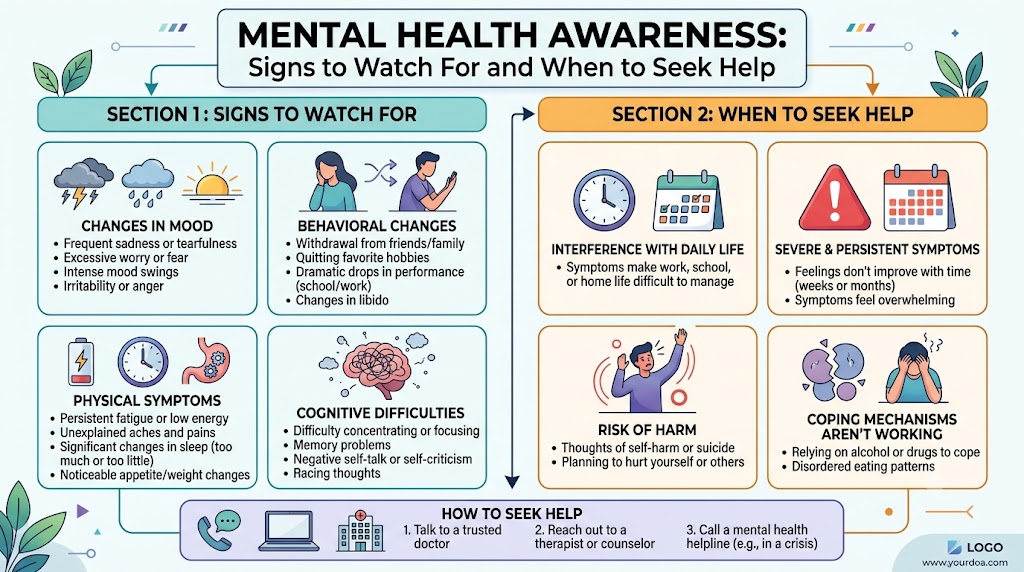
Common Signs to Watch For
Mental health symptoms often manifest gradually. While everyone experiences occasional sadness or stress, persistent patterns that interfere with your daily life may indicate that you need support.
- Persistent Sadness: Feeling down, hopeless, or empty for an extended period.
- Anxiety or Excessive Worry: Feeling constantly on edge, fearful, or experiencing physical symptoms like a racing heart.
- Mood Swings: Experiencing extreme highs or lows that feel out of character.
- Sleep Disturbances: Struggling to fall asleep, staying asleep, or sleeping significantly more than usual.
- Loss of Interest: Finding little joy in activities you once loved.
- Social Withdrawal: Wanting to be alone more often and pulling away from friends or family.
- Difficulty Concentrating: Feeling “foggy,” struggling to finish tasks, or experiencing memory lapses.
- Changes in Eating Habits: Significant weight loss or gain, or a complete lack of interest in food.
- Fatigue: Feeling chronically exhausted, even after getting enough rest.
Symptoms Comparison Table
| Warning Sign | Possible Impact |
| Persistent sadness | Emotional distress |
| Anxiety | Difficulty managing daily life |
| Sleep problems | Fatigue and poor concentration |
| Mood changes | Relationship challenges |
| Social withdrawal | Isolation and loneliness |
| Appetite changes | Physical and emotional effects |
Risk Factors for Mental Health Problems
Mental health is influenced by a complex interplay of biology, environment, and life experiences. While anyone can experience mental health challenges, certain factors may increase your susceptibility:
- Chronic Stress: Long-term exposure to high-pressure environments at work or home.
- Trauma: Experiencing or witnessing distressing events can have a lasting impact on mental wellbeing.
- Family History: A genetic predisposition to certain conditions can play a significant role.
- Chronic Illnesses: Living with long-term pain or a health condition can be mentally draining.
- Substance Abuse: The use of certain substances can trigger or worsen underlying mental health issues.
- Major Life Changes: Moving, job loss, grief, or transitions can trigger temporary emotional instability.
When to Seek Professional Help
It is important to know when self-care needs to be supplemented by professional guidance. If you notice the following, please reach out to a professional:
- Duration: Symptoms persist for more than two to three weeks without improvement.
- Daily Interference: Your emotional state makes it difficult to work, go to school, or maintain relationships.
- Physical Symptoms: You are experiencing unexplained physical ailments linked to your stress or mood.
- Behavioral Changes: You notice friends or family members commenting on your withdrawal or irritability.
- Safety Concerns: If you feel overwhelmed to the point of considering self-harm or hopelessness, please reach out for immediate emergency assistance.
Healthy Ways to Support Mental Wellness
You have more control over your mental wellness than you might think. Incorporating small, consistent habits can build your emotional resilience:
- Regular Exercise: Physical activity releases endorphins, which are natural mood elevators.
- Quality Sleep: Prioritizing a consistent sleep schedule helps regulate your emotions.
- Balanced Nutrition: Fueling your body with healthy food impacts how your brain functions.
- Stress Management: Practice techniques like deep breathing, meditation, or journaling.
- Social Support: Stay connected with people who uplift and understand you.
- Mindfulness: Stay present and engage with your surroundings to reduce ruminating thoughts.
Common Myths vs Facts Table
| Myth | Fact |
| Mental illness is a weakness | Mental health conditions are medical issues |
| Only adults experience mental health problems | People of all ages can be affected |
| Talking about mental health makes things worse | Open conversations encourage support |
Real-Life Examples
Consider the story of “Sarah.” She noticed that for several weeks, she wasn’t enjoying her weekend hobbies, felt tired all the time, and was withdrawing from her friends. Initially, she blamed it on “being busy at work.” However, because she was aware of the signs, she realized it wasn’t just burnout. She spoke to her primary care doctor early on, adjusted her workload, and sought therapy. Because she acted early, she prevented her mild symptoms from escalating into a full-blown crisis. Awareness allowed her to take control of her health before it felt unmanageable.
FAQs
- What are the earliest signs of a mental health concern?
Subtle changes like increased irritability, sleep disruption, or a decrease in motivation. - When is the right time to see a therapist?
When symptoms begin to affect your daily functioning or you feel stuck. - Does stress always lead to mental illness?
Not always, but chronic, unmanaged stress is a major risk factor. - Are mental health conditions treatable?
Yes, with the right support, most people find effective management strategies. - How can families help a loved one?
By listening without judgment and encouraging them to seek professional help. - Can diet affect my mood?
Yes, the gut-brain connection is powerful; nutrition plays a key role in stability. - Is it normal to feel anxious occasionally?
Yes, but it becomes a concern when it is constant and uncontrollable. - Will talking about my feelings make me look weak?
No, it is a sign of immense courage and self-awareness. - Can I improve my mental health on my own?
You can definitely improve your wellbeing, but professional support is a valuable tool. - Do I need a diagnosis to talk to someone?
No, you can seek support for stress or emotional changes at any time. - How do I start a conversation about mental health?
Choose a quiet time and be honest about how you are feeling. - Is exercise really that effective?
Physical activity is one of the most effective non-medical ways to manage mood. - What is the goal of mental health awareness?
To reduce stigma and encourage early seeking of support. - Does trauma always cause long-term issues?
Not always, but it requires care and sometimes professional support to process. - How can I help others safely?
Be a good listener, validate their feelings, and suggest resources.
Final Thoughts
Your mental health is a lifelong journey, not a destination. By staying aware of your own patterns and seeking help when you need it, you empower yourself to live a healthier, more balanced life. Never underestimate the power of a single conversation or the benefit of early intervention.We encourage you to prioritize your wellbeing today. For more information on health, wellness, and finding the right resources to support your journey, explore the educational content available at ASKDOCTORLIVE.