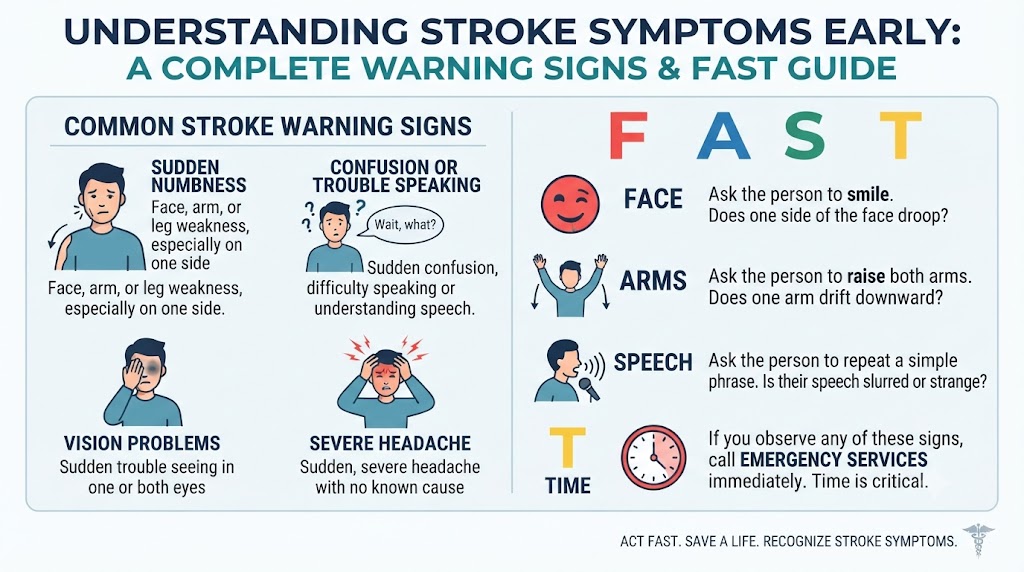
A stroke is a medical emergency that occurs when the blood supply to part of the brain is interrupted or reduced, preventing brain tissue from getting oxygen and nutrients. When this happens, brain cells can begin to die within minutes. Recognizing the warning signs immediately is not just helpful—it is the most critical step in saving a life and reducing the potential for long-term disability.At AskDoctorLive, we believe that informed patients are better equipped to handle medical emergencies. This guide provides essential information on identifying early stroke symptoms, understanding why immediate action is necessary, and knowing the steps to take when every second counts.
Understanding Stroke
A stroke happens when a blood vessel in the brain is blocked or bursts. The brain is an incredibly complex organ that relies on a constant flow of oxygen-rich blood to function. When that flow stops, the affected area of the brain begins to malfunction almost instantly.
There are two primary types of strokes, along with a critical warning state:
- Ischemic Stroke: Occurs when a blood vessel supplying the brain is obstructed by a clot.
- Hemorrhagic Stroke: Occurs when a blood vessel in the brain leaks or ruptures.
- Transient Ischemic Attack (TIA): Often called a “mini-stroke,” this is a temporary period of symptoms similar to a stroke that leaves no permanent damage but indicates a high risk for a future, major stroke.
STROKE OVERVIEW TABLE
| Aspect | Description |
| Medical Condition | Brain infarction or hemorrhage |
| Organs Affected | Brain and neurological pathways |
| Main Cause | Clots or ruptured blood vessels |
| Medical Emergency | Yes, requires immediate hospital care |
| Treatment Goal | Restore blood flow and limit brain damage |
Early Stroke Symptoms
Stroke symptoms often appear suddenly. Because the brain controls different functions depending on the area affected, symptoms can vary. However, they share a common thread of abrupt onset.
Sudden Weakness or Numbness
Often affecting one side of the body, this can manifest as an inability to lift an arm or walk steadily.
Facial Drooping
One side of the face may sag or feel numb, making a smile look uneven.
Difficulty Speaking
The person may experience slurred speech, confusion, or the inability to find the right words.
Vision Problems
Sudden dimness, blurred vision, or loss of sight in one or both eyes.
Loss of Balance
A sudden sensation of dizziness, loss of coordination, or trouble walking.
Severe Sudden Headache
An abrupt, intense headache often described as the “worst headache of your life,” sometimes accompanied by vomiting or altered consciousness.
EARLY STROKE SYMPTOMS TABLE
| Symptom | What It May Indicate | Requires Emergency Care |
| Facial Drooping | Nerve/muscle impact in the brain | Yes |
| Arm Weakness | Motor pathway disruption | Yes |
| Speech Difficulty | Language center impairment | Yes |
| Vision Changes | Visual cortex disturbance | Yes |
| Balance Problems | Cerebellar or vestibular impact | Yes |
| Severe Headache | Increased pressure/hemorrhage | Yes |
The FAST Stroke Test
The FAST test is a simple, internationally recognized tool designed to help anyone identify the most common signs of a stroke.
- F – Face: Ask the person to smile. Does one side of the face droop?
- A – Arms: Ask the person to raise both arms. Does one arm drift downward?
- S – Speech: Ask the person to repeat a simple phrase. Is their speech slurred or strange?
- T – Time: If you observe any of these signs, it is time to call emergency services immediately.
FAST TEST TABLE
| FAST Step | What to Check | Recommended Action |
| Face | Smile symmetry | Call Emergency Services |
| Arms | Ability to raise both arms | Call Emergency Services |
| Speech | Clarity and coherence | Call Emergency Services |
| Time | Onset of symptoms | Call Emergency Services |
Types of Stroke
Understanding the nature of a stroke helps in appreciating why rapid intervention is the only viable path to safety.
STROKE TYPES TABLE
| Stroke Type | Cause | Emergency Level |
| Ischemic Stroke | Blocked artery (clot) | Critical |
| Hemorrhagic Stroke | Ruptured blood vessel | Critical |
| TIA | Temporary blockage | Critical (warning sign) |
Who Is at Higher Risk?
While anyone can have a stroke, certain factors increase the likelihood. Managing these through lifestyle changes and medical oversight is key to prevention.
RISK FACTORS TABLE
| Risk Factor | Why It Increases Risk | Can It Be Managed? |
| High Blood Pressure | Damages blood vessel walls | Yes |
| Diabetes | Affects vascular health | Yes |
| Smoking | Weakens vessels/increases clotting | Yes |
| High Cholesterol | Causes plaque buildup | Yes |
| Obesity | Increases strain on the heart | Yes |
| Family History | Genetic predisposition | No (but can be monitored) |
Diagnosis in Hospital
When a patient arrives at the hospital, medical teams move quickly to identify the type of stroke to determine the appropriate treatment.
DIAGNOSTIC TESTS TABLE
| Test | Purpose | What It Detects |
| CT Scan | Rapid imaging | Bleeding or large clots |
| MRI | Detailed brain view | Extent of tissue damage |
| Blood Tests | Assess health markers | Clotting factors/glucose levels |
| Vascular Imaging | View blood vessel blockages | Location of the blockage |
| Neurological Exam | Evaluate function | Motor and sensory deficits |
Emergency Treatment Overview
Treatment depends entirely on the type of stroke. Ischemic strokes may be treated with clot-busting medications, while hemorrhagic strokes may require procedures to stop bleeding.
TREATMENT OVERVIEW TABLE
| Treatment | Purpose | When Used |
| Emergency Evaluation | Rapid assessment | Immediately upon arrival |
| Medication | Dissolve clots | Within a specific time window |
| Thrombectomy | Physically remove clot | In cases of large vessel blockage |
| Surgery | Repair vessel/relieve pressure | For hemorrhagic strokes |
| Stroke Unit Care | Specialized monitoring | Post-initial stabilization |
Stroke Prevention Tips
Prevention is the most powerful tool in the fight against stroke. Small, consistent changes in daily habits lead to significant long-term health improvements.
📊 PREVENTION TABLE
| Prevention Tip | Benefit |
| Blood Pressure Control | Prevents vessel damage |
| Healthy Eating | Reduces cholesterol/weight |
| Physical Activity | Improves circulation |
| Quit Smoking | Enhances vessel health |
| Routine Checkups | Early detection of risk factors |
Common Mistakes People Make
- Ignoring temporary symptoms: Assuming symptoms will pass can lead to permanent damage if a TIA turns into a full stroke.
- Waiting for symptoms to disappear: “Wait and see” is dangerous; time lost is brain lost.
- Driving themselves: Always call emergency services; you need specialized medical care during transit.
- Assuming fatigue: Never dismiss sudden neurological changes as mere tiredness.
- Delaying care: Early arrival allows for treatments that can reverse or limit the impact of a stroke.
Real-Life Awareness Scenarios
- Family Recognition: A husband notices his wife’s face drooping while she talks and immediately uses the FAST test, prompting an urgent call for help.
- TIA Warnings: A patient experiences brief weakness that disappears, but they seek medical advice anyway, leading to the discovery of a high-risk blockage that is treated before a major stroke occurs.
- Quick Response: Emergency services identify a stroke, notify the hospital, and the patient receives medication upon arrival, significantly improving their recovery.
- Delayed Consequences: A person waits hours to see if a speech difficulty will clear; by the time they arrive at the hospital, the window for certain life-saving treatments has closed.
Future of Stroke Care
The landscape of stroke care is improving through technology, allowing for faster diagnosis and more personalized recovery journeys.
FUTURE OF STROKE CARE TABLE
| Innovation | Potential Benefit |
| AI Diagnosis | Faster identification of stroke type |
| Mobile Stroke Units | Treatment starting in the ambulance |
| Tele-Stroke | Expert neurology consults anywhere |
| Advanced Imaging | Precision in locating damage |
| Personalized Rehabilitation | Tailored recovery for better function |
FAQs
- What are the first signs of a stroke?
Sudden numbness, facial drooping, speech difficulty, and loss of balance. - What is the FAST test?
A simple way to check for Face, Arms, Speech, and Time. - Can stroke symptoms go away?
Sometimes (as with a TIA), but you must treat them as an emergency regardless. - What is a TIA?
A “mini-stroke” that serves as a warning for a potential major stroke. - Who is at highest risk?
Those with high blood pressure, diabetes, or a history of smoking. - Is every stroke painful?
Not always; many strokes are painless, which is why awareness is so important. - When should I call emergency services?
The moment you suspect any stroke symptoms. - How is stroke diagnosed?
Through physical exams, CT/MRI scans, and vascular imaging. - Can stroke be prevented?
Yes, through lifestyle changes and management of medical conditions. - What happens after hospital treatment?
A transition to a stroke unit followed by a rehabilitation plan. - Do all strokes cause paralysis?
No, the impact depends on which part of the brain is affected. - Can young people have a stroke?
Yes, though it is more common in older adults. - Is it better to go to a specialized stroke center?
Yes, these centers have the resources for rapid intervention. - What is the recovery timeline?
It varies greatly and depends on the severity of the stroke. - What should I do while waiting for the ambulance?
Keep the person calm, do not give them food or water, and note the time symptoms began.
Final Thoughts
A stroke is a life-altering event, but it does not have to be a fatal or permanently disabling one if acted upon quickly. By recognizing early stroke symptoms and acting immediately, you can ensure the best possible care for yourself or a loved one. Emergency medical attention is the only safe path forward—every minute saved preserves brain function.
To continue your journey in health literacy, explore AskDoctorLive for reliable health education, stroke awareness resources, and guidance on preventive care. Stay informed, stay vigilant, and remember that awareness saves lives.