For many patients around the world, the search for quality healthcare leads across international borders. As healthcare costs rise and wait times for specialized procedures grow in many developed nations, a growing number of individuals are turning to alternative destinations. Among these, India has emerged as a premier hub for high-quality, cost-effective medical care.
Navigating the landscape of international MyMedicPlus can be daunting. From selecting the right facility to understanding the nuances of surgery expenses, successful medical travel requires careful preparation. This guide explores the essential components of medical tourism in India, helping you make informed decisions about your health and financial future.
Why India Has Become a Leading Destination for Medical Tourism
India’s reputation as a healthcare destination is built on a foundation of professional expertise and modern infrastructure. Many of the best hospitals in India for international patients are equipped with technology that rivals top-tier facilities in the West.
Several factors drive the growth of medical travel to the region:
- World-Class Expertise: Many Indian surgeons and specialists have received training or fellowship experience at prestigious international institutions.
- Cost Efficiency: The treatment cost in India is significantly lower than in many Western countries, often without sacrificing the standard of care.
- No Wait Times: Unlike many public health systems that require months of waiting for elective procedures, Indian hospitals can often schedule surgeries shortly after a consultation.
- English-Speaking Staff: Effective communication is a cornerstone of safe healthcare. The prevalence of English-speaking doctors, nurses, and administrative staff minimizes language barriers for international travelers.
Understanding the Factors That Influence Treatment Costs
When researching medical care abroad, it is common to look for a single price tag. However, the reality of medical billing is complex. A quoted price is rarely a fixed expense.
Whether you are looking into knee replacement surgery cost in India or planning for heart bypass surgery cost in India, the total financial outlay is influenced by several variables:
1. Hospital and Infrastructure Tier
Top-tier, JCI-accredited hospitals may charge more than smaller private facilities. However, these institutions often provide comprehensive packages that include international patient support services, premium room accommodations, and post-operative monitoring.
2. Surgeon’s Experience and Reputation
The seniority and expertise of the surgical team play a significant role. Highly sought-after surgeons who specialize in complex procedures may have different fee structures compared to general practitioners.
3. Patient Health Profile
Your existing medical history, age, and overall fitness influence the procedure’s complexity. A patient with underlying conditions—such as diabetes or hypertension—may require additional diagnostic tests or a longer intensive care unit (ICU) stay, which impacts the final bill.
4. Room Category
In many Indian hospitals, patients choose between standard wards, semi-private rooms, and deluxe suites. The choice of accommodation directly affects the daily room rate and the associated nursing costs.
5. Post-Operative Care and Medication
The cost estimate usually covers the surgery, but post-operative medication, specialized physiotherapy, and follow-up consultations should also be factored into your budget.
How to Compare Hospitals Before Traveling
Selecting the right provider is the most critical step in your healthcare planning. Using a reliable healthcare information platform like MyMedicPlus can simplify the research process.
When evaluating potential facilities, consider the following checklist:
| Criteria | What to Look For |
| Accreditation | Check for JCI (Joint Commission International) or NABH certifications. |
| Specialization | Does the hospital have a specific “Center of Excellence” for your required procedure? |
| International Support | Look for dedicated international patient lounges, visa assistance, and translators. |
| Transparency | Is the hospital willing to provide a detailed, itemized cost estimate? |
| Success Rates | Look for publicly shared outcomes regarding infection rates and surgical success. |
Essential Steps for Planning Your Medical Journey
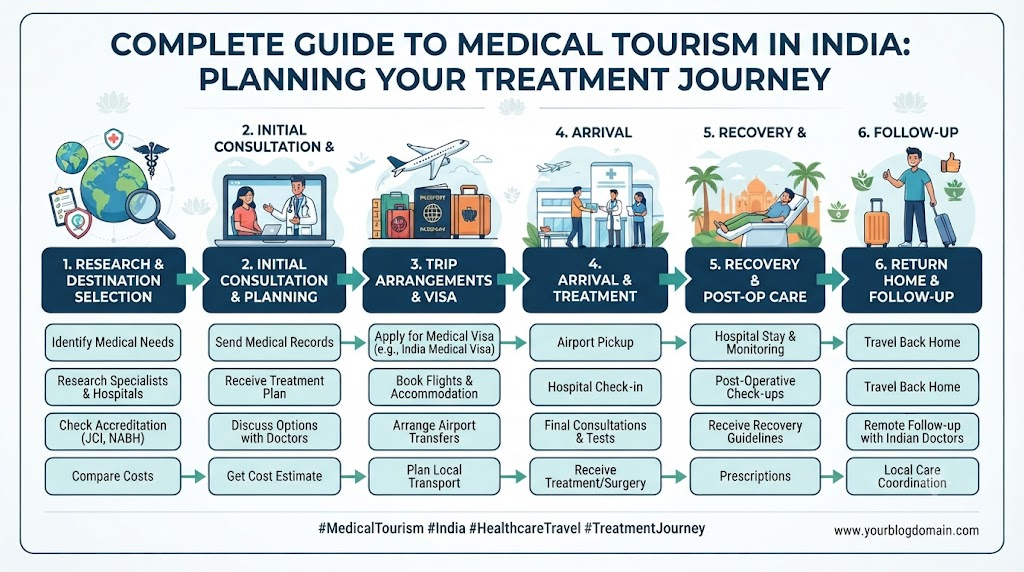
Effective healthcare planning goes beyond just booking a flight. It involves a systematic approach to ensure safety and comfort.
1. Initial Consultation and Records Gathering
Gather all your medical records, including recent blood work, imaging results (MRIs, X-rays), and a summary of your current medications. Many hospitals allow for virtual consultations where a doctor reviews these files to provide an initial opinion.
2. Financial Budgeting
Create a budget that includes not only the surgical costs but also:
- Flights and visa fees.
- Accommodation for a companion.
- Local transportation.
- Contingency funds for unexpected complications.
3. Visa and Travel Documentation
Most countries require a specific Medical Visa for patients seeking treatment in India. Ensure you have the necessary invitation letters from the hospital to facilitate the visa application process.
4. Recovery and Aftercare Planning
Discuss your recovery timeline with your surgeon. Some procedures require a minimum stay of two to four weeks before you are cleared for air travel. Ensure your healthcare guide or consultant helps you map out this timeline clearly.
Knee Replacement and Heart Bypass: A Brief Look
Two of the most common procedures for medical travelers in India are orthopedic and cardiac surgeries.
- Orthopedic Surgery: Procedures like knee or hip replacements are highly standardized in India. Patients often choose this route to avoid lengthy domestic wait times and to benefit from advanced robotic-assisted surgical options.
- Cardiac Surgery: India has a long history of excellence in cardiac care. From bypass surgeries to complex valve repairs, the country’s heart institutes are world-renowned for high volumes and excellent clinical outcomes.
Regardless of the procedure, it is vital to remember that medical outcomes depend on individual biology. Always view cost estimates as a guide, and maintain open communication with your surgical team about your expectations and goals.
Key Takeaways for Patients
- Research is your best defense: Never choose a hospital based solely on price. Look at accreditation, reviews, and clinical expertise.
- Prepare for variables: Always budget an additional 15–20% for unexpected medical or travel expenses.
- Use reliable resources: Platforms like MyMedicPlus serve as a helpful hospital comparison resource, providing the clarity needed to navigate complex treatment options.
- Prioritize recovery: The surgery is only half the battle. Ensure you have a plan for physical therapy and recuperation before you return home.
Frequently Asked Questions (FAQs)
1. Is it safe for international patients to undergo surgery in India?
Yes, provided you choose an accredited hospital. Many hospitals in India meet or exceed international safety standards (JCI accreditation) and have dedicated departments for international patients.
2. How do I know if the cost estimates I receive are accurate?
Reputable hospitals provide a treatment plan that outlines expected expenses. However, you should always ask for a list of “inclusions” and “exclusions” to understand what is covered and what might be billed separately.
3. Do I need a special visa for medical treatment in India?
Yes, most international patients need a Medical Visa. It is recommended to check the specific requirements for your nationality via the official Indian embassy website.
4. How long should I plan to stay in India for recovery?
The duration depends on the procedure. Your surgeon will provide a recommendation. It is safer to plan for a slightly longer stay to ensure you are medically cleared for air travel before returning home.
5. Can I bring a family member with me?
Absolutely. Most Indian hospitals welcome companions and offer facilities to accommodate them during the patient’s stay.
6. How can I get a second opinion before traveling?
Many Indian hospitals offer remote second opinion services. You can submit your medical reports via a medical assistance platform, and their specialist team will provide a clinical review.
7. Is the quality of care in India the same as in developed countries?
Yes. In many cases, top-tier Indian hospitals use the same technology, implants, and surgical techniques as those in the US, UK, or Europe, often with a more personalized approach to patient care.
Conclusion
Medical tourism is a significant step toward taking control of your health. By choosing India as your destination, you gain access to high-quality clinical expertise, modern infrastructure, and an affordable pathway to better health.
The journey to recovery requires diligence and planning. Whether you are comparing costs for a major procedure or simply researching your options, remember that the goal is not just finding the lowest price, but finding the right balance of safety, quality, and support. Utilize professional tools, verify your providers, and prepare your recovery plan with care. Your health is your most valuable asset—ensure you are making decisions that support your long-term well-being.