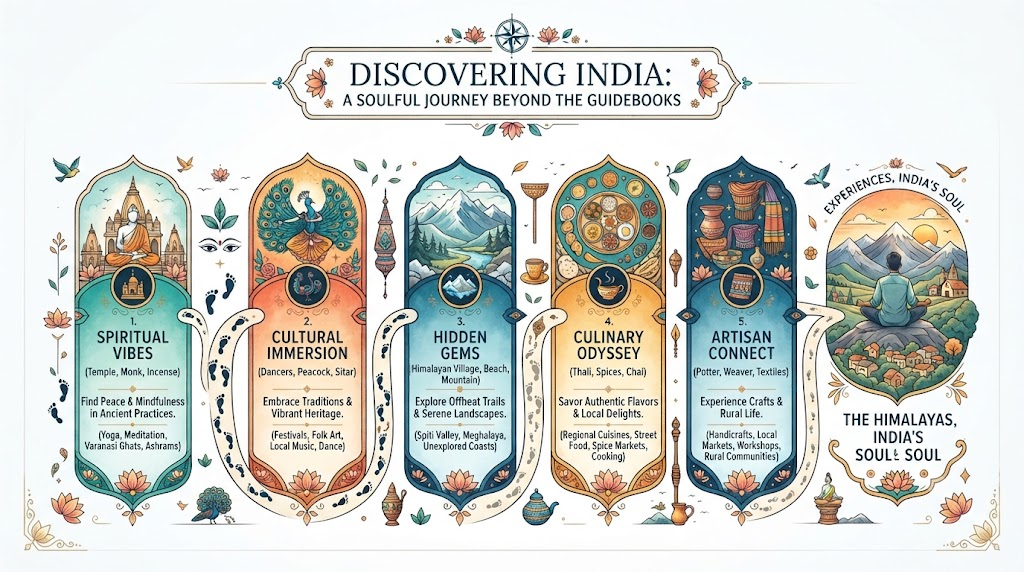
In an age of hyper-connectivity and rapid-fire travel, India remains one of the few places on Earth that insists you slow down. The true magic of this land is not found in the speed at which you traverse its states, but in the stillness you find when you stop rushing. Whether you are seeking the spiritual resonance of a centuries-old temple or the genuine hospitality of a family-run homestay, the Indian experience is best measured in moments, not miles. Planning a journey here is an exercise in intentionality; it requires balancing the iconic heritage sites with the quiet, transformative experiences that traditional guidebooks often overlook. This guide is your blueprint for navigating India with a “slow travel” mindset, ensuring that your journey is as enriching for the communities you visit as it is for your own perspective.
Why India Demands More Than a “Checklist” Approach
Many travelers arrive in India with a checklist of monuments, only to leave feeling like they saw everything but understood little. The true value of an Indian expedition lies in the process—the morning tea shared with a local shopkeeper, the sudden realization of history while walking through an unmarked fort, or the profound silence found in a mountain monastery. This is a land that rewards the curious and the patient.
The Geography of Experience
India is not a monolith; it is a collection of distinct worlds. Understanding this is key to planning. The North holds the rugged drama of the Himalayas and the remnants of great empires. The South is characterized by a slower pace, coastal breezes, and a deep-seated connection to heritage and arts. Recognizing these regional distinctions helps you curate a trip that aligns with your personal travel energy.
Top Attractions: Choosing the Right Path
While the Taj Mahal is an architectural marvel, consider balancing your trip with less-frequented landmarks:
- Hampi (Karnataka): A surreal landscape of boulders and temple ruins that feels like another planet.
- Spiti Valley (Himachal): A high-altitude desert perfect for those seeking isolation and stark beauty.
- Majuli (Assam): The world’s largest river island, offering a unique look at Neo-Vaishnavite culture.
- Fort Kochi (Kerala): A melting pot of colonial history, spice markets, and art.
Attraction Comparison Table
| Site | Why It’s Unique | Best Season | Ideal Pace |
| Hampi | Ancient boulder ruins | Nov–Feb | Slow |
| Spiti | High-altitude desert | June–Sept | Moderate |
| Majuli | Island culture/nature | Oct–Dec | Relaxed |
| Kochi | Cultural fusion | Sept–Mar | Balanced |
Things to Do: Curating Your Own Narrative
Move away from standard sightseeing. Immerse yourself in village tourism in India to understand traditional crafts. Engage in pilgrimage tours in India—not just for religious reasons, but for the architectural and communal wealth of these sites. If you crave intensity, adventure activities in India, such as multi-day treks in the Garhwal Himalayas, offer physical and mental rejuvenation.
Seasonal Rhythms: Timing Your Visit
- The Post-Monsoon Glow (Oct–Nov): Everything is lush and the air is crisp.
- The Winter Season (Dec–Feb): Ideal for the plains and Southern coastal regions.
- The Mountain Calling (May–Sept): Perfect for the northern reaches when the plains are sweltering.
Seasonal Comparison Table
| Window | Atmosphere | Best For |
| Winter | Energetic, crisp | Festivals & City tours |
| Summer | Quiet, reflective | Trekking & High altitudes |
| Monsoon | Vibrant, rainy | Nature & Ayurveda retreats |
Logistics: Bridging the Distance
The sheer scale of India means transportation requires a strategy. While flights save time, the Indian train network—if you choose higher-class carriages—offers a window into the country’s soul. Once in a town, prioritize public transport or hiring a vetted local driver to ensure a safe, stress-free commute.
Sample Itinerary: The “Deep Discovery” Approach
- 3 Days: Explore the transition from urban centers to nearby heritage villages.
- 5 Days: Focus on a single state (e.g., Rajasthan or Kerala) to move beyond surface-level sights.
- 7+ Days: Integrate a spiritual or adventure element, such as a trek or a stay at a remote eco-lodge.
The Value of Local Insights
Your trip is only as good as the connections you make. When you work with local tour guides in India via HolidayLandmark, you aren’t just getting a translator; you are getting a cultural bridge. They are the ones who know when the hidden local festival starts or which family in the village makes the best traditional meal.
Finding Your Home Away from Home
While luxury hotels offer comfort, the best homestays in India offer context. Staying in a family-run property changes your relationship with the place. You become a guest rather than a tourist, gaining access to the daily traditions and nuances of local living.
Sustainable Travel: Leaving a Positive Footprint
Respect for local tradition is the foundation of modern travel. Practice “leave no trace” hiking, support local craft cooperatives rather than mass-produced souvenirs, and always ask before photographing people. Your presence as a traveler should enrich, not deplete, the destination.
How HolidayLandmark Supports Your Journey
HolidayLandmark exists to simplify the complexity of travel planning. By providing access to authentic village experiences, pilgrimage itineraries, and a network of trusted local guides, the platform helps you move away from the tourist path and toward something much more meaningful.
Frequently Asked Questions (FAQ)
- Is it better to plan a trip alone or with help?
A mix is best; plan the broad strokes, but use local experts for the daily experiences. - How do I find authentic homestays?
Use platforms like HolidayLandmark to find vetted, high-quality stays. - What if I don’t speak Hindi?
English is widely understood in tourism and urban centers; local guides can assist elsewhere. - Are there risks to off-beat travel?
Always research specific regions and use local, trusted transportation. - What is the ‘Golden Triangle’?
Delhi, Agra, and Jaipur; it’s popular but just the starting point of India. - Can I travel solo?
Yes, India is very popular for solo travelers who prioritize safety and pre-planned logistics. - What should I prioritize?
Prioritize experiences that match your interests, not just the “top 10” lists. - How do I dress?
Modesty is appreciated everywhere; dress comfortably and respectfully. - What about health and food?
Eat fresh, eat cooked, and drink bottled or filtered water. - How can I travel sustainably?
Support local artisans and minimize plastic use.
Conclusion
Travel in India is a masterclass in perspective. Whether you find yourself lost in the spiritual echoes of an ancient temple or trekking through the high-altitude solitude of the mountains, the country demands that you stay present. The true “best places to visit in India” are not found on a map, but in the moments where you step off the conventional path and connect with the reality of the land.Planning a trip here shouldn’t feel like a chore; it should be the first step of your adventure. By focusing on local experiences, choosing homestays that support community livelihoods, and consulting with local guides, you ensure your journey is as impactful as it is memorable. Platforms like HolidayLandmark are here to bridge the gap, providing you with the tools to build a trip that is authentic, safe, and truly your own.