Introduction
Laboratory tests are a cornerstone of modern medicine, acting as a window into your internal health. Whether it is a routine blood count or a specialized diagnostic evaluation, these tests provide clinicians with data that is essential for diagnosing conditions, monitoring ongoing health, and planning effective treatments.At ASKDOCTORLIVE, we are dedicated to providing reliable lab test guidance that helps you navigate these complexities. In this guide, we will explore the different types of medical tests, how to prepare for them, and why consulting with a qualified healthcare professional is the most important step in interpreting your results. Remember, information is only the beginning—your health decisions should always be made in partnership with your doctor.
What Are Lab Tests?
Laboratory tests are medical procedures that involve analyzing samples of blood, urine, tissue, or other substances from the body. These samples are examined to detect the presence of markers that indicate how your organs are functioning or whether a disease is present.
The Role of Testing
- Screening Tests: Used to check for potential health concerns before symptoms even appear.
- Diagnostic Tests: Used to identify the specific cause of a symptom or health issue you are currently experiencing.
- Monitoring Tests: Used to track the progress of a known condition or the effectiveness of a prescribed medication.
By combining these results with your physical examination and medical history, doctors can create a comprehensive picture of your health.
Why Reliable Lab Test Guidance Matters
Navigating medical testing without guidance can lead to unnecessary worry. Reliable guidance helps bridge the gap between receiving a lab report and understanding what it means for your specific situation.
- Clarity: Reducing confusion about what specific tests are intended to measure.
- Preparation: Ensuring you follow instructions, like fasting, to avoid skewed results.
- Communication: Empowering you to ask better questions during your next doctor’s visit.
- Prevention: Helping you understand the value of regular screening in catching health issues early.
Common Types of Medical Lab Tests
Blood Tests
Blood tests are the most common diagnostic tool.
- Complete Blood Count (CBC): Measures red cells, white cells, and platelets.
- Blood Glucose: Evaluates how the body manages sugar, often used for diabetes monitoring.
- Cholesterol Testing: Screens for heart health risks.
- Liver & Kidney Function: Checks enzymes and waste products to ensure organ efficiency.
Urine Tests
These help identify metabolic issues, kidney problems, or urinary tract infections. Routine examinations look for proteins, glucose, or cells that shouldn’t be present in the urine.
Specialized Diagnostic Tests
- Hormone Testing: Measures thyroid, reproductive, or adrenal hormone levels.
- Allergy Testing: Identifies specific immune reactions to environmental or food triggers.
- Genetic Testing: Evaluates inherited markers that may predispose an individual to certain health conditions.
| Test Type | Purpose | Common Use |
| Blood Tests | Evaluate body functions | Health monitoring and diagnosis |
| Urine Tests | Check metabolic and kidney health | Detect infections and abnormalities |
| Hormone Tests | Measure hormone levels | Evaluate hormonal conditions |
| Genetic Tests | Identify inherited factors | Risk assessment and personalized care |
| Screening Tests | Detect possible health concerns | Preventive healthcare |
How AskDoctorLive Helps With Lab Test Guidance
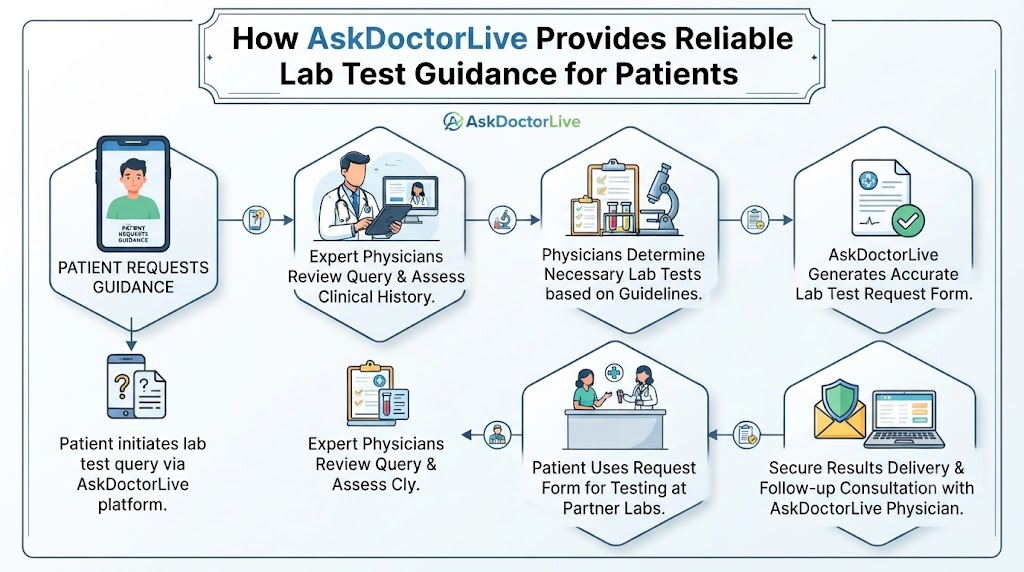
ASKDOCTORLIVE serves as an educational companion in your healthcare journey. We help by:
- Simplifying Concepts: Breaking down complex medical terms into plain, easy-to-understand language.
- Defining Purpose: Explaining why a doctor might order a specific test.
- Guiding Preparation: Providing general information on how to ready yourself for a procedure.
- Promoting Professionalism: Always reinforcing that you must discuss these results with your healthcare provider to receive a personalized evaluation.
Preparing for a Lab Test
Preparation is the secret to accurate results. Always follow the specific instructions provided by your clinical team.
- Fasting Requirements: If a test requires fasting, do not eat or drink anything (except water, if permitted) for the specified number of hours.
- Medication Review: Inform your doctor about all medicines, supplements, or herbal products you are currently taking, as these can interfere with results.
- Hydration: Being well-hydrated makes blood collection easier and more comfortable.
- Records: Bring your previous medical records or a list of your current health conditions.
Understanding Lab Test Reports
A lab report is just a collection of data points. It is not a diagnosis.
- Reference Ranges: These are the “normal” values established by laboratories. However, “normal” is a statistical average and may not reflect what is optimal for you.
- Context is Key: An abnormal result is not always a sign of a serious disease; it can be influenced by recent illness, diet, or medication.
- The Professional Role: Only a doctor who knows your symptoms and full medical history can correctly determine if a result is concerning.
Factors That Can Influence Test Results
Many variables can shift your numbers outside of the expected range:
- Diet and Exercise: Recent intense exercise or heavy meals can change blood chemistry.
- Timing: Hormones, in particular, fluctuate throughout the day.
- Age and Gender: Standard ranges are often stratified by these factors.
- Existing Conditions: Chronic illness can naturally alter certain lab markers.
Common Mistakes People Make With Lab Tests
- Self-Interpretation: Relying on online searches to diagnose yourself often leads to unnecessary anxiety.
- Skipping Instructions: Failing to fast or follow other specific guidelines can lead to “false” results, requiring you to repeat the test.
- Ignoring Follow-ups: Even if you feel fine, an abnormal result needs to be reviewed by a professional to ensure nothing is being missed.
Solution: Always view a test as part of a conversation with your doctor. If a result is unclear, write down your questions before your next appointment.
Benefits of Proper Lab Test Guidance
Proper guidance fosters a proactive approach to your health. When you understand your tests, you become a partner in your own care. This leads to better preventive care, reduced anxiety, and more efficient communication with your medical team.
Patient Checklist Before and After Lab Testing
| Step | Importance |
| Understand the test purpose | Helps prepare correctly |
| Follow preparation instructions | Supports reliable results |
| Share medical history | Helps accurate evaluation |
| Review results with professionals | Provides proper context |
| Maintain health records | Supports future healthcare decisions |
Role of Healthcare Professionals
Your doctor, pathologist, and healthcare team are the only ones who can synthesize your lab data. They look at your test results alongside your:
- Physical symptoms.
- Clinical history.
- Family risk factors.
- Current lifestyle habits.
This holistic approach is why you should never rely solely on an internet search to understand a medical report.
Common Myths vs. Facts
| Myth | Fact |
| Every abnormal result means serious disease | Results need medical interpretation and context |
| Online information can replace doctors | Educational resources support but do not replace medical care |
| More tests always mean better healthcare | Tests should be recommended based on medical needs |
| Normal results always mean perfect health | Healthcare evaluation considers multiple factors |
Real-Life Educational Scenarios
- The Fasting Patient: A patient prepares for a glucose test by fasting as instructed, resulting in an accurate reflection of their blood sugar levels.
- Discussing Results: A person sees a slightly “high” cholesterol marker on their report and schedules a follow-up with their doctor to discuss diet changes rather than panicking.
- Preventive Screening: An individual uses general information to understand the purpose of a routine wellness panel, encouraging them to stay consistent with their annual check-ups.
FAQs
- What are lab tests used for?
They help diagnose, monitor, and screen for health conditions. - Why is guidance important?
It reduces anxiety and ensures tests are performed correctly. - How do I prepare for a blood test?
Follow fasting instructions and inform your doctor of your medications. - Can food affect results?
Yes, fasting is often required to avoid temporary spikes in glucose or lipids. - Why do doctors recommend different tests?
Tests are chosen based on your specific symptoms and health history. - How can I understand my report?
Look at the reference ranges, but always have your doctor explain them. - Should I worry about abnormal results?
Do not panic; many abnormal results are minor or transient. - Can online resources explain tests?
They provide context, but they cannot provide a medical diagnosis. - Why discuss reports with a doctor?
Only they can interpret results in the context of your overall health. - How often should screenings be done?
This depends on your age, risk factors, and doctor’s advice. - What factors affect results?
Diet, medication, hydration, and timing can all play a role. - Are all tests the same?
No, every test measures a different specific marker. - What info should I provide?
Provide a full list of all current medications and supplements. - How does preventive testing help?
It allows for the early detection of potential issues. - How can ASKDOCTORLIVE help?
By providing reliable, educational information to better prepare you for your healthcare journey.
Final Thoughts
Laboratory testing is an empowering tool that, when understood and used correctly, provides the clarity needed to maintain long-term health. By preparing properly, understanding the basics of your reports, and maintaining open communication with your medical team, you can take control of your diagnostic journey.Reliable information is your best advocate. We invite you to explore ASKDOCTORLIVE for more resources on diagnostic testing, healthcare guidance, and tools designed to help you make informed decisions about your well-being. Always consult with a qualified healthcare professional to determine the best path for your specific health needs.