Introduction
Your eyesight is arguably your most precious sense. When facing a diagnosis that requires vision correction, finding the right care can feel overwhelming. Navigating clinical terms, comparing treatment methodologies, and analyzing vast price differences are complex hurdles for patients and caregivers alike.Fortunately, the landscape of global ophthalmology has evolved dramatically. Today, patients have access to premier eye care facilities equipped with state-of-the-art diagnostic imaging and robotic surgical suites.This educational guide is designed to empower you with objective information. We will break down key factors to consider when comparing the best eye hospitals in the world, analyze the nuances of major procedures like cataract and refractive surgery, and review critical cost considerations in major medical hubs like India. Our goal is to help you confidently map out your journey toward clearer vision.
Why Choosing the Right Eye Hospital Matters
Selecting an eye clinic or surgery center is not just about proximity; it is about finding an ecosystem that prioritizes clinical excellence and patient safety. Advanced ophthalmic procedures demand immense precision. The margins of error in delicate micro-surgeries—such as corneal transplants or retinal detachments—are measured in microns (thousandths of a millimeter).
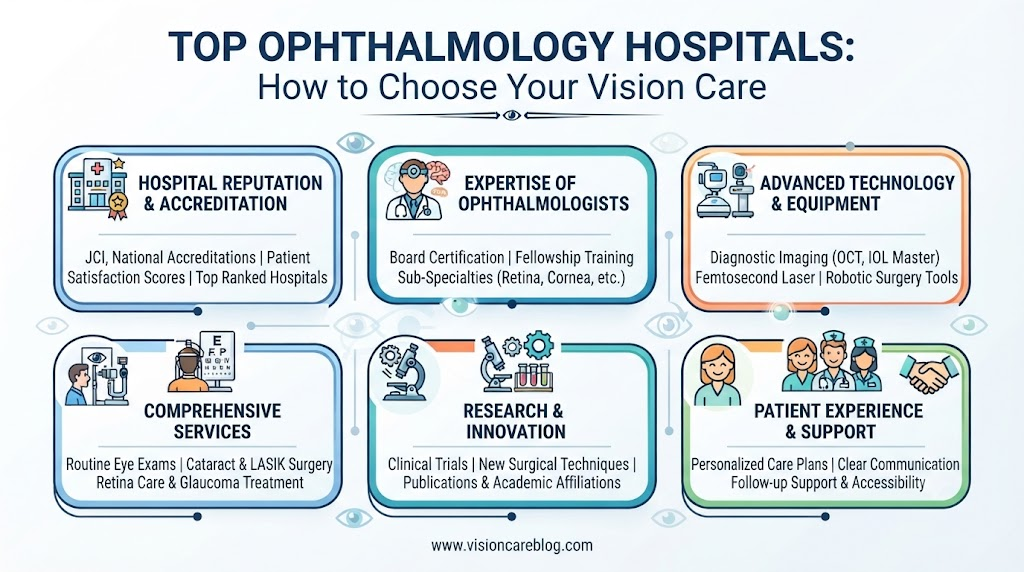
The best eye surgery hospitals distinguish themselves by maintaining rigorous healthcare quality accreditations (such as JCI internationally, or NABH in India). These accreditations ensure that the facility adheres to strict infection control, standardized surgical protocols, and advanced emergency care backups.
Additionally, top-tier centers house specialized sub-departments. Rather than relying on a general practitioner, a premier hospital connects you with dedicated specialists:
- Retina specialists for macular degeneration and diabetic retinopathy.
- Glaucoma specialists to manage intraocular pressure.
- Cornea specialists for surface diseases and complex refractive issues.
Choosing a hospital with an established reputation and the latest diagnostic imaging technology minimizes the risk of misdiagnosis and ensures a customized treatment path.
Common Eye Conditions and Treatments
Ophthalmic conditions span a broad spectrum, from minor refractive errors to progressive, sight-threatening diseases. The most widely sought-after surgical interventions globally are cataract extractions and refractive laser procedures.
- Refractive Errors (Myopia, Hyperopia, Astigmatism): These common vision issues are routinely resolved via laser eye surgery. Techniques such as LASIK (Laser-Assisted In Situ Keratomileusis), PRK (Photorefractive Keratectomy), and SMILE (Small Incision Lenticule Extraction) reshapes the cornea to focus light perfectly onto the retina.
- Cataracts: A natural clouding of the eye’s crystalline lens, typically associated with aging. Treatment involves removing the cloudy lens and replacing it with an artificial Intraocular Lens (IOL).
- Glaucoma: Known as the “silent thief of sight,” this group of diseases damages the optic nerve, often due to high fluid pressure. Early management involves medicated eye drops or selective laser trabeculoplasty, while advanced cases may require surgical shunts or trabeculectomy.
- Retinal Disorders: Conditions such as diabetic retinopathy or retinal tears require urgent care from specialized retina clinics using advanced lasers or vitrectomy surgeries.
Key Factors to Compare Eye Hospitals
To make an objective comparison between different facilities, you should look beyond marketing materials and evaluate specific, verifiable benchmarks:
- Clinical Accreditations: Check if the facility is accredited by bodies like Joint Commission International (JCI) or local equivalents like NABH. These certifications are proof of structured safety standards.
- Surgeon Expertise and Credentials: Research the profiles of the clinical staff. Look for board-certified ophthalmologists who have completed fellowships in their respective sub-specialties.
- Available Technology: Opt for hospitals that invest in contemporary diagnostic and therapeutic tools. For instance, does the hospital offer advanced optical coherence tomography (OCT) for retinal scans, or femtosecond lasers for blade-free surgeries?
- Patient Outcome Rates: Reputable hospitals are transparent about their success rates and post-surgical infection statistics.
- International Patient Services: If you are traveling for care, look for facilities with dedicated desks that handle visa assistance, language interpretation, airport transfers, and post-discharge continuity of care.
Comparing Core Procedures: Cataract vs. LASIK
For patients researching vision restoration, understanding the primary differences between popular surgeries is crucial. Below is our first comparative breakdown, evaluating the differences between cataract surgery and refractive laser surgery (LASIK).
Table 1: Cataract Surgery vs. LASIK Surgery
| Feature | Cataract Surgery | LASIK Surgery |
| Primary Goal | Remove a cloudy natural lens to restore visual clarity. | Reshape the clear cornea to eliminate reliance on glasses/contacts. |
| Core Technology | Ultrasound waves (Phacoemulsification) or Femtosecond laser; Intraocular Lens (IOL). | Excimer laser, Femtosecond laser (for blade-free flap creation). |
| Typical Target Patient | Adults usually over the age of 50 experiencing age-related cloudy vision. | Young adults (18–45) with stable refractive prescriptions. |
| Primary Advantages | Permanently cures cataracts; choice of premium lenses can correct presbyopia. | Rapid recovery, highly predictable results, freedom from eyewear. |
| Potential Limitations | Small risk of posterior capsule opacification (easily treated with a YAG laser later). | Temporary dry eyes, glare, or halos around lights at night. |
| Cost Profile | Varies widely based on the chosen lens type (monofocal vs. multifocal/toric). | Usually charged as a flat rate per eye, depending on custom profiles. |
Cataract Surgery: Standard vs. Laser Options
When preparing for cataract extraction, you will likely need to choose between traditional manual methods and newer laser-assisted technology.
- Traditional Phacoemulsification: The surgeon uses a tiny handheld blade to make an incision in the cornea, creates an opening in the lens capsule manually, and uses ultrasound energy to break up the cataract before vacuuming it out.
- Laser-Assisted Cataract Surgery (FLACS): A femtosecond laser performs the corneal incision, capsulotomy, and initial lens fragmentation. This method offers unparalleled precision, reducing the amount of ultrasound energy needed inside the eye, which can lead to faster healing.
Table 2: Traditional Phacoemulsification vs. Laser-Assisted Cataract Surgery (FLACS)
| Feature | Traditional Phacoemulsification | Laser-Assisted Cataract Surgery (FLACS) |
| Incision Method | Manual micro-incision using a surgical blade. | Computer-guided femtosecond laser incision. |
| Lens Fragmentation | Manual cracking using ultrasound energy. | Precise laser pre-fragmentation of the lens. |
| Astigmatism Correction | Relies on manual incisions or post-op glasses. | Integrated, highly precise laser corneal reshaping. |
| Suitable Patients | Suitable for almost all standard cataract cases. | Ideal for patients seeking premium IOLs or astigmatism correction. |
| Cost Profile | Most economical; widely covered by standard insurance. | Higher upfront cost; premium surcharges apply for laser use. |
LASIK and Refractive Alternatives
If your goal is to eliminate glasses, LASIK is the most famous pathway, but it isn’t the only option. Patients with thin corneas, high prescriptions, or active lifestyles may benefit more from alternatives like PRK (Photorefractive Keratectomy) or SMILE.
Table 3: LASIK vs. PRK vs. SMILE
| Feature | LASIK | PRK | SMILE |
| Surgical Approach | Creates a thin flap on the cornea, reshapes tissue underneath, and replaces flap. | Gently removes outer corneal surface cells (epithelium) and reshapes directly. | Carves a tiny, keyhole lenticule inside the cornea and removes it through a micro-incision. |
| Epithelial Recovery | Extremely fast (usually within 24 to 48 hours). | Slower (requires 3 to 5 days for surface cells to regenerate). | Fast, minimally invasive recovery with no corneal flap risks. |
| Best Suited For | Moderate nearsightedness, farsightedness, and astigmatism. | Patients with thin corneas or those involved in high-contact sports. | Moderate to high nearsightedness (myopia) with or without astigmatism. |
| Discomfort Level | Minimal post-operative discomfort. | Mild to moderate pain for 48–72 hours during epithelial healing. | Extremely low discomfort; very low incidence of post-op dry eye. |
| Dry Eye Risk | Moderate temporary risk during initial months. | Low long-term risk. | Extremely low risk due to preserved corneal nerves. |
Treatment Cost Considerations
The overall financial plan for eye care is dictated by several variables: the specific surgical technology utilized, the surgeon’s experience level, the geographic location of the clinic, and the choice of premium consumables (such as specialty intraocular lenses).
Global Cost Disparities and Medical Tourism
For many patients residing in Western nations, the cost of elective procedures like refractive laser eye surgery or premium lens implants is not fully covered by basic insurance policies. This has driven the rise of medical tourism, with patients traveling to world-class medical hubs.
India has emerged as one of the premier global destinations for ophthalmic care. The country boasts some of the best eye hospitals in the world, featuring JCI accredited facilities, state-of-the-art tech, and highly experienced, English-speaking clinical staff.
- Cataract Surgery Cost in India: While a premium cataract extraction can cost upwards of $4,000 to $6,000 per eye in the US or UK, the corresponding cataract surgery cost in India typically ranges from $800 to $2,500 per eye. This lower price point includes premium multifocal or toric lenses and advanced laser-assisted options.
- LASIK Surgery Cost in India: Basic LASIK or advanced blade-free customized treatments can range from $400 to $1,500 for both eyes in India, compared to $3,000 to $5,000 in Western countries.
These cost differences are due to lower operational overheads, favorable exchange rates, and highly competitive domestic pricing, without any compromise in clinical quality or patient safety.
Expert Tips for Choosing a Specialist
To secure the best possible outcome, keep these professional suggestions in mind when selecting your eye care provider:
- Verify Sub-Specialization: Ensure your surgeon has specific, high-volume fellowship training in the precise procedure you need. A general ophthalmologist is excellent for routine checkups, but a cornea specialist should handle your LASIK or premium IOL implantation.
- Ask About Procedure Volume: Do not hesitate to ask a surgeon how many times they have performed a specific surgery. Highly experienced surgeons (those who have performed thousands of successful procedures) have highly refined hand-eye coordination and are best equipped to handle rare intraoperative variations.
- Prioritize Diagnostic Detail: The best hospitals run highly thorough, multi-test diagnostic panels before clearing you for any surgery. If a clinic rushes you into a treatment plan without extensive corneal mapping (topography) or tear-film analysis, consider seeking a second medical opinion.
Actionable Best Practices for Planning Treatment
Proper preparation and structured aftercare play a massive role in the success of your eye surgery.
Preparing for Surgery
- Discontinue Contact Lenses: If you are undergoing LASIK or PRK, you must stop wearing contact lenses (typically 1 to 2 weeks for soft lenses, and up to 4 weeks for rigid gas permeable lenses) prior to your diagnostic measurements, as contacts temporarily warp the natural shape of your cornea.
- Arrange a Companion: Ophthalmic surgeries are outpatient procedures, but your vision will be blurred immediately afterward. You must arrange for a family member or friend to drive you home safely.
Post-Operative Care Guidelines
- Strict Adherence to Eye Drops: Administer your prescribed antibiotic and anti-inflammatory eye drops exactly as directed by your clinical team.
- Avoid Contaminants: Keep tap water, soap, and cosmetics away from your eyes for at least one week following surgery. Avoid swimming pools and hot tubs.
- Protect Your Eyes: Wear protective sunglasses outdoors to guard against UV rays and windblown dust. Use protective eye shields while sleeping to prevent accidental rubbing.
Common Mistakes to Avoid
When patients plan their eye care, certain pitfalls can lead to poor outcomes or unexpected financial strain:
- Choosing Solely Based on the Lowest Price: Extremely cheap, heavily discounted “deals” on laser eye surgery often use older, bladed microkeratome technologies rather than modern, personalized blade-free lasers. Prioritize safety and technology over the absolute lowest price.
- Ignoring the Fine Print in Cost Estimates: Ensure your cost quote is comprehensive. Ask if the estimate covers pre-operative diagnostic imaging, post-operative medications, follow-up consultations, and any potential enhancement procedures if minor under-corrections occur.
- Neglecting Post-Op Recovery Timelines: Traveling patients often book flights home too soon. Ensure you plan to stay near your treating hospital for at least 5 to 7 days post-surgery so your surgeon can perform critical early follow-up evaluations.
Future of Eye Care: Emerging Technologies
Ophthalmology is one of the fastest-evolving fields in modern medicine. Keep an eye out for these breakthrough innovations that are gradually becoming mainstream:
- Presbyopia-Correcting Drops: Novel eye drops designed to temporarily constrict the pupil, improving near-focus for individuals suffering from age-related reading difficulties without needing glasses.
- Gene Therapy: Revolutionary treatments like Luxturna are now curing previously untreatable inherited retinal dystrophies.
- AI-Driven Diagnostics: Artificial intelligence algorithms are being integrated into standard diagnostic imaging systems to detect early signs of diabetic retinopathy, glaucoma, and macular degeneration with superhuman accuracy.
Why Use BestEyeHospitals.com?
Navigating the complex world of eye clinics, diagnostic options, and international surgery costs can be incredibly challenging. This is where BestEyeHospitals.com acts as your trusted, independent advisor.
Our platform is designed to consolidate complex healthcare data into clear, easy-to-digest formats. We help patients and their families:
- Compare Top Accredited Hospitals: Evaluate global and domestic eye care clinics side-by-side based on certifications, geographic location, and treatment specialties.
- Find Leading Ophthalmology Specialists: Review detailed profiles of experienced eye surgeons, verifying their qualifications, specializations, and patient reviews.
- Demystify Surgical Costs: Access transparent pricing guides for cataract extractions, premium IOLs, and advanced refractive laser procedures in India and other global medical hubs.
- Access Independent Information: Our content is strictly educational, helping you ask the right questions during your clinical consultations so you can make confident, stress-free decisions.
Frequently Asked Questions (FAQs)
1. What is the difference between an ophthalmologist and an optometrist?
An ophthalmologist is a medical doctor (MD or DO) who specializes in eye and vision care, licensed to practice medicine, perform complex eye surgeries, and treat advanced eye diseases. An optometrist is a doctor of optometry (OD) who primarily provides primary vision care, conducts eye examinations, prescribes corrective lenses, and manages common, non-surgical eye conditions.
2. Is cataract surgery painful?
No, cataract surgery is typically painless. Before the procedure begins, your eye surgeon will administer local anesthetic numbing drops to ensure you feel no pain. You may experience a mild sensation of pressure or light during the short 10-to-15-minute procedure. Mild scratchiness or irritation is normal during the first 24 hours of recovery.
3. How long does the recovery process take after LASIK surgery?
The immediate visual recovery after LASIK is remarkably rapid. Most patients notice a dramatic improvement in their vision within 24 hours. However, complete healing of the corneal flap and stabilization of your prescription can take anywhere from three to six months. During this time, minor fluctuations in vision and temporary dryness are normal.
4. What is the average cataract surgery cost in India?
The cataract surgery cost in India generally ranges from $800 to $2,500 per eye. The exact cost depends on factors such as the choice of hospital (private vs. government-subsidized), the surgical technique used (traditional phacoemulsification vs. laser-assisted), and the specific type of intraocular lens (monofocal, multifocal, or astigmatism-correcting toric lenses) implanted.
5. Can I get both eyes treated with cataract surgery at the same time?
Typically, eye surgeons prefer to operate on one eye at a time, spacing the procedures 1 to 2 weeks apart. This approach ensures that the first eye has healed sufficiently and achieved stable vision before the second eye is treated. It also minimizes the risk of rare bilateral complications or temporary bilateral vision impairment during initial recovery.
6. What is the average LASIK surgery cost in India?
The average LASIK surgery cost in India ranges from $400 to $1,500 for both eyes. This price variation is dictated by the specific technology selected. Basic conventional LASIK is on the lower end, while highly customized, wave-front guided, blade-free (all-laser) femtosecond LASIK and modern SMILE procedures are on the higher end of the spectrum.
7. What is a “premium” intraocular lens (IOL)?
A premium IOL is an advanced implant used during cataract surgery. Unlike standard monofocal lenses, which only correct vision at a single distance (usually far distance), premium lenses (such as multifocal, trifocal, or extended depth of focus lenses) allow you to see clearly at near, intermediate, and far distances, significantly reducing your dependency on reading glasses.
8. Are there any permanent side effects of LASIK?
While LASIK has a satisfaction rate of over 95%, some patients may experience prolonged side effects. These can include persistent dry eyes, glare, halos around light sources at night, or minor under- or over-corrections that might require a secondary enhancement procedure. Serious, vision-threatening complications are extremely rare when patients are properly screened.
9. Which are the best eye hospitals in India for international patients?
India is home to world-renowned eye care chains and standalone institutes, including the Aravind Eye Care System, Sankara Nethralaya, L.V. Prasad Eye Institute (LVPEI), and Dr. Agarwal’s Eye Hospital. These institutions are globally recognized for their high surgical volumes, advanced technology, JCI/NABH accreditations, and dedicated international patient care coordination.
10. Can a cataract return after successful surgery?
No, a cataract cannot return because the natural lens of the eye has been permanently removed and replaced with a synthetic intraocular lens. However, some patients may develop a common condition called Posterior Capsule Opacification (PCO), where the thin membrane supporting the lens becomes cloudy. This is easily corrected in minutes via a painless, outpatient YAG laser procedure.
11. Is laser eye surgery covered by insurance?
In most cases, laser refractive surgeries like LASIK, PRK, or SMILE are classified as elective cosmetic procedures, meaning they are not covered by standard health insurance policies. However, cataract surgery is considered medically necessary and is widely covered by health insurance, though patients may need to pay out-of-pocket for premium upgraded lenses or laser-assisted options.
12. Am I a good candidate for LASIK?
To be a good candidate for LASIK, you must be at least 18 years old, have a stable corrective lens prescription for at least one year, and possess healthy eyes free from active corneal diseases, severe dry eye syndrome, or progressive glaucoma. Your corneas must also have adequate thickness, which is verified during a detailed pre-operative examination.
13. What is the main difference between JCI and NABH accreditations?
Joint Commission International (JCI) is a US-based global accreditation body that evaluates hospitals worldwide based on international patient safety and healthcare quality standards. The National Accreditation Board for Hospitals & Healthcare Providers (NABH) is the premier Indian national accreditation board. Both represent the highest levels of quality, safety, and operational excellence within their respective scopes.
14. What happens if I blink or move my eye during LASIK?
Modern laser systems are equipped with incredibly fast, advanced active eye-tracking technology. These systems continuously monitor the position of your eye thousands of times per second. If you make a sudden movement or blink, the tracking system instantly detects it and pauses the laser immediately, resuming only when your eye is perfectly realigned, ensuring absolute safety.
15. How do I prepare for traveling abroad for eye surgery?
Start by choosing an accredited hospital and sharing your local diagnostic scans with them for a remote assessment. Confirm the complete cost estimate, including accommodation and follow-up care. Secure your medical visa, book comfortable travel, and ensure you plan to stay in the destination country for at least 7 to 10 days post-surgery for crucial early checkups.
Conclusion
Making decisions about your vision care is a deeply personal process that requires careful evaluation. Whether you are researching premium cataract lenses to restore your active lifestyle, comparing advanced refractive laser options to eliminate daily reliance on glasses, or planning medical travel to access cost-effective treatments in India, prioritizing clinical quality, hospital accreditation, and surgeon specialization is paramount.By taking the time to research, seek second opinions, and compare the best eye hospitals in India and globally, you can protect your vision and ensure a smooth, worry-free recovery. Always consult with a qualified ophthalmologist to discuss your specific clinical needs.