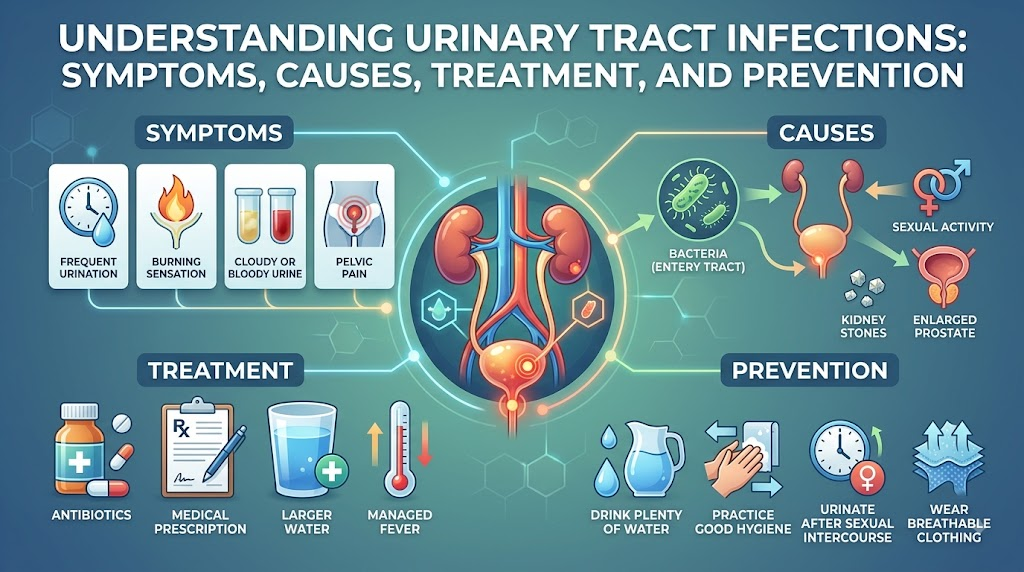
Introduction
Urinary tract infections (UTIs) are among the most common bacterial infections worldwide. Virtually anyone can develop a UTI, though women experience them at significantly higher rates due to anatomical differences. The experience of a UTI can range from mild, irritating bladder discomfort to severe illness if an infection spreads up into the kidneys.Navigating health concerns requires access to clear, reliable, and evidence-based information. Patient-focused platforms like ASKDOCTORLIVE offer general health education resources that help individuals understand common body signals, prepare for discussions with their healthcare providers, and make informed lifestyle decisions. This guide will walk you through the fundamentals of urinary tract infections, helping you understand how they occur, how doctors diagnose and treat them, and how you can protect your urinary health.
What Is a Urinary Tract Infection?
A urinary tract infection occurs when microscopic organisms—most commonly bacteria—enter the urinary tract, attach to its lining, and begin to multiply.
To understand how a UTI develops, it helps to look at the main components of the human urinary system:
               [ Kidneys ] (Filter waste & produce urine)
                    │
                    ▼
               [ Ureters ] (Tubes carrying urine downward)
                    │
                    ▼
               [ Bladder ] (Stores urine until full)
                    │
                    ▼
               [ Urethra ] (Tube releasing urine outside body)
- Kidneys: Two bean-shaped organs that filter waste products and excess fluid from the blood to produce urine.
- Ureters: Thin muscular tubes that carry urine down from each kidney into the bladder.
- Bladder: A hollow, muscular organ that stores urine until it is convenient to urinate.
- Urethra: The single tube that carries urine from the bladder to the outside of the body.
Under normal conditions, the urinary tract is designed to resist bacterial colonization. Urine flow helps flush out microbes naturally, and the lining of the bladder has defense mechanisms to prevent bacteria from sticking. However, when bacteria (most frequently Escherichia coli, which normally live harmlessly in the digestive tract) manage to enter through the urethra, they can cause localized inflammation and infection.
Types of Urinary Tract Infections
UTIs are generally categorized by where the infection is located within the urinary system. The location of the infection plays a major role in how severe the symptoms are and how it is managed.
                  ┌─────────────────────────────────────────┐
                  │       Urinary Tract Infections          │
                  └────────────────────┬────────────────────┘
                                       │
            ┌──────────────────────────┴──────────────────────────┐
            ▼                                                     ▼
┌───────────────────────┐                             ┌───────────────────────┐
│ Lower Urinary Tract   │                             │ Upper Urinary Tract   │
└───────────┬───────────┘                             └───────────┬───────────┘
            │                                                     │
   ┌────────┴────────┐                                           ▼
   ▼                 ▼                                 [ Pyelonephritis ]
[ Urethritis ]  [ Cystitis ]                           (Kidney Infection)
 (Urethra)       (Bladder)                             *Requires urgent care*
Urethritis (Infection of the Urethra)
Urethritis is an inflammation or infection limited to the urethra, the tube conducting urine out of the body. It often causes burning or pain during urination and may sometimes produce localized discharge. Urethritis can be caused by typical UTI bacteria or by organisms associated with sexually transmitted infections (STIs).
Cystitis (Bladder Infection)
Cystitis is an infection of the bladder and is by far the most common type of UTI. When people refer to a “standard UTI,” they are usually talking about acute bacterial cystitis. Symptoms include lower abdominal pressure, frequent urges to urinate, and a burning sensation while urinating. While uncomfortable, uncomplicated cystitis is generally straightforward to treat when evaluated promptly by a medical professional.
Pyelonephritis (Kidney Infection)
Pyelonephritis occurs when bacteria travel upward from the bladder through the ureters and take root in one or both kidneys. Unlike a localized bladder infection, a kidney infection is an upper urinary tract infection that can cause systemic illness. It can potentially damage kidney tissue or spread to the bloodstream (a dangerous condition called sepsis) if left untreated. Suspected kidney infections always require prompt medical evaluation and treatment.
Common UTI Symptoms
The symptoms of a lower urinary tract infection (cystitis or urethritis) can vary from person to person, but they often follow a recognizable pattern.
Common Lower UTI Symptoms:
 • Burning or pain during urination (Dysuria)
 • Persistent, intense urge to urinate (Urgency)
 • Frequent passing of small amounts of urine (Frequency)
 • Pressure or cramping in the lower abdomen or pelvis
 • Urine that appears cloudy or murky
 • Urine with a unusually strong or pungent odor
 • Traces of blood in the urine (Hematuria - pink, red, or cola-colored urine)
It is worth noting that a person may experience only one or two of these symptoms, while others may experience several at once.
Symptoms of a Possible Kidney Infection (Pyelonephritis)
If bacteria move beyond the bladder into the upper urinary tract, symptoms often change from localized urinary discomfort to systemic signs of illness. Recognizing these warning signals is crucial for getting medical care quickly.
+--------------------------------------------------------------------+
|                WARNING SIGNS OF A KIDNEY INFECTION                 |
+--------------------------------------------------------------------+
|  • High fever and sudden, shaking chills                           |
|  • Back, flank (side), or groin pain (usually on one side)        |
|  • Persistent nausea and vomiting                                  |
|  • Confusion, disorientation, or extreme fatigue (esp. older adults)|
|  • General feeling of severe illness alongside bladder symptoms    |
+--------------------------------------------------------------------+
Important Note: If you experience urinary symptoms along with a fever, chills, nausea, vomiting, or severe back or side pain, seek medical evaluation right away. These symptoms suggest that the infection may have reached your kidneys.
What Causes UTIs?
Urinary tract infections occur when bacteria overcome your body’s natural defenses in the urinary system.
┌─────────────────────────────────────────────────────────────────┐
│                     How a UTI Develops                          │
├───────────────────┬─────────────────────────┬───────────────────┤
│ 1. Migration      │ 2. Colonization         │ 3. Infection      │
├───────────────────┼─────────────────────────┼───────────────────┤
│ Microbes (often   │ Bacteria attach to the  │ Bacteria multiply,│
│ E. coli from the  │ lining of the urethra   │ causing inflammation│
│ digestive tract)  │ or bladder, evading     │ and localized     │
│ reach the urethra │ local immune defenses   │ symptoms          │
└───────────────────┴─────────────────────────┴───────────────────┘
Several key factors can contribute to bacterial entry and multiplication:
- Bacterial Entry: The vast majority of UTIs are caused by Escherichia coli (E. coli), bacteria normally found in the gastrointestinal tract. Bacteria can be transferred from the anal area to the urethral opening during wiping, hygiene routines, or physical contact.
- Anatomical Factors: The female urethra is significantly shorter than the male urethra and is located close to both the vagina and anus. This short distance allows bacteria to reach the bladder much more easily.
- Sexual Activity: Physical motion during sexual activity can push bacteria into the urethra.
- Incomplete Bladder Emptying: Urine left standing in the bladder acts as a growth medium for bacteria. Conditions that prevent complete emptying—such as urinary retention, neurological disorders, or structural blockages—increase infection risks.
- Urinary Tract Obstructions: Kidney stones, an enlarged prostate in men, or structural narrowings can block urine flow and trap bacteria.
- Urinary Catheter Use: Tubes inserted into the bladder to drain urine provide a direct pathway for bacteria to enter the urinary tract.
- Hormonal Changes: Reduced estrogen levels during and after menopause can alter the natural bacterial flora and lining of the urinary tract, making it easier for harmful bacteria to thrive.
Contrary to a common misconception, having a UTI does not mean a person has poor hygiene. While proper hygiene practices help, many physiological and biological factors play a role in whether an infection develops.
Who Is More Likely to Develop a UTI?
While anyone can contract a urinary tract infection, certain groups are at higher risk due to biological, physical, or life-stage factors.
┌───────────────────────────────────────────────────────────────────────┐
│                        Population Differences                         │
├───────────────────┬───────────────────┬───────────────┬───────────────┤
│ Women             │ Men               │ Older Adults  │ Pregnant      │
├───────────────────┼───────────────────┼───────────────┼───────────────┤
│ • Shorter urethra │ • Less common     │ • Atypical    │ • Hormonal    │
│ • Hormonal shifts │ • Often linked to │   symptoms    │   changes     │
│ • Higher overall  │   prostate or     │ • Confusion   │ • Needs care  │
│   frequency       │   blockage        │   risk        │   promptly    │
└───────────────────┴───────────────────┴───────────────┴───────────────┘
Women
Women are significantly more prone to UTIs than men. Research indicates that up to half of all women will experience at least one UTI during their lifetime. The combination of a shorter urethra and hormonal shifts during menstruation, pregnancy, and menopause contributes to this higher susceptibility.
Men
UTIs are less common in young and middle-aged men. When a UTI occurs in a man, it is often classified as a complicated infection, meaning it may involve an underlying issue such as an enlarged prostate (benign prostatic hyperplasia), structural narrowing, or a history of catheter use. Male UTIs generally warrant a complete evaluation by a healthcare provider.
Older Adults
In older adults, UTIs may present differently than in younger individuals. Classic symptoms like burning or frequency may be mild or absent. Instead, older adults might experience general weakness, sudden changes in mobility, incontinence, or acute mental status changes such as confusion or disorientation.
Pregnant Individuals
Hormonal shifts during pregnancy relax the muscular tone of the ureters, while the expanding uterus places physical pressure on the bladder. This can slow urine flow and make it easier for bacteria to travel up toward the kidneys. Because untreated UTIs during pregnancy can increase the risk of premature delivery or low birth weight, urinary screening is a routine part of prenatal care.
Children
UTIs in infants and young children can be harder to spot. Symptoms may include unexplained fever, irritability, poor feeding, vomiting, or a regression in potty training. Children with UTIs often require pediatric evaluation to check for underlying structural variations in the urinary system, such as vesicoureteral reflux (where urine flows backward from the bladder to the kidneys).
Summary of UTI Risk Factors
Understanding risk factors can help you recognize personal vulnerabilities and take proactive preventive steps:
- Gender: Female anatomy creates a shorter path to the bladder.
- Sexual Activity: Frequent or recent sexual intercourse can introduce bacteria into the urethra.
- Use of Certain Birth Control Methods: Diaphragms and spermicidal agents can disrupt healthy vaginal flora and increase bacterial growth.
- Menopause: Reduced circulating estrogen alters the urinary tract’s mucosal linings and protective microflora.
- Urinary System Blockages: Kidney stones, structural abnormalities, or an enlarged prostate that hinder urine drainage.
- Suppressed Immune System: Conditions like diabetes or medications that suppress immune function weaken the body’s natural defenses against bacteria.
- Catheterization: Long-term or recent use of a urinary catheter.
- Previous UTIs: Having had one UTI increases the statistical risk of experiencing another in the future.
How Are UTIs Diagnosed?
If you suspect you have a UTI, a formal medical evaluation is essential to confirm the diagnosis, rule out other conditions, and identify the appropriate treatment.
Diagnostic Evaluation Steps:
 [ 1. Symptom & History Review ] ──> [ 2. Urinalysis ] ──> [ 3. Urine Culture ] ──> [ 4. Imaging (If needed) ]
Medical History & Symptom Review
Your healthcare provider will start by asking about your specific symptoms, how long you’ve had them, your personal medical history, any recent sexual activity, and any prior UTIs.
Urinalysis
A rapid laboratory test performed on a “clean-catch” midstream urine sample. The sample is examined under a microscope and tested with dipsticks to look for:
- White Blood Cells (Leukocytes): Indicates an active immune response and inflammation in the urinary tract.
- Red Blood Cells (Erythrocytes): Points to microscopic bleeding caused by irritation.
- Nitrites: Produced when certain types of bacteria convert nitrates into nitrites in the bladder.
Urine Culture and Sensitivity
While a urinalysis provides quick clues, a urine culture grows the bacteria in a lab setting to identify the exact species causing the infection. Sensitivity testing determines which specific antibiotics will effectively kill that strain. Culture results are particularly valuable for recurrent infections, complicated UTIs, or when initial antibiotic treatments fail to clear symptoms.
Additional Testing (For Complex Cases)
For individuals with recurrent UTIs, suspected structural abnormalities, or unresolved kidney infections, doctors may recommend imaging studies:
- Ultrasound or CT Scan: Provides detailed images of the kidneys, ureters, and bladder to check for stones, blockages, or structural issues.
- Cystoscopy: A procedure where a doctor uses a thin, lighted tube with a camera to look inside the urethra and bladder.
How Doctors Treat UTIs
Bacterial urinary tract infections are treated primarily with targeted antibiotics. These medications work by killing the bacteria or stopping them from multiplying, helping clear the infection and relieve symptoms.
┌─────────────────────────────────────────────────────────────────┐
│                    Principles of UTI Treatment                  │
├───────────────────┬─────────────────────────┬───────────────────┤
│ Targeted Meds     │ Full Duration           │ No Sharing        │
├───────────────────┼─────────────────────────┼───────────────────┤
│ Prescribed based  │ Complete the entire     │ Never use leftover│
│ on symptoms, age, │ regimen even if feeling │ antibiotics or    │
│ and lab results   │ 100% better early       │ someone else's    │
└───────────────────┴─────────────────────────┴───────────────────┘
Personalized Antibiotic Regimens
There is no single “best” antibiotic for every UTI. The choice of medication, form, and duration depends on:
- The type of infection (bladder vs. kidney).
- Whether the UTI is considered uncomplicated or complicated.
- Your allergy history, age, kidney function, and pregnancy status.
- Local bacterial resistance patterns or specific urine culture results.
Completing the Prescribed Course
One of the most important rules of antibiotic treatment is to finish the full course of medication exactly as prescribed, even if your symptoms completely resolve after a day or two. Stopping treatment early can leave surviving, resilient bacteria behind, increasing the risk of the infection returning—potentially stronger and more resistant to antibiotics.
Why You Should Never Self-Treat with Leftover Antibiotics
It can be tempting to reach for leftover antibiotics from a previous illness when urinary discomfort strikes, but self-medicating without a medical evaluation carries significant risks:
- Wrong Antibiotic Selection: Different bacteria respond to different classes of antibiotics. Taking an incorrect drug won’t cure your infection and delays proper treatment.
- Inadequate Dosing: Leftover supplies rarely contain a full, effective course of treatment, increasing the chance of an incomplete recovery.
- Risk of Antibiotic Resistance: Misusing antibiotics helps bacteria develop resistance, making future infections much harder to treat.
- Masking Underlying Conditions: Symptoms that feel like a basic UTI could actually stem from a kidney issue, a sexually transmitted infection, or vaginal inflammation—conditions that require entirely different medical approaches.
Can a UTI Go Away on Its Own?
You may wonder whether a mild UTI will simply clear up if you drink extra fluids and rest.
While the body’s immune system can occasionally clear low levels of bacteria in very mild cases, a confirmed bacterial urinary tract infection should generally be evaluated and treated by a healthcare professional.
Leaving a bacterial infection untreated carries the risk of the bacteria migrating up the ureters into the kidneys. What begins as a minor, manageable bladder irritation can escalate into a serious kidney infection (pyelonephritis) that requires intravenous medications or hospitalization. If you suspect you have a UTI, seeking professional medical guidance is the safest path.
Supportive Care and Comfort Measures
While medical treatment with antibiotics is necessary to eliminate a bacterial UTI, home supportive care can help ease discomfort while your prescription takes effect.
Dos and Don'ts During UTI Recovery:
 ✔ DO drink plenty of water to help flush the urinary tract naturally.
 ✔ DO apply a warm heating pad to your lower abdomen to ease cramping.
 ✔ DO rest and allow your body time to heal.
 ✖ DON'T consume irritants like alcohol, heavy caffeine, or very spicy foods.
 ✖ DON'T rely on water or juice ALONE to cure an active bacterial infection.
- Stay Well-Hydrated: Drinking adequate amounts of water helps dilute your urine and encourages frequent urination, which aids in flushing bacteria out of your system.
- Use Soothing Heat: Placing a warm heating pad or warm water bottle over your lower abdomen can help soothe bladder pressure and muscle cramping.
- Avoid Urinary Irritants: While recovering, try to limit beverages and foods that can irritate the bladder lining, such as coffee, caffeinated teas, alcohol, carbonated drinks, citrus juices, and very spicy foods.
Cranberry Products and UTIs: Evidence vs. Myths
Cranberry juice and supplements are frequently discussed when talking about urinary health. It’s important to understand what the science says—and what it doesn’t—regarding cranberries and UTIs.
+--------------------------------------------------------------------+
|                CRANBERRY PRODUCTS: WHAT SCIENCE SAYS               |
+--------------------------------------------------------------------+
|  FOR PREVENTION: Proanthocyanidins (PACs) in cranberries can help  |
|  prevent E. coli from sticking to bladder walls in some people.    |
|                                                                    |
|  FOR TREATMENT: Cranberry products CANNOT cure an active bacterial │
|  infection. They do not replace prescribed antibiotics.             |
+--------------------------------------------------------------------+
- The Mechanism: Cranberries contain compounds called proanthocyanidins (PACs). Laboratory studies show that PACs can help prevent E. coli bacteria from adhering to the cells lining the bladder wall.
- Prevention Potential: Some clinical studies suggest that daily cranberry supplements or unsweetened juice may help reduce the frequency of recurrent UTIs in certain individuals.
- Not a Treatment for Active UTIs: Cranberry juice cannot eradicate or cure an active, established bacterial infection. Relying on cranberry products instead of medical treatment can allow an infection to spread to the kidneys.
How to Prevent Urinary Tract Infections
Taking proactive steps to support your urinary health can significantly reduce your chances of developing a UTI or experiencing a recurrence.
┌─────────────────────────────────────────────────────────────────┐
│                     UTI Prevention Habits                       │
├───────────────────┬─────────────────────────┬───────────────────┤
│ Daily Habits      │ Hygiene Practices       │ Lifestyle Choices │
├───────────────────┼─────────────────────────┼───────────────────┤
│ • Drink water     │ • Wipe front-to-back    │ • Wear breathable │
│   consistently    │ • Urinate post-sex      │   cotton underwear│
│ • Don't hold in   │ • Avoid harsh vaginal   │ • Manage health   │
│   urine unnecessarily sprays or douches     │   conditions      │
└───────────────────┴─────────────────────────┴───────────────────┘
Practical Prevention Tips
- Maintain Good Hydration: Drink plenty of water throughout the day. Consistent fluid intake encourages regular urination, flushing out bacteria before they can settle.
- Urinate When You Feel the Need: Avoid holding your urine for long periods. Try to empty your bladder completely every few hours.
- Wipe Front to Back: After using the toilet, always wipe from front to back. This simple habit keeps rectal bacteria away from the urethra.
- Urinate After Sexual Activity: Emptying your bladder soon after intercourse helps flush away any bacteria that may have been introduced into the urethra during physical contact.
- Re-evaluate Hygiene Products: Avoid using harsh, scented soaps, bubble baths, feminine hygiene sprays, or douches around the genital area. These products can disrupt your natural bacterial balance and irritate the urethra.
- Choose Breathable Clothing: Wear cotton underwear and loose-fitting pants to keep the genital area dry and prevent moisture buildup, which can encourage bacterial growth.
- Review Birth Control Choices: If you experience frequent UTIs and use diaphragms or spermicides, talk with your doctor about alternative contraception options.
Recurrent UTIs: What You Need to Know
While a single UTI is an uncomfortable inconvenience, dealing with recurrent UTIs can be frustrating and disruptive to daily life.
Recurrent UTI Definition:
 • 2 or more infections within a 6-month period
   OR
 • 3 or more infections within a 12-month period
Why Do Recurrent UTIs Happen?
Recurrent infections can happen for several reasons:
- Reinfections: New infections caused by different strains of bacteria entering the urinary tract over time.
- Persisting Infections: The original infection was never fully cleared, often due to an incomplete course of antibiotics or bacterial resistance.
- Anatomical or Functional Factors: Structural variations in the urinary tract, incomplete bladder emptying, or kidney stones.
- Post-Menopausal Changes: Decreased estrogen levels alter protective vaginal flora (such as Lactobacilli), making room for harmful bacteria to thrive.
Medical Options for Recurrent UTIs
If you experience recurrent UTIs, your doctor may recommend a targeted evaluation to check for underlying causes. Depending on your situation, preventive strategies might include:
- Post-coital low-dose antibiotic therapy (taking a single preventive dose after sexual intercourse).
- A short course of self-directed antibiotic therapy at the first sign of confirmed symptoms.
- Topical vaginal estrogen cream for post-menopausal individuals.
- Targeted non-antibiotic supplements, such as D-mannose or standardized cranberry extracts, under medical supervision.
Special Considerations for Specific Groups
UTIs During Pregnancy
Because pregnant individuals face higher risks of kidney infections and associated pregnancy complications, urinary symptoms should never be ignored. Prenatal visits often include routine urine screening to catch asymptomatic bacteriuria (bacteria present in the urine without symptoms) early. If a UTI is confirmed during pregnancy, doctors prescribe pregnancy-safe antibiotics to clear the infection safely.
UTIs in Men
Because male anatomy makes bacterial entry into the bladder less likely, a UTI in a man often points to an underlying factor—such as prostate inflammation (prostatitis), an enlarged prostate, or urinary tract stones. Evaluation typically includes assessing prostate health and, in some cases, imaging to ensure urine drains properly.
UTIs in Children
Urinary infections in pediatric patients require careful evaluation by a pediatrician or family doctor. In addition to clearing the infection, doctors check whether structural variations (like vesicoureteral reflux) are present to protect long-term kidney health.
UTIs in Older Adults
Because older adults may not present with classic urinary symptoms, family members and caregivers should watch for subtle changes, such as sudden confusion, agitation, lethargy, or unsteadiness. However, it is important to note that a positive urine test in an older adult without active symptoms does not always mean a UTI is present—a condition called asymptomatic bacteriuria, which often does not require antibiotic treatment.
Sex and Urinary Tract Infections
It is common to wonder about the relationship between sexual intimacy and urinary tract health.
┌────────────────────────────────────────────────────────────────────────┐
│                         UTI vs. STI Differences                        │
├───────────────────┬───────────────────────────┬────────────────────────┤
│ Feature           │ Urinary Tract Infection   │ Sexually Transmitted   │
│                   │ (UTI)                     │ Infection (STI)        │
├───────────────────┼───────────────────────────┼────────────────────────┤
│ Contagious via    │ No. Not classified as an  │ Yes. Transmitted via   │
│ Intercourse?      │ STI.                      │ sexual contact.        │
├───────────────────┼───────────────────────────┼────────────────────────┤
│ Primary Origin    │ Digestive bacteria        │ Specific viral or      │
│                   │ entering urethra.         │ bacterial pathogens.   │
├───────────────────┼───────────────────────────┼────────────────────────┤
│ Typical Discharge │ Unlikely / Minimal.       │ Common (vaginal or     │
│                   │                           │ penile discharge).     │
├───────────────────┼───────────────────────────┼────────────────────────┤
│ Testing Method    │ Standard Urinalysis &     │ Specific STI Swabs or  │
│                   │ Urine Culture.            │ Targeted DNA Tests.    │
└───────────────────┴───────────────────────────┴────────────────────────┘
- UTIs Are Not STIs: A urinary tract infection is caused by digestive bacteria entering the urinary tract, not by a sexually transmitted pathogen. You cannot “catch” a standard UTI from your partner in the way you might contract an STI.
- Sex as a Risk Factor: The mechanical motion of sexual intercourse can push naturally occurring bacteria near the urethra upward into the bladder.
- Overlapping Symptoms: Some STIs (such as chlamydia, gonorrhea, or herpes) can cause burning during urination or urethral discomfort that mimics a UTI. If your symptoms include unusual vaginal or penile discharge, sores, or follow a new sexual contact, inform your healthcare provider so they can order appropriate testing.
When to Seek Urgent Medical Care
While many lower UTIs can be managed with a standard office visit, certain red-flag symptoms require immediate medical attention:
[ ALERT ] Seek Urgent Medical Evaluation If You Experience:
 • High fever, sudden severe chills, or uncontrollable shaking
 • Pain in your upper back, side (flank), or below your ribs
 • Persistent nausea, vomiting, or inability to keep fluids down
 • Visible blood or clots in your urine
 • Symptoms occurring while pregnant
 • Urinary symptoms in a young child or infant
 • Rapidly worsening symptoms despite starting antibiotics
 • Confusion, severe lethargy, or disorientation in an older adult
Common UTI Myths vs. Facts
┌─────────────────────────────────────────────────────────────────────────┐
│                           MYTHS VS. FACTS                               │
├───────────────────────────────────────────┬─────────────────────────────┤
│ MYTH                                      │ FACT                        │
├───────────────────────────────────────────┼─────────────────────────────┤
│ "UTIs are always caused by poor personal  │ "Multiple factors like      │
│  hygiene."                                │  anatomy cause UTIs."       │
├───────────────────────────────────────────┼─────────────────────────────┤
│ "Drinking gallons of water can cure an    │ "Hydration aids comfort but │
│  active bacterial infection."             │  won't replace antibiotics."│
├───────────────────────────────────────────┼─────────────────────────────┤
│ "Cranberry juice kills UTI bacteria."     │ "Cranberries may help avoid │
│                                           │  attachment, not cure."     │
├───────────────────────────────────────────┼─────────────────────────────┤
│ "It's safe to take a friend's leftover    │ "Misusing antibiotics is    │
│  antibiotics for UTI symptoms."           │  ineffective and dangerous."│
├───────────────────────────────────────────┼─────────────────────────────┤
│ "All burning urination is a simple        │ "STIs, kidney stones, and   │
│  bladder infection."                      │  irritation show same signs."│
└───────────────────────────────────────────┴─────────────────────────────┘
Common Mistakes People Make with UTIs
Avoiding these frequent missteps can lead to smoother recoveries and better overall health outcomes:
- Ignoring Early Symptoms: Hoping a UTI will simply fade away without medical evaluation can allow bacteria to travel to your kidneys.
- Stopping Antibiotics Early: Discontinuing your prescription as soon as you feel better allows resilient bacteria to survive and multiply, setting the stage for a relapse.
- Using Leftover Medications: Self-treating with unprescribed or leftover antibiotics risks choosing the wrong drug and contributes to antibiotic resistance.
- Relying Solely on Home Remedies: Using cranberry juice or herbal teas as a replacement for proper medical evaluation when dealing with an active bacterial infection.
- Dismissing Recurrent Episodes: Treating repeated UTIs as isolated events rather than seeking an evaluation for underlying causes.
- Ignoring UTI Symptoms in Men or Pregnant Individuals: Assuming male or gestational urinary symptoms are simple, minor issues that don’t need prompt clinical attention.
How ASKDOCTORLIVE Can Support Your Health Journey
Understanding common health issues empowers you to take better control of your wellness. Patient-education platforms like ASKDOCTORLIVE.COM offer general medical articles and resources to help you:
- Learn About Symptoms: Better understand the signs your body sends and know when it’s time to seek professional medical care.
- Prepare for Doctor Visits: Formulate thoughtful, effective questions before walking into your healthcare provider’s office.
- Explore Preventive Habits: Learn about evidence-based lifestyle changes and self-care strategies to support long-term urinary, digestive, and cardiovascular health.
- Stay Informed: Access clear, easy-to-understand health information designed for everyday readers.
Frequently Asked Questions (FAQs)
1.What is a urinary tract infection (UTI)?
A urinary tract infection is an infection caused by microbes—most commonly bacteria like E. coli—that enter and multiply within the urinary system, which includes the urethra, bladder, ureters, and kidneys.
2.What are the most common symptoms of a UTI?
The classic symptoms of a lower urinary tract infection include a strong, burning sensation during urination, a persistent urge to urinate, passing small amounts of urine frequently, lower abdominal pain or pressure, and urine that appears cloudy, bloody, or strong-smelling.
3.What causes a UTI?
UTIs are typically caused by bacteria from the gastrointestinal tract making their way into the urethra and traveling up into the bladder. Factors like female anatomy, sexual activity, urinary blockages, catheter use, and hormonal changes during menopause increase this risk.
4.How is a UTI diagnosed?
Doctors diagnose UTIs by assessing your medical history and symptoms, followed by laboratory testing of a midstream urine sample (urinalysis). A urine culture may also be performed to identify the specific bacteria and select the most effective antibiotic.
5.How are UTIs treated?
Bacterial UTIs are treated with targeted prescription antibiotics. The choice of medication and duration depend on your health history, age, the specific bacteria involved, and whether the infection is in the bladder or kidneys.
6.Can a UTI go away without antibiotics?
While mild irritation may occasionally resolve with increased fluid intake, confirmed bacterial UTIs generally require antibiotic treatment. Leaving a UTI untreated increases the risk of the infection spreading up to the kidneys.
7.Can drinking large amounts of water cure a UTI?
Drinking water helps flush out the urinary tract and reduce discomfort, but hydration alone cannot kill an established bacterial infection. It serves as a helpful supportive measure alongside prescribed antibiotic treatment.
8.Are cranberry products effective for UTIs?
Cranberry products contain compounds that may help prevent bacteria from sticking to the bladder wall, which can aid in preventing recurrent UTIs for some people. However, cranberries cannot cure an active bacterial infection and should not replace antibiotics.
9.How can I prevent urinary tract infections?
Preventive steps include staying well-hydrated, urinating when you feel the urge, wiping from front to back, urinating soon after sexual activity, avoiding irritating scented genital products, and wearing breathable cotton underwear.
10.What is the difference between a bladder infection and a kidney infection?
A bladder infection (cystitis) is a lower urinary tract infection characterized by localized symptoms like burning urination and frequency. A kidney infection (pyelonephritis) is a severe upper urinary tract infection that causes systemic symptoms such as high fever, chills, flank/back pain, nausea, and vomiting.
11.Can men get UTIs?
Yes, men can get UTIs, though they are less common due to male anatomy. When men do develop UTIs, they are often linked to underlying factors such as an enlarged prostate or structural blockage and warrant medical evaluation.
12.Are UTIs common during pregnancy?
UTIs are more common during pregnancy due to hormonal shifts and physical pressure on the urinary tract. Because untreated UTIs during pregnancy carry higher risks of complications, prompt evaluation and pregnancy-safe antibiotics are essential.
13.Can a UTI be confused with an STI?
Yes. Conditions like urethritis caused by certain sexually transmitted infections (such as chlamydia or gonorrhea) can cause burning during urination and urethral discomfort that feels similar to a UTI. Specific testing helps differentiate between the two.
14.Why do I keep getting recurrent UTIs?
Recurrent UTIs (two or more in six months) can stem from lingering bacteria, new bacterial exposures, anatomical variations, kidney stones, or hormonal changes after menopause. A healthcare provider can help identify contributing factors and suggest preventive strategies.
15.When should I see a doctor for UTI symptoms?
You should contact a doctor as soon as you experience persistent urinary pain, burning, urgency, or cloudy urine. Seek urgent medical care if you develop high fever, chills, back/side pain, nausea, vomiting, or if you are pregnant.
Final Conclusion
Urinary tract infections are common and uncomfortable, but understanding how they develop makes them much easier to recognize, manage, and prevent. While localized bladder infections usually respond well to prompt, appropriate antibiotic treatment, ignoring warning signs can allow bacteria to travel to the kidneys, leading to more severe health complications.