Introduction
Sleep affects physical health, emotional wellbeing, concentration, energy, and everyday functioning in profound ways. When you experience restful sleep, your mind and body can recover, repair, and prepare for the demands of the day ahead.Online healthcare has emerged as a convenient starting point for discussing non-emergency sleep concerns. Platforms like AskDoctorLive can support patients by providing access to online healthcare guidance, helping them discuss symptoms, understand possible next steps, and determine when additional evaluation may be appropriate.
What Are Sleep Disorders?
Sleep disorders are medical conditions that disrupt your normal sleep patterns, affecting your overall sleep duration, sleep quality, and ability to function during the day. Healthy sleep involves cycling through different stages, including deep sleep and dream sleep (REM sleep), which are essential for physical and mental restoration.When a sleep disorder is present, these natural cycles can become fragmented or interrupted. This can affect your ability to fall asleep, remain asleep, or maintain a consistent sleep timing.Consequently, daytime alertness suffers, leading to fatigue and diminished concentration. It is important to distinguish between occasional, stress-related sleep disruption and a persistent sleep disorder that requires structured medical evaluation.
Common Types of Sleep Disorders
Sleep concerns encompass a wide variety of conditions, each affecting the body differently. Medical professionals categorize these issues based on their specific characteristics and underlying mechanisms.
Common categories include:
- Insomnia: Characterized by persistent difficulty falling asleep, staying asleep, or obtaining restorative sleep despite having adequate opportunity to rest.
- Sleep Apnea: A condition involving repeated breathing interruptions during sleep that can significantly impact oxygen levels and may require specialized evaluation.
- Restless Legs Syndrome: Involves uncomfortable physical sensations in the legs and an irresistible urge to move them, which typically worsens during periods of rest or at night.
- Circadian Rhythm Sleep-Wake Disorders: Mismatches between a person’s internal biological clock and their external environment, affecting sleep timing.
- Parasomnias: Unusual behaviors, movements, or experiences that occur during sleep, such as sleepwalking or confusional arousals.
- Excessive Daytime Sleepiness: Persistent daytime fatigue and sleepiness that can stem from multiple possible medical, behavioral, or lifestyle causes.
Online consultations cannot diagnose every sleep disorder remotely, but they offer a valuable way to discuss these categories and plan appropriate next steps.
Common Symptoms of Sleep Problems
Recognizing how sleep difficulties manifest in daily life is an important step toward finding relief. Sleep problems rarely present with just a single sign; instead, they often involve a combination of nighttime and daytime symptoms.
Common symptoms include:
- Difficulty falling asleep when you first go to bed
- Frequent nighttime awakenings that disrupt your rest
- Waking up too early and being unable to fall back asleep
- Feeling unrefreshed and exhausted after a full night in bed
- Persistent daytime fatigue that lingers throughout the day
- Excessive sleepiness that makes it hard to stay awake during routine tasks
- Difficulty concentrating, focusing, or remembering details
- Increased irritability, mood changes, or emotional sensitivity
- Morning headaches associated with poor or disrupted sleep
- Loud, chronic snoring or witnessed pauses in breathing during sleep
- Unusual nighttime behaviors or restless movements
These symptoms can have many different causes, ranging from lifestyle factors to underlying medical conditions.
When Should Sleep Problems Be Discussed With a Doctor?
While an occasional restless night is normal, certain patterns suggest that professional guidance is warranted. Recognizing when to seek help can prevent minor sleep issues from becoming chronic concerns.
You should consider discussing your sleep with a doctor if you experience:
- Persistent sleep difficulties that last for weeks or longer
- Sleep problems that begin to affect your work performance, studies, or relationships
- Daytime sleepiness that interferes with daily activities or driving safety
- Frequent nighttime awakenings that leave you drained
- Loud or persistent snoring accompanied by daytime fatigue
- Witnessed pauses in breathing during sleep reported by a partner
- Morning headaches linked with poor sleep quality
- Recurrent, disruptive nighttime behaviors
- Sleep problems that persist despite adopting healthy sleep habits
- A growing dependence on sleep medicines or substances just to get through the night
Professional assessment helps uncover the root causes of these patterns.
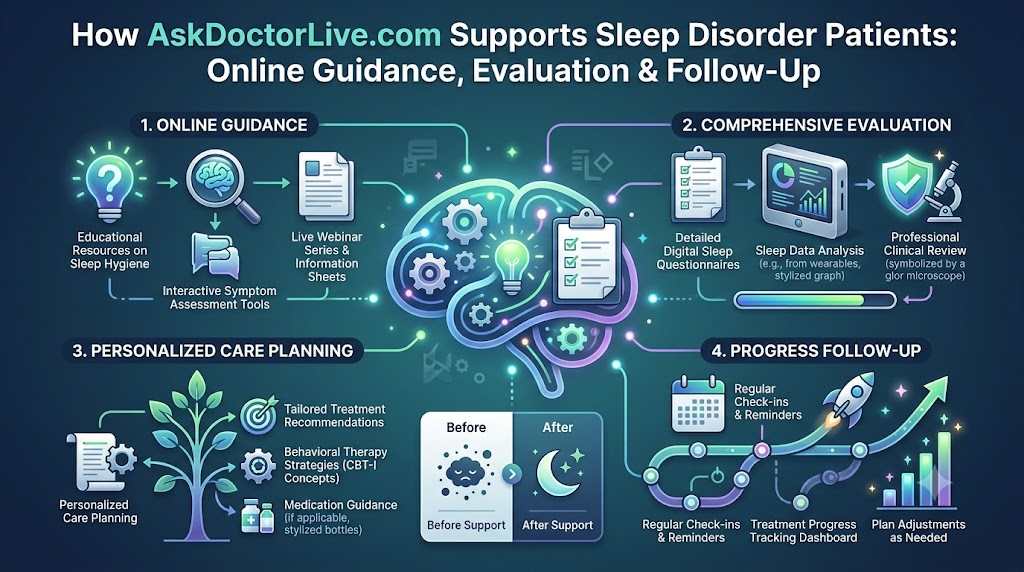
How AskDoctorLive Supports Sleep Disorder Patients
Online healthcare platforms fulfill a specific, supportive role in modern medicine. AskDoctorLive.com functions as an online healthcare and medical-information platform that connects patients with qualified professionals for non-emergency guidance.
The platform supports patients by facilitating:
- Initial discussions of persistent sleep concerns and worries
- Detailed reviews of your symptom history and timeline
- Conversations about lifestyle, work schedules, and sleep habits
- General health guidance and education regarding sleep hygiene
- Reviews of relevant personal medical information or previous records
- Answers to questions about persistent sleep symptoms
- Follow-up consultations to track symptom progress over time
- Guidance on whether an in-person physical evaluation is necessary
- Preparation support for upcoming specialist appointments
While online consultations provide valuable education and direction, they do not replace comprehensive in-person testing or specialized sleep studies.
What Patients Can Discuss During an Online Sleep Consultation
Preparing for a virtual visit involves knowing what topics are appropriate to cover with a healthcare professional. An online consultation offers a structured environment to review your sleep profile in detail.
You can discuss:
- Your typical sleep schedule, bedtime, and wake-up time
- Specific difficulties falling asleep or staying asleep
- The frequency of nighttime awakenings or early morning waking
- The degree of daytime fatigue and its impact on your routine
- Presence of snoring, gasping, or choking sensations at night
- Your sleep environment, noise levels, and comfort factors
- Work schedules, shift work, and demanding lifestyle stressors
- Caffeine, alcohol, and nicotine habits
- Current prescription medicines, over-the-counter products, and supplements
- Previous sleep-related evaluations or treatments you have tried
- Other coexisting health conditions that might influence rest
Providing complete and accurate information helps the clinician offer the most relevant guidance.
Preparing for an AskDoctorLive Consultation
Taking a few moments to organize your thoughts before a virtual visit ensures you make the most of your time with the doctor.
Consider using this practical preparation checklist:
- Write down your main concern: Identify the primary sleep issue that prompted the visit.
- Record symptom onset: Note when the sleep problems first started and how they have evolved.
- Track timings: Write down your usual bedtime, wake time, and estimated sleep latency.
- Note awakenings: Keep track of how often you wake up during the night.
- Evaluate daytime impact: Note instances of excessive daytime sleepiness or concentration issues.
- Document nighttime events: Write down any observations about snoring or unusual movements.
- List medications: Prepare a comprehensive list of all current medicines, vitamins, and supplements.
- Gather records: Keep any relevant previous medical reports accessible.
- Prepare questions: Write down specific questions you want to ask the doctor.
- Optimize your space: Choose a quiet, private environment with good lighting.
- Test your setup: Check your internet connection, microphone, and device camera beforehand.
The Role of a Sleep Diary
A sleep diary is a simple yet powerful tool used to track your daily sleep patterns over a period of one to two weeks. It helps remove guesswork by providing concrete data for your healthcare discussions.
When maintaining a sleep diary, you should consistently record:
- The exact time you went to bed and attempted to sleep
- Your estimated time it took to fall asleep
- The number and duration of any nighttime awakenings
- Your final wake-up time in the morning
- Any daytime naps, including their length
- Subjective ratings of your sleep quality
- Consumption of caffeine, alcohol, and heavy meals near bedtime
- Timing and intensity of physical exercise
- Major schedule changes or emotional stressors
While a sleep diary provides invaluable background information for your doctor, it does not independently diagnose a sleep disorder.
Table 1 – Sleep Concerns and Possible Care Pathways
| Sleep Concern | What Patients May Discuss Online | When Additional Evaluation May Be Needed |
| Occasional difficulty sleeping | Stressors, sleep hygiene, bedtime routines | If sleeplessness becomes chronic and unmanageable |
| Persistent insomnia symptoms | Sleep onset struggles, nighttime awakenings | When lifestyle adjustments fail to improve sleep |
| Daytime sleepiness | Fatigue patterns, daily impact, sleep duration | If sleepiness impairs driving or daily safety |
| Snoring | Snoring volume, sleep partner observations | When accompanied by daytime exhaustion |
| Possible sleep apnea symptoms | Witnessed breathing pauses, morning headaches | When physical exam or overnight testing is indicated |
| Restless legs symptoms | Evening limb discomfort, urge to move | When symptoms severely disrupt sleep initiation |
| Unusual nighttime behaviors | Parasomnia episodes, sudden awakenings | When physical safety or neurological causes are suspected |
| Irregular sleep schedule | Shift work challenges, circadian misalignment | When structured schedule resets require specialist input |
How Doctors Evaluate Sleep Problems
When you seek medical evaluation for persistent sleep disturbances, clinicians follow a systematic approach to uncover the underlying causes.
The evaluation process typically involves:
- Taking a detailed medical history covering past illnesses and chronic conditions
- Reviewing a thorough sleep history, including duration, quality, and habits
- Assessing lifestyle factors, stress levels, and occupational demands
- Conducting a comprehensive medication review to check for sleep-disrupting agents
- Discussing mental and emotional wellbeing when relevant to sleep patterns
- Performing an in-person physical examination when airway or physical factors need assessment
- Reviewing completed sleep diaries to identify behavioral trends
- Utilizing standardized screening questionnaires to gauge symptom severity
- Recommending additional diagnostic testing or specialist referral when indicated
The exact evaluation path depends heavily on your unique presentation.
When a Sleep Study May Be Needed
In certain clinical scenarios, standard evaluations and online discussions are not sufficient to pinpoint the exact nature of a sleep problem. In these instances, doctors may recommend a formal sleep study.A sleep study (polysomnography) is a specialized diagnostic test that records your body’s physiological functions while you sleep. It monitors brain waves, eye movements, heart rate, breathing patterns, oxygen saturation, and body movements throughout the night.Doctors may recommend a sleep study to investigate suspected sleep apnea, periodic limb movement disorders, chronic unexplained insomnia, or parasomnias. Testing can sometimes be conducted via home-based sleep apnea testing devices in selected circumstances, though complex conditions require in-lab monitoring. Test selection always depends on your specific clinical circumstances.
Telemedicine and Sleep Disorder Care
Telemedicine offers unique advantages for individuals navigating sleep difficulties, provided its operational scope is well understood. Virtual care bridges the gap between everyday worries and formal in-person investigation.
Online consultations are particularly useful for:
- Conducting initial health discussions about non-emergency sleep concerns
- Reviewing symptom history, duration, and severity in a relaxed setting
- Assessing daily sleep habits and bedroom hygiene practices
- Holding structured follow-up consultations to discuss progress
- Reviewing completed sleep diaries and behavioral changes
- Discussing previous diagnostic reports or lab results
- Providing general lifestyle guidance and educational resources
- Helping patients decide whether an in-person evaluation is necessary
Virtual care provides an accessible starting point, but clinicians recognize that remote interactions cannot replace hands-on physical exams or specialized diagnostic testing.
When Online Consultation May Not Be Enough
While virtual care is valuable, certain clinical situations demand in-person medical attention and cannot be resolved through an online portal alone.
An in-person appointment is required when:
- A physical examination of the upper airway, neck, or lungs is necessary
- There is a strong clinical suspicion of sleep apnea requiring diagnostic testing
- Significant breathing concerns or oxygenation issues are present
- Severe daytime sleepiness creates immediate safety risks
- Unusual or potentially dangerous nighttime behaviors require neurological assessment
- Symptoms appear to be driven by an underlying physical illness requiring lab work
- Imaging studies or formal overnight sleep testing must be coordinated
- Persistent symptoms fail to improve despite initial lifestyle guidance
Online healthcare and in-person medical services complement each other to form a comprehensive care network.
Table 2 – Online Consultation vs In-Person Sleep Evaluation
| Factor | Online Consultation | In-Person Evaluation |
| Symptom discussion | Explain in detail | Explain in detail |
| Medical history | Review history | Review history |
| Physical examination | Limited scope | Fully available |
| Sleep diary review | Possible | Possible |
| Diagnostic testing | Limited capability | Available when appropriate |
| Sleep study coordination | May require referral | Can be coordinated through appropriate services |
| Follow-up | Often convenient | Available in clinic |
| Emergency care | Not appropriate | Appropriate through emergency services |
Sleep Hygiene and Healthy Sleep Habits
Practicing good sleep hygiene creates an optimal internal and environmental foundation for restorative rest. While healthy habits alone cannot cure an underlying sleep disorder, they are an essential component of overall sleep health.
Key practices include:
- Maintaining consistent sleep and wake times, even on weekends
- Creating a dark, quiet, and comfortably cool sleep environment
- Limiting stimulating activities, work, and intense discussions before bedtime
- Managing evening screen exposure by turning off phones and tablets
- Avoiding excessive caffeine, heavy meals, and nicotine late in the day
- Limiting alcohol consumption, as it disrupts sleep architecture later in the night
- Engaging in regular daytime physical activity to promote deeper rest
- Establishing relaxing wind-down routines, such as reading or gentle stretching
- Managing daytime naps carefully to avoid interfering with nighttime sleep
Sleep Problems and Mental Wellbeing
The relationship between sleep and emotional wellbeing is deeply interconnected and bidirectional. Emotional health heavily influences how well you sleep, and conversely, poor sleep profoundly affects your mood.When you experience chronic stress, worry, or tension, your nervous system remains hyper-aroused, making it difficult to transition into deep sleep. On the other hand, chronic sleep deprivation can heighten irritability, increase feelings of anxiety, and diminish your ability to cope with daily stressors.Conditions like anxiety and depression frequently coexist with sleep changes. When persistent sleep disturbances accompany mood changes, professional assessment is beneficial to address both aspects of health comprehensively.
Sleep Disorders in Different Age Groups
Sleep concerns manifest differently across various stages of life, reflecting unique developmental, physiological, and lifestyle factors.
Age-related differences include:
- Children: May experience bedtime resistance, night waking, sleep terrors, snoring due to enlarged tonsils, or behavioral issues stemming from insufficient rest.
- Adults: Frequently deal with stress-induced insomnia, irregular work schedules, sleep apnea symptoms, and lifestyle-related sleep debt.
- Older Adults: Often encounter shifts in circadian timing, increased nighttime awakenings, medication-related sleep issues, and a higher prevalence of coexisting health conditions that influence sleep quality.
Individual assessment is always essential because age alone does not explain persistent sleep disruption.
Common Mistakes Patients Make With Sleep Problems
When dealing with sleepless nights, well-intentioned individuals often make missteps that inadvertently prolong their discomfort.
Frequent mistakes include:
- Ignoring persistent symptoms and hoping they will resolve spontaneously
- Self-diagnosing complex conditions based on random internet searches
- Taking over-the-counter sleep aids or medications without medical guidance
- Changing prescribed medication regimens without professional advice
- Dismissing loud snoring or witnessed breathing pauses as harmless quirks
- Maintaining highly inconsistent sleep and wake schedules across the week
- Relying on alcohol as a sedative to help induce sleep
- Skipping recommended follow-up appointments after an initial consultation
- Failing to mention all active medications, herbal products, and supplements
- Assuming every sleep problem is simple insomnia without checking for other factors
Avoiding these pitfalls helps streamline your journey toward better rest.
Warning Signs Requiring Urgent Attention
Emergency Warning: Certain acute symptoms require immediate emergency medical evaluation rather than a routine online consultation or delayed appointment. Seek emergency medical services immediately if you experience:
- Severe breathing difficulty, choking sensations, or acute shortness of breath
- Significant chest pain, pressure, or discomfort
- Sudden loss of consciousness, fainting, or collapse
- Severe confusion, disorientation, or acute cognitive changes
- Dangerous, violent, or injurious behaviors associated with sleep episodes
- Sudden, severe neurological symptoms such as weakness or slurred speech
- Any situation that appears to be a life-threatening medical emergency
Emergency symptoms must always be handled through local emergency medical services or emergency departments.
How Follow-Up Supports Sleep Health
Follow-up care is a critical element of managing persistent sleep difficulties. Because sleep patterns shift over time and treatment strategies require monitoring, regular follow-ups ensure your care remains aligned with your health needs.
Effective follow-up supports:
- Reviewing changes in your symptom frequency and severity
- Analyzing new patterns recorded in your ongoing sleep diary
- Evaluating how your body responds to initial guidance or lifestyle adjustments
- Identifying any new or emerging symptoms that need attention
- Determining whether additional diagnostic testing or specialist referral is required
- Adjusting your care pathway safely under professional supervision
Consistent follow-up prevents minor unresolved issues from becoming chronic roadblocks.
How to Get the Most From an Online Sleep Consultation
Maximizing the value of a virtual doctor visit involves clear communication and active participation.
Practical tips to enhance your consultation include:
- Being completely honest about your sleep habits, caffeine use, and alcohol intake
- Describing your symptoms clearly, including when they occur and how long they last
- Explaining how sleep problems affect your daytime energy and work performance
- Mentioning all prescription drugs, over-the-counter products, and supplements you take
- Sharing relevant previous medical reports or test results
- Having your completed sleep diary available to reference during the call
- Asking the doctor what the recommended next steps should be
- Understanding clearly when an in-person physical evaluation is necessary
- Committing to attend all recommended follow-up appointments
Step-by-Step Sleep Care Journey With AskDoctorLive
Navigating sleep health through an online platform involves a logical, structured series of steps:
- Step 1: Identify and acknowledge your main sleep concern and its impact on your life.
- Step 2: Record your daily symptoms and track your rest patterns using a sleep diary.
- Step 3: Prepare your health information, medication list, and specific questions.
- Step 4: Book an appropriate online consultation through AskDoctorLive.com.
- Step 5: Discuss your sleep symptoms openly with the healthcare professional during the session.
- Step 6: Review possible next steps, educational resources, and lifestyle recommendations.
- Step 7: Complete any recommended in-person physical evaluations or diagnostic tests.
- Step 8: Follow up with your healthcare provider when advised to review progress.
- Step 9: Track changes in your sleep quality and daytime functioning over time.
- Step 10: Seek urgent emergency care immediately if emergency warning signs occur.
EXACTLY 15 FAQs
1.How does AskDoctorLive.com support sleep disorder patients?
AskDoctorLive.com connects patients with healthcare professionals for online medical guidance, symptom reviews, health education, and follow-up support.
2.Can I discuss insomnia with an online doctor?
Yes, you can discuss difficulties falling or staying asleep, explore potential contributing factors, and receive guidance on next steps.
3.Can an online doctor evaluate sleep problems?
An online doctor can review your symptom history and sleep habits, though comprehensive diagnosis may require in-person assessments.
4.Can telemedicine diagnose every sleep disorder?
No, telemedicine cannot diagnose complex sleep disorders that require physical examinations, laboratory work, or specialized sleep studies.
5.What information should I provide during an online sleep consultation?
You should share your sleep schedule, symptom duration, daytime fatigue levels, medication list, and lifestyle habits.
6.Should I keep a sleep diary before talking to a doctor?
Keeping a sleep diary helps organize your sleep patterns and provides useful background information for your healthcare consultation.
7.Can an online consultation help with persistent insomnia?
An online consultation can help you discuss persistent insomnia, explore lifestyle modifications, and determine if specialist referral is needed.
8.Can sleep apnea be evaluated through an online consultation?
An online consultation can help discuss symptoms like snoring or breathing pauses, but formal diagnosis requires physical evaluation and sleep testing.
9.When might I need a sleep study?
A sleep study may be recommended when doctors need to monitor physiological functions overnight to diagnose conditions like sleep apnea.
10.Can children receive online guidance for sleep concerns?
Parents can discuss child sleep habits online, though pediatric concerns often require direct in-person pediatric evaluation.
Conclusion
Sleep problems can stem from a wide variety of causes, and appropriate evaluation is essential when symptoms persist or begin to affect your daily life. Online healthcare platforms like AskDoctorLive.com support patients through online medical discussions, symptom reviews, health education, follow-up, and guidance about when additional in-person care may be appropriate.Telemedicine represents one valuable part of a broader healthcare journey and does not replace emergency care, physical examinations, diagnostic testing, or specialist evaluation when those measures are necessary. Seeking appropriate professional guidance early helps ensure you receive the right level of care for your unique health needs.