Introduction
Some people notice that they are not feeling like themselves but cannot explain why. They may lose interest in things they once enjoyed, feel tired most of the time, sleep differently, or find everyday tasks harder than before. These changes can sometimes be early signs of depression. Recognizing these changes early can make it easier to seek the right support. AskDoctorLive.com can help readers learn more about health and medical care. This article explains AskDoctorLive in simple language. It covers common symptoms, how depression is assessed, treatment options, everyday support, and ways family members can help someone who may be struggling.
What Is Depression?
Depression is a mental health condition that can affect a person’s mood, thoughts, body and everyday life. It is more than feeling sad after a difficult day or being disappointed about something.
Someone with depression may have a low mood for a long period and may lose interest in activities they normally enjoy. Changes in sleep, appetite, energy, concentration and confidence can also happen.
Depression does not look exactly the same in everyone. Some people may talk about feeling sad, while others mainly notice tiredness, irritability, low motivation or difficulty managing normal responsibilities.
Having one or two symptoms does not automatically mean someone has depression. A healthcare professional looks at the overall pattern, how long symptoms have been present and how much they affect daily life.
Early Signs of Depression
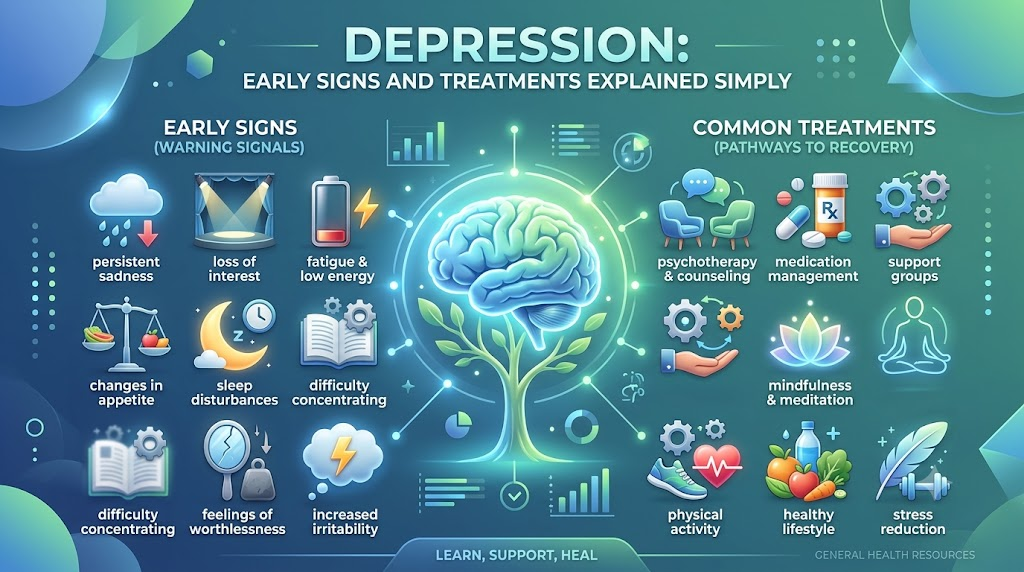
The early signs of depression can be emotional, physical, mental and social. They may appear slowly, which can make them difficult to notice at first.
Persistent Low Mood
A person may feel sad, empty, down or emotionally tired for much of the day. These feelings may continue even when there is no clear reason for them.
Loss of Interest or Pleasure
Things that once felt enjoyable may no longer feel interesting. A person may stop enjoying hobbies, spending time with friends or taking part in activities they normally look forward to.
Changes in Sleep
Depression can affect sleep in different ways. Some people have trouble falling asleep or wake up often, while others sleep much more than usual.
Changes in Appetite or Weight
A person may lose interest in food or start eating more than usual. These changes can sometimes lead to noticeable changes in weight.
Low Energy and Tiredness
Feeling tired even after resting can be another sign. Simple tasks such as getting ready, working or completing household responsibilities may begin to feel difficult.
Trouble Concentrating
Depression may make it harder to focus, remember things or make everyday decisions. This can affect work, school and other responsibilities.
Low Self-Esteem and Guilt
Some people become very critical of themselves. They may feel worthless, guilty about things that are not their fault, or believe they are a burden to others.
Irritability and Social Withdrawal
Depression does not always appear as sadness. Irritability, frustration and wanting to be alone can also occur. A person may stop answering messages, meeting friends or taking part in family activities.
Reduced Motivation
Even simple tasks may seem difficult to start. Personal care, household work, studies or job responsibilities may begin to feel overwhelming.
Depression Signs at a Glance
| Early Sign | How It May Appear | Possible Effect on Daily Life |
|---|---|---|
| Persistent low mood | Feeling sad, empty or down for much of the day | Less interest in normal activities |
| Loss of interest | Hobbies and enjoyable activities no longer feel rewarding | Less social and recreational activity |
| Sleep changes | Sleeping too little or much more than usual | Low energy and difficulty following routines |
| Appetite changes | Eating much less or more than usual | Changes in weight and daily habits |
| Low energy | Feeling tired even after resting | Difficulty completing normal tasks |
| Concentration problems | Trouble focusing, remembering or making decisions | Problems at work, school or home |
| Social withdrawal | Avoiding friends, family or social activities | Less support and greater isolation |
Temporary Low Mood or Depression?
Everyone experiences sadness, stress and disappointment. A difficult event, relationship problem or major life change can affect someone’s mood for a while.
Depression is different because symptoms can continue and may interfere with everyday life. A person may find it increasingly difficult to work, study, maintain relationships or take care of normal responsibilities.
The length and pattern of symptoms matter, but there is no need to diagnose yourself based on an article. If changes continue or become difficult to manage, talking with a healthcare professional can help clarify what may be happening.
When Should You Seek Professional Help?
Consider speaking with a doctor, psychologist, psychiatrist, counselor or another qualified mental health professional when symptoms continue, become stronger or start affecting daily life.
Professional support may also be useful when you are struggling with work, education, relationships, sleep, personal care or normal responsibilities.
Seeking help does not mean that someone has failed to cope. A professional can listen to the concerns, consider possible causes and explain suitable treatment and support options.
How Is Depression Diagnosed?
There is no single test that can confirm depression. A healthcare professional usually asks about mood, thoughts, sleep, appetite, energy, concentration and daily activities.
They may also ask about medical history, medicines, lifestyle and recent changes or stressful events. Questionnaires or screening tools may sometimes be used as part of the assessment.
Some physical health conditions can cause symptoms that are similar to depression. For this reason, a healthcare professional may consider other possible causes when appropriate.
A proper assessment is more useful than trying to decide from a list of symptoms online.
Treatment Options for Depression
Treatment for depression depends on the person’s symptoms, health history, needs and personal circumstances. Some people may need one form of treatment, while others may benefit from a combination.
Talking Therapy
Talking therapies give people a safe place to discuss thoughts, feelings and problems. Cognitive behavioural therapy, often called CBT, is one type of therapy that can help people understand patterns of thinking and develop healthier ways of responding to difficult situations.
Counseling and other forms of therapy may also be considered depending on the person’s needs.
Medicines
Antidepressant medicines may be prescribed by a qualified healthcare professional when appropriate. They are not suitable for everyone, and the choice of medicine depends on the individual’s situation.
People should take prescription medicines only as directed by their healthcare professional and should discuss concerns or side effects with them.
Lifestyle and Daily Support
Regular physical activity, enough sleep, regular meals and staying connected with supportive people can support mental well-being.
These steps can be useful alongside professional care, but they should not be treated as a replacement for medical or psychological treatment when someone needs it.
Other Specialist Treatments
For some people with more complex or severe depression, a specialist may consider additional treatment options. The appropriate approach depends on the person’s symptoms, medical history and response to earlier treatment.
Everyday Ways to Support Mental Health
Small daily habits can sometimes make difficult periods easier to manage. Keeping a simple routine, getting appropriate physical activity and staying connected with trusted people can provide structure.
Regular meals and a healthy sleep routine are also useful. When depression makes these things difficult, starting with small and manageable steps may be more realistic than trying to change everything at once.
Most importantly, a person does not have to handle depression alone. Professional support can be an important part of recovery.
How Family and Friends Can Help
Family members and friends can make a real difference by listening without judgment. Sometimes simply staying connected and allowing someone to talk can be helpful.
They can also encourage the person to speak with a qualified healthcare professional and offer practical support, such as helping with appointments or everyday tasks.
Friends and family should not feel responsible for curing depression. Their role is to provide care, encouragement and support while the person receives appropriate professional help.
When Urgent Mental Health Support Is Needed
Thoughts about suicide, self-harm or feeling that life is not worth living should always be taken seriously. A person experiencing these thoughts needs immediate support from a qualified professional.
If there is an immediate safety concern, contact local emergency services, a crisis service, a healthcare professional or a trusted person right away. Staying with the person and helping them reach appropriate support can also be important.
These situations should not be managed alone or ignored.
Frequently Asked Questions About Depression
1. What is depression?
Depression is a mental health condition that can affect mood, thoughts, physical health and daily activities. It can involve persistent low mood or loss of interest along with other emotional, physical or mental changes.
2. What are the early signs of depression?
Early signs may include low mood, loss of interest, tiredness, sleep changes, appetite changes, poor concentration, low confidence and social withdrawal. Symptoms can be different from one person to another.
3. How is depression different from normal sadness?
Sadness is a normal response to many difficult situations and may improve with time. Depression can involve symptoms that continue and interfere with daily life, relationships or normal responsibilities.
4. When should someone seek help for depression?
Professional help may be appropriate when symptoms continue, become worse or interfere with daily activities. A person does not need to wait until symptoms become severe before asking for support.
5. How is depression diagnosed?
A healthcare professional usually asks about symptoms, mood, sleep, appetite, energy, concentration and daily functioning. They may also review medical history and use screening questionnaires as part of the assessment.
6. Can therapy help with depression?
Talking therapies can help many people manage depression. CBT and counseling are examples of approaches that may be considered depending on the person’s needs.
7. Are medicines used to treat depression?
Antidepressants may be prescribed when a healthcare professional believes they are appropriate. The choice of medicine should be based on the person’s individual health needs and discussed with a qualified professional.
8. Can lifestyle changes help with depression?
Healthy routines, physical activity, regular meals, adequate sleep and social connection can support mental well-being. However, lifestyle changes should not replace professional treatment when treatment is needed.
9. Can people recover from depression?
Many people experience improvement with appropriate treatment and support. Recovery can look different for each person, and some people may need ongoing support to manage their mental health.
10. How can I help a family member with depression?
Listen without judging, stay connected and encourage them to seek professional help. Offering practical support and taking serious changes in mood or behavior seriously can also be helpful.
Conclusion
Recognizing the early signs of depression can help people seek support before symptoms become harder to manage. Depression is a real health condition, and treatment may include therapy, medicines, healthy routines, social support or a combination of approaches. There is no single treatment that works for everyone. If you or someone close to you is experiencing ongoing symptoms, speaking with a qualified healthcare professional can help you understand the situation and explore appropriate care and support.