Introduction
Bipolar disorder is a mental health condition. It can cause major mood changes. These changes can affect sleep, energy, and daily life.A person may feel very active at times. They may also feel very low at other times. These changes are more than normal mood swings.Learning about bipolar disorder can help reduce fear. It can also help families offer better support. If you want trusted health information, AskDoctorLive can help you learn more about health topics.
What Is Bipolar Disorder?
Bipolar disorder affects mood, energy, and activity. It can cause periods of very high or low mood. These periods are called mood episodes.A mood episode can affect work and family life. It can also change sleep and daily habits. The signs can be different for each person.Bipolar disorder is a health condition. It is not a personal weakness. It is also not something a person chooses.
How Bipolar Mood Episodes Can Change
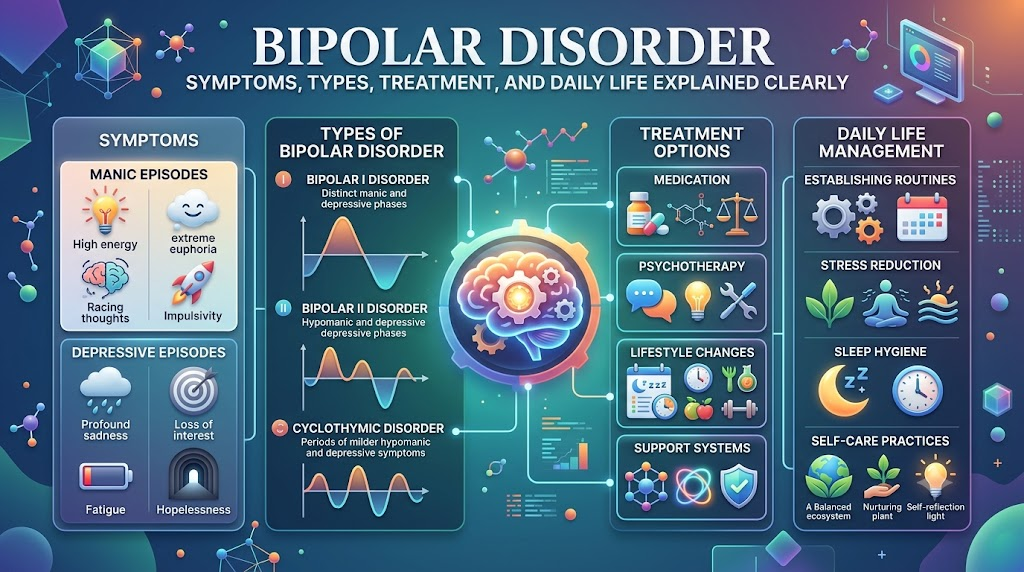
People with bipolar disorder may have different mood episodes. These can include mania, hypomania, and depression.Some people may have clear changes between episodes. Others may have mixed or changing symptoms. A health professional can assess these patterns.Mood changes can affect many parts of life. They may change sleep, focus, work, and relationships. This is why proper care can be important.
Mania and Its Common Signs
Mania is a strong period of high mood or energy. It can cause major changes in normal behavior. A person may feel full of energy and need less sleep.They may talk very fast or have racing thoughts. They may also start many activities at once. Some people may make risky or sudden choices.Mania can affect daily life in serious ways. It may also affect work, money, or relationships. These signs do not mean a person can diagnose themselves.
Hypomania and How It Differs
Hypomania is a milder form of high mood. It can cause more energy and less need for sleep. A person may also feel more active or talk more.Hypomania is not the same as normal happiness. It also differs from full mania. The change must be clear and different from usual behavior.A doctor looks at the full pattern of symptoms. They also look at how the changes affect daily life. This helps them make a proper assessment.
Depression and Its Common Signs
Bipolar depression can cause a very low mood. A person may lose interest in things they once enjoyed. They may also feel tired or have trouble focusing.Sleep and appetite may also change. Some people may pull away from family or friends. Feelings of hopelessness can also occur.These signs can affect work and daily tasks. They can also affect close relationships. Support from a health professional can help.
Main Types of Bipolar Disorder
There are different types of bipolar disorder. The main types include Bipolar I, Bipolar II, and cyclothymic disorder.Bipolar I includes manic episodes. Depression may also happen. Bipolar II includes hypomania and major depressive episodes.
Cyclothymic disorder causes repeated mood changes. The changes are less severe than full mania or depression. Still, they can affect daily life.
| Type | Main feature |
|---|---|
| Bipolar I | Manic episodes may occur |
| Bipolar II | Hypomania and depression may occur |
| Cyclothymic disorder | Repeated, milder mood changes |
These types are not better or worse than each other. Each person can have a different pattern. A mental health professional can explain the diagnosis.
Possible Causes and Risk Factors
There is no single cause of bipolar disorder. Several factors may play a role. These factors can include genes, brain changes, and life stress.Family history may also increase the risk. This does not mean a person will develop bipolar disorder. Many factors can affect a person’s mental health.Sleep problems may also affect mood. Stress and other health problems can matter too. A doctor can look at these factors during an assessment.Having a risk factor does not confirm bipolar disorder. It only means the risk may be higher. More information is needed for a diagnosis.
How Doctors Diagnose Bipolar Disorder
There is no single test for bipolar disorder. A doctor may ask about mood changes and daily habits. They may also ask about sleep and energy levels.The doctor may review your health history. They may ask about family mental health history. They may also ask about medicines or other substances.A full assessment helps rule out other causes. Some health problems can cause similar symptoms. This is why professional assessment is important.Do not try to diagnose yourself from online information. Websites can help you learn about symptoms. AskDoctorLive.com can also help readers prepare questions for a doctor.
Treatment and Long-Term Management
- Bipolar disorder can often be managed with proper care. Treatment can vary from person to person. Doctors may change care based on symptoms and needs.
- Treatment may include prescribed medicines. It may also include psychotherapy and regular follow-up. Healthy sleep and daily habits can support treatment.
- Do not start or stop medicine on your own. Do not change a dose without medical advice. Always talk with your doctor about medicine changes.
- Treatment is often a long-term process. Regular care can help track mood changes. It can also help find problems early.
Therapy, Support, and Daily Habits
- Therapy can support people with bipolar disorder. It can help people understand their mood changes. It may also help with stress and daily problems.
- Therapy can help build healthy routines. It may also improve communication with others. Some people learn ways to notice early warning signs.
- Daily habits can also support mental health. A regular sleep schedule may help keep routines steady. Tracking mood changes can also help during doctor visits.
- Staying close to trusted people can be helpful. Asking for support early can also make a difference. Self-care should support treatment, not replace it.
How Family Members Can Help
Family support can be very helpful. Loved ones can listen without judging. They can also encourage the person to get professional care.Family members can support regular sleep and daily routines. They can stay calm during difficult moments. They can also ask how they can help.Loved ones should not try to diagnose the person. They should also respect privacy and personal choices. A caring and calm approach can build trust.Families can learn more about bipolar disorder too. AskDoctorLive.com can be useful for basic health information. A health professional can answer personal questions.
When Professional Help May Be Needed
Professional help may be useful when mood changes become severe. It may also help when symptoms affect work or school.Help can be important when daily tasks become hard. It can also help when sleep changes become major. Repeated mood changes should also be discussed with a doctor.Early support can make care easier to manage. A doctor can review symptoms and health history. They can then discuss suitable care options.
Urgent Safety Information
Some situations need urgent help. This includes thoughts of self-harm or harm to others. It also includes severe confusion or being unable to stay safe.In these cases, contact local emergency services. You can also contact a trusted health professional right away. Stay with the person if it is safe to do so.Do not leave an unsafe situation without help. Urgent care is important when there is immediate danger. Getting help is a sign of care, not weakness.
Frequently Asked Questions About Bipolar Disorder
1. What is bipolar disorder?
Bipolar disorder is a mental health condition. It can cause major changes in mood, energy, and activity.
2. What are common signs of bipolar disorder?
Signs can include high energy, low mood, sleep changes, and racing thoughts. Symptoms can vary from person to person.
3. What is the difference between mania and hypomania?
Both can cause high energy and mood changes. Mania is more severe and can cause major problems.
4. Can bipolar disorder cause depression?
Yes, depression can occur with bipolar disorder. It may cause low mood, low energy, and loss of interest.
5. What are the main types of bipolar disorder?
The main types include Bipolar I, Bipolar II, and cyclothymic disorder. Each type has a different pattern of symptoms.
6. What causes bipolar disorder?
There is no single cause. Genes, brain factors, stress, sleep, and other factors may play a role.
7. How is bipolar disorder diagnosed?
A doctor reviews mood patterns, health history, sleep, and behavior. They may also check for other possible causes.
8. Can bipolar disorder be treated?
Yes, bipolar disorder can often be managed with proper care. Treatment may include medicine, therapy, and regular follow-up.
9. How can family members support someone with bipolar disorder?
Family members can listen without judgment. They can support healthy routines and encourage professional care.
10. When should someone seek professional help for bipolar disorder?
Help is important when symptoms affect daily life or safety. Urgent help is needed when someone cannot stay safe.
Final Thoughts
Bipolar disorder can cause major mood changes. These changes can affect sleep, energy, work, and relationships.The condition has different types and symptoms. Treatment can also differ from person to person. Proper care can help people manage their health.Family support can also play an important role. Learning about bipolar disorder can reduce fear and confusion. AskDoctorLive.com can help readers learn more about health topics.If symptoms cause concern, speak with a qualified health professional. If someone is not safe, seek urgent help at once.