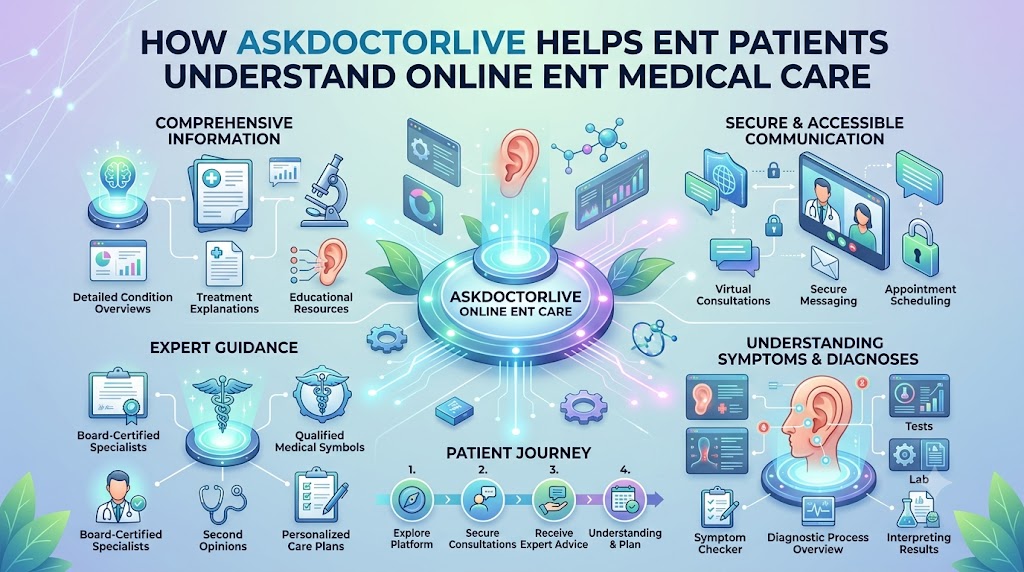
Introduction
Ear, nose, and throat problems can affect many parts of daily life. Ear pain may disturb sleep or make hearing harder. A blocked nose may affect breathing and comfort. Throat problems may affect eating, speaking, or swallowing. These symptoms can make people unsure about which doctor to contact or when to seek care.An online ENT consultation can give patients a way to discuss suitable health concerns with a qualified doctor. It may help patients explain symptoms, ask questions, and understand possible next steps without starting with a hospital visit. AskDoctorLive.com may support this type of online medical discussion for suitable concerns. Patients can learn more through ASKDOCTORLIVE, online care has clear limits. A doctor cannot fully examine every part of the ear, nose, throat, or neck through a normal video call. Some symptoms need tests, special tools, or an in-person examination. Emergency symptoms also need urgent medical care and should not wait for an online appointment.
What Does ENT Care Include?
ENT means ear, nose, and throat care. An ENT specialist, also called an otolaryngologist, treats problems that affect these areas. These body parts support important functions such as hearing, breathing, balance, smell, speech, and swallowing. Because these functions are linked to daily life, even a small problem can cause discomfort.An ENT doctor may assess concerns such as ear pain, hearing changes, blocked ears, sinus problems, nasal congestion, sore throat, voice changes, and swallowing problems. Balance concerns, dizziness, vertigo, snoring, and some sleep-related breathing problems may also need ENT care. Similar symptoms can have different causes, so patients should not try to diagnose themselves from symptoms alone.For example, a blocked nose may happen with allergies, a cold, sinus problems, or other causes. Ear discomfort may also have more than one possible reason. A medical professional can ask questions and decide whether further examination or testing is needed.
Common ENT Concerns Patients May Discuss Online
Many patients first notice symptoms that seem simple but affect daily comfort. These may include ear discomfort, a blocked feeling in the ear, ringing sounds, hearing changes, nasal congestion, runny nose, sneezing, or sinus pressure. Throat symptoms may include soreness, irritation, hoarseness, coughing, or changes in the voice.Patients can explain how long the symptoms have lasted and how often they happen. They can also describe what makes the symptoms better or worse. For example, a patient may notice nasal congestion at night or throat irritation after speaking for long periods. These details can help the doctor understand the concern more clearly.Some suitable concerns may be discussed during an online ENT consultation. However, not every ENT problem can be assessed remotely. Sudden hearing loss, severe breathing trouble, serious swallowing problems, or other urgent symptoms need prompt medical assessment. Patients should not delay emergency care while waiting for an online doctor appointment.
How AskDoctorLive May Help ENT Patients
Digital healthcare can make it easier for some patients to discuss health concerns. An online medical consultation may allow a patient to explain symptoms, share health information, ask questions, and understand possible next steps. This can be useful for people who find travel difficult or want to discuss a non-emergency concern before deciding on further care.A platform such as AskDoctorLive.com may help patients explore online medical guidance for suitable concerns. The exact services, doctors, appointment choices, and other features can change over time. Patients should check the current information provided by the platform instead of assuming that every service is available.The main value of online care is communication and guidance. A doctor can listen to the patient’s concern and ask useful questions. The doctor may then explain whether further medical review, testing, or an in-person ENT visit may be needed. Online care should support informed decisions, not replace every form of medical examination.
How an Online ENT Consultation Works
An online ENT consultation usually begins with the patient explaining the main health concern. The doctor may ask when the symptoms started and whether they are getting better or worse. Questions may also cover past health problems, previous ENT care, medicines, allergies, and daily activities. Clear answers can help the doctor understand the situation.During the consultation, the doctor may ask more questions based on the symptoms. They may discuss possible causes in general terms and explain what the patient should do next. The doctor may also suggest an in-person examination or further testing when a physical check is needed.An online visit should not be viewed as a promise of an instant diagnosis. ENT conditions often need direct examination or special equipment. The doctor must decide whether remote guidance is suitable for the concern. Patients should follow qualified medical advice and ask questions when instructions are not clear.
How to Prepare for an Online ENT Appointment
Good preparation can make an online consultation more useful. Patients can write down their main symptoms before the appointment. They should note when the symptoms started, how often they happen, and whether they affect sleep, work, eating, speaking, breathing, or hearing. They should also note anything that seems to improve or worsen the symptoms.It can help to keep a list of current medicines, allergies, past ENT visits, and known health conditions nearby. Earlier reports or test results may also be useful when they are available. Patients should not change medicines or treatment plans simply because they have an online appointment.Before the consultation, patients can write down questions they want to ask. They should choose a quiet and private place for the visit when possible. A stable internet connection can also make communication easier. Most importantly, patients should give honest and complete information to the doctor.
How to Explain ENT Symptoms Clearly
Clear symptom details can help a doctor understand a concern during a virtual visit. Ear symptoms may include pain, pressure, ringing, blocked feelings, discharge, or hearing changes. Patients should explain which ear is affected and whether the problem started suddenly or slowly.Nose symptoms may include congestion, discharge, sneezing, pressure, or reduced smell. Patients can explain whether symptoms happen during certain seasons or after exposure to dust or other triggers. Throat symptoms may include soreness, irritation, coughing, voice changes, or difficulty swallowing.Patients should also explain how symptoms affect daily life. A person with hearing changes may struggle during conversations. Someone with nasal congestion may have trouble sleeping. Someone with a sore throat may find eating or speaking uncomfortable. These details do not replace examination, but they give the doctor useful information.
Benefits and Limits of Online ENT Care
Online ENT care can offer useful benefits for suitable concerns. Patients may save travel time and discuss symptoms from home. It may also make it easier to ask follow-up questions or discuss non-emergency concerns. People who live far from specialist services may find remote medical communication useful as an early step.However, online care cannot replace every physical examination. A doctor may need to look inside the ear, examine the throat, check the nose, or assess the neck directly. Some concerns may also need hearing tests, imaging, laboratory tests, or other investigations.A virtual consultation can still help explain what may happen next. It may help a patient understand whether an ENT clinic or hospital visit is appropriate. The important point is to understand the limits of remote care. Convenience should never be more important than patient safety.
When an In-Person ENT Visit May Be Needed
Some ENT concerns need direct medical assessment. Persistent ear pain, continuing hearing problems, repeated sinus symptoms, long-lasting voice changes, and swallowing difficulties may need an in-person review. A doctor may recommend an ENT clinic or hospital when physical examination or testing is needed.Sudden hearing loss needs urgent medical assessment. Severe breathing difficulty is also an emergency concern. A person who cannot swallow saliva or has serious swelling around the throat may need emergency care. These symptoms should not be managed by waiting for an online consultation.Other symptoms may not be emergencies but still need timely review. Symptoms that continue, return often, or become worse should be discussed with a qualified healthcare professional. Patients should follow the urgency advice given by their doctor and seek in-person care when remote assessment is not enough.
Privacy and Safe Use of Online Consultations
Patients should understand how an online healthcare platform handles personal information. Medical details can include sensitive health history, medicines, reports, and other private information. Patients should use official access methods and avoid sharing medical information through random or unknown channels.Before using an online service, patients can review the platform’s current privacy information. They can also check the available information about doctors and consultation services. Patients should avoid assuming that a platform provides a specific security feature unless the platform clearly states it.Patients should also use a private place for their consultation when possible. They should speak openly with the doctor and ask if they do not understand something. Safe online care means using trusted access methods, sharing useful information, and knowing when remote care is not enough.
Follow-Up Care After an Online ENT Consultation
A consultation should leave the patient with a clear idea of the next step. Patients can ask what symptoms they should watch and whether another medical review is needed. They can also ask whether an ENT examination, hearing test, scan, or other assessment may be useful when the doctor recommends it.Some concerns may need follow-up with an ENT specialist. Other concerns may improve with general care and observation, depending on the doctor’s advice. Patients should understand any instructions before ending the consultation and ask questions if something is unclear.Follow-up options depend on the service and the patient’s medical needs. Patients should not assume that online follow-up is always available through AskDoctorLive.com. They should check the current service information. If symptoms become severe or urgent, they should seek appropriate medical care instead of waiting for a planned follow-up.
How Families Can Support ENT Patients
Family members can help make online consultations easier for children, older adults, or people who find technology difficult. They may help collect medical records, write down symptoms, prepare questions, or arrange the video call. They can also help the patient remember important health information.The patient should still have a chance to speak directly with the doctor when possible. Family members can share useful observations, but they should not replace the patient’s own description. This is especially important when the patient can explain symptoms clearly.For children, a parent or suitable caregiver may need to provide health history. They can explain when symptoms started and what changes they have noticed. Privacy should still be respected. Family support should help communication without taking away the patient’s voice.
Common Mistakes to Avoid
Patients can make online consultations less useful by leaving out important details. Some may forget to mention medicines, allergies, past ENT problems, or previous test results. Others may describe only the main symptom without explaining how long it has lasted or how it affects daily life.Another mistake is expecting a video consultation to replace every physical examination. Some patients may also ignore worsening symptoms because they already have an online appointment planned. This can create an unsafe delay. Emergency symptoms always need the right level of medical care.Patients should also avoid risky home procedures. They should not put objects into the ear or try to perform medical procedures without proper guidance. They should not start or stop medicines based only on online information. Clear questions and honest answers can make online care safer and more useful.
How to Choose the Right ENT Care Option
The right care option depends on the symptoms and their urgency. An online consultation may suit some non-emergency concerns. An ENT clinic may be better when a physical examination is needed. A hospital may be more suitable when symptoms are serious or when several medical services may be required.Patients can consider how long symptoms have lasted and whether they are getting worse. They can also check whether the service has suitable medical professionals and clear consultation information. Questions about appointment costs, privacy, follow-up care, and specialist referral can help patients make a better choice.Convenience should not be the only reason for choosing online care. Patient safety should come first. If the symptoms need direct examination, the patient should follow medical advice and visit the appropriate healthcare facility.
How AskDoctorLive Fits Into the Patient Journey
AskDoctorLive.com may fit into the early discussion stage of a patient’s healthcare journey. A patient with a suitable ENT concern may use an online medical platform to explain symptoms and prepare questions for a doctor. The doctor can then discuss the concern and help the patient understand possible next steps.The exact services and features available through AskDoctorLive.com should always be checked on the platform itself. Patients should not assume that a specific ENT specialist, appointment method, fee, prescription service, or follow-up option is available unless it is clearly provided by the platform.This keeps the focus on informed healthcare decisions. Online medical guidance can be useful when the concern is suitable for remote discussion. When a physical examination or urgent care is needed, patients should move to the appropriate in-person service.
Fictional Patient Example
Fictional example: Meena has had nasal congestion several times over recent weeks. It becomes worse at certain times and sometimes affects her sleep. She wants to discuss the problem with a doctor but is unsure whether she needs an ENT clinic first.Meena writes down when the congestion happens and whether she also has sneezing, nasal discharge, pressure, or reduced smell. She also lists her current medicines and any known allergies. During an online consultation, she explains these details and asks whether an in-person examination may be needed.The doctor may use this information to guide the next step. The doctor may explain whether the symptoms need further assessment or ENT review. This example is fictional and does not show a guaranteed diagnosis or treatment result.
Frequently Asked Questions About Online ENT Care
1. How does AskDoctorLive.com help ENT patients?
AskDoctorLive.com may help suitable patients discuss ENT concerns through online medical guidance. Patients can explain symptoms, ask questions, and understand possible next steps. The exact services available should be checked on the current platform.
2. What is an online ENT consultation?
An online ENT consultation is a remote medical discussion with a qualified doctor. The doctor asks about symptoms and health history. They may then explain possible next steps or recommend an in-person examination.
3. Which ENT problems may be discussed online?
Suitable concerns may include ear discomfort, blocked ears, nasal congestion, sinus symptoms, sore throat, voice changes, and some hearing concerns. The doctor decides whether the problem can be safely discussed online.
4. Can an ENT doctor examine my ears through a video call?
A video call can help the doctor ask questions and observe some visible concerns. It cannot fully replace an ear examination with proper medical tools. Some ear problems need direct examination.
5. How should I prepare for an online ENT appointment?
Write down your symptoms, when they began, and how they affect daily life. Keep your medicine list and earlier reports nearby. Also prepare questions you want the doctor to answer.
6. Can online ENT consultations replace hospital visits?
No. Online consultations cannot replace every hospital or ENT clinic visit. Some problems need physical examination, hearing tests, imaging, or other medical investigations.
7. When should I visit an ENT specialist in person?
Persistent or recurring symptoms may need an in-person review. Hearing problems, continuing ear pain, swallowing difficulty, and long-lasting voice changes may need direct assessment.
8. Can I discuss hearing changes during an online consultation?
Yes, patients can discuss hearing changes with a doctor online. The doctor may ask when the change started and whether it affects one or both ears. Sudden hearing loss needs urgent medical assessment.
9. What should I do if my ENT symptoms get worse?
Do not wait if symptoms become severe or unusual. Contact a suitable healthcare professional or seek urgent care when needed. Follow the urgency advice given by a qualified doctor.
10. Which ENT symptoms need emergency medical care?
Severe breathing difficulty, inability to swallow saliva, serious throat swelling, and sudden hearing loss need prompt medical attention. Emergency symptoms should not wait for an online appointment.
Final Thoughts
Online ENT care can help patients discuss suitable ear, nose, and throat concerns from home. It may make communication easier and help patients understand possible next steps. AskDoctorLive.com may be one option for people looking for online medical guidance, depending on the services currently available.However, remote care has clear limits. Some ENT concerns need direct examination, special tests, or specialist care. Patients should also know the warning signs that need urgent or emergency attention. Convenience should never replace safe medical care.The best approach is to give clear health information, ask useful questions, and follow qualified medical advice. When online care is not enough, patients should move to the right in-person service. This helps keep ENT care practical, informed, and focused on patient safety.