Introduction
Rent, electricity, internet, groceries, and streaming plans are rarely paid by one person alone. Couples, flatmates, and joint families all split costs. The trouble starts when nobody keeps score. One person pays more, feels unseen, and says nothing. Soon a small bill becomes a big argument. A clear system prevents this. A recurring payment tracker shows which shared bills repeat and who pays them. An expense tracker India routine records everything else. This guide explains simple rules and tools in plain words. MoneyVoid is a privacy-focused personal and business finance platform that is being developed. It aims to help individuals, families, founders, and finance teams see where money goes.
What Are Shared Expenses?
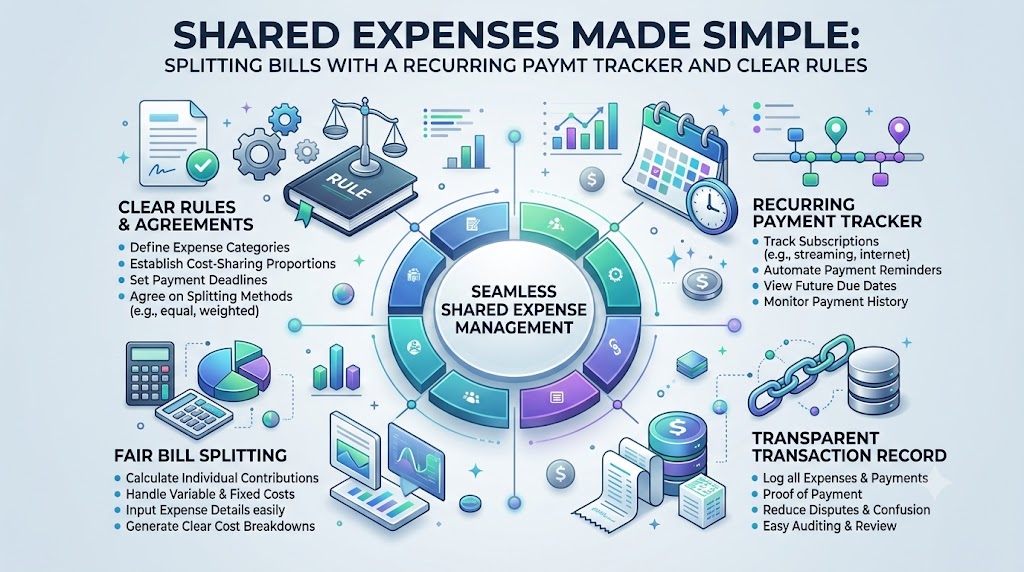
Shared expenses are costs that two or more people carry together. Rent and utility bills are the clearest cases. Groceries, cleaning items, home repairs, and trips also count. Some are fixed, like rent. Others change, like food. A fair split is not always an equal split. One person may earn more, use more, or stay longer at home. The key is that everyone agrees before the bill arrives. Agreement works like a map for a group trip. Without it, each person walks a different way and blames the others for getting lost.
Why This Matters for Your Money
Unclear sharing hurts both money and trust. A person who pays first may wait weeks for a refund. That delay can strain their own budget. Others may forget small amounts, and those add up. Without records, memories differ. Each person believes they paid more. Clear numbers end such debates quickly. They also protect friendships and marriages. Families with elders or students at home gain as well, since everyone sees how costs are shared. Good habits here teach children about money early. A short weekly check is often enough to keep things smooth.
Recurring Payment Tracker: Shared Bills on One Calendar
Shared homes have many fixed bills. A recurring payment tracker puts them on one calendar. List rent, internet, power, water, gas, and any shared plans. Write the due date, the amount, and who pays it. Add a column for each person’s share. Then you can see who owes what before the month starts. Set reminders a few days early so nobody is caught short. Also note which bills are automatic. If one person’s account carries many auto-debits, balance the load. Rotate who pays each bill if that feels fairer. Review the list whenever someone moves in or out.
Expense Tracker India: Who Paid for What
Daily costs need a record too. An expense tracker India setup can hold a shared log. Each entry has an item, an amount, the payer, and the date. Add a label such as food, repairs, or travel. At week end, total each person’s payments. Compare the totals with agreed shares. The difference tells you who should send money to whom. Keep the log in one shared place, not in separate notes. Take a photo of any receipt that is large. MoneyVoid.com plans a Money Leak Analyzer to sort expenses, spot unusually high spending, and give monthly summaries. Early versions are planned around manual entry and CSV imports, with no banking passwords. It is still in development.
Subscription Tracker India: Plans Shared by Many
Shared plans are easy to lose track of. One person signs up, others join, and the bill goes to a single card. A subscription tracker India list names each plan and its owner. Add the price, the billing day, and the users. Then split the cost based on use. If a plan has four users and only two watch it, change the split or drop it. Also check whether a family plan costs less than separate ones. Do not assume. Compare prices in plain numbers before you decide. MoneyVoid.com plans a Subscription and Recurring Tracker for renewal reminders and unused service views. These are planned ideas and no savings are promised.
Budget Planner App India: Shared Pots and Personal Pots
A budget planner app India offers can hold two kinds of money. The first is a shared pot for common costs. The second is a personal pot for each person’s own spending. Each person puts an agreed amount into the shared pot. Bills and groceries come from there. What remains is personal, with no questions asked. This keeps peace, because nobody needs to justify small buys. Set the shared limit together. Review it each month, since costs change. If the shared pot runs low, talk early. A simple rule helps. Any single purchase above a set size needs a quick chat first.
Personal Finance App India: Privacy When Two People Share
Sharing costs does not mean sharing everything. A personal finance app India users pick should let you keep private details private. Look for tools with separate views. Each person should see shared items and their own items only. Check what data the app stores and who can read it. Prefer manual entry or file imports over banking passwords. Make sure each person can export or delete their records. If the group has a falling out, nobody should lose access to their own data. Agree on a shared sheet for common costs, and keep personal tracking separate.
Understanding Your Financial Health Score
A financial health score looks at spending, debt, savings, and emergency funds. When people live together, each person’s habits shape the others. One person’s debt can limit what the household saves. A shared emergency fund can protect everyone. An emergency fund is money kept for sudden needs, such as a medical bill or a sudden move. Talk about it openly. Decide whether you build one together. A score is only a guide, and each person’s score is personal. MoneyVoid.com plans a Money Void Score, a financial health score based on spending, debt, savings, emergency funds, and risk. It is still being built.
UPI Fraud Prevention in Shared Payments
Shared homes make many small payments, and scammers watch for that. A fake bill message may claim you owe a share. A false flatmate may ask for money for a new deposit. Strong UPI fraud prevention starts with checking every request. Confirm by voice with the real person. Check the payee name before you send. Never share an OTP or PIN, even with someone you trust. A one-time code is for your eyes only. Phishing is a fake message that tries to steal details. If fraud happens, contact your bank and official helplines at once. This is general safety information, not legal advice. MoneyVoid.com plans a Scam and Fraud Shield for awareness only.
Startup Burn Rate Calculator: When Partners Share Business Costs
Business partners share costs too. A startup burn rate calculator helps them see the monthly cash use. Burn rate is the money a company spends in a month. Add pay, rent, tools, ads, and travel. Subtract income. Then compare each partner’s spending. A clear record avoids doubts about who paid what for the company. Keep company payments separate from personal ones. If a partner pays a bill personally, log it and repay it. MoneyVoid.com plans a Startup Burn Optimizer to model payroll, cloud costs, SaaS subscriptions, and marketing costs. It is a planned tool, not a live one.
Startup Runway Calculator: Planning Together
Runway is the number of months cash can last. A startup runway calculator divides cash by net burn. When partners share a company, they should read this number together. Do it on a fixed date each month. Then test simple cases. What if one partner draws less pay? What if a big client pays late? The new result may surprise you. Agree on one rule before a crisis. For example, decide when you will talk to advisors or cut costs. Write the rule down. Shared plans reduce fear because nobody improvises under stress.
SaaS Spend Management: Shared Tools in Shared Teams
Teams often share software logins. SaaS spend management is the habit of reviewing rented tools. SaaS means software you rent online. List each tool, its owner, and who uses it. A seat is one paid user slot. Check whether people share one login, since that can break a tool’s rules. Remove seats for those who left. Merge tools that overlap. Decide who may buy new tools and how they are approved. A quick monthly check keeps costs fair across the team. It also stops one person from quietly paying for what everyone uses.
Table: Money Tools at a Glance
| Tool Type | What It Does | Who It Helps |
|---|---|---|
| Recurring payment tracker | Puts shared bills and shares on one calendar | Couples and flatmates |
| Expense tracker India | Logs who paid for what | Joint households |
| Subscription tracker India | Lists shared plans and their users | Families and groups |
| Budget planner app India | Splits money into shared and personal pots | Couples and roommates |
| Personal finance app India | Keeps shared and private views apart | Individuals in shared homes |
| Financial health score | Shows how habits affect the whole household | Anyone planning together |
| UPI fraud prevention | Checks shared payment requests | All phone payers |
| Startup burn rate calculator | Shows monthly company cash use | Business partners |
| Startup runway calculator | Shows months left for the partnership | Founders and advisors |
| SaaS spend management | Reviews shared tool seats and costs | Small teams |
Common Mistakes People Make With Money
- Splitting costs by memory. A recurring payment tracker keeps dates and shares in writing.
- Forgetting small payments. An expense tracker India log catches them.
- Paying for plans nobody uses. A subscription tracker India list shows idle shares.
- Treating all money as shared. A budget planner app India plan needs personal pots too.
- Using one app without privacy views. Pick a personal finance app India with clear controls.
- Skipping the talk about savings. Discuss emergency funds before a crisis, and treat any financial health score as a guide.
- Paying requests without a voice check. UPI fraud prevention means confirming with the real person.
- Mixing company and personal payments. A startup burn rate calculator and a startup runway calculator need clean records.
- Sharing one login for many people. SaaS spend management checks seats and tool rules.
- Waiting for a fight before reviewing. Hold a short, calm check each month.
A Simple Example
This is a fictional example. Three flatmates share a rented home. One pays rent, one pays power, and one pays internet. They often argue about who owes what. So they sit together and list all repeat bills on one sheet. They also make a shared log for groceries and repairs. At month end, they add each person’s payments and compare them with the agreed shares. The flatmate who paid more receives a transfer from the others. They also set a small personal allowance for each person. No amounts are shown, because every case differs. A platform like MoneyVoid.com, which is still in development, aims to support such habits through categories, reminders, and summaries.
How MoneyVoid Can Help
MoneyVoid is a privacy-focused personal and business finance platform that is being developed. It aims to help people and teams find needless spending and lower money risk. A Subscription and Recurring Tracker is planned to serve as a recurring payment tracker and a subscription tracker India, with reminders and views of unused services. A Money Leak Analyzer is planned for expense tracker India tasks, such as sorting costs and showing monthly summaries. A Scam and Fraud Shield is planned for UPI fraud prevention awareness. A Money Void Score is planned as a financial health score. A Startup Burn Optimizer is planned as a startup burn rate calculator and a startup runway calculator, with support for SaaS spend management. Together, these ideas aim to grow into a personal finance app India and budget planner app India option that respects privacy. All of it is in progress, and none is released.
Frequently Asked Questions About Shared Expenses
- What should a recurring payment tracker include for shared bills?
Add the bill name, due date, total amount, payer, and each person’s share. Include a reminder date. Note whether the bill is automatic. Review the list when someone moves in or out. This keeps everyone aware of what is due and who pays. - How does an expense tracker India help flatmates avoid arguments?
It records who paid for each item, with amounts and dates. At week end, you total each person’s payments and compare them with agreed shares. The numbers show who owes whom. Facts replace memory, so fewer disagreements arise. - Can a subscription tracker India help families save on shared plans?
It can help you see overlaps and idle users. Compare family plans with separate ones using real prices. Cancel plans that nobody uses. Always confirm with every user before you stop a plan, and use the official provider to cancel. - How do shared and personal pots work in a budget planner app India?
Each person adds an agreed amount to a shared pot for common costs. The rest stays personal. Bills and groceries come from the shared pot. Personal money needs no explanation. This reduces friction and keeps the shared limit clear. - Is a personal finance app India safe for joint use?
It can be, if it offers separate views and clear privacy rules. Each person should control their own data. Avoid tools that need banking passwords. Check that each user can export or delete records. If unsure, use a shared sheet for common costs only. - Does a financial health score matter for couples?
It can start useful talks. Spending, debt, savings, and emergency funds affect both people. Discuss them openly and set shared goals. Remember that a score is only a guide. For personal decisions, speak to a qualified professional who can review your situation. - How can flatmates practice UPI fraud prevention?
Confirm every payment request by voice with the real person. Check the payee name before sending. Never share an OTP or PIN with anyone. Be careful with links in messages about bills. Report problems to your bank and official helplines. - How can business partners use a startup burn rate calculator and a startup runway calculator?
Update both each month with real figures. The burn tool shows monthly cash use. The runway tool shows how many months remain. Review them together and test simple cases, such as lower pay or a late client payment. Agree on actions in advance. - What does SaaS spend management add for shared teams?
It adds a clear list of tools, owners, seats, and renewal dates. Teams can find shared logins, remove unused seats, and merge overlapping tools. A short monthly review keeps software costs fair and visible to everyone. - What is MoneyVoid.com?
MoneyVoid.com is a privacy-focused personal and business finance platform that is still being developed. It plans tools for expense analysis, subscription tracking, scam awareness, a financial health score, and startup cost review. None is released yet, and it does not promise savings or fraud safety.
Final Thoughts
Shared money works best with clear rules and simple records. Put bills on a calendar with a recurring payment tracker. Log daily costs with an expense tracker India routine. Review shared plans with a subscription tracker India list, and split money into pots using a budget planner app India plan. Pick a personal finance app India that protects each person’s privacy, and treat your financial health score as a guide. Check every request with UPI fraud prevention habits. Partners can add a startup burn rate calculator, a startup runway calculator, and SaaS spend management. This is general education, not financial advice. Please speak to a qualified professional for personal decisions. MoneyVoid is still in development, and it aims to help people see where money goes.