Introduction
Understanding sleep apnea can help you notice sleep problems and learn when to seek medical care. Sleep apnea is a condition in which breathing repeatedly stops or becomes weaker during sleep. These changes can disturb sleep and leave you feeling tired during the day.
Loud snoring, waking up gasping, and feeling sleepy during the day can be warning signs. However, not everyone has the same symptoms, and some people do not know they have a problem. A family member may notice pauses in breathing before the person notices any changes.
Learning about sleep apnea symptoms, causes, diagnosis, and treatment can help you take the right next step. For more health information and patient support, visit Askdoctorlive.
What Is Sleep Apnea?
Sleep apnea is a sleep disorder that affects normal breathing. During sleep, breathing may stop for short periods or become too shallow. These changes can happen many times during the night.
When breathing is disturbed, the body may briefly wake up to restore normal airflow. These short awakenings can happen without the person remembering them. As a result, sleep may feel poor even after spending many hours in bed.
Some people learn about the condition because a partner notices loud snoring or pauses in breathing. Others seek help because they wake up tired or struggle to focus during the day.
Snoring alone does not mean you have sleep apnea. A healthcare professional must assess your symptoms and may recommend a sleep study to confirm the diagnosis.
Main Types of Sleep Apnea
There are three main forms of sleep apnea. Knowing the type helps doctors choose the right treatment.
Obstructive Sleep Apnea (OSA)
Obstructive sleep apnea is the most common type. It occurs when the muscles around the throat relax during sleep and partly or fully block the airway. Air then has trouble moving in and out of the lungs.
A person may snore loudly, gasp, or briefly stop breathing. The brain may wake the person just enough to reopen the airway, which can interrupt normal sleep.
Central Sleep Apnea
Central sleep apnea happens when the brain does not send the usual signals needed to control breathing. Unlike obstructive sleep apnea, the main problem is not a blocked throat airway.
This type may be linked to certain heart or brain conditions, some medicines, or other health problems. Treatment depends on the cause and the person’s overall health.
Mixed or Complex Sleep Apnea
Some people have features of both obstructive and central sleep apnea. In some cases, central breathing problems appear or become more noticeable during treatment for obstructive sleep apnea.
Doctors assess these patterns carefully because the best treatment may differ from standard care for obstructive sleep apnea.
Common Signs and Symptoms of Sleep Apnea
Sleep apnea can affect both nighttime rest and daytime activities. Some signs are noticed by the person, while others are easier for a family member to see.
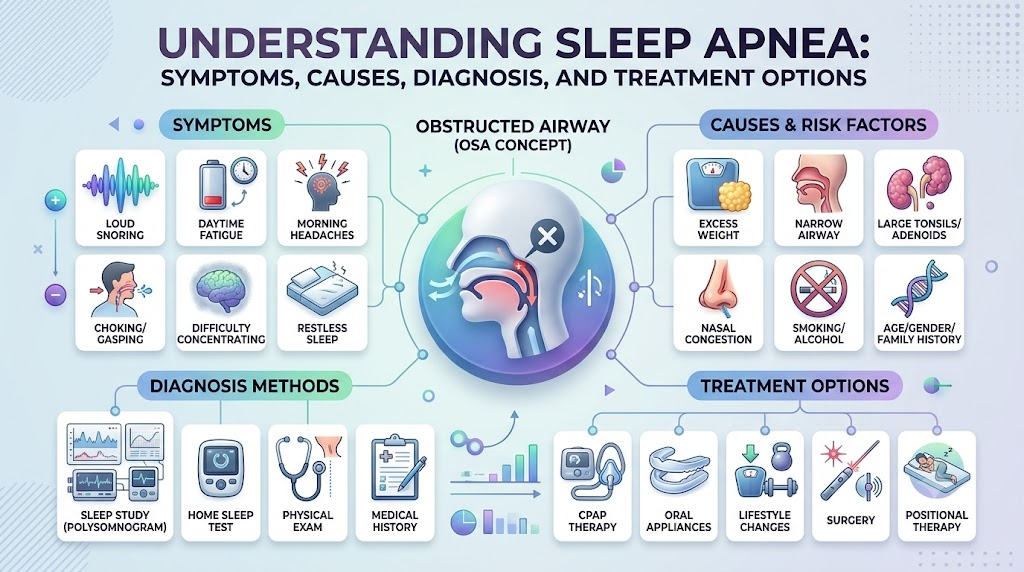
Nighttime symptoms may include loud or frequent snoring, pauses in breathing, gasping, choking, and restless sleep. You may also wake up several times without knowing why.
During the day, you may feel tired, have morning headaches, or wake with a dry mouth. Some people have trouble focusing, forget things more often, or feel irritable. Waking up often to urinate can also occur.
Symptoms can differ among adults. Some women may report tiredness, poor sleep, headaches, or mood changes rather than obvious loud snoring. Children may show behavior changes or trouble paying attention.
Sleep Apnea Symptoms and What They May Mean
| Symptom | Possible explanation | Recommended next step |
|---|---|---|
| Pauses in breathing | Airflow may stop or become reduced during sleep. | Arrange a medical assessment. |
| Loud snoring | Air may be moving through a narrowed airway. | Seek advice if snoring is frequent or comes with other symptoms. |
| Gasping or choking | Breathing may be disturbed during sleep. | Discuss these episodes with a healthcare professional. |
| Morning headaches | Poor sleep or other health issues may contribute. | Seek assessment if headaches keep returning. |
| Daytime sleepiness | Sleep may be broken or not refreshing. | Discuss persistent tiredness with a clinician. |
These symptoms can have other causes. They cannot confirm sleep apnea without a proper medical assessment.
Causes and Risk Factors of Sleep Apnea
Obstructive sleep apnea often occurs when the muscles in the throat relax during sleep. This can narrow the airway and make breathing harder. If the airway becomes blocked, breathing may stop for a short time.
Several factors can increase the chance of developing obstructive sleep apnea. These include excess body weight, the shape of the jaw or airway, enlarged tonsils, increasing age, and a family history of the condition. Some health problems can also raise the risk.
However, sleep apnea can affect people of different body sizes and backgrounds. A person without obvious risk factors may still develop it. Having one or more risk factors does not mean you definitely have the condition.
Central sleep apnea has different causes. It may be linked to certain heart conditions, problems affecting the brain, high-altitude exposure, or medicines that affect breathing, including some opioid medicines. A clinician can review your health history and medicines to help identify possible causes.
Why Sleep Apnea Should Not Be Ignored
Poor sleep can affect how you think, feel, and function each day. You may find it harder to focus, remember information, control your mood, or complete everyday tasks.
Untreated sleep apnea is also linked to high blood pressure and a higher risk of certain heart and blood vessel problems. These risks differ from person to person, and complications are not certain for everyone.
Daytime sleepiness can make driving, using tools, or working with machines dangerous. If you struggle to stay awake, do not drive or operate equipment that could put you or others at risk.
Getting assessed can help you understand the cause of your symptoms and explore suitable treatment. Early attention may improve sleep and help manage health risks.
How Doctors Diagnose Sleep Apnea
Doctors begin by asking about your symptoms, sleep habits, medical history, and medicines. They may ask whether you snore, wake up gasping, or feel sleepy during the day.
Information from a bed partner or family member can be useful. They may have noticed breathing pauses or unusual sounds while you sleep. Your clinician may also examine your mouth, throat, and other areas linked to breathing.
A sleep study, also called a sleep test, is often used to diagnose sleep apnea. It records information about breathing and other body functions during sleep.
Some sleep studies take place in a sleep clinic, where equipment can measure several body signals. A home sleep apnea test may be suitable for some adults who are suspected of having obstructive sleep apnea and have no major complicating conditions.
Home testing is not right for everyone. A clinician decides which test is suitable. If a home test does not give a clear answer, a clinic-based study may be needed.
Online questionnaires and symptom checklists can help identify possible risk, but they cannot confirm the diagnosis. Test results help doctors determine whether sleep apnea is present, which type it is, and how severe it may be.
Treatment Options for Sleep Apnea
Sleep apnea treatment depends on the type of condition, its severity, your symptoms, and your health needs. There is no single treatment that works best for everyone.
Positive Airway Pressure (PAP)
Positive airway pressure devices deliver air through a mask to help keep the airway open during sleep. Continuous positive airway pressure, known as CPAP, uses a steady level of pressure. Other PAP devices may adjust pressure or provide different levels during breathing.
PAP therapy is a common treatment for obstructive sleep apnea. It may reduce breathing interruptions and improve sleep when used as prescribed. Your care team can help you choose a suitable mask and manage problems such as dryness or discomfort.
Professionally Fitted Oral Appliances
An oral appliance is a device worn in the mouth during sleep. Some devices move the lower jaw forward to help keep the airway open.
These devices may help selected people with obstructive sleep apnea, including some who cannot use PAP therapy. A trained dental professional should assess and fit the device, with follow-up to check how well it works.
Lifestyle Changes
Regular physical activity, healthy sleep habits, and weight management when appropriate may help some people manage obstructive sleep apnea. Avoiding smoking can also support better overall health.
Alcohol and certain sedating medicines may worsen breathing during sleep in some people. Discuss your habits and medicines with your clinician. Never stop prescribed medicine without medical advice.
Lifestyle changes can help, but they do not replace needed treatment in every case.
Positional Strategies
Some people have more breathing interruptions when sleeping on their backs. Sleeping on the side or using an approved positional method may help reduce symptoms in these cases.
This approach is not suitable for everyone. A clinician can help determine whether sleep position plays a major role in your condition.
Surgery and Other Specialist Treatments
Some patients may benefit from surgery or other specialist treatments. These options depend on the airway structure, the type of sleep apnea, previous treatments, and personal health needs.
Surgery may be considered when specific structures contribute to airway blockage. Other treatments may be suitable for selected patients who cannot use standard options. A sleep specialist can explain the likely benefits, risks, and alternatives.
Central sleep apnea may need a different approach, such as treating an underlying health problem or reviewing medicines that affect breathing. Some patients need a specialised breathing device under close medical supervision.
Sleep Apnea Treatment Options at a Glance
| Treatment option | How it may help | Important consideration |
|---|---|---|
| PAP devices | Help keep the airway open during sleep. | Correct mask fit and regular use matter. |
| Oral appliances | May move the jaw forward to improve airflow. | Professional fitting and follow-up are needed. |
| Lifestyle changes | May support better sleep and reduce some risk factors. | They may not be enough on their own. |
| Positional strategies | May help people whose symptoms worsen on their backs. | Benefits depend on the person’s sleep pattern. |
| Specialist procedures | May address selected airway or breathing problems. | Assessment is needed to weigh benefits and risks. |
Treatment should match the diagnosis and the person’s needs. Follow your clinician’s advice rather than choosing a treatment based on symptoms alone.
Tips for Living With Sleep Apnea
Living with sleep apnea often means following a treatment plan over time. Attend follow-up visits so your healthcare team can check your symptoms, review treatment, and decide whether changes are needed.
If you use PAP therapy, wear the device as prescribed. Tell your care team if the mask leaks, your mouth feels dry, your nose becomes blocked, or the air pressure feels uncomfortable. They may be able to adjust the mask or recommend ways to make treatment easier.
Clean and maintain your equipment according to the manufacturer’s instructions. Do not change device settings or stop treatment without professional guidance.
Try to keep a regular sleep schedule and make your bedroom comfortable, quiet, and dark. Avoid driving when you are too sleepy to stay alert. If symptoms continue despite treatment, let your clinician know so they can review the cause.
Sleep Apnea in Children
Children can also develop sleep apnea. Signs may include regular snoring, pauses in breathing, restless sleep, mouth breathing, or unusual sleep positions.
During the day, a child may seem irritable, have trouble paying attention, or show behavior changes. Enlarged tonsils or adenoids, which are tissues near the back of the nose and throat, can contribute to obstructive sleep apnea.
If you notice these signs, seek advice from a pediatric healthcare professional. Children need an age-appropriate assessment and treatment plan. Adult treatment advice should not be applied directly to children.
When to Seek Medical Advice
Arrange a medical assessment if you have repeated pauses in breathing during sleep, loud frequent snoring with other symptoms, nighttime gasping, or persistent daytime sleepiness. A clinician can assess your symptoms and decide whether a sleep study is needed.
Tell your healthcare team about all medicines you take, especially those that may affect breathing. Discuss sleep apnea concerns before surgery or other procedures that may involve anesthesia or sedating medicines.
Do not drive or operate dangerous equipment if you are struggling to stay awake. Seek urgent medical help if you have severe breathing difficulty or another sudden, serious symptom.
You do not need to wait until symptoms become severe before asking for help. A timely assessment can help you understand what is happening and what steps may be useful.
Frequently Asked Questions About Sleep Apnea
1. What is sleep apnea in simple terms?
Sleep apnea is a condition in which breathing repeatedly stops or becomes reduced during sleep. These changes can disturb sleep and cause daytime tiredness. A sleep study is usually needed to confirm the diagnosis.
2. What are the most common signs of sleep apnea?
Common signs include loud snoring, pauses in breathing, gasping during sleep, morning headaches, and daytime sleepiness. Symptoms vary, and some people have less obvious signs.
3. Can you have sleep apnea without snoring?
Yes. Some people with sleep apnea do not snore loudly or at all. Other symptoms, such as breathing pauses or persistent tiredness, may still need medical assessment.
4. What causes obstructive sleep apnea?
It happens when the upper airway becomes partly or fully blocked during sleep. Throat muscle relaxation, airway structure, enlarged tonsils, and some other factors may contribute.
5. How do doctors test for sleep apnea?
Doctors review your symptoms and medical history and may arrange a sleep study. Depending on your health and symptoms, the test may take place at home or in a sleep clinic.
6. Can sleep apnea be treated?
Yes. Treatment may include PAP therapy, oral appliances, lifestyle changes, positional strategies, or selected specialist procedures. The right choice depends on the type and severity of sleep apnea.
7. What is the difference between CPAP and other PAP devices?
CPAP provides a steady level of air pressure to help keep the airway open. Other PAP devices may adjust pressure or provide different pressure levels during breathing. Your clinician can advise which device suits you.
8. Can lifestyle changes help manage sleep apnea?
Yes, regular activity, healthy sleep habits, and weight management when appropriate may help some people. However, lifestyle changes alone may not control every case, so follow your treatment plan.
9. Is sleep apnea dangerous if left untreated?
Untreated sleep apnea can increase the risk of high blood pressure, certain cardiovascular problems, and accidents caused by sleepiness. Risks vary, so seek medical advice if you notice possible symptoms.
10. Can children develop sleep apnea?
Yes. Children may snore, breathe irregularly during sleep, or have daytime behavior and attention problems. A pediatric healthcare professional can assess the cause and recommend suitable treatment.
Final Thoughts
Understanding sleep apnea is an important step toward better sleep and improved daily health. Snoring, gasping, and daytime tiredness can have several causes, but repeated breathing problems during sleep deserve medical attention.
With the right diagnosis and treatment, many people can manage sleep apnea and improve their sleep. Follow your care plan, attend follow-up visits, and report symptoms that continue or worsen. A healthcare professional can help you find an approach that fits your needs.