Introduction
Digestive problems can affect daily life in many ways. Frequent diarrhea, stomach pain, and unexplained weight loss may be easy to overlook. However, when these problems keep returning, they deserve attention.
Crohn’s disease is a long-term condition that causes inflammation in the digestive tract. Its symptoms may begin slowly and change over time. Some people experience mild problems, while others develop more noticeable symptoms.
Recognizing Crohn’s Disease Early Signs can help people understand when their digestive health needs medical attention. Early assessment can help doctors identify the cause and plan suitable care. For more general health information and medical topics, visit ASKDOCTORLIVE. Not every stomach problem means Crohn’s disease, but repeated changes should not be ignored.
What Is Crohn’s Disease?
Crohn’s disease is a type of inflammatory bowel disease (IBD). It causes swelling and irritation in the digestive tract. This inflammation can affect different areas, from the mouth to the anus.
The condition often affects the small intestine and large intestine. However, the affected areas can differ between people. Some people have inflammation in one area, while others have it in several places.
Crohn’s disease is different from a short-term stomach infection. A common stomach problem may improve within a few days. Crohn’s disease is long-term and may cause symptoms that return over time.
The condition also affects people differently. Some may have mild digestive problems, while others experience pain, tiredness, and weight changes. A person’s symptoms depend on where the inflammation occurs and how active it is.
Crohn’s disease is not contagious. It cannot spread from one person to another through food, touch, or close contact.
Why Recognizing Crohn’s Disease Early Matters
Ongoing digestive problems can affect eating habits, sleep, work, and daily activities. Ignoring these changes may delay finding the real cause.
Early medical assessment helps doctors understand what is happening inside the digestive tract. It can also help identify inflammation, check for other conditions, and plan further tests.
Crohn’s disease may cause problems if inflammation continues without proper care. These can include narrowing of the intestine, sores, and other digestive complications.
However, digestive symptoms do not always point to Crohn’s disease. Infections, food-related problems, and other bowel conditions can cause similar signs.
A doctor can review the symptoms and decide whether further testing is needed. Getting checked early can make it easier to understand the problem and discuss suitable care.
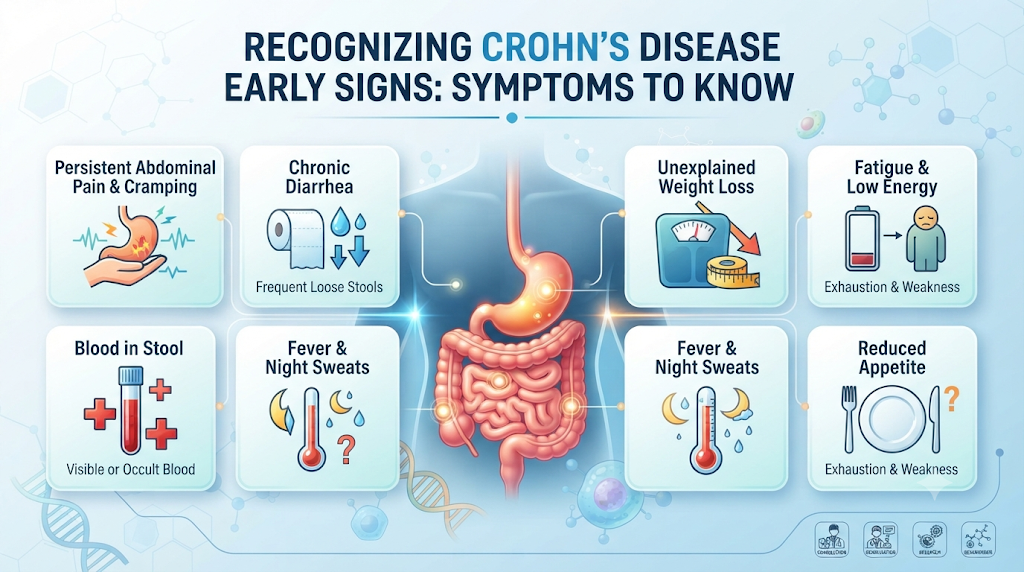
Common Early Signs of Crohn’s Disease
The early symptoms of Crohn’s disease may appear gradually. Some people notice one symptom first, while others experience several together.
The following signs are worth noticing, especially when they continue or return often.
Ongoing Diarrhea
Repeated diarrhea is one of the common symptoms of Crohn’s disease. A person may pass loose or watery stools several times a day.
These changes may continue for weeks or return after short periods of improvement. Some people may also feel an urgent need to use the toilet.
Ongoing diarrhea can affect the body’s fluid balance. It may also make it harder to absorb important nutrients.
Abdominal Pain and Cramping
Recurring stomach pain is another common warning sign. A person may feel cramps, pressure, or discomfort in the belly.
The pain may occur before or after eating. Some people notice it around the lower right side of the abdomen, but its location can vary.
Repeated abdominal pain should be discussed with a doctor. It is important to find out whether inflammation or another digestive problem is responsible.
Unexplained Weight Loss
Losing weight without trying can be another sign of Crohn’s disease. Some people eat less because stomach pain, nausea, or diarrhea affects their appetite.
Inflammation may also affect how the body absorbs nutrients. This can make it harder to maintain a healthy weight.
Unexpected weight changes should not be ignored, especially when they happen with repeated digestive problems.
Fatigue and Low Energy
Feeling tired all the time may be linked to ongoing inflammation. Diarrhea and poor nutrient absorption can also affect energy levels.
Some people may develop anemia, which means the body does not have enough healthy red blood cells. This can cause weakness and tiredness.
Rest may not always improve this type of fatigue. A doctor can check for possible causes through medical tests.
Loss of Appetite
Some people with Crohn’s disease lose interest in food. They may feel full quickly or avoid meals because of stomach discomfort.
A reduced appetite can lead to lower food intake. Over time, this may contribute to weight loss and nutritional problems.
Notice whether appetite changes continue or return regularly.
Bloating and Nausea
Bloating may cause the stomach to feel full, tight, or swollen. Some people also experience nausea or vomiting.
These problems may happen when inflammation affects the normal movement of food through the digestive tract.
Repeated bloating and nausea deserve medical attention, especially when they occur with pain or changes in bowel habits.
Blood or Mucus in Stool
Blood or mucus in stool can occur in some people with Crohn’s disease. Blood may appear bright red, dark, or mixed with the stool.
Mucus may look like a clear or whitish substance. These changes can happen when the digestive lining becomes irritated or damaged.
Blood in stool should always be assessed by a healthcare professional. Other conditions can also cause this symptom.
Fever
Some people experience a raised body temperature during active inflammation. Fever may occur with stomach pain, diarrhea, or a general feeling of illness.
A fever alone does not confirm Crohn’s disease. It can have many causes, including infections.
A doctor should assess repeated or unexplained fever, especially when other digestive symptoms are present.
Common Early Signs of Crohn’s Disease
| Early Sign | What It May Feel or Look Like | Why It Should Be Noticed |
|---|---|---|
| Diarrhea | Repeated loose or watery stools | May suggest ongoing bowel irritation |
| Abdominal pain | Repeated cramps or stomach discomfort | May be linked to digestive inflammation |
| Weight loss | Losing weight without trying | May indicate poor appetite or nutrient absorption |
| Fatigue | Regular tiredness and low energy | May be linked to inflammation or anemia |
| Appetite changes | Eating less or feeling full quickly | May affect nutrition and body weight |
| Blood or mucus in stool | Red blood or unusual mucus in bowel movements | Needs medical assessment to find the cause |
Other Symptoms That May Affect the Body
Crohn’s disease does not always affect the digestive system alone. In some people, inflammation may also affect other parts of the body.
Possible symptoms include:
- Joint pain: Some people experience painful or swollen joints.
- Eye irritation: Redness, pain, or inflammation may affect the eyes.
- Skin changes: Tender red bumps or other skin problems may appear.
- Mouth sores: Small painful sores may develop inside the mouth.
- Anal discomfort: Pain, sores, or small tears may develop around the anus.
These symptoms can occur alongside digestive problems. However, they do not confirm Crohn’s disease by themselves.
Tell your doctor about unusual changes affecting any part of your body. This information can help during a medical assessment.
How Symptoms May Develop Over Time
Crohn’s disease often follows a pattern of flare-ups and remission.
A flare-up is a period when symptoms become more active. During this time, a person may experience more diarrhea, pain, fatigue, or appetite changes.
Remission is a period when symptoms become less noticeable or disappear. Some people may feel well for weeks or months.
However, symptoms can return after a period of improvement. Their timing and severity are different for each person.
A symptom diary can help identify these changes. Record when problems start, how long they last, and whether they affect daily activities.
Remember that feeling better does not always mean inflammation has disappeared. Medical advice and suitable tests can help assess digestive health.
Who May Have a Higher Risk of Crohn’s Disease?
Crohn’s disease can affect people of different ages. Researchers believe several factors may increase the chance of developing it.
Family history: People with a close family member who has inflammatory bowel disease may have a higher risk. Genetic factors may play a role.
Immune system activity: An unusual immune response may contribute to inflammation in the digestive tract. Researchers are still studying how this happens.
Smoking: Smoking is a known risk factor for Crohn’s disease. It may also make the condition harder to manage.
Age: Crohn’s disease can develop at any age. It is often diagnosed in teenagers and younger adults, but older people can develop it too.
Having one or more risk factors does not mean someone has Crohn’s disease. A medical assessment is needed to understand the cause of symptoms.
Crohn’s Disease Symptoms in Children
Children can also develop Crohn’s disease. Their symptoms may look similar to those seen in adults.
Common signs include repeated diarrhea, stomach pain, poor appetite, and unexplained weight changes. Some children may also feel tired or less interested in normal activities.
Growth changes are another important sign. Ongoing inflammation and poor nutrient absorption may affect a child’s normal growth and development.
Some children may grow more slowly than expected or experience delayed puberty. These changes need discussion with a pediatrician.
Parents should keep track of ongoing digestive problems and changes in eating habits. A doctor can check the child’s growth and decide whether further tests are needed.
Early assessment can help identify the cause and support the child’s health.
When Should You See a Doctor?
Repeated digestive problems deserve medical attention, even when they seem mild. Do not wait until symptoms become severe before seeking advice.
Arrange a medical appointment if you experience:
- Diarrhea that continues or keeps returning.
- Repeated abdominal pain or cramping.
- Weight loss without changes in diet or exercise.
- Ongoing tiredness or reduced appetite.
- Blood or mucus in your stool.
- Digestive symptoms that affect normal daily activities.
Blood in stool should be assessed promptly. Bloody diarrhea or black, dark-red stools also need urgent medical advice.
Seek immediate medical care for serious warning signs, including:
- Severe or worsening abdominal pain.
- Heavy rectal bleeding or continuous bleeding.
- Persistent vomiting, especially when you cannot keep fluids down.
- Signs of dehydration, such as very little urine, dizziness, or a very dry mouth.
These symptoms may point to serious problems that need urgent assessment. Do not assume they are caused by Crohn’s disease.
When to Seek Medical Help for Possible Crohn’s Disease
| Symptom or Warning Sign | Recommended Action | Why It Matters |
|---|---|---|
| Recurring diarrhea or stomach pain | Arrange a medical appointment | May need assessment for ongoing digestive problems |
| Unexplained weight loss | Speak with a healthcare professional | May indicate nutritional or digestive problems |
| Blood in stool | Seek prompt medical assessment | May indicate bleeding or bowel inflammation |
| Severe abdominal pain | Seek immediate medical care | Could indicate a serious abdominal problem |
| Heavy or continuous bleeding | Go to an emergency department | Significant blood loss needs urgent attention |
| Persistent vomiting | Seek urgent medical care | May lead to dehydration or indicate a serious problem |
How Doctors Check for Crohn’s Disease
There is no single symptom or test that confirms every case of Crohn’s disease. Doctors use a combination of medical information and tests.
Medical and family history: The doctor asks about symptoms, medicines, family history, and previous health problems.
Physical examination: The doctor may check the abdomen for swelling, tenderness, or unusual changes. They may also check body weight and general health.
Blood tests: These tests may look for anemia and signs of inflammation. They can also help doctors understand a person’s general health.
Stool tests: A stool sample may help identify inflammation or rule out certain infections. Some tests measure a substance called calprotectin, which can indicate bowel inflammation.
Colonoscopy and endoscopy: These tests use a thin, flexible tube with a small camera. A colonoscopy helps doctors examine the colon and the end of the small intestine.
Biopsy: During an endoscopy, doctors may take a small tissue sample. A laboratory examines it for signs of inflammation or other changes.
Imaging tests: MRI or CT scans can help doctors examine parts of the digestive tract. These tests may show areas of inflammation or other problems.
Not everyone needs every test. The doctor chooses suitable tests based on symptoms and medical findings.
Crohn’s Disease or Another Digestive Problem?
Several digestive conditions can cause symptoms similar to Crohn’s disease. This makes it difficult to identify the cause through symptoms alone.
Irritable Bowel Syndrome (IBS): IBS can cause abdominal pain, bloating, diarrhea, and constipation. However, it does not cause the same type of digestive tract inflammation seen in Crohn’s disease.
Digestive infections: Some infections can cause diarrhea, stomach cramps, nausea, and fever. They may improve after the infection clears, depending on its cause.
Ulcerative colitis: This is another type of inflammatory bowel disease. It mainly affects the colon and rectum, while Crohn’s disease can affect different parts of the digestive tract.
Other digestive conditions: Food intolerance and other bowel problems may also cause similar symptoms.
Doctors use medical history and suitable tests to identify the cause. Avoid self-diagnosing or starting treatment based only on online information.
What to Track Before a Medical Appointment
Keeping a record of your symptoms can help make a medical appointment more useful. It gives the doctor a clearer picture of what has been happening.
Consider recording these details:
- Symptom timing: Write down when symptoms started and how often they occur.
- Bowel changes: Record stool frequency, consistency, and any blood or mucus.
- Abdominal pain: Note where the pain occurs, how strong it feels, and how long it lasts.
- Appetite and weight: Track changes in eating habits and body weight.
- Possible food triggers: Note foods that seem linked to discomfort without assuming they cause inflammation.
- Medicines and supplements: Make a list of everything you take, including non-prescription products.
- Family history: Mention whether close relatives have Crohn’s disease or another type of IBD.
Share this information honestly with your doctor. Do not stop prescribed medicines or make major diet changes without medical advice.
Frequently Asked Questions
1. What are the earliest signs of Crohn’s disease?
The earliest signs may include repeated diarrhea, abdominal pain, unexplained weight loss, and tiredness. Some people also experience reduced appetite, bloating, or fever. Symptoms can begin slowly and may come and go. These signs do not confirm Crohn’s disease, so a medical assessment is important.
2. Can Crohn’s disease begin with mild symptoms?
Yes. Crohn’s disease can begin with mild digestive problems. A person may notice occasional stomach cramps, loose stools, or reduced appetite. These symptoms may become more noticeable over time. If they keep returning or affect daily activities, speak with a healthcare professional.
3. Is diarrhea always present in Crohn’s disease?
No. Although diarrhea is a common symptom, not everyone with Crohn’s disease experiences it. Some people may have constipation, abdominal pain, bloating, or appetite changes instead. Symptoms depend on which part of the digestive tract is affected and how active the inflammation is.
4. Where is Crohn’s disease pain usually felt?
Crohn’s disease pain can occur in different parts of the abdomen. Some people feel discomfort around the lower right side, while others experience pain in other areas. The location depends on where inflammation occurs. Repeated or severe abdominal pain should be assessed by a doctor.
5. Can Crohn’s disease cause unexplained weight loss?
Yes. Crohn’s disease may lead to weight loss through reduced appetite, ongoing diarrhea, and poor nutrient absorption. Some people eat less because of pain or nausea. Unexplained weight loss should be discussed with a healthcare professional, especially when it occurs with digestive symptoms.
6. Can Crohn’s disease symptoms come and go?
Yes. Many people experience periods called flare-ups and remission. Symptoms may become stronger during a flare-up and improve during remission. However, symptoms can return after a period of feeling well. Keep track of these changes and discuss recurring problems with your doctor.
7. How is Crohn’s disease different from IBS?
Crohn’s disease causes inflammation in the digestive tract. IBS affects how the bowel works but does not cause the same type of inflammation. Both conditions can cause stomach pain, bloating, and diarrhea. Doctors use medical history and suitable tests to help tell them apart.
8. What tests help doctors diagnose Crohn’s disease?
Doctors may use blood tests, stool tests, colonoscopy, and imaging scans. A biopsy may also help identify changes in the digestive lining. The choice depends on the person’s symptoms and examination findings. No single test is suitable for confirming every case.
9. Can children develop Crohn’s disease?
Yes. Children can develop Crohn’s disease and may experience diarrhea, abdominal pain, poor appetite, and weight changes. Some may also show slow growth or delayed puberty. Parents should discuss ongoing symptoms or unusual growth changes with a pediatrician.
10. When should someone seek medical help for possible Crohn’s disease?
Seek medical advice for repeated diarrhea, ongoing stomach pain, unexplained weight loss, or blood in stool. Severe abdominal pain, heavy bleeding, persistent vomiting, and serious signs of dehydration need immediate medical attention. A qualified healthcare professional can assess symptoms and arrange suitable tests.
Final Thoughts
Recognizing Crohn’s Disease Early Signs can help people take better care of their digestive health. Repeated diarrhea, stomach pain, tiredness, and unexplained weight loss deserve attention.
These symptoms do not always mean Crohn’s disease. However, early medical assessment can help identify the cause and guide the next steps.
Avoid self-diagnosis and speak with a qualified healthcare professional about ongoing digestive problems. For general health information, ASKDOCTORLIVE.COM can be a useful resource for exploring medical topics and learning more about health concerns.