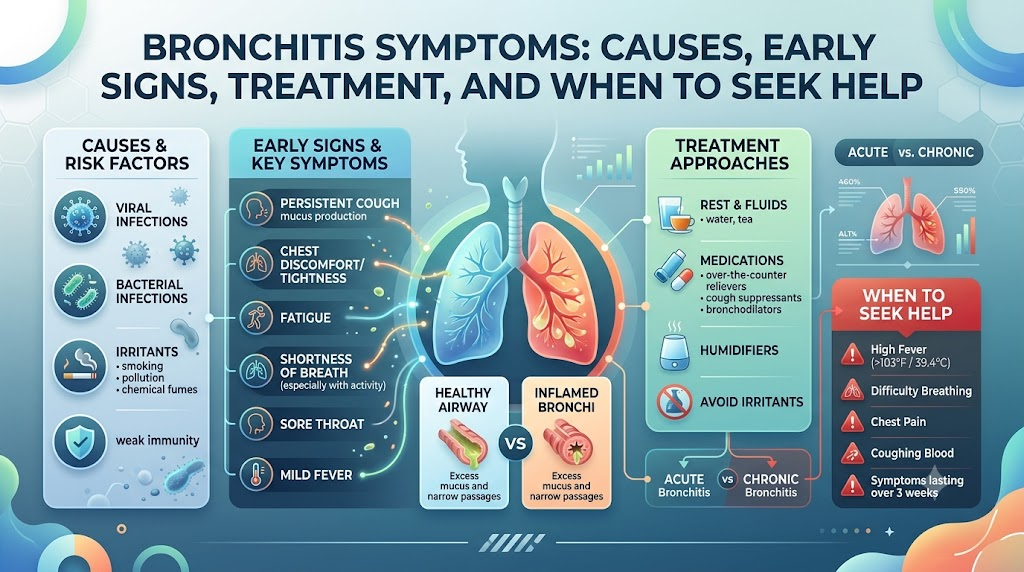
Bronchitis is a condition that causes swelling in the airways leading to your lungs. It often causes a cough, and some people bring up mucus. Symptoms may start like a common cold and can last for several weeks.
Understanding bronchitis symptoms can help you know what to expect and when to seek care. You can find more general health information at Askdoctorlive. This article explains early signs, common causes, home care, treatment options, and warning signs that need medical attention.
What Is Bronchitis?
Bronchitis happens when the bronchial tubes become swollen and irritated. These tubes carry air to and from your lungs. Swelling can make you cough and produce extra mucus.
Bronchitis can be short-term or long-term. Acute bronchitis often follows a cold or another breathing infection. Chronic bronchitis involves ongoing airway problems and needs medical care.
Bronchitis symptoms can look like those of a cold, flu, asthma, or pneumonia. These illnesses may share signs, so symptoms alone cannot confirm the cause. A healthcare professional can help identify the problem.
What Are the Common Symptoms of Bronchitis?
Bronchitis symptoms can range from mild to more troubling. Not everyone has every symptom, and the length of illness can vary.
Persistent Cough
A cough is the main sign of bronchitis. It may begin with a dry, tickling feeling in your throat. Later, you may cough more often or bring up mucus.
The cough can remain after other symptoms improve. Repeated coughing may also disturb sleep and make daily tasks harder.
Cough With Mucus
Some people develop a cough with mucus. The mucus may look clear, white, yellow, or green. Its color alone cannot show whether bacteria caused the illness.
You may notice more mucus in the morning or after lying down. Tell your doctor if the amount increases or you see blood.
Chest Discomfort
Frequent coughing can make the chest muscles sore. Some people feel tightness or mild discomfort when they cough.
Severe or lasting chest pain needs prompt medical attention. Do not assume that all chest pain comes from bronchitis.
Sore Throat and Runny Nose
Bronchitis may begin with a sore throat, runny nose, or blocked nose. These signs often occur with a cold or another respiratory infection.
Throat irritation may continue because of frequent coughing. Drinking warm fluids may help soothe the throat.
Tiredness, Fever, and Body Aches
Some people feel weak or tired during an illness. Mild fever and body aches may also occur, especially when a virus causes the infection.
Rest can help your body recover. A high or lasting fever needs medical advice because it may point to another problem.
Wheezing and Shortness of Breath
Wheezing is a whistling sound during breathing. It can happen when the airways become narrow or irritated.
Some people also feel short of breath. Severe breathing trouble needs emergency care. People with asthma or other lung conditions may need extra attention.
What Are the Early Signs of Bronchitis?
Early bronchitis symptoms often resemble a common cold. You may first notice a sore throat, runny nose, tiredness, or mild body aches.
A cough may develop over the next few days. It may start dry and later produce mucus. Some people also notice chest soreness from repeated coughing.
These early signs do not prove that you have bronchitis. Flu, COVID-19, and other respiratory illnesses can cause similar symptoms. Watch how you feel and seek medical advice when symptoms worsen or concern you.
What Is the Difference Between Acute and Chronic Bronchitis?
Bronchitis has two main forms. Acute bronchitis is usually short-term, while chronic bronchitis involves a long-lasting problem.
Acute Bronchitis
Acute bronchitis often follows a viral infection, such as a cold. The cough may last for several weeks, even after other symptoms improve.
Most cases get better with time and supportive care. Antibiotics usually do not help when a virus causes the illness.
Chronic Bronchitis
Chronic bronchitis causes ongoing cough and mucus production. It often relates to long-term airway irritation, especially from smoking.
It may occur as part of chronic obstructive pulmonary disease, known as COPD. COPD is a long-term lung condition that makes breathing harder.
Doctors use specific medical rules to identify chronic bronchitis. A cough lasting only a few days does not mean you have this condition. Ongoing symptoms need medical assessment and a suitable care plan.
What Causes Bronchitis?
The causes of bronchitis depend on its type. Most cases of acute bronchitis result from viruses.
Common causes and triggers include:
- Viruses: Cold and flu viruses can inflame the airways.
- Bacteria: Some bacteria can cause airway infections, but this is less common in acute bronchitis.
- Tobacco smoke: Smoking can irritate the airways and increase the risk of long-term breathing problems.
- Secondhand smoke: Breathing other people’s smoke can also harm the airways.
- Dust and pollution: Dirty air may trigger irritation and coughing.
- Chemical fumes: Strong fumes from some products can irritate the lungs.
Mucus color does not prove that you have a bacterial infection. A doctor can assess your symptoms and decide whether testing or treatment is needed.
Who Is More Likely to Develop Bronchitis?
Anyone can develop acute bronchitis. Some people have a greater chance of getting it or developing complications.
Smoking and exposure to polluted air can irritate the airways. Frequent contact with people who have respiratory infections may also increase exposure to viruses.
People with asthma, COPD, heart disease, or weakened immune systems may need extra care. Older adults and young children may also face a higher risk of complications.
These factors do not mean that serious illness will always occur. Seek medical advice early if you have an ongoing health condition and develop breathing symptoms.
How Do Doctors Diagnose Bronchitis?
A healthcare professional may ask when your cough began and how it has changed. They may ask about fever, mucus, smoking, medicines, and other health problems.
The doctor may listen to your lungs and check your breathing. They may also check your temperature and other signs of illness.
Many cases of acute bronchitis do not need special tests. A chest X-ray may be needed if the doctor suspects pneumonia. Other tests may help when symptoms suggest another illness.
The tests depend on your symptoms and exam. Your clinician will decide which tests, if any, are useful.
Common Bronchitis Symptoms and What They May Mean
Symptoms can overlap with other illnesses. This table offers general guidance, not a diagnosis.
| Symptom | What a person may notice | When to seek medical advice |
|---|---|---|
| Persistent cough | Cough that continues for days or weeks | If it lasts over three weeks or worsens |
| Mucus | Clear, white, yellow, or green mucus | If symptoms worsen or blood appears |
| Chest discomfort | Soreness after frequent coughing | For severe or lasting chest pain |
| Mild fever | Feeling warm or having a raised temperature | If fever is high or lasts |
| Wheezing | Whistling sound when breathing | If new, worsening, or linked to breathing trouble |
| Shortness of breath | Breathing feels harder than usual | Seek urgent care if severe |
| Blood in mucus | Red streaks or blood when coughing | Get prompt medical assessment |
Severe breathing trouble, significant chest pain, or coughing up blood needs prompt medical assessment. Seek emergency help for severe symptoms.
How Can You Care for Bronchitis Symptoms at Home?
Many mild cases of acute bronchitis improve with time. Simple care may help you feel more comfortable while you recover.
Get Enough Rest
Rest when you feel tired. You may need to reduce hard exercise or busy tasks for a short time.
Return to your usual activities as your energy improves. Avoid pushing yourself when you feel weak or breathless.
Drink Enough Fluids
Water, soup, and warm drinks can help keep you hydrated. Warm drinks may also soothe an irritated throat.
If a doctor has told you to limit fluids, follow that advice. Ask your healthcare professional if you are unsure how much to drink.
Use Humid Air When Helpful
A clean humidifier may ease throat irritation for some people. Follow the device instructions and clean it often to prevent mold and germs.
Avoid breathing over bowls of boiling water. The hot water and steam can cause serious burns.
Avoid Smoke and Strong Fumes
Do not smoke, and avoid secondhand smoke when possible. Smoke can irritate the airways and make coughing worse.
Try to stay away from dust, heavy pollution, and strong chemical fumes. Improve indoor air when possible.
Soothe Your Throat Safely
Honey may help calm a cough in adults and children over one year old. You can add it to a warm drink if it suits you.
Never give honey to a baby under one year old. Ask a doctor or pharmacist before using cough or cold medicines, especially for young children or people with other health conditions.
Do Antibiotics Help Treat Bronchitis?
Most cases of acute bronchitis are caused by viruses. Antibiotics treat certain bacterial infections, so they usually do not help viral bronchitis.
Yellow or green mucus does not prove that bacteria caused the illness. Doctors consider your full symptoms and health history before deciding whether antibiotics are needed.
A clinician may prescribe antibiotics if they suspect or confirm a bacterial illness. Do not take leftover antibiotics or share medicines with others. Use antibiotics only when a qualified healthcare professional prescribes them for you.
When Should You See a Doctor for Bronchitis?
Seek medical advice if your cough lasts longer than three weeks. You should also contact a doctor if symptoms worsen or fail to improve.
Arrange medical advice if you notice:
- A high or lasting fever
- Blood in your mucus
- New or worsening wheezing
- Shortness of breath
- Repeated episodes of bronchitis
- Symptoms that affect an existing heart or lung condition
- Symptoms when you have a weakened immune system
Pregnant people, older adults, and people at higher risk may need advice sooner. Do not delay care if symptoms worry you or make daily tasks difficult.
What Are the Emergency Warning Signs?
Some symptoms may signal a serious breathing problem or another emergency. Seek emergency medical help if you have:
- Severe difficulty breathing
- Blue or grey lips or skin
- Severe or persistent chest pain
- New confusion or trouble staying awake
- Rapid worsening with signs of serious illness
Do not wait at home for these symptoms to pass. Get emergency help at once.
How Can You Reduce the Risk of Bronchitis?
You cannot prevent every case of bronchitis. However, some daily habits may lower your risk of infection and airway irritation.
Wash your hands often with soap and water. Cover your mouth and nose when coughing or sneezing. Clean shared surfaces when needed, especially during respiratory illness.
Avoid smoking and secondhand smoke. Reduce exposure to dust, pollution, and chemical fumes when possible.
Stay up to date with recommended vaccines. Ask a healthcare professional which vaccines suit your age and health. Vaccines can help prevent some infections that affect the lungs, but they cannot prevent every cause of bronchitis.
Daily Habits That May Help Protect Your Airways
Small changes can help protect your breathing health. Choose habits that fit your daily life.
| Healthy habit | How it may help | Simple action |
|---|---|---|
| Handwashing | Lowers the spread of many germs | Wash hands with soap and water |
| Avoiding smoke | Reduces airway irritation | Stay away from tobacco smoke |
| Improving indoor air | May reduce exposure to irritants | Ventilate rooms when safe |
| Covering coughs | Helps limit germ spread | Use a tissue or your elbow |
| Cleaning shared surfaces | Helps reduce germs on common items | Clean frequently touched areas |
| Discussing vaccines | Helps protect against some respiratory infections | Ask a healthcare professional what you need |
These steps reduce some risks but cannot prevent every respiratory illness. Seek care if symptoms develop or worsen.
Key Takeaways About Bronchitis Symptoms
Bronchitis often causes a persistent cough, sometimes with mucus. It may begin after a cold, and the cough can last for several weeks.
Most cases of acute bronchitis are caused by viruses. Rest, fluids, and avoiding smoke may help ease mild symptoms.
Mucus color alone does not show whether antibiotics are needed. Seek medical advice for a lasting cough, worsening symptoms, or blood in mucus. Severe breathing trouble and serious chest pain need emergency care.
Frequently Asked Questions About Bronchitis Symptoms
1. What are the most common symptoms of bronchitis?
The main symptom is a persistent cough, which may produce mucus. Other symptoms can include chest discomfort, sore throat, tiredness, mild fever, and wheezing. Symptoms vary from person to person.
2. What are the early signs of bronchitis?
Early signs may include a runny nose, sore throat, tiredness, and a mild cough. The cough may become stronger or produce mucus over time. These signs can also occur with other respiratory illnesses.
3. Can bronchitis cause a cough with mucus?
Yes, bronchitis can cause a cough that brings up mucus. The mucus may be clear, white, yellow, or green. Its color alone cannot show whether the cause is bacterial.
4. How long do bronchitis symptoms usually last?
Acute bronchitis often improves over a few weeks. A cough may continue after other symptoms have gone away. See a doctor if your cough lasts longer than three weeks or gets worse.
5. What is the difference between acute and chronic bronchitis?
Acute bronchitis is usually short-term and often follows a viral infection. Chronic bronchitis causes ongoing cough and mucus production and may be linked to COPD. A healthcare professional can assess persistent symptoms.
6. Can bronchitis go away without antibiotics?
Yes, many cases of acute bronchitis improve without antibiotics because viruses cause most cases. Rest and fluids may help ease symptoms. A doctor can assess whether another illness needs different treatment.
7. Does yellow or green mucus mean I need antibiotics?
No, yellow or green mucus does not prove that you have a bacterial infection. Doctors consider your symptoms and health history when deciding on treatment. Do not use leftover antibiotics without medical advice.
8. When should I see a doctor for bronchitis?
Seek medical advice if your cough lasts over three weeks, symptoms worsen, or you develop lasting fever. Blood in mucus, wheezing, and shortness of breath also need assessment. People with existing heart or lung conditions may need advice sooner.
9. Which bronchitis symptoms need emergency care?
Severe breathing trouble, blue or grey lips, severe chest pain, and new confusion need emergency care. Rapid worsening can also signal a serious illness. Seek emergency help immediately if these signs appear.
10. How can I reduce my risk of bronchitis?
Wash your hands, cover coughs, and avoid tobacco smoke. Reduce exposure to dust and strong fumes when possible. Ask a healthcare professional about vaccines that help prevent respiratory infections.
Conclusion
Recognizing bronchitis symptoms can help you understand when home care may be enough. However, other illnesses can cause similar signs, so ongoing symptoms deserve attention.
Rest, fluids, and avoiding airway irritants may help with mild cases. Seek medical advice if symptoms persist or worsen, and get emergency help for serious breathing problems. A qualified healthcare professional can help you understand your symptoms and choose the right care.