Introduction
Heart disease remains one of the most significant health challenges facing individuals globally. While the term can sound intimidating, the reality is that many forms of heart-related conditions are rooted in lifestyle factors that are well within our control. Prevention is always more effective—and significantly more empowering—than treatment. This guide is designed to provide you with a clear, actionable path toward a healthier heart. Whether you are looking to make small adjustments or significant lifestyle shifts, you will find the information here to support your journey. For more expert resources and reliable medical guidance, we invite you to explore ASKDOCTORLIVE.
What Is Heart Disease?
Heart disease is a broad term that describes a range of conditions affecting the heart and blood vessels. It includes issues such as coronary artery disease, heart rhythm problems (arrhythmias), and heart defects present at birth.
Most often, heart disease develops over time as plaque builds up in the arteries, causing them to narrow and harden—a process known as atherosclerosis. This process restricts blood flow and can lead to serious events like heart attacks or strokes. Understanding that this is often a gradual process is crucial because it highlights why early, consistent preventive care is so effective.
Why Heart Disease Prevention Matters
Investing in your heart health is essentially an investment in your entire future. Prevention does more than just lower the risk of life-altering events like heart attacks or strokes; it fundamentally improves your day-to-day existence.
When you prioritize your cardiovascular health, you often experience:
- Higher energy levels.
- Better physical stamina and fitness.
- Improved mental clarity and mood.
- Reduced long-term healthcare costs.
- A significantly higher quality of life as you age.
Common Risk Factors for Heart Disease
Many factors contribute to heart disease. Some are out of our control, such as family history and age, but many others are linked to our daily habits. Being aware of these risk factors is the first step toward mitigation.
Heart Disease Risk Factors Table
| Risk Factor | Possible Impact |
| High Blood Pressure | Damages artery walls over time |
| High Cholesterol | Leads to plaque buildup in arteries |
| Diabetes | Increases cardiovascular stress and risk |
| Smoking | Reduces oxygen supply and damages blood vessels |
| Obesity | Increases the heart’s workload |
| Physical Inactivity | Weakens heart muscle and cardiovascular fitness |
| Chronic Stress | Can cause temporary spikes in blood pressure |
Early Warning Signs of Heart Disease
Your body often provides subtle clues when your cardiovascular system is struggling. It is important to pay attention to these signs, especially if they persist or occur during physical exertion:
- Chest Discomfort: Pain, pressure, or tightness in the chest.
- Shortness of Breath: Difficulty breathing, even during light activity.
- Unusual Fatigue: Feeling exhausted even after adequate rest.
- Dizziness: Feeling lightheaded or faint without a clear cause.
- Irregular Heartbeat: Feeling palpitations or “skipping” beats.
- Swelling: Fluid retention in the legs, ankles, or feet.
- Referred Pain: Discomfort or numbness radiating into the arms, neck, jaw, or back.
Heart-Healthy Lifestyle Habits
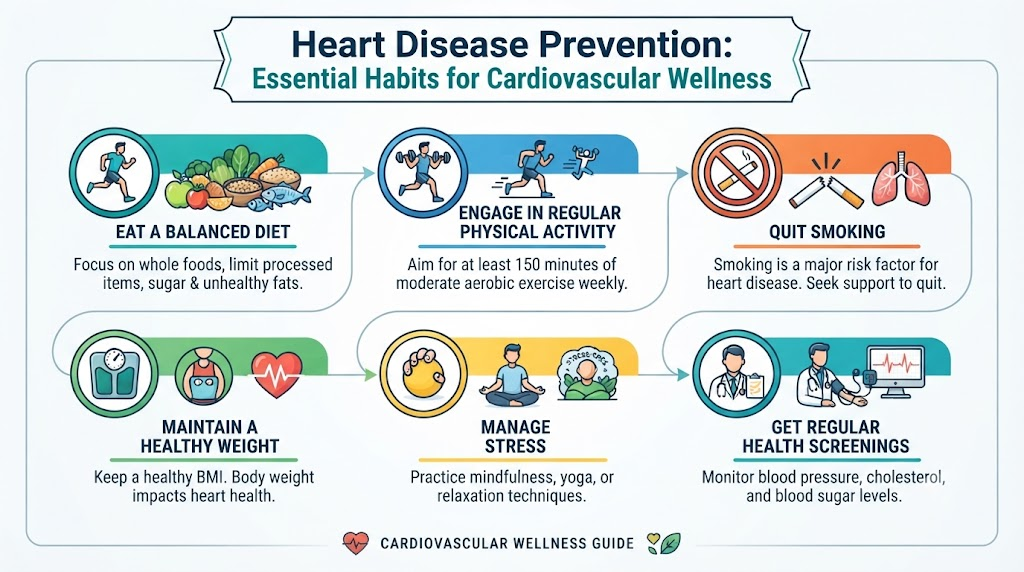
A heart-healthy lifestyle is built on consistency, not perfection. Small, sustainable changes are far more effective than radical, temporary diets.
Heart Healthy Foods Table
| Food | Heart Benefit |
| Fruits | Rich in vitamins and antioxidants |
| Vegetables | High in fiber and essential nutrients |
| Whole Grains | Support healthy cholesterol levels |
| Fish | Rich in Omega-3 fatty acids |
| Nuts | Contain healthy fats and protein |
| Olive Oil | Provides heart-healthy monounsaturated fats |
Exercise and Physical Activity
Movement is medicine for the heart. The goal is to keep your heart muscle strong and your blood vessels flexible.
- Aerobic Exercise: Activities like walking, swimming, or cycling increase your heart rate and improve oxygen circulation.
- Strength Training: Lifting weights or using resistance bands helps manage weight and blood sugar levels.
- Weekly Recommendation: Aim for at least 150 minutes of moderate-intensity aerobic activity each week.
Importance of Regular Health Screenings
You cannot manage what you do not measure. Regular screenings are essential for catching silent issues like high blood pressure or high cholesterol before they cause damage.
- Blood Pressure: Check it regularly, as it is often called the “silent killer” due to a lack of obvious symptoms.
- Cholesterol & Blood Sugar: These tests provide a snapshot of your metabolic health and cardiovascular risk.
- Routine Evaluations: Use these screenings as a conversation starter with your doctor to build a personalized health plan.
Common Myths vs Facts
| Myth | Fact |
| Heart disease only affects the elderly. | It can impact adults at various stages of life. |
| Thin people cannot develop heart disease. | Anyone can be at risk regardless of body type. |
| Exercise alone prevents heart disease. | Diet and lifestyle habits are equally vital. |
| Chest pain is always the first symptom. | Symptoms are unique and vary between individuals. |
When Should You See a Doctor?
Do not wait for a crisis to seek medical guidance. You should schedule a visit if you have:
- Persistent chest pain or shortness of breath.
- A known family history of early heart disease.
- Diagnosed high blood pressure or abnormal cholesterol levels.
- Frequent episodes of sudden dizziness or fainting.
Real-Life Prevention Examples
- The Power of Walking: A person who was previously inactive starts taking a 20-minute brisk walk daily. Over months, they notice lower resting heart rates and improved blood pressure readings.
- Small Diet Shifts: By replacing processed snacks with raw nuts, fruits, and more vegetables, a patient manages to bring their cholesterol levels into a healthy range without needing medication.
- Smoking Cessation: After quitting smoking, an individual finds that their breathing significantly improves and their risk of clot formation drops, providing immediate benefits to their vascular health.
Frequently Asked Questions (FAQs)
- What is the best way to prevent heart disease?
A combination of a balanced diet, regular exercise, and regular health screenings. - Can heart disease be prevented completely?
While you cannot control all factors (like genetics), you can significantly lower your risk through healthy choices. - How often should blood pressure be checked?
At least once a year, or more frequently if advised by your doctor. - Which foods are healthiest for the heart?
Focus on whole foods: leafy greens, berries, fatty fish, and whole grains. - Does stress increase heart disease risk?
Yes, chronic stress can negatively impact blood pressure and encourage unhealthy habits. - Can exercise reverse heart disease risk?
Consistent exercise can improve heart function and help manage conditions like high blood pressure. - What are the early warning signs?
Chest pain, fatigue, and shortness of breath are key signs to watch for. - Is heart disease hereditary?
Genetics play a role, but lifestyle habits can often overcome or mitigate those risks. - How important is cholesterol control?
Very important, as high cholesterol contributes to artery-clogging plaque. - How can families support heart health?
By cooking heart-healthy meals together and staying active as a unit. - Does diabetes increase heart disease risk?
Yes, high blood sugar damages blood vessels over time. - How much exercise is recommended?
150 minutes of moderate activity per week is a great standard goal. - Can young adults develop heart disease?
Yes, poor lifestyle choices at a young age can set the stage for later health issues. - When should someone see a cardiologist?
If you have concerning symptoms or significant risk factors identified by your primary doctor. - What lifestyle habits make the biggest difference?
Quitting smoking and maintaining a healthy weight are typically the most impactful.
Final Thoughts
Preventing heart disease is a lifelong commitment to yourself. It is not about radical transformations overnight, but rather about the accumulation of small, healthy habits—choosing to move more, eating nutrient-dense foods, and staying proactive with your medical checkups. By taking these steps, you are protecting your heart and ensuring a higher quality of life for years to come.Remember, your health is a journey, and you don’t have to navigate it alone. For reliable healthcare information, expert tips, and professional guidance on your wellness journey, continue exploring ASKDOCTORLIVE. Take charge of your heart health today.