Introduction
Mild headaches are a common experience for many, often appearing as a dull, steady ache that can interfere with your daily comfort. These headaches are frequently triggered by the stresses of everyday life, such as busy schedules, screen time, or simply forgetting to drink enough water throughout the day. While they are usually harmless and temporary, understanding how to manage them naturally can significantly improve your quality of life.The key to managing mild headaches often lies in recognizing the underlying triggers and applying gentle, non-invasive remedies. By understanding the causes, you can take control of your well-being through simple lifestyle adjustments. This guide aims to provide practical, evidence-based information to help you navigate these moments of discomfort safely. For those seeking reliable health information and continuous guidance on maintaining wellness, you can explore the resources at AskDoctorLive. Throughout this article, we will explore effective home remedies, preventive lifestyle strategies, and the importance of knowing when to consult a healthcare professional.
Understanding Mild Headaches
A mild headache is typically characterized by a non-throbbing pain or a sense of pressure around the head, forehead, or neck. Unlike intense migraines or neurological episodes, mild headaches rarely affect your ability to function entirely but can still be quite bothersome.
Common Differences:
- Mild Headaches: Often caused by external factors like posture or dehydration; usually respond well to rest.
- Tension Headaches: Often feel like a tight band around the head, frequently linked to stress.
- Migraines: These involve more severe, throbbing pain, often accompanied by sensitivity to light, sound, or nausea.
HEADACHE OVERVIEW TABLE
| Type of Headache | Description | Common Triggers |
| Tension Headache | Tight band-like pressure | Stress, poor posture |
| Dehydration Headache | Dull ache throughout the head | Not drinking enough water |
| Stress Headache | Tension in neck and shoulders | Emotional or physical strain |
| Eye Strain Headache | Pain focused behind eyes | Excessive screen time |
| Sinus Headache | Pressure in cheekbones/forehead | Allergies or sinus congestion |
Common Causes of Mild Headaches
Stress and Anxiety
High-stress environments cause muscles in the neck and scalp to tighten, leading to what is commonly known as a tension headache.
Lack of Sleep
Sleep is restorative. When you don’t get enough rest, your body struggles to regulate pain sensitivity, making you more prone to headaches.
Dehydration
Even mild dehydration can cause your brain tissue to lose fluids, resulting in a dull, persistent headache that resolves quickly once you rehydrate.
Skipping Meals
Fluctuations in blood sugar levels can trigger headaches, especially if you go too long without refueling your body with balanced nutrition.
Excess Screen Time
Staring at digital devices for prolonged periods causes “digital eye strain,” which manifests as pain around the eyes and forehead.
Poor Posture
Slouching at a desk or looking down at a phone puts immense strain on the neck muscles, which radiates pain upward into the head.
Caffeine Imbalance
Caffeine is a stimulant. Both consuming too much and withdrawing from regular amounts can trigger a “caffeine headache.”
Natural Home Remedies for Mild Headaches
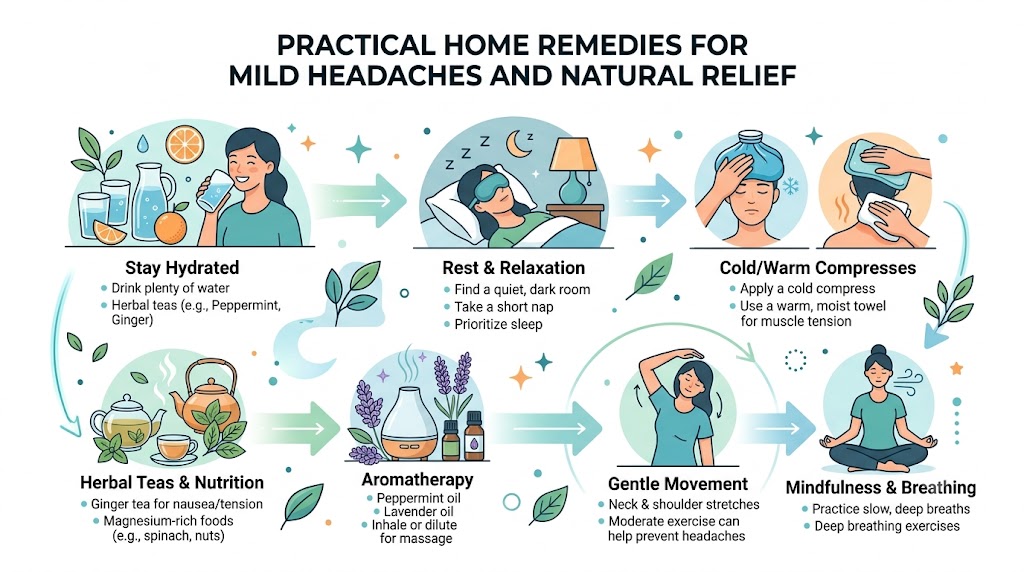
Drinking Enough Water
The most immediate fix for a dehydration-related headache is to slowly drink a glass of cool water. Avoid gulping large amounts too quickly.
Cold or Warm Compress
Apply a cold pack to your forehead to reduce inflammation or a warm towel to your neck to relax tight muscles.
Caffeine in Small Amounts
If you are used to a daily cup, a small amount of coffee or tea may help relieve a headache by constricting blood vessels.
Rest in a Dark Room
Sensory overload can worsen any headache. Closing your eyes in a quiet, dimly lit room allows your nervous system to reset.
Gentle Neck and Shoulder Stretching
Slowly rotating your neck or shrugging your shoulders can release the tension that contributes to most mild headaches.
Deep Breathing and Relaxation
Controlled breathing exercises help lower stress hormones and encourage muscle relaxation throughout the body.
HEADACHE REMEDIES TABLE
| Remedy | How It Helps | When to Use |
| Water Intake | Rehydrates brain tissue | At the first sign of pain |
| Cold Compress | Constricts vessels/numbing | For sharp or throbbing pain |
| Warm Compress | Relaxes tight muscles | For tension in neck/shoulders |
| Caffeine | Constricts dilated vessels | For mild tension headaches |
| Rest in Dark Room | Reduces sensory input | When pain is aggravated by light |
| Herbal Remedies | Provides calming effects | When needing gentle relief |
Lifestyle Tips to Prevent Mild Headaches
Prevention is the most effective form of management. By building these habits into your daily routine, you can reduce the frequency of headaches:
- Regular Sleep Schedule: Aim for 7–9 hours of consistent sleep.
- Balanced Diet: Eat at regular intervals to keep blood sugar stable.
- Hydration Habits: Keep a water bottle nearby throughout the day.
- Exercise and Movement: Incorporate light movement to improve blood flow.
- Stress Control: Practice mindfulness or short breaks during work.
- Screen-Time Breaks: Follow the 20-20-20 rule—every 20 minutes, look at something 20 feet away for 20 seconds.
LIFESTYLE PREVENTION TABLE
| Habit | Benefit |
| Hydration | Prevents volume-depletion headaches |
| Sleep Routine | Regulates pain threshold and stress |
| Exercise | Releases endorphins and improves posture |
| Stress Management | Reduces physical muscle tension |
| Screen Breaks | Prevents eye fatigue |
Foods That May Help or Trigger Headaches
Helpful Foods
Hydrating foods like cucumbers, melons, and leafy greens support fluid balance. Magnesium-rich foods like almonds and spinach can also help relax blood vessels.
Trigger Foods
Everyone’s triggers are different, but some find that aged cheeses, processed meats (containing nitrates), or foods with MSG may contribute to their headache frequency.
FOOD GUIDE TABLE
| Category | Examples | Effect on Headaches |
| Hydrating Foods | Watermelon, Cucumber | Maintains fluid levels |
| Trigger Foods | Aged Cheese, Processed Meats | May trigger sensitivity in some |
| Balanced Foods | Whole grains, Lean proteins | Stabilizes blood sugar levels |
When Mild Headaches May Need Attention
While most mild headaches are managed at home, you should seek medical advice if you experience:
- A sudden, “thunderclap” headache (the worst of your life).
- Vision changes, slurred speech, or confusion.
- Headaches accompanied by a high fever or stiff neck.
- Headaches that start after a head injury.
- A significant change in the pattern of your headaches.
How to Track Headache Patterns
Keeping a diary is a powerful tool to identify patterns. By noting these details, you can pinpoint specific triggers to avoid.
HEADACHE TRACKING TABLE
| Information to Record | Why It Helps |
| Time of Headache | Identifies daily stress patterns |
| Food Intake | Helps spot dietary triggers |
| Sleep Hours | Shows correlation with fatigue |
| Stress Level | Links emotional state to physical pain |
| Symptoms | Distinguishes between headache types |
Common Mistakes People Make
- Overusing Painkillers: Relying on medication too often can lead to “medication-overuse” headaches.
- Ignoring Hydration: Many people wait until they are thirsty; hydration should be proactive.
- Skipping Meals: This leads to blood sugar dips, a common and avoidable headache trigger.
- Ignoring Triggers: Failing to observe what happens right before a headache prevents long-term prevention.
Real-Life Patient Scenarios
- Dehydration Scenario: A busy professional realizes they haven’t had water for six hours and has a dull ache. They drink two glasses of water and rest, resolving the headache within 30 minutes.
- Stress Scenario: After a long meeting, a worker feels neck tension. They take a 5-minute break, stretch, and practice deep breathing, which prevents the headache from escalating.
- Screen-Time Scenario: A student spends four hours studying. They begin to feel eye pressure, use the 20-20-20 rule, and the pain fades.
Future of Headache Management
Technology is changing how we manage wellness:
- AI Tracking: Apps that analyze your data to predict when you are at high risk for a headache.
- Wearables: Devices that track posture and muscle tension.
- Smart Alerts: Reminders to drink water or take breaks before a headache starts.
FUTURE OF HEADACHE CARE TABLE
| Innovation | Potential Benefit |
| AI Tracking | Identifying subtle, hidden triggers |
| Wearables | Real-time posture and tension monitoring |
| Health Apps | Simplified diary and pattern analysis |
| Smart Alerts | Proactive prevention |
| Digital Monitoring | Data-driven discussions with your doctor |
FAQs
- What causes mild headaches?
They are mostly caused by stress, dehydration, poor posture, or lack of sleep. - Are home remedies effective?
Yes, for mild headaches, natural remedies often resolve the pain without needing pills. - Can dehydration cause headaches?
Absolutely; it is one of the most common causes of simple headaches. - How long do mild headaches last?
Usually from a few minutes to a few hours once the trigger is removed. - What foods help headaches?
Foods high in magnesium and water content are generally helpful. - When should I worry about a headache?
If it is sudden, severe, or accompanied by neurological symptoms like weakness. - Can stress trigger headaches?
Yes, it causes muscle tension in the head and neck. - Is caffeine good or bad?
It depends; small amounts can help, but too much can trigger headaches. - How can I prevent headaches naturally?
By maintaining a consistent sleep, hydration, and movement schedule. - Are headaches related to sleep?
Poor sleep quality is a major contributor to headache frequency. - Do screen breaks help?
Yes, they prevent eye fatigue and associated tension. - Should I eat if I have a headache?
If you haven’t eaten in a while, a small, balanced snack may help. - Is heat better than cold?
Cold is better for throbbing pain; heat is better for muscle tension. - Can posture cause head pain?
Yes, neck tension from bad posture often radiates to the head. - How can I track my triggers?
Keep a simple notebook or a digital log for a few weeks to spot patterns.
Final Thoughts
Managing mild headaches is about listening to your body and addressing the root cause rather than just masking the pain. By focusing on hydration, rest, posture, and stress management, you can significantly reduce the impact these headaches have on your daily life. Remember that consistency in your lifestyle habits is your best defense.
If you find that your headaches are becoming more frequent or severe, it is always wise to keep a detailed log and consult with a professional. For ongoing wellness tips, health management tools, and reliable medical information, continue exploring AskDoctorLive to support your journey toward a healthier, more balanced lifestyle.