Introduction
Skin is the body’s primary shield against the environment, but when that shield weakens, conditions like eczema can take root. Eczema is a broad term for a group of chronic inflammatory conditions that cause the skin to become dry, red, irritated, and intensely itchy. Millions of individuals worldwide navigate this condition daily, experiencing symptoms that vary dramatically in intensity from mild dryness to severe, painful flaking.To help you explore trusted skin health resources, ask medical questions, and review expert educational articles from the comfort of home, you can visit ASKDOCTORLIVE, an educational dermatology and skin health guide dedicated to supporting your wellness journey.
What Is Eczema?
Eczema, most frequently referred to in medical settings as atopic dermatitis, is a chronic inflammatory skin condition characterized by an overactive immune response and structural weaknesses in the skin barrier. To understand eczema, it helps to picture healthy skin as a well-constructed brick wall. In a healthy individuals, the “bricks” (skin cells) are bound securely by a rich matrix of “mortar” (lipids, fats, and moisture-retaining proteins like filaggrin). This barrier keeps essential moisture locked inside while blocking out environmental irritants, allergens, and microbes.
In skin affected by eczema, a genetic variation or an environmental disruption causes a shortage of these crucial lipids and structural proteins. As a result, the “mortar” crumbles, creating microscopic gaps in the barrier. Moisture evaporates rapidly—a process known as transepidermal water loss—leaving the skin dry, brittle, and highly reactive. When everyday irritants penetrate these gaps, they trigger an inflammatory response from the immune system, leading to redness, swelling, and severe itching.
It is important to understand that eczema is non-contagious; it cannot be passed from person to person through physical contact. It also differs distinctly from other common skin rashes:
- Contact Dermatitis: A localized allergic reaction triggered only when the skin directly touches a specific substance, like nickel or a harsh chemical.
- Psoriasis: A chronic autoimmune condition driven by rapid skin cell overproduction, typically causing thick, silvery scales on the elbows and knees.
- Atopic Dermatitis (Eczema): An ongoing, systemic sensitivity that arises from an internal skin barrier defect, presenting as widespread, intensely itchy patches that flare up periodically.
Early Symptoms of Eczema
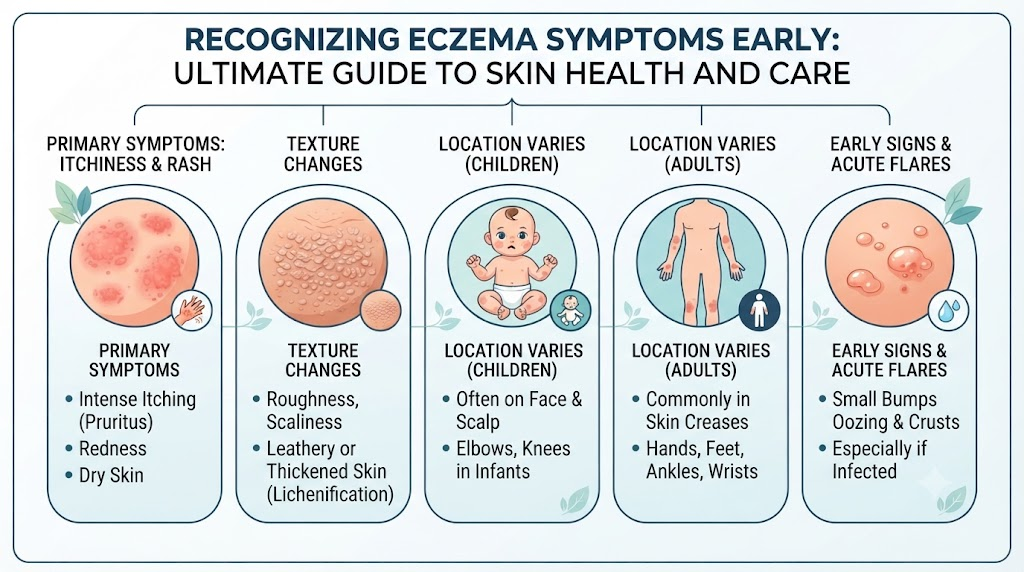
Eczema does not always appear suddenly as a fully formed, widespread rash. More often, it begins with subtle structural changes in the skin that worsen gradually if left unmanaged.
Persistent Itching (Pruritus)
Intense, unyielding itching is universally recognized as the hallmark early symptom of eczema. Famously described by dermatologists as “the itch that rashes,” this sensation often develops before any visible irritation appears on the skin surface. The itch can become especially pronounced during the evening or overnight, frequently disrupting sound sleep and leading to involuntary scratching.
Dry or Rough Skin
In its earliest phases, eczema often mimics simple dry skin. However, normal dry skin typically resolves quickly after applying a basic lotion. Eczema-prone skin remains persistently rough, flaky, or coarse to the touch, failing to hold onto hydration even after multiple applications of generic moisturizers.
Red or Discolored Patches
As the underlying inflammation intensifies, visible patches begin to form. The color of these patches varies depending on your natural skin tone. On fair skin, the patches typically look bright red or pink. On darker skin tones, the affected areas may appear brown, deep purple, or ashen gray, making them occasionally harder to detect immediately without close inspection.
Small Raised Bumps
In many individuals, early flare-ups present as clusters of tiny, raised bumps scattered across the skin. These bumps can feel firm or rough under the fingers and are often surrounded by localized areas of inflammation and warmth.
Skin Cracking
Because the compromised skin barrier loses its natural elasticity, simple movements like bending a joint can cause the skin to split. These small, painful cracks commonly form around the knuckles, wrists, and structural creases of the elbows or knees, serving as easy entry points for bacteria.
Oozing or Crusting During Active Flare-Ups
When an eczema flare-up hits an acute phase, the tiny raised bumps can develop into minuscule fluid-filled blisters. If scratched or heavily irritated, these blisters weep a clear, yellowish fluid. As this fluid dries on the skin surface, it forms a crusty layer, which can indicate that the skin barrier is severely compromised.
Thickened Skin (Lichenification)
When an area of skin is subjected to chronic, repetitive scratching over weeks or months, the body responds by thickening the tissue to protect itself. This process, known as lichenification, turns the skin leather-like, deeply lined, and dark, making the area even more resistant to standard topical treatments.
Sensitive or Irritated Skin
Eczema-prone skin is fundamentally reactive. Everyday habits that cause no issues for others—such as taking a warm shower, sweating lightly during exercise, or applying a standard scented body wash—can instantly cause a stinging, burning, or uncomfortable prickly sensation.
Common Triggers
While the root cause of eczema is tied to genetics and barrier function, active flare-ups are usually set off by external environmental factors or internal physiological stresses. Identifying and managing these triggers is a cornerstone of effective care.
- Dry Weather: Cold winter air and low humidity levels dry out the skin rapidly, stripping away remaining surface moisture and triggering seasonal flare-ups.
- Harsh Soaps & Detergents: Standard commercial soaps frequently contain strong surfactants like sodium lauryl sulfate, which strip natural lipids from the skin barrier.
- Fragrances: Added perfumes in lotions, laundry detergents, cosmetics, and fabric softeners are potent irritants that easily provoke inflammation in sensitive skin.
- Dust Mites & Pollen: These common airborne allergens can penetrate a compromised skin barrier, triggering an overactive immune response from within.
- Pet Dander: Microscopic proteins found in the skin flakes, saliva, and urine of furred animals can quickly worsen eczema symptoms upon contact or inhalation.
- Stress: High emotional or psychological stress releases hormones like cortisol, which fuel systemic inflammation and significantly intensify the sensation of itching.
- Sweating & Overheating: Sodium and trace minerals found in human sweat can sting and irritate open skin cracks, making heavy exercise a common trigger if the skin isn’t rinsed promptly.
- Certain Fabrics: Coarse, synthetic materials or natural wool fibers can physically rub against the skin, causing mechanical irritation that initiates an itch-scratch cycle.
- Skin Infections: Proliferating bacteria (like Staphylococcus aureus) or viral strains can exploit open skin cracks, releasing toxins that worsen local inflammation.
Eczema Symptoms Comparison Table
| Symptom | Common Description | Clinical Progression |
| Itching | Often the earliest and most persistent symptom | Can precede the rash; frequently intensifies at night |
| Dry Skin | Rough, flaky, or deeply cracked skin | Fails to improve with standard cosmetic lotions |
| Rash | Red, brown, gray, or purple patches | Appearance varies significantly based on natural skin tone |
| Oozing | Clear or yellowish fluid weeping from the skin | Occurs primarily during acute, severe flare-ups |
| Thickened Skin | Leather-like texture with accentuated skin lines | Develops over time from chronic, repetitive scratching |
| Crusting | Dried fluid forming a yellowish or rough crust | Signals severe irritation or a potential secondary infection |
Who Is at Higher Risk?
Eczema can affect individuals across all demographics, but certain genetic patterns and environmental histories render some populations significantly more susceptible.
Children and Infants
Eczema is highly prevalent in infants and young children, often appearing within the first few months of life. In babies, it typically presents on the cheeks, forehead, and outer surfaces of the arms and legs. While many children see their symptoms improve or completely clear up as they grow into adulthood, the underlying skin sensitivity often remains.
The Atopic March: Family History, Asthma, and Allergies
Eczema is intimately linked to a genetic predisposition toward allergic hypersensitivities. This connection is clinically recognized as the Atopic March, a progression where a child develops eczema early in life, followed later by asthma, allergic rhinitis (hay fever), or food allergies. If one or both parents navigate eczema, asthma, or seasonal allergies, their children carry a substantially higher risk of developing a compromised skin barrier.
Sensitive Skin and Environmental Factors
Individuals who possess naturally delicate skin that reacts quickly to seasonal shifts, windburn, or new cosmetic products have a higher baseline susceptibility. Additionally, living in highly polluted urban areas, industrial environments, or cold, low-humidity climates increases the likelihood of developing persistent atopic symptoms.
How Doctors Diagnose Eczema
Diagnosing eczema is fundamentally a clinical process. There is no single blood test, skin biopsy, or laboratory scan that can definitively state whether a person has atopic dermatitis. Instead, a qualified physician or dermatologist establishes a diagnosis through a methodical evaluation of the patient’s symptoms and physical history.
Medical History and Symptom Review
The doctor will begin by asking detailed questions about your symptoms. They will want to know when the itching started, how frequently flare-ups occur, whether the discomfort disrupts your sleep, and if you have noticed any specific lifestyle or environmental triggers. They will also review your family history to check for patterns of asthma, hay fever, or chronic skin conditions.
Comprehensive Physical Examination
A thorough inspection of your skin is essential. The doctor will evaluate the distribution, texture, and color of the rashes. Eczema follows distinct structural patterns based on age; for example, it commonly appears in the creases of the elbows and knees in older children and adults, whereas it favors the face and scalp in infants.
Allergy Evaluation and Patch Testing
If the doctor suspects that a specific environmental allergen or contact chemical is triggering your flare-ups, they may recommend targeted allergy testing. Patch testing involves applying small, controlled amounts of common irritants to the skin of the back under medical tape for 48 hours. This helps identify whether a specific contact allergy (like a preservative or fragrance) is complicating your underlying eczema, allowing for a more accurate long-term management plan.
Treatment Options
Managing eczema requires a multi-layered approach aimed at repairing the skin barrier, reducing inflammation, and breaking the harmful itch-scratch cycle. Because symptoms vary, treatment recommendations depend heavily on your skin’s current condition and medical history.
Daily Emollients and Moisturizers
The foundation of all eczema care is the regular application of high-quality, medical-grade emollients. These thick creams or ointments act as an artificial barrier, sealing in moisture and filling the microscopic gaps between skin cells. They should be applied multiple times a day, especially within three minutes of bathing, to lock in maximum hydration.
Prescription Topical Medications
During active flare-ups, standard moisturizers are rarely enough to calm the skin. Physicians frequently prescribe targeted topical treatments:
- Topical Corticosteroids: These anti-inflammatory creams range from mild to high potency. They are applied sparingly to affected areas for short periods to quickly reduce redness, swelling, and intense itching.
- Topical Calcineurin Inhibitors (TCIs): Non-steroidal prescription creams that gently modulate the local immune response. They are highly useful for delicate skin zones, such as the face, eyelids, and skin creases, where long-term steroid use can cause thinning of the skin.
Anti-Itch and Systemic Treatments
To help patients manage severe nighttime itching and protect sleep quality, doctors may suggest short-term oral antihistamines. While these do not cure the underlying rash, their mild sedative properties can help prevent involuntary nighttime scratching. For severe, stubborn cases that do not respond to topical care, dermatologists may consider advanced systemic options, such as short-term oral immunosuppressants or modern biologic therapies that precisely target the specific cellular pathways driving the inflammation.
Wet Wrap Therapy and Trigger Avoidance
For intense, painful flare-ups, wet wrap therapy can provide profound relief. This process involves applying a generous layer of prescription medication or emollient to the skin, wrapping the area in a clean layer of warm, damp cotton clothing, and covering it with a dry outer layer. This technique drastically increases moisture absorption and cools the skin. Alongside this physical therapy, systematically identifying and removing environmental triggers from your home remains an essential step in preventing future issues.
Daily Skin Care Tips
A reliable, predictable daily skincare routine is your primary defense against frequent eczema flare-ups. Consistency is key to keeping the skin barrier stable and resilient.
- Moisturize Frequently: Apply a thick, bland cream or ointment at least twice a day. Keep travel-sized containers with you so you can rehydrate your hands immediately after washing them.
- Prioritize Fragrance-Free Products: Choose skincare, body washes, and laundry detergents explicitly labeled “fragrance-free.” Avoid products labeled “unscented,” as these often contain masking fragrances that can still irritate sensitive skin.
- Take Short, Lukewarm Baths: Limit baths or showers to 5–10 minutes using lukewarm water. Hot water acts as a solvent, stripping away the skin’s natural protective oils.
- Gently Pat the Skin Dry: After bathing, never rub your skin aggressively with a towel. Instead, gently pat the skin dry, leaving it slightly damp before applying your moisturizer.
- Avoid the Urge to Scratch: Scratching damages the skin barrier and worsens the itch. Press a cold, damp compress against the itchy area instead to numb the sensation safely.
- Keep Fingernails Short: Trim and file your fingernails regularly. Keeping them short reduces the mechanical damage and skin tearing caused by accidental or involuntary scratching.
- Wear Soft Cotton Clothing: Choose loose, breathable fabrics like 100% cotton or silk. Avoid coarse wools and synthetic polyesters that trap sweat and chafe the skin.
- Identify Personal Triggers: Keep a simple daily journal noting what you eat, the products you use, and environmental changes to help isolate what sets off your symptoms.
Lifestyle Tips for Preventing Flare-Ups
Beyond a solid skincare routine, making intentional adjustments to your daily habits can help stabilize your immune system and reduce the frequency of unpredictable eczema flare-ups.
Proactive Stress Management
Because stress directly fuels systemic inflammation, incorporating regular relaxation techniques into your schedule can help protect your skin. Practices like deep-breathing exercises, yoga, regular physical activity, and prioritizing consistent sleep schedules can help keep stress hormones in check, minimizing stress-induced itching.
Ambient Climate Control and Smart Laundering
Avoid sudden shifts in temperature and humidity, which can shock sensitive skin. During dry winter months, run a cool-mist humidifier in your bedroom to keep the air hydrated. When washing clothes, use gentle, plant-based detergents, and run an extra rinse cycle to ensure every trace of soap residue is completely cleared from your fabrics.
Adhering to Medical Plans
Never stop using your prescribed medications the moment your skin begins to look clear. Follow your dermatologist’s exact instructions for tapering off treatments, and keep all scheduled follow-up appointments. Consistent, proactive care is far more effective than trying to manage a severe, fully developed flare-up after it has taken hold.
Possible Complications if Left Untreated
Leaving chronic skin inflammation unmanaged can lead to secondary physical and emotional complications that affect your overall well-being.
- Secondary Skin Infections: Open cracks, sores, and scratches provide a direct pathway for bacteria, viruses, or fungi. An infection caused by Staphylococcus bacteria can lead to painful, fluid-filled blisters, increased swelling, and require prescription antibiotics.
- Chronic Sleep Disturbance: The intense itching associated with eczema frequently worsens at night, leading to frequent waking. Over time, this chronic sleep deprivation causes daytime exhaustion, trouble focusing, and reduced productivity.
- Lichenification and Permanent Thickening: Continuous scratching causes specific areas of skin to become permanently thick, leathery, and dark. This altered tissue can remain chronically itchy and becomes significantly harder for standard topical treatments to penetrate.
- Reduced Quality of Life: Navigating highly visible, uncomfortable rashes can lead to self-consciousness, social withdrawal, and emotional fatigue, underscoring the importance of addressing the condition early.
How ASKDOCTORLIVE Helps Patients
Managing a chronic skin condition requires access to accurate, timely guidance. ASKDOCTORLIVE serves as a helpful educational platform designed to connect individuals with the tools and information needed for proactive health choices.
Convenient Online Medical Consultations
When dealing with a persistent rash, getting an expert opinion quickly can prevent symptoms from worsening. The platform enables users to connect with qualified healthcare professionals and specialists remotely. This allows you to share clear images of your skin concerns, discuss your symptoms, and receive professional guidance without the long wait times of a traditional clinic.
Comprehensive Educational Resources
The platform hosts a comprehensive library of dermatology articles, skin health guides, and preventive care resources. These educational materials break down complex medical concepts into clear, easy-to-understand language, helping you learn how to protect your skin barrier and safely manage chronic conditions.
Supporting Informed Healthcare Choices
By providing accessible medical insights and clear educational information, the platform helps eliminate the guesswork often tied to skin issues. Armed with verified facts, you can better understand your symptoms, ask more informed questions during your appointments, and implement practical daily self-care routines with confidence.
Common Mistakes People Make
When managing sensitive skin, simple missteps can accidentally cause symptoms to flare up. Recognizing these common pitfalls can help you avoid unnecessary discomfort.
Ignoring Persistent Early Itching
Waiting for a severe, widespread rash to develop before taking action is a common mistake. Persistent itching or dry patches are early indicators that your skin barrier is struggling. Addressing these signs early with thick moisturizers can stop a full flare-up in its tracks.
Using Harsh Skincare Products
Using heavily perfumed lotions, trendy cosmetic serums, or antibacterial soaps can irritate sensitive skin. When your skin barrier is compromised, sticking to simple, dermatologically tested, fragrance-free formulations is always the safest path.
Giving In to Excessive Scratching
Scratching provides a brief moment of relief, but it tears the delicate skin surface, releasing inflammatory chemicals that actually make the itch worse. Breaking this cycle by using cold compresses or anti-itch treatments protects your skin from damage and infection.
Stopping Treatments Too Early
Stopping your prescription topical treatments the second your skin looks clear often backfires. Sub-surface inflammation can linger even after the visible rash fades. Always follow your doctor’s full application schedule to ensure the area is completely stabilized.
Self-Medicating Without Professional Guidance
Borrowing a friend’s prescription steroid cream or applying unverified home remedies can worsen your symptoms or thin the skin if used incorrectly. Every individual’s skin is unique, making professional diagnostic guidance essential for safe care.
Common Myths vs. Facts
Myth: Eczema is a contagious condition that can be caught through direct physical contact.
Fact: Eczema is entirely non-contagious. It stems from a combination of genetic skin barrier variations and immune system responses, meaning it cannot be passed from person to person.
Myth: Eczema is a condition that exclusively develops during early childhood.
Fact: While highly common in infants, eczema can develop at any stage of life. Adult-onset eczema is well-documented and frequently triggered by occupational exposures, stress, or shifting environmental climates.
Myth: Applying a standard cosmetic moisturizer is enough to completely cure eczema.
Fact: High-quality moisturizers are essential for daily barrier support, but they are not a cure. During active flare-ups, medical treatments like topical anti-inflammatories are often required to calm the immune response.
Myth: Every persistent red, dry rash can be safely assumed to be eczema.
Fact: Many distinct skin conditions—including psoriasis, contact allergies, and fungal infections—share very similar visual symptoms. A professional evaluation is necessary to ensure you receive the correct diagnosis and treatment.
Real-Life Educational Scenarios
Scenario A: Early Pediatric Intervention
A parent noticed their three-month-old infant routinely rubbing their cheeks against their bedding, accompanied by the appearance of rough, dry patches on the face. Recognizing these as early signs of infantile eczema, the parents consulted a pediatrician immediately. By switching to a fragrance-free washing routine and applying a thick emollient after short, lukewarm baths, they successfully settled the skin and prevented a severe flare-up.
Scenario B: Managing Adult-Onset Symptoms
An adult working in a high-stress office environment began experiencing intense itching on the inside of their elbows, followed by dark, rough patches. Rather than ignoring the discomfort, they sought a timely dermatological evaluation. The specialist diagnosed atopic dermatitis and prescribed a short course of a non-steroidal topical cream, allowing the patient to calm the inflammation before the skin could thicken from scratching.
Scenario C: Identifying Environmental Triggers
A patient experienced severe skin flaking and redness every winter. Working with a doctor, they identified cold outdoor air and harsh synthetic clothing as their primary triggers. By introducing a cool-mist humidifier to their home, switching to 100% cotton layers, and applying an ointment-based moisturizer throughout the day, they significantly reduced the frequency of their winter flare-ups.
Scenario D: Long-Term Maintenance Success
An individual with a lifelong history of eczema frequently suffered from painful skin cracking and secondary infections due to constant scratching. By partnering with a dermatologist, they established a structured care plan combining daily emollients, strategic wet wrap therapy, and stress-reduction habits. Maintaining this consistent routine allowed them to stabilize their skin barrier, protect their sleep quality, and enjoy a better quality of life.
FAQs (Frequently Asked Questions)
1.What are the earliest symptoms of eczema?
The earliest indicator is usually persistent, intense itching, which often occurs before a visible rash forms. This is typically accompanied by localized skin dryness, roughness, or subtle patches of discoloration.
2.Is eczema contagious?
No. Eczema is non-contagious. It is driven by internal genetic variations affecting the skin barrier and immune system responses, meaning it cannot be spread through skin-to-skin contact.
3.Can adults develop eczema for the first time?
Yes. While eczema commonly begins in childhood, adult-onset eczema can develop at any age, often triggered by stress, environmental factors, or hormonal changes.
4.What common factors trigger eczema flare-ups?
Frequent triggers include dry winter weather, hot showers, harsh soaps, added fragrances, dust mites, pet dander, emotional stress, excessive sweating, and coarse fabrics like wool.
5.How do doctors diagnose eczema?
Eczema is diagnosed clinically through a detailed review of the patient’s medical history, a physical examination of the rash patterns, and an evaluation of family allergy histories.
6.Can eczema be permanently cured?
There is currently no permanent cure for eczema, but the condition can be highly effectively managed. Most individuals achieve comfortable skin through consistent skincare, trigger avoidance, and targeted medical treatments.
7.Which types of moisturizers are best?
Thick, fragrance-free ointments and creams are highly recommended. These provide a more substantial protective seal to lock in moisture compared to thin, water-based cosmetic lotions.
8.When should I consult a professional?
You should see a doctor or dermatologist if your skin symptoms are persistent, worsening, causing severe pain, disrupting your sleep, or showing signs of a secondary infection.
9.Can high stress levels worsen eczema?
Yes. Emotional stress prompts the body to release inflammatory hormones like cortisol, which can directly trigger or worsen an eczema flare-up and intensify itching.
10.Is eczema directly linked to allergies?
Yes. Eczema is closely associated with a genetic predisposition to allergies, part of a progression known as the Atopic March, which includes asthma, hay fever, and food sensitivities.
11.How can I prevent frequent flare-ups?
Maintain excellent skin hydration by moisturizing daily, take short lukewarm showers, use gentle fragrance-free products, manage stress, and avoid your known environmental triggers.
12.Do certain foods affect eczema symptoms?
In some individuals, particularly young children, specific food allergens can trigger systemic inflammation. If you suspect a food link, consult a specialist for proper testing rather than cutting out major food groups blindly.
13.How is eczema typically treated in young children?
Treatment focuses on gentle care: frequent application of mild emollients, short lukewarm baths, avoiding harsh chemicals, and using low-potency, doctor-approved topical anti-inflammatories when needed.
14.What are the warning signs of a secondary skin infection?
Signs of infection include open sores oozing yellowish fluid, the formation of honey-colored crusts, rapidly increasing redness, swelling, warmth, or a sudden fever. These require prompt medical attention.
15.How does ASKDOCTORLIVE support individuals with eczema?
The platform connects users with online medical consultations, offers a library of expert dermatology resources, and provides skin health guidance to help patients make informed care decisions.
Final Thoughts
Recognizing eczema symptoms early is an invaluable step toward achieving comfortable, healthy skin. Paying close attention to early indicators like persistent itching, localized roughness, and subtle discoloration allows you to take action before the skin barrier becomes severely compromised. Implementing a consistent, gentle skincare routine, systematically identifying your personal triggers, and avoiding common pitfalls like excessive scratching can drastically reduce the impact of flare-ups on your daily life.Because eczema presents uniquely in every individual, partnering with qualified healthcare professionals is the safest way to establish an effective, long-term care plan.