Introduction
Migraines are far more than just “bad headaches.” For millions of people, they represent a significant neurological challenge that can disrupt work, personal relationships, and overall well-being. Unlike a tension headache, a migraine is a complex physiological event involving the nervous system, often resulting in debilitating pain and sensory sensitivity.Understanding the unique patterns of your own body is the first step toward regaining control. By learning to recognize the warning signs and identifying specific environmental or lifestyle triggers, individuals can often reduce the frequency and intensity of their attacks. This guide provides a detailed look at the clinical and practical aspects of living with this condition. For those seeking reliable medical information and professional guidance on navigating neurological health, ASKDOCTORLIVE serves as a trusted resource for patient education and wellness management.
Understanding Migraines
At its core, a migraine is a primary headache disorder characterized by recurrent attacks. These episodes involve complex interactions within the brain, affecting blood flow, nerve signals, and chemical balances.
While an occasional headache might be triggered by minor dehydration or temporary muscle strain, a migraine often follows a distinct biological pathway. Distinguishing between occasional occurrences and chronic migraine—defined by frequent headache days—is essential for determining the right approach to care. Proper diagnosis by a healthcare professional is the foundational step in building an effective management plan.
Why Migraine Awareness Matters
Living with migraines often means navigating a world that isn’t built for sensitivity to light, sound, or physical exertion. Awareness is vital because it moves the focus from simply “enduring” the pain to actively managing the condition. When patients understand their symptoms, they can better communicate with their healthcare providers, leading to more accurate diagnostic outcomes and personalized wellness strategies.
MIGRAINE TYPES COMPARISON TABLE
| Migraine Type | Common Features | Typical Duration |
| Migraine Without Aura | Head pain, nausea, light sensitivity | Several hours to days |
| Migraine With Aura | Visual disturbances before headache | Variable |
| Chronic Migraine | Frequent migraine days per month | Ongoing condition |
| Vestibular Migraine | Dizziness and balance issues | Hours to days |
| Silent Migraine | Aura without severe headache | Short-term episodes |
Common Migraine Symptoms
Migraines manifest differently in every individual. While the throbbing pain is the most recognized feature, many patients experience a wide spectrum of sensory symptoms. These can start hours or even days before the actual pain begins. Common indicators include heightened sensitivity to light (photophobia), sensitivity to sound (phonophobia), nausea, and occasionally, visual phenomena such as flashing lights or blind spots.
MIGRAINE SYMPTOMS TABLE
| Symptom | Possible Effect on Daily Life |
| Head Pain | Reduced productivity |
| Light Sensitivity | Difficulty using screens |
| Sound Sensitivity | Trouble in noisy environments |
| Nausea | Reduced appetite |
| Fatigue | Lower energy levels |
| Vision Changes | Difficulty concentrating |
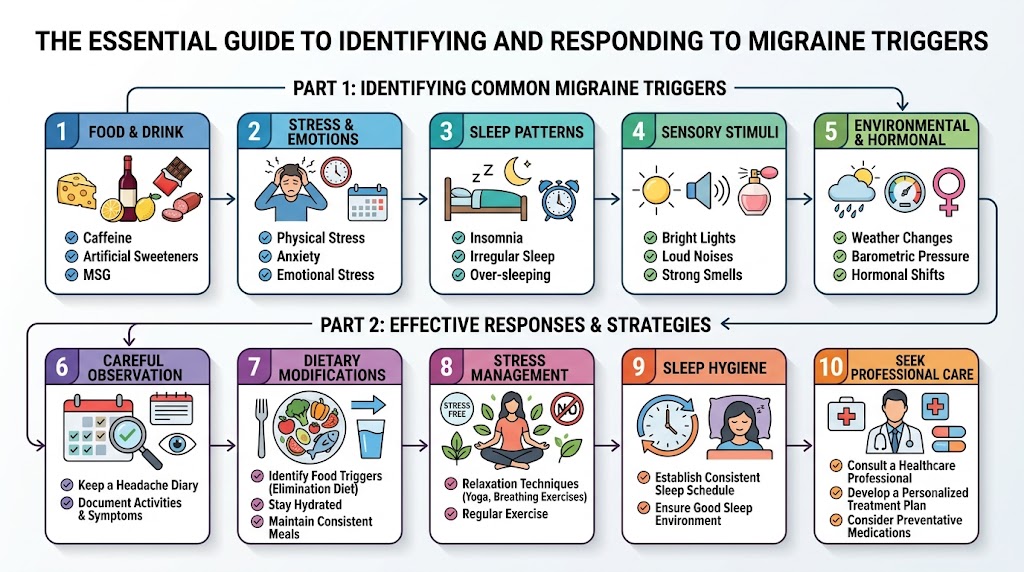
Common Migraine Triggers
Triggers are external or internal factors that set off a migraine attack. While triggers are highly personal, some common culprits include:
- Stress: Sudden releases of stress or high-pressure environments.
- Sleep Disturbances: Irregular sleep cycles or poor quality rest.
- Hormonal Changes: Fluctuations often linked to cycles in many patients.
- Certain Foods and Beverages: Items containing additives like MSG, aged cheeses, or excessive caffeine.
- Dehydration: Failing to maintain optimal fluid levels throughout the day.
- Weather Changes: Shifts in barometric pressure or extreme temperatures.
- Excessive Screen Time: Eye strain from prolonged device use.
Stages of a Migraine Attack
A migraine is typically experienced in four distinct phases:
- Prodrome: Pre-headache warning signs, such as mood changes, cravings, or neck stiffness.
- Aura: Sensory symptoms occurring shortly before the pain, such as visual flashes.
- Headache: The primary phase characterized by intense, often one-sided pain.
- Postdrome: The “migraine hangover,” where individuals feel drained and mentally foggy as the attack subsides.
TRIGGER MANAGEMENT TABLE
| Trigger | Prevention Strategy |
| Stress | Relaxation techniques |
| Poor Sleep | Consistent sleep schedule |
| Dehydration | Adequate water intake |
| Certain Foods | Trigger tracking diary |
| Screen Exposure | Regular breaks |
| Hormonal Changes | Medical consultation when needed |
How Migraines Are Diagnosed
Diagnosis is primarily based on a comprehensive review of your medical history and an evaluation of your symptom patterns. A physician will look for specific criteria, such as the frequency of attacks and the nature of the pain. Neurological examinations are often performed to rule out other conditions, and in some cases, imaging tests (like an MRI or CT scan) may be ordered if the symptoms are atypical.
Migraine Treatment Options
Management is rarely “one size fits all.” It often involves a combination of:
- Lifestyle Modifications: Adjusting daily habits to stabilize the nervous system.
- Preventive Medications: Taken daily to reduce the frequency and severity of future attacks.
- Acute Symptom Management: Targeted therapies meant to stop a migraine once it begins.
- Trigger Avoidance: Using a diary to identify and eliminate specific environmental or dietary triggers.
Lifestyle Habits That May Help
Building a resilient routine is key. Regularity in sleep, consistent hydration, and balanced nutrition provide the brain with a stable environment, which may lower the likelihood of an attack. Incorporating gentle exercise and stress-management techniques—such as deep breathing or meditation—can also be highly beneficial for overall neurological health.
Common Mistakes People Make
- Ignoring early symptoms: Hoping a migraine will “just pass” can lead to a more severe episode later.
- Overusing pain medications: This can sometimes trigger “rebound” headaches.
- Skipping meals: Blood sugar fluctuations are a frequent, yet preventable, trigger.
- Poor sleep habits: Inconsistent bedtimes are a major contributor to migraine frequency.
Real-Life Patient Scenarios
Consider a patient who experiences regular headaches on weekends. By keeping a tracking diary, they notice a pattern: they sleep in late on Saturday mornings, causing a shift in their routine. Once they begin waking up at a consistent time, their weekend migraine frequency drops significantly. This highlights the power of identifying simple, manageable lifestyle triggers.
Future of Migraine Care
The field is evolving rapidly with the introduction of digital health tools. Migraine tracking apps allow patients to log symptoms and potential triggers with precision. Additionally, AI-assisted monitoring is beginning to help neurologists analyze complex data patterns, leading to more personalized treatment approaches and timely telemedicine interventions.
FAQs
- What causes migraines?
While the exact cause is complex, it involves genetics, environmental factors, and changes in brain chemicals. - Are migraines hereditary?
Yes, a family history is one of the most common risk factors. - What foods can trigger migraines?
Common triggers include aged cheeses, processed meats, and certain artificial sweeteners. - How long do migraines last?
An untreated attack can last from four hours to several days. - Can stress cause migraines?
Yes, both high-stress periods and the “let-down” after a stressful event are common triggers. - When should medical advice be sought?
If your headaches change in frequency, severity, or character, consult a professional. - How are migraines different from headaches?
Migraines include systemic symptoms like nausea and sensitivity to light, whereas common headaches are primarily pain-focused. - Do children get migraines?
Yes, though symptoms may manifest differently than in adults. - Can weather trigger migraines?
Absolutely; barometric pressure changes are a well-documented trigger. - Is there a cure?
Currently, there is no permanent cure, but the condition can be managed effectively. - Should I use caffeine for migraines?
Caffeine can help some and trigger others; it is best to discuss usage with a doctor. - Can exercise prevent them?
Regular, moderate exercise is generally encouraged for migraine prevention. - What is a “rebound” headache?
A headache caused by the frequent use of acute pain medication. - How does a diary help?
It identifies subtle patterns between your daily habits and your migraine attacks. - Is dehydration a major trigger?
Yes, fluid balance is essential for proper brain function.
Final Thoughts
Migraines are a persistent health concern for many, but they do not have to define your quality of life. By focusing on awareness, identifying personal triggers, and maintaining consistent healthy habits, you can take a proactive stance in managing your neurological health. Always work closely with a healthcare professional to tailor a plan that works for you. For more insights on wellness and effective health management, we invite you to explore the extensive resources available at ASKDOCTORLIVE.