Introduction
Navigating a cardiovascular diagnosis can be overwhelming for patients and their families. When facing complex cardiac procedures, finding the right medical facility and specialist is crucial for ensuring optimal outcomes. The landscape of global healthcare offers numerous options, ranging from local specialized centers to internationally renowned institutions.This comprehensive guide is designed to help you understand what defines the best cardiac hospitals, how to compare treatment options like bypass surgery vs angioplasty, and why structural factors like hospital accreditations matter. By understanding these key variables, including the role of medical tourism for heart surgery in India, patients and caregivers can make highly informed, confident decisions regarding their cardiovascular care journeys.
Why Choosing the Right Cardiac Hospital Matters
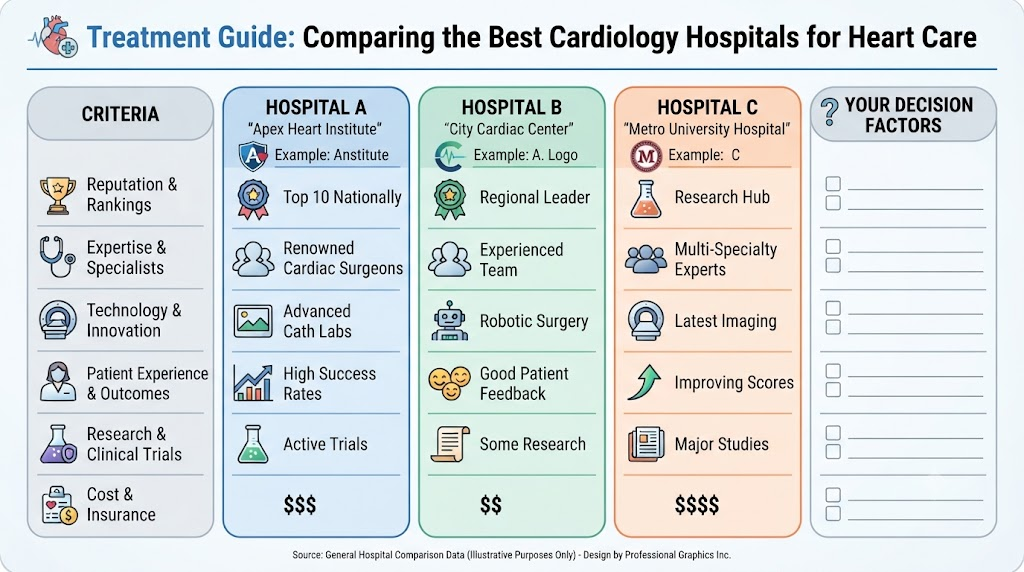
Selecting an institution for cardiovascular care involves evaluating structural infrastructure and specialized expertise. The best heart hospitals in the world stand out because they integrate cutting-edge diagnostic cardiology with multidisciplinary surgical teams. A dedicated facility ensures that if complications arise, an integrated intensive care unit (ICU) and emergency cardiac care protocols are immediately available.
Furthermore, top-tier best cardiology hospitals prioritize comprehensive patient safety frameworks. High-volume centers—hospitals that perform thousands of cardiac surgeries annually—statistically demonstrate lower mortality rates and fewer post-operative complications. Choosing a specialized center means accessing standardized care paths tailored specifically to complex conditions like advanced coronary artery disease.
Key Factors to Compare Cardiac Hospitals
Clinical Outcomes and Volume
When evaluating institutions, look closely at their clinical track records. The best heart surgery hospitals maintain transparent data regarding survival rates, infection rates, and successful long-term outcomes for procedures like coronary artery bypass grafting (CABG) and heart valve replacement. High volumes typically correlate with refined surgical precision.
Accreditations and Quality Standards
Accreditation serves as an objective benchmark for healthcare quality. Globally, look for institutions certified by the Joint Commission International (JCI). In regional contexts, certifications like the National Accreditation Board for Hospitals & Healthcare Providers (NABH) indicate that the facility complies with stringent patient safety and operational protocols.
Specialist Expertise and Teams
A hospital is only as good as its medical faculty. Patients should research the qualifications of the medical staff, specifically seeking out the best cardiac surgeons in India or globally, depending on their travel plans. Top hospitals feature collaborative teams consisting of interventional cardiologists, cardiac surgeons, specialized anesthesiologists, and dedicated cardiac rehabilitation therapists.
Understanding Cardiac Treatments and Procedures
Cardiovascular interventions generally fall into two categories: interventional cardiology and cardiothoracic surgery. Understanding the difference between standard treatments helps patients participate actively in their care planning meetings with their chosen heart specialist.
Angioplasty is a minimally invasive catheter-based procedure used to open clogged heart arteries, often utilizing stents. Conversely, bypass surgery (CABG) is a major surgical procedure where a healthy blood vessel is grafted to bypass blocked coronary arteries. Deciding between these methods depends heavily on the complexity, location, and number of arterial blockages.
Table 1: Bypass Surgery vs Angioplasty
| Features | Bypass Surgery (CABG) | Angioplasty (PCI) |
| Advantages | Long-term durability for multi-vessel blockages; excellent durability. | Minimally invasive; rapid recovery; no general anesthesia needed. |
| Limitations | Major surgery; longer hospital stay; prolonged recovery period. | Higher risk of restenosis (re-narrowing) compared to CABG over time. |
| Suitable Patients | Complex multi-vessel disease; diabetic patients with severe blockages. | Single or double vessel disease; acute heart attack emergencies. |
| Cost Considerations | Higher initial cost due to operating room, ICU stay, and length of stay. | Lower immediate procedural cost; shorter hospital stay duration. |
Evaluating Hospital Types and Operations
The operational framework of a hospital significantly impacts patient experience, wait times, and financial requirements. Patients generally choose between public systems and private institutions.
Public or government-run hospitals often feature highly experienced medical boards due to the massive volume of patients they treat daily. However, they may suffer from prolonged waiting lists for non-emergency procedures. Private institutions prioritize cutting-edge technology, localized patient services, and minimal waiting times, though at a premium cost structure.
Table 2: Government vs Private Cardiac Hospitals
| Features | Government Cardiac Hospitals | Private Cardiac Hospitals |
| Advantages | Highly subsidized costs; highly experienced senior doctors. | Modern infrastructure; no waiting lines; personalized amenities. |
| Limitations | Long waiting lines; crowded facilities; limited personalized care. | Significantly higher overall expenses; variable pricing models. |
| Suitable Patients | Budget-conscious individuals; routine non-emergency care. | International medical tourists; those seeking rapid intervention. |
| Cost Considerations | Extremely low or completely covered under public health schemes. | Premium pricing; out-of-pocket expenses vary by room category. |
Medical Tourism and Global Treatment Planning
The rising cost of healthcare in Western nations has driven a substantial increase in international patient travel. India has emerged as a premier hub for healthcare travel, combining elite clinical expertise with highly competitive financial structures.
When evaluating medical tourism for heart surgery in India, international patients find access to the best cardiac hospitals in India that rival Western institutions in technology and clinical talent. These hubs feature dedicated international patient service departments that handle everything from medical visa invitations and airport transfers to language interpretation and post-operative follow-up coordination.
Table 3: Heart Surgery in India vs Western Countries
| Features | Cardiac Treatment in India | Cardiac Treatment in Western Countries |
| Advantages | Substantial cost savings; zero waiting periods; elite JCI hospitals. | Proximity for local residents; familiar regulatory environments. |
| Limitations | Travel distance; necessity of cross-border medical planning. | Substantially high out-of-pocket costs; long waiting lists. |
| Suitable Patients | Uninsured or underinsured patients; those seeking immediate surgery. | Patients with comprehensive local insurance coverage. |
| Cost Considerations | Typically 70% to 80% lower than US/UK private care costs. | Premium pricing structures; expensive diagnostic phases. |
Managing Heart Surgery Cost in India
The financial aspect of cardiac care is a vital consideration for families. The heart surgery cost in India is remarkably cost-effective, but patients must understand what the comprehensive package includes.
A standard cardiac surgery financial estimate should clearly define the costs associated with the surgeon’s fees, operating theater charges, anesthesia, implant costs (such as mechanical or tissue valves), ICU stay duration, routine diagnostic tests (like an echocardiogram or ECG), and standard pharmaceuticals. Patients should always request a detailed, line-item pre-cost quote to avoid unexpected out-of-pocket expenses during discharge.
Expert Tips for Selecting a Hospital and Surgeon
- Verify Surgeon Specifics: When searching for the best cardiac surgeons in India or globally, look specifically at their experience with your precise procedure. A surgeon excellent at minimally invasive valve repairs may have different outcomes than one focusing primarily on complex pediatric cases.
- Seek a Second Medical Opinion: Always obtain a second medical opinion based on your diagnostic cardiology reports. A second perspective can clarify whether an interventional approach or surgical management is the safest long-term path for your condition.
- Assess ICU Quality: Inquire about the nurse-to-patient ratio in the cardiac ICU. Elite best cardiac hospitals maintain a 1:1 or 1:2 ratio for the critical first 24–48 hours post-surgery to ensure continuous monitoring.
Best Practices for Patient Planning and Recovery
- Comprehensive Document Gathering: Maintain a physical and digital folder containing all recent ECGs, echocardiograms, coronary angiograms, and blood reports to facilitate smooth consultations.
- Pre-Operative Optimization: Under the guidance of your heart specialist, optimize physical health through light breathing exercises and strict management of comorbidities like diabetes and hypertension.
- Understand Discharge Protocols: Before leaving the facility, ensure you receive a highly detailed recovery plan outlining medication schedules, wound care instructions, dietary modifications, and emergency contact numbers.
- Structured Cardiac Rehabilitation: Enroll in a formal cardiac rehabilitation program post-discharge. Supervised exercise and lifestyle education are proven to accelerate recovery and protect long-term cardiovascular health.
Common Mistakes to Avoid in Cardiac Care Planning
- Choosing Based Solely on Cost: Opting for the cheapest procedure quote can be dangerous if it means compromising on hospital accreditation, ICU infrastructure, or surgeon experience.
- Overlooking Travel Realities: For international patients, failing to account for the necessary recovery period before flying back home can lead to travel-related complications like deep vein thrombosis (DVT).
- Ignoring Post-Operative Support: Selecting a hospital that does not offer clear remote follow-up options or digital telemetry reviews can complicate long-term recovery management once you return home.
Frequently Asked Questions (FAQs)
1. What makes a hospital one of the best cardiac hospitals?
The best hospitals feature international accreditations like JCI, maintain high annual procedural volumes, utilize advanced diagnostic and surgical technologies, and employ multidisciplinary teams of experienced heart specialists to ensure patient safety and optimal long-term survival rates.
2. Why is the heart surgery cost in India lower than in Western countries?
The lower cost is primarily driven by lower operational overheads, favorable currency exchange rates, and lower living costs in India. The clinical quality, technology, and medical expertise remain fully on par with premier global standards.
3. How do I choose between bypass surgery and angioplasty?
This decision depends on the extent of your coronary artery disease. A heart specialist determines this by evaluating the number of blocked arteries, your overall medical history, and findings from coronary angiograms.
4. What are the benefits of medical tourism for heart surgery in India?
International patients gain access to zero waiting times, highly competitive pricing structures, state-of-the-art medical technology, JCI-accredited facilities, and world-renowned cardiac surgeons who possess extensive experience in handling complex cardiovascular cases.
5. What accreditations should I look for in a global heart hospital?
Look for international gold standards like Joint Commission International (JCI) accreditation. For care within India, look for National Accreditation Board for Hospitals & Healthcare Providers (NABH) certifications, which guarantee strict adherence to patient safety protocols.
6. Can I get a second medical opinion before undergoing cardiac surgery?
Yes, obtaining a second medical opinion is highly recommended. Sharing your diagnostic cardiology files with another independent heart specialist helps confirm the diagnosis and ensures that the suggested treatment path is optimal for you.
7. What is minimally invasive heart surgery?
Minimally invasive heart surgery involves performing cardiac procedures through small incisions between the ribs, rather than cutting through the breastbone. This approach results in less pain, reduced scarring, and significantly faster patient recovery times.
8. How long does a patient need to stay in the hospital after bypass surgery?
Typically, patients remain in the hospital for 5 to 7 days post-surgery. This duration includes 1 to 2 days in the cardiac ICU for close monitoring, followed by a few days in a standard recovery room.
9. What services do international patient departments provide?
These specialized departments assist with medical visa arrangements, airport transfers, local accommodation bookings, language translation services, customized dietary preferences, and post-discharge telemedicine consultations with your treating cardiac surgeon.
10. How long should an international patient stay in India after heart surgery?
It is generally recommended to stay in the country for 2 to 3 weeks post-discharge. This timeline allows the surgical team to conduct essential follow-up checkups and clear the patient for safe long-distance air travel.
11. What is the difference between a cardiologist and a cardiac surgeon?
A cardiologist focuses on diagnosing heart conditions and treating them using medications or minimally invasive catheter procedures like angioplasty. A cardiac surgeon performs invasive operations, such as open-heart bypass surgery and valve replacements.
12. Are diagnostic cardiology tests included in standard surgical packages?
Pre-operative packages usually include basic diagnostic tests like blood work, ECGs, and chest X-rays. However, advanced pre-surgical imaging or unexpected repeat diagnostic tests may sometimes be billed separately depending on individual hospital guidelines.
13. What lifestyle changes are required after major heart surgery?
Patients must adopt a heart-healthy diet low in saturated fats, engage in regular low-impact exercise, quit smoking entirely, manage stress levels effectively, and strictly adhere to all prescribed cardiovascular medications.
14. How safe is it to travel long distances for cardiac treatments?
Travel is highly safe if planned correctly. Patients must be stabilized beforehand, secure explicit medical clearance from their cardiologist, and coordinate closely with the hospital’s international medical transit team.
15. How can I verify the credentials of cardiac surgeons in India?
You can verify their medical registrations through official medical councils, evaluate their professional summaries on accredited hospital portals, research peer-reviewed publications, and review their verified clinical case volume records.
Conclusion
Making decisions regarding complex cardiovascular care requires a balanced approach of thorough research and factual evaluation. By looking closely at objective criteria—such as hospital accreditations, historical clinical success rates, surgical team volumes, and clear pricing models—patients and families can look past the confusion often surrounding healthcare options.
Whether you are evaluating local private care facilities or examining the substantial financial and logistical benefits of medical tourism for heart surgery in India, taking the time to carefully compare your options is the single most important step toward achieving a safe, successful, and well-managed medical outcome.