Introduction
Allergies affect millions of people worldwide, turning daily environments into potential sources of discomfort. Whether it is the seasonal onset of pollen or a reaction to a specific food, understanding the mechanism behind these reactions is the first step toward effective management.At ASKDOCTORLIVE.COM, we bridge the gap between confusion and clarity. We help patients access reliable health information, connect with qualified healthcare professionals, and seek guidance through online consultations to ensure that every individual can navigate their health journey with confidence and professional support.
What Are Allergies?
An allergy is the immune system’s reaction to a foreign substance—such as pollen, bee venom, or pet dander—that is typically harmless to most people. When you have an allergy, your immune system makes antibodies that identify a particular allergen as something harmful, even though it isn’t.
How the Immune System Causes Allergic Reactions
When you come into contact with an allergen, your immune system’s antibody production leads to a reaction in your skin, sinuses, airways, or digestive system. The severity ranges from minor irritation to anaphylaxis, a potentially life-threatening emergency.
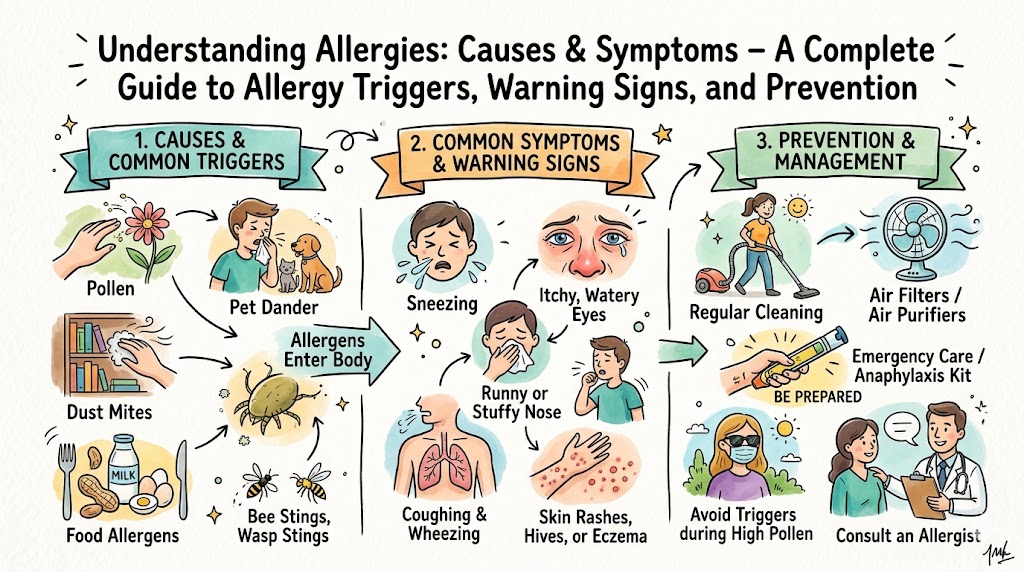
Common Causes of Allergies
- Pollen: Often referred to as “hay fever.”
- Dust Mites: Microscopic organisms living in household dust.
- Pet Dander: Proteins found in skin cells, urine, or saliva.
- Mold: Spores that grow in damp areas.
- Foods: Common culprits include peanuts, tree nuts, wheat, soy, fish, and dairy.
- Insect Stings: Reactions to bees, wasps, or hornets.
- Medications: Such as penicillin or aspirin.
Understanding Allergies: Causes & Symptoms
While causes vary, the process of understanding allergies: causes & symptoms remains consistent. The immune system overreacts, releasing chemicals like histamine, which trigger the physical symptoms patients experience daily.
Common Allergy Symptoms
- Respiratory: Sneezing, runny or stuffy nose, coughing, and wheezing.
- Ocular: Itchy, watery, or red eyes.
- Dermal: Skin rashes, hives, eczema, or redness.
- Systemic: Swelling of the lips, tongue, or face.
Types of Allergies
| Allergy Type | Symptoms | Common Triggers |
| Seasonal | Sneezing, runny nose | Pollen, grass |
| Food | Hives, swelling, digestive issues | Nuts, shellfish, dairy |
| Skin | Redness, itching, rash | Latex, soaps, cosmetics |
| Drug | Rash, fever, wheezing | Antibiotics, NSAIDs |
| Insect | Swelling at site, hives | Bee, wasp stings |
Risk Factors for Allergies
Several factors increase your risk:
- Family History: If allergies run in your family.
- Age: Allergies are more common in children, though they can develop at any age.
- Asthma: Often co-exists with allergic conditions.
How Allergies Are Diagnosed
Diagnosis usually involves a physical exam, a detailed medical history, and specific tests, such as:
- Skin Prick Tests: Small amounts of allergens are placed on the skin.
- Blood Tests: Measuring the amount of allergy-causing antibodies in your bloodstream.
Treatment Options
| Treatment | Purpose | Benefits |
| Antihistamines | Block histamine | Rapid relief of sneezing/itching |
| Decongestants | Relieve stuffiness | Clears nasal passages |
| Immunotherapy | Desensitization | Long-term reduction in sensitivity |
| Epinephrine | Emergency response | Life-saving for anaphylaxis |
Allergy Prevention Strategies
- Avoidance: Identify and limit exposure to known triggers.
- Keep a Diary: Track when and where symptoms occur.
- Use Air Purifiers: Especially helpful for indoor allergies.
- Medication: Take preventive meds before the allergy season starts.
When to Seek Medical Attention
| Symptom | Severity Level | Recommended Action |
| Mild sneezing | Low | Over-the-counter medication |
| Difficulty breathing | High | Emergency care immediately |
| Facial swelling | Critical | Call emergency services |
Seasonal Allergy Survival Guide
- Monitor Pollen Counts: Stay indoors on high-count days.
- Close Windows: Use air conditioning during allergy season.
- Shower After Being Outdoors: This washes away pollen from hair and skin.
Understanding Food Allergy Labels and Safety
Always read labels carefully. Manufacturers are required to list common allergens like milk, eggs, fish, and nuts. When in doubt, avoid the product.
Frequently Asked Questions
- Can I outgrow allergies? Sometimes, especially with food allergies in children.
- Are allergies genetic? Yes, genetics play a major role.
- What is the fastest way to stop sneezing? Antihistamines.
- Are dust mites avoidable? You can reduce them with allergen-proof mattress covers.
- Can stress make allergies worse? Yes, stress can trigger immune system responses.
- Do natural remedies work? Some provide relief, but consult a doctor first.
- What is anaphylaxis? A severe, life-threatening allergic reaction.
- Can I be allergic to my pet? Yes, you are usually allergic to their dander/saliva.
- Should I use an air purifier? Yes, HEPA filters help.
- How long does a reaction last? From a few hours to several days.
- Do I need a prescription? Not always; many effective treatments are OTC.
- What is “Oral Allergy Syndrome”? An itchy mouth from certain raw fruits/veggies.
- Are skin tests painful? Only minor discomfort.
- Is it a cold or an allergy? Colds cause fever and body aches; allergies do not.
- Can climate change affect allergies? Yes, longer growing seasons mean more pollen.
- How often should I change filters? Every 3 months.
- Can I develop allergies as an adult? Yes, new sensitivities can emerge.
- What is an EpiPen? A device for emergency epinephrine delivery.
- Does exercise help? It can clear airways, but beware of outdoor triggers.
- Can I get an online consultation? Yes, via ASKDOCTORLIVE.COM.
Detailed Conclusion
Navigating the complexities of allergies requires both knowledge and proactive management. As we have explored in this guide, understanding allergies: causes & symptoms is the cornerstone of patient health. By identifying specific triggers—whether they are environmental, seasonal, or dietary—individuals can transition from a state of constant reaction to one of controlled prevention. Recognizing the early warning signs, such as persistent sneezing, skin irritation, or respiratory discomfort, allows for early intervention, which can significantly improve your overall quality of life.The benefits of obtaining a proper diagnosis cannot be overstated. When you work with a healthcare professional, you move beyond guesswork and toward a targeted treatment plan that addresses your unique immune response. Whether your management strategy involves simple over-the-counter antihistamines, environmental modifications, or long-term immunotherapy, having a clear roadmap from an expert ensures your safety and comfort.