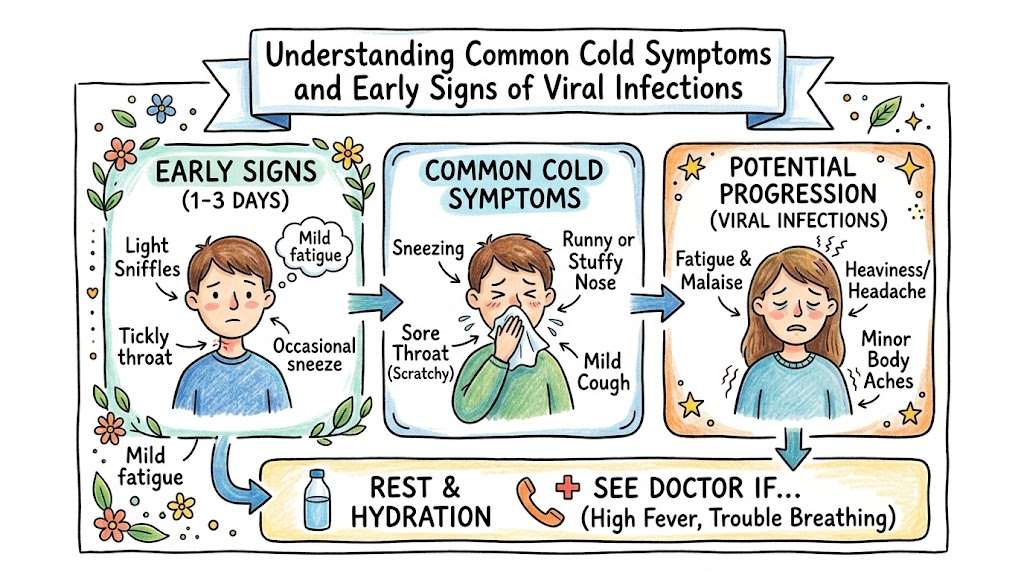
Waking up with a scratchy throat or a sudden sneezing fit often sends people on a panicked race to their favorite web browser. Unfortunately, searching the internet for basic wellness guidance frequently exposes patients to a massive wave of misleading health information. A simple tickle in your chest can quickly be misconstrued as a severe respiratory illness, which causes immense anxiety. Conversely, some individuals dismiss significant complications as a simple sniffle, which leads to delayed treatment and unnecessary physical suffering. This confusion from self-diagnosis highlights exactly why the world needs an objective, medically backed approach to everyday illnesses.
Understanding common cold symptoms simply means recognizing how your body responds to mild, widespread upper respiratory viral infections. While a cold is rarely life-threatening, misinterpreting its progression can disrupt your work, weaken your immune system, and spread illness to vulnerable loved ones. Reliable online healthcare guidance provides a calm, clear voice amidst all the digital noise, helping you identify true symptoms with absolute precision. When you know exactly what your body is experiencing, you can choose the right remedies and skip the panic entirely.
What This Guide Covers
- The deep history of digital health and the rise of verified telemedicine.
- The primary differences between self-diagnosis, virtual triaging, and clinical medical advice.
- The core principles that guarantee safety and privacy during an online health check.
- Real-world comparisons between traditional walk-in clinics and modern virtual medical platforms.
- Practical tools and essential metrics that are currently shaping the future of global patient care.
Managing a viral infection does not have to be a guessing game driven by random online blog posts. By using certified digital networks, you can easily access professional insight and track your symptoms safely from home. To connect with a licensed doctor right away, receive personalized recovery support, and access trusted medical advice, click over to ASKDOCTORLIVE to take full control of your daily wellness journey.
The Evolution of Online Healthcare Services
Early Challenges in Digital Healthcare
In the initial days of the public internet, finding accurate information about a runny nose or mild fever was surprisingly difficult. Search engines routinely prioritized sensationalized headlines or unverified chat forums over true peer-reviewed clinical data. Consequently, patients often fell victim to severe self-medication risks, using leftover antibiotics to treat viral colds, which accomplishes absolutely nothing while driving up global bacterial resistance.
This environment of rampant misinformation created a dangerous cycle where patients either overtreated minor issues or completely ignored deteriorating health signs. Because there was no verified medical guidance built into early search engines, people routinely delayed treatment for underlying issues like sinus infections or bronchitis. This gap clearly demonstrated that the internet needed an organized, professional upgrade to protect public safety.
Moving Toward Trusted Telemedicine Platforms
As digital technology matured, a new wave of dedicated online doctor consultation platforms emerged to rescue patients from search engine confusion. These systems completely changed the dynamic by introducing licensed medical practitioners into the digital space. Instead of scrolling through unverified forums, individuals could finally consult with a real provider using secure messaging and video calls.
This shift vastly improved digital healthcare accessibility, providing unprecedented patient convenience for busy families and working professionals. You no longer had to sit in a crowded, germ-filled waiting room for two hours just to find out if your cough required prescription support. Telemedicine effectively turned the internet into a direct pipeline to verified clinical expertise.
Expansion Across Modern Healthcare Ecosystems
Today, virtual medical networks have expanded globally, integrating themselves into the very foundation of the modern healthcare ecosystem. Telemedicine platforms are no longer treated as experimental luxuries; they are viewed as critical infrastructure by hospitals and insurance networks worldwide. This expansion has broken down geographic barriers, allowing top-tier medical advice to travel instantly across borders.
Modern digital health services now connect seamlessly with pharmacies, diagnostic labs, and local emergency rooms. This interconnected system ensures that whether you are dealing with a mild winter cold or a complex chronic condition, your data moves with you. This global evolution has made high-quality medical guidance a universal reality for millions of internet users.
Defining Reliable Medical Advice Online
Core Structure of Online Medical Guidance
Reliable online medical advice relies on a highly secure, automated core structure designed to match the clinical accuracy of an elite hospital. When a patient logs into a professional telemedicine platform, they do not just read text; they enter a structured online consultation system. This system utilizes a precise digital healthcare workflow that safely collects symptom timelines, current prescription intake, and pre-existing medical history.
Once the system compiles this essential patient profile, it securely routes the data to an appropriate, licensed physician for immediate review. This workflow prevents data fragmentation and ensures that the doctor has a clear overview before the conversation even starts. This organized structure completely eliminates the random guesswork associated with generic search engine queries.
Daily Responsibilities of Online Healthcare Providers
The day-to-day operations of an online healthcare provider require a balanced mix of rapid clinical analysis, data review, and digital patient empathy. Telemedicine doctors spend their hours evaluating incoming symptom profiles, conducting live video assessments, and answering urgent medical queries. They carefully check for visual signs of illness, such as inflamed throats or respiratory patterns, while talking patients through their recovery steps.
Additionally, these modern clinicians coordinate care with physical pharmacies by sending secure digital prescriptions directly to your neighborhood provider. They also continuously monitor patient feedback and track recovery updates through automated check-in systems. This active digital presence ensures that virtual medical advice remains highly responsive, safe, and deeply rooted in real-world clinical standards.
Local Clinics vs. Online Healthcare Platforms
Understanding when to utilize traditional in-person medical care versus modern virtual healthcare systems is essential for efficient health management.
| Feature | Traditional Local Clinics | Online Healthcare Platforms |
| Average Wait Time | Hours in a waiting room, or weeks for an appointment | Minutes to connect with a live doctor online |
| Primary Exposure Risk | High risk of catching secondary bugs from other patients | Zero exposure risk; clear consultation from home |
| Diagnostic Capabilities | On-site blood draws, X-rays, and physical swabbing | Visual triage, symptom analysis, and digital tracking |
| Prescription Delivery | Manual paper scripts or delayed pharmacy calls | Instant, direct electronic prescription transmission |
| Ideal Use Cases | Severe breaks, deep wounds, and emergency trauma | Cold and flu tracking, renewals, and general triage |
The Patient-Centered Digital Healthcare Mindset
Adopting a patient-centered digital healthcare mindset means taking an active, informed role in managing your own physical well-being. Modern healthcare accessibility gives you the unique power to address subtle changes in your health long before they escalate into serious medical crises. This approach shifts the patient from a passive observer to an active manager of their own recovery journey.
However, utilizing this digital mindset effectively requires an understanding that virtual tools work best as a complement to traditional medicine, not a complete replacement. A smart patient uses online consultations to quickly sort through mild issues, gather professional advice, and determine if an in-person diagnostic test is necessary. It combines the ultimate speed of digital communication with the physical safety of traditional hospital systems.
The 7 Core Principles of Understanding Common Cold Symptoms
1. Verified Medical Information
Every trustworthy medical platform must base its educational resources and diagnostic support entirely on verified medical information. When dealing with widespread respiratory issues, it is vital that content stems from peer-reviewed clinical studies and established immunological guidelines. This strict reliance on data protects the general public from dangerous wellness trends, unproven herbal remedies, and inaccurate self-treatment concepts.
2. Patient Safety & Privacy
Medical transparency means absolutely nothing if your personal data is left exposed to internet threats, making patient safety and privacy paramount. Elite telemedicine platforms employ military-grade encryption systems and rigidly adhere to global data security laws to shield your health metrics. Patients must have complete peace of mind that their virtual consultation videos, private text chats, and prescription documents remain entirely confidential.
3. Reducing Delays in Medical Guidance
When a viral cold leaves you feeling completely exhausted, the last thing you want to do is drive through traffic to sit in a clinic. A fundamental pillar of digital care is dramatically reducing delays in delivering medical guidance to those in need. By providing rapid digital connection speeds, modern health networks ensure that patients get certified advice within minutes, allowing them to rest and begin safe recovery protocols immediately.
4. Healthcare Visibility & Transparency
Building genuine trust in the digital space requires absolute visibility into the credentials and background of your virtual care team. Reputable networks provide transparent doctor profiles that showcase a clinician’s specific certifications, education history, and real patient reviews. This openness reassures the user that they are speaking with a verified expert, completely eliminating the anonymity that fuels misleading internet health advice.
5. Healthcare Automation & Accessibility
Modern telemedicine utilizes smart healthcare automation to eliminate the frustrating administrative hurdles that traditionally plague walk-in clinics. Automated appointment software, immediate text confirmations, and instant electronic prescription renewals make managing an illness completely effortless. This high level of accessibility ensures that anyone with a smartphone can navigate the system, regardless of their technological experience.
6. Reliable Virtual Medical Support
A high-quality health platform must maintain absolute operational stability, especially during peak winter cold and flu seasons. Reliable virtual medical support means the video streaming technology works perfectly, data entry portals never crash, and backup servers prevent system downtime. If a patient requires guidance during an anxious midnight coughing fit, the digital infrastructure must perform without a single hitch.
7. Simplified Healthcare Consultation Experience
The final core principle focuses on delivering a genuinely simplified healthcare consultation experience from start to finish. Dealing with a congested head and a pounding headache leaves patients with very little patience for complicated software layouts. Clean user interfaces, direct navigation pathways, and straightforward instructions ensure that seeking help feels like a comforting relief rather than a frustrating digital chore.
Key Healthcare Concepts You Must Know
Online Consultation vs. Self-Diagnosis vs. Professional Medical Advice
- Self-Diagnosis: A risky practice where an individual guesses their condition based on random search engine queries, frequently leading to unnecessary anxiety or wrong treatments.
- Online Consultation: The secure process of interacting with a live, certified practitioner online to systematically analyze symptoms, timelines, and vitals.
- Professional Medical Advice: The formal clinical diagnosis and personalized treatment blueprint provided exclusively by a licensed medical expert after proper review.
Healthcare Performance Tracking
To maintain a gold standard of care, modern virtual health networks rely heavily on systematic healthcare performance tracking. These metrics measure exactly how long a patient waits in a digital queue and evaluate the clinical accuracy of the advice provided. By continuously monitoring user feedback and tracking recovery times, digital systems constantly upgrade their operations to better serve the community.
Digital Healthcare Challenges
While technology has vastly improved how we access care, specific digital healthcare challenges continue to demand our vigilance. The internet remains cluttered with fake medical advice, sponsored wellness products, and confusing information that can easily misguide an untrained reader. Overcoming these challenges requires patients to completely avoid unverified blogs and rely solely on established, certified healthcare platforms.
Medical Escalation & Emergency Coordination
Understanding the parameters of medical escalation is a vital skill for anyone utilizing online health services. Virtual consultations are incredibly effective for managing typical cold symptoms like a runny nose, mild congestion, or a slight cough. However, if a patient develops severe chest pain, can no longer breathe, or suffers an unmanageable fever, the online doctor immediately activates emergency coordination protocols to send them to a physical emergency room.
Capacity Planning in Telemedicine
Just like a traditional brick-and-mortar hospital, a digital health network must utilize advanced capacity planning to handle sudden surges in patient volume. During peak seasonal virus outbreaks, sophisticated routing algorithms distribute incoming consultation requests evenly across a vast network of doctors. This balancing act ensures that wait times remain low and every single patient receives focused, unhurried medical attention.
Four Critical Healthcare Metrics
+-----------------------------------------------------------------------+
|                       CRITICAL HEALTHCARE METRICS                     |
+-----------------------------------------------------------------------+
|  1. Patient Response Time   -->  Measures seconds to reach a provider |
|  2. Consultation Quality    -->  Tracks clinical accuracy of advice    |
|  3. Patient Satisfaction    -->  Rates overall user comfort and care  |
|  4. Accessibility Efficiency-->  Evaluates speed of booking system    |
+-----------------------------------------------------------------------+
Online Healthcare Technology vs. Traditional Healthcare Systems
The Healthcare Philosophy Difference
The core difference between online healthcare technology and traditional systems comes down to proactive convenience versus reactive intervention. Virtual platforms are designed around immediate accessibility, digital symptom tracking, and early lifestyle guidance, making them perfect for managing daily acute illnesses before they worsen. Traditional physical hospital systems focus heavily on intensive physical procedures, specialized imaging technology, and immediate hands-on trauma care.
Roles & Responsibilities Compared
Online Doctors
- Review digital intake profiles, allergy histories, and symptom timelines thoroughly.
- Conduct live video assessments to examine visible symptoms like breathing patterns and skin color.
- Provide professional medical advice and authorize secure electronic prescriptions.
- Differentiate between simple viral colds and complications that require immediate in-person testing.
Healthcare Advisors
- Help patients interpret complex medical data and recovery guides without confusing jargon.
- Provide continuous educational support regarding immune health and winter wellness.
- Assist users in choosing the correct level of virtual or physical care for their specific needs.
- Follow up with patients post-consultation to ensure recovery is moving along smoothly.
Telemedicine Support Teams
- Monitor digital network stability to ensure crystal-clear video and audio streaming.
- Assist elderly or non-technical patients with setting up their virtual consultation tools.
- Troubleshoot database errors instantly to prevent delays in patient queues.
- Maintain the security protocols that safeguard data during live doctor calls.
Patient Coordinators
- Manage the smooth transfer of digital health summaries to physical primary care clinics.
- Help patients book follow-up laboratory testing or specialist visits if complications arise.
- Organize pharmacy routing to ensure prescriptions are filled at the user’s preferred location.
- Act as a central point of contact for logistical questions regarding appointments or documentation.
Healthcare IT Teams
- Deploy advanced encryption layers to protect the network from security breaches.
- Optimize platform responsiveness across mobile phones, tablets, and desktop computers.
- Build automated scheduling tools to eliminate manual administrative errors.
- Ensure high availability by maintaining robust cloud server backups worldwide.
Can Both Healthcare Systems Work Together?
Absolutely, and this harmonious combination is known as a hybrid healthcare system. In a modern hybrid framework, a patient might use a smartphone app to triage a persistent cough, speaking with an online doctor within minutes. If the virtual physician suspects the cold has developed into bacterial pneumonia, they instantly route the patient’s digital summary to a local physical lab for an X-ray, combining digital speed with physical accuracy.
Which Healthcare Model Should Patients Choose?
Choosing the correct healthcare model depends completely on the severity and urgency of your current physical condition. For a standard winter cold, sore throat, mild nasal congestion, or basic prescription renewals, online healthcare platforms offer unparalleled convenience and zero exposure risks. However, if you experience sudden chest pain, deep breathing difficulties, unmanageable bleeding, or severe physical trauma, you must head straight to a traditional emergency room immediately.
Real-World Use Cases of Online Medical Advice
How Patients Use Online Healthcare Platforms
Real-world patients utilize digital health platforms in remarkably practical, life-enhancing ways during their daily lives. Imagine a working parent who notices their toddler has developed a runny nose and a mild barky cough late on a Sunday evening. Instead of dressing the sick child and heading to a crowded midnight urgent care clinic, the parent opens a secure telemedicine app from their living room.
Within ten minutes, they are speaking with a certified pediatrician who reviews the child’s breathing patterns over high-definition video. The doctor reassures the parent that it is a standard viral cold, explains proper hydration steps, and sends a soothing prescription straight to a 24-hour pharmacy. The child stays comfortable at home, and the family avoids a massive medical bill.
Emergency & Critical Care Coordination
While online platforms excel at managing everyday conditions, they also serve as a vital screening tool for emergency coordination. Consider an elderly patient who mistakenly believes their severe shortness of breath is just a stubborn winter cold. During a quick virtual check-in, the online doctor instantly recognizes the clinical markers of acute heart failure or severe respiratory distress.
The physician immediately instructs the patient’s spouse to call emergency services while keeping the video link active to provide real-time instructions. Simultaneously, the platform’s support team transmits the patient’s digital medical summary directly to the incoming ambulance crew. This rapid, coordinated response saves critical minutes when every single second matters.
Managing Healthcare at Large Scale
Modern telemedicine platforms are meticulously engineered to support tens of thousands of active patients simultaneously without breaking a sweat. Through the use of automated intake forms, cloud-based data storage, and intelligent doctor routing, administrative backlogs are completely eliminated. This massive scale ensures that during widespread winter outbreaks, the healthcare system remains balanced, operational, and accessible to everyone.
High Availability in Digital Healthcare
A viral cold or a sudden midnight fever does not wait for normal clinic business hours to strike, making high availability an absolute necessity. True digital healthcare platforms operate around the clock, providing uninterrupted access to professional medical guidance 24 hours a day, 300 and 65 days a year. This constant availability acts as a massive safety net, giving families peace of mind during late-night health scares.
Efficient Healthcare Support for Rural Areas
In remote geographic regions or isolated rural towns, driving to see a medical specialist can easily require an entire day of travel. Telemedicine completely obliterates this distance barrier by delivering elite medical advice straight to any internet-connected device. Rural patients can now have their respiratory symptoms evaluated by top-tier urban clinicians, ensuring that high-quality healthcare is never dictated by your zip code.
Common Mistakes in Online Healthcare
Mistake 1 — Trusting Unverified Medical Information
One of the most dangerous missteps a patient can make is gathering health advice from unverified public forums or social media feeds. These unregulated spaces are frequently packed with unscientific rumors, dangerous cure-alls, and inaccurate explanations of cold symptoms. Always ensure that any health data you read comes directly from a certified, professional medical platform staffed by licensed experts.
Mistake 2 — Ignoring Serious Symptoms
Far too often, individuals use generic internet searches to convince themselves that a severe illness is just a minor, passing cold. A patient might look up “fatigue and cough” and completely miss the fact that their symptoms point toward an escalating lung infection or heart issue. Never let an online search talk you out of seeking real professional medical advice when your body feels genuinely sick.
Mistake 3 — Depending Only on Internet Searches
Relying entirely on passive text searches creates a dangerous medical vacuum devoid of personal clinical context. A search engine query cannot look at your throat, review your unique genetic background, or listen to the wheeze in your chest. Internet reading should only be used to general education, never as a standalone substitute for a real live consultation with a licensed doctor.
Mistake 4 — Sharing Incomplete Medical Information
When interacting with an online doctor, some patients accidentally fail to mention minor details like current over-the-counter supplement use or slight allergies. Omitting these basic facts can severely compromise the safety of your digital prescription, leading to dangerous drug interactions. Treat your virtual clinician with absolute transparency by providing a comprehensive, honest overview of your health history.
Mistake 5 — Delaying Emergency Care
Attempting to utilize a standard online consultation platform during a severe, life-threatening medical crisis is an exceptionally critical error. If a family member is gasping for air, turning blue around the lips, or losing consciousness, you must skip the computer entirely. These moments demand immediate physical treatment at a traditional hospital, and wasting time online puts lives at risk.
Mistake 6 — Ignoring Data Privacy
In a frantic rush to find quick health answers at 2 AM, many individuals carelessly enter their private details into unencrypted, sketchy websites. Failing to check for secure platform indicators or professional privacy policies leaves your personal health records wide open to identity theft or data brokers. Protect your personal information by sticking exclusively to highly secure, recognized telemedicine platforms.
Essential Healthcare Tools & Technologies
Telemedicine Platforms
The modern cornerstone of virtual medical care is the specialized, highly secure telemedicine platform. These systems are far more than basic video calling programs; they are custom-built environments engineered to comply with strict medical privacy laws. They feature advanced high-definition video pipelines, integrated chat boxes for sharing symptom timelines, and encrypted portals for storing electronic health summaries.
Emergency Coordination Systems
Running continuously beneath the surface of top-tier health networks are automated emergency coordination systems. If an online provider recognizes that a patient’s respiratory cold has crossed into a life-threatening crisis, these tools jump into action. They can pinpoint the patient’s approximate location, look up the closest physical emergency rooms, and push clinical notes straight to oncoming trauma teams.
Healthcare Automation Platforms
To keep digital medical networks running seamlessly, healthcare automation platforms manage all the complex background logistics. These intelligent systems take care of automatic appointment scheduling, send text message reminders, and process digital prescription routing to local pharmacies. By removing manual paperwork, automation allows doctors to dedicate 100% of their energy to analyzing patient symptoms.
Smart Healthcare Monitoring
The rapid development of smart healthcare monitoring devices has completely revolutionized how we track everyday illnesses at home. Patients can now utilize connected pulse oximeters, smart thermometers, and wireless blood pressure cuffs that send data straight to their virtual doctor. If your blood oxygen levels drop unexpectedly during a severe cold, your care team is notified immediately, allowing for rapid medical adjustments.
Healthcare Performance Tracking
To maintain an elite standard of patient care, modern medical platforms utilize specialized performance tracking software. This technology continuously tracks average patient response times, analyzes consultation quality scores, and measures overall user satisfaction. By looking closely at this real-time data, healthcare administrators can instantly smooth out bottlenecks and ensure that every user receives an exceptional experience.
How to Become a Digital Healthcare Expert — Career Roadmap
Skills Every Healthcare Professional Must Have
- Healthcare Communication: The specialized ability to explain complex immunological responses and recovery steps in clear, comforting, and jargon-free language over video.
- Patient Support: A deep well of patience and empathy to guide sick, anxious, or non-technical individuals through digital systems smoothly.
- Digital Healthcare Understanding: Complete technical mastery of electronic health record systems, remote monitoring tools, and secure messaging portals.
- Medical Terminology: An flawless command of clinical language to accurately document symptom progressions and coordinate with pharmacy networks.
- Telemedicine Workflow Knowledge: A thorough understanding of digital triage rules, secure intake protocols, data privacy laws, and emergency escalation pathways.
Professional Learning Path
Launching a career within the fast-paced field of digital healthcare requires a strong, well-structured educational foundation. Most professionals begin by earning a traditional degree in nursing, health administration, health informatics, or computer science. Gaining early, hands-on experience inside a physical clinic or traditional hospital provides an essential understanding of face-to-face patient workflows and real-world clinical demands.
Once the basic fundamentals are securely in place, aspiring experts transition into the digital space by taking specialized courses in telehealth management and healthcare data law. This advanced training teaches you how to bridge the gap between complex software design and traditional clinical practice. Over time, these professionals move into administrative roles, designing the very automation workflows that help millions of patients access rapid care.
Certifications Worth Pursuing
To establish true authority inside the modern telehealth landscape, professionals should secure recognized industry certifications. Earning a credential as a Certified Health Informatics Professional or a Board-Certified Telehealth Coordinator validates your expertise in managing virtual care systems. Additionally, completing specialized training in medical data compliance proves that you can safely handle sensitive electronic health records.
Educational Resources with ASKDOCTORLIVE.COM
The world of digital medicine changes rapidly, meaning that continuous reading and skill building are absolutely mandatory for long-term success. Aspiring managers and clinicians should regularly consume platform case studies, whitepapers, and real-world system reviews to stay ahead of the curve. Exploring the comprehensive educational materials and digital insights provided by ASKDOCTORLIVE.COM serves as a fantastic launching pad for your virtual healthcare career.
The Future of Online Healthcare
AI & Automation in Telemedicine
The next major evolution of online care will see deep integration of artificial intelligence and advanced symptom automation. Future AI tools will act as highly intelligent digital assistants, chatting with patients during intake to build a perfectly detailed timeline of their cold symptoms. This automated summary will then be handed to the doctor, allowing them to focus entirely on the human element of the consultation.
Smart Healthcare & Virtual Consultations
As wearable technology continues to skyrocket in sophistication, virtual consultations will become incredibly immersive and deeply analytical. Future home wellness kits will include smart stethoscopes and digital throat cameras that stream real-time, studio-quality data straight to your online provider. This advanced connectivity will allow a virtual cold check-up to match the exact tactile accuracy of an in-person diagnostic exam.
Cloud-Based Healthcare Systems
The complete migration of medical networks onto global, highly secure cloud-based healthcare systems will finally eliminate fragmented patient records. No matter if you visit an online doctor while traveling abroad or check into a local clinic at home, your complete health summary will update instantly in the cloud. This seamless access will prevent duplicate testing, reduce prescription errors, and make managing seasonal illnesses incredibly smooth.
Future Skills That Will Matter Most
- Digital Healthcare Communication: Translating clinical warmth and empathy perfectly across digital screen interfaces.
- Telemedicine Operations: Masterfully managing complex cloud databases, automated tools, and virtual patient flows.
- Healthcare Analytics: Intelligently reading massive streams of biometric data from consumer wearables to identify early health risks.
- Patient Experience Optimization: Engineering flawlessly simple, stress-free digital pathways for sick individuals seeking immediate medical support.
FAQ SECTION
- How can an online doctor consultation help me manage standard common cold symptoms safely?
An online doctor consultation allows a licensed practitioner to systematically review your symptom timeline, look at your throat over video, and check your breathing patterns from home. This process ensures you receive accurate recovery steps and necessary prescription support while entirely bypassing crowded waiting rooms, saving you time and protecting you from secondary infections. - Is my private health data entirely secure when I use a telemedicine platform?
Yes, reputable telemedicine platforms utilize high-level encryption systems and rigidly follow global medical data protection laws to guard your information. Before you begin typing your private symptoms, always make sure the platform features a secure connection indicator and displays a transparent, professional data privacy policy on its website. - Can an online healthcare provider tell the difference between a cold and something more serious?
Online providers are trained to look closely for specific clinical indicators, such as wheezing sounds, prolonged high fevers, or severe throat inflammation, that suggest your cold has escalated. If they spot these red flags, they will immediately guide you toward necessary in-person laboratory swabs, X-rays, or specialized physical care. - How do automated healthcare tools improve overall digital healthcare accessibility for daily patients?
Automated healthcare tools completely eliminate annoying administrative paperwork by allowing you to schedule appointments instantly, receive automated text updates, and send prescriptions to your pharmacy automatically. This streamlined digital workflow ensures that any individual with a basic smartphone can navigate the health platform easily, regardless of tech experience. - When should I skip an online consultation and go straight to a physical emergency room?
You must bypass online platforms entirely and seek immediate physical emergency treatment if you experience severe chest pain, extreme difficulty breathing, a completely unmanageable high fever, or sudden confusion. These critical, acute symptoms point toward a medical emergency that requires hands-on trauma care and immediate physical hospital infrastructure. - What role will artificial intelligence play in the future of online medical advice?
In the coming years, artificial intelligence will act as an incredibly efficient digital assistant that automatically categorizes incoming symptom data and tracks wearable health metrics in real time. This automation will allow your virtual doctor to review a comprehensive, pre-analyzed summary of your illness, making your online consultation significantly faster and more accurate.
Final Summary
Successfully navigating the winter season requires a clear, accurate understanding of common cold symptoms and a complete rejection of misleading search engine myths. Embracing a patient-centered digital healthcare mindset allows families to step away from dangerous self-diagnosis patterns and move toward verified online medical advice provided by licensed experts. While traditional physical clinics remain absolutely necessary for handling complex diagnostics and immediate physical emergencies, modern telemedicine networks offer an unmatched, highly secure option for tracking everyday respiratory issues from the comfort of home. As smart healthcare monitoring devices, cloud-based records, and intelligent automation systems continue to expand globally, the entire patient care experience will become increasingly efficient, personalized, and universally accessible. Managing your physical recovery should never feel like a confusing, stressful guessing game driven by unverified blog posts. By choosing to rely strictly on established, certified healthcare platforms, you ensure that your recovery journey remains completely safe, structured, and scientifically sound. To skip the long clinic lines, speak with a live medical professional today, and gain access to trusted healthcare support, turn over to ASKDOCTORLIVE to confidently protect your family’s wellness.