Introduction
The skin is the body’s largest organ, acting as our primary defense against the environment, temperature fluctuations, and potential pathogens. Because it is constantly exposed to the outside world, it is also highly susceptible to changes and disorders. Understanding common skin conditions is the first step toward maintaining healthy skin and recognizing when something requires professional attention.In this guide, we explore the landscape of dermatological health, including how to identify common conditions, understand the importance of preventive habits, and know when to seek help from a qualified medical professional. For reliable health education and resources on skin wellness, you can visit ASKDOCTORLIVE to learn more about how to navigate your skin health journey with confidence.
What Are Skin Conditions?
Skin conditions encompass a broad spectrum of disorders that affect the skin’s integrity, appearance, and function. While some conditions are temporary and resolve with minimal intervention, others are chronic, requiring long-term management and support from a dermatology team.
Healthy skin serves as a barrier, regulating body temperature, protecting against infection, and synthesizing vitamins. When this barrier is compromised—whether due to internal factors like genetics or external triggers like allergens—skin conditions arise.
It is important to understand that skin diseases vary significantly from person to person. A condition that manifests as dry, scaly patches in one individual might present as localized redness in another. Because skin is dynamic, its reaction to internal health and environmental stimuli is unique to the individual.
Why Understanding Skin Conditions Matters
Taking the time to learn about your skin health is an investment in your overall well-being. Knowledge serves as a powerful tool in several ways:
- Early Diagnosis: Recognizing a rash or lesion early often allows for simpler, more effective management before the condition progresses.
- Better Symptom Management: Understanding the “why” behind your symptoms—such as identifying a specific trigger—can help reduce the frequency and severity of flare-ups.
- Preventing Complications: Proper care, such as keeping an area clean or avoiding a known allergen, can prevent secondary skin infections.
- Improving Quality of Life: Many skin conditions can be uncomfortable or painful. Effective management helps restore comfort and confidence.
- Maintaining Healthy Skin: Education helps you choose skincare products and habits that align with your skin’s specific needs, promoting longevity and health.
Most Common Skin Conditions
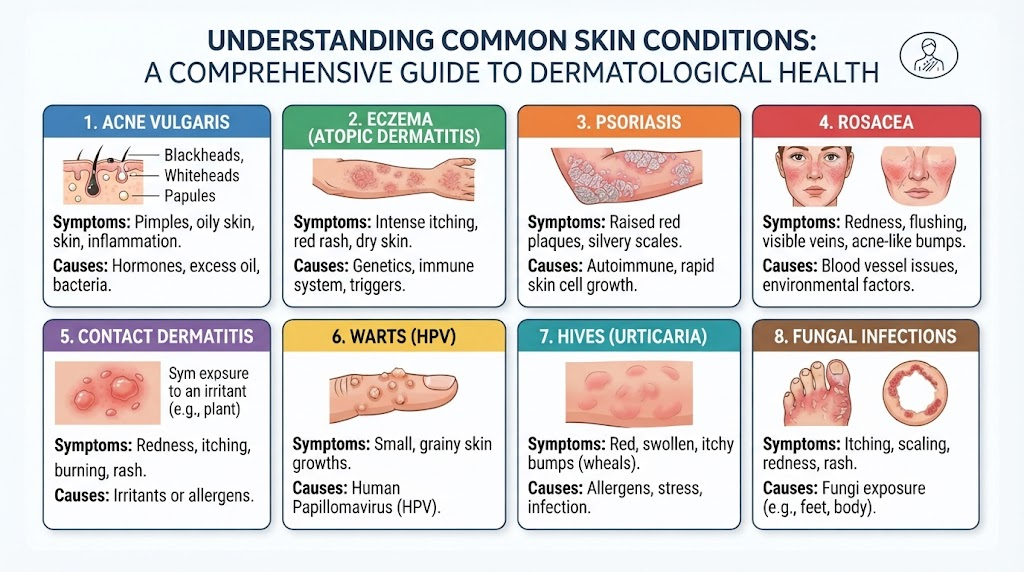
While there are thousands of dermatological disorders, some appear much more frequently in clinical settings. Below are several common conditions.
Acne
Acne is a condition involving the oil glands and hair follicles. It often presents as pimples, blackheads, whiteheads, or deeper nodules. While commonly associated with adolescence, it can affect adults as well. Causes include excess oil production, bacteria, and clogged pores.
Eczema (Atopic Dermatitis)
Eczema is a chronic condition characterized by dry, itchy, and inflamed skin. It often flares up in response to triggers like harsh soaps, fabrics, or environmental allergens. The primary focus is usually on soothing the skin barrier.
Psoriasis
Psoriasis is an autoimmune condition that causes skin cells to multiply too quickly, leading to thick, red, scaly patches often found on the elbows, knees, and scalp. It requires professional medical management.
Rosacea
This condition typically affects the face, causing redness, flushing, and sometimes small, pus-filled bumps. It is often aggravated by heat, sun exposure, stress, or spicy foods.
Contact Dermatitis
Contact dermatitis occurs when the skin reacts to a specific substance. It can be “allergic” (immune reaction) or “irritant” (chemical damage). Symptoms include itching, burning, and a red rash.
Fungal Skin Infections
Examples include athlete’s foot and ringworm. These infections are caused by fungi that thrive in warm, moist areas. They often appear as ring-shaped rashes and can be itchy.
Hives (Urticaria)
Hives appear as raised, itchy welts on the skin, often triggered by an allergic reaction to food, medication, or environmental factors. They can appear suddenly and vary in size.
Warts
Warts are small, grainy skin growths caused by a virus (human papillomavirus). They are usually harmless but can be bothersome or spread to other parts of the body.
Vitiligo
Vitiligo is a condition where the skin loses its pigment, resulting in white patches. It is thought to be related to the immune system attacking pigment-producing cells.
Shingles
Shingles is a painful rash caused by the reactivation of the chickenpox virus. It typically appears as a single stripe of blisters on one side of the body.
Common Skin Conditions Comparison Table
| Skin Condition | Common Symptoms | Typical Management |
| Acne | Pimples, blackheads, oily skin | Skincare and medical treatment if needed |
| Eczema | Dry, itchy, inflamed skin | Moisturizers and trigger management |
| Psoriasis | Thick, scaly skin patches | Long-term medical management |
| Rosacea | Facial redness and flushing | Trigger avoidance and medical care |
| Contact Dermatitis | Itchy rash after exposure | Avoid irritants and appropriate treatment |
| Fungal Infection | Ring-shaped rash, itching | Antifungal treatment under medical guidance |
Common Causes and Risk Factors
Understanding the root cause of a skin concern is often complex, as many conditions are multifactorial. Common contributors include:
- Genetics: Many conditions, such as eczema and psoriasis, have a strong hereditary component.
- Allergies: Immune responses to substances like fragrances, nickel, or food can manifest as rashes.
- Hormonal Changes: Fluctuations can trigger acne or affect skin sensitivity.
- Environmental Irritants: Exposure to chemicals, soaps, detergents, or pollution can damage the skin barrier.
- Infections: Bacteria, viruses, fungi, and parasites can lead to a variety of skin lesions.
- Autoimmune Conditions: When the body’s immune system mistakenly attacks healthy skin tissue.
- Stress: High stress levels can exacerbate conditions like psoriasis, eczema, and acne.
- Poor Skincare Habits: Over-washing, using harsh products, or failing to protect the skin from the sun can lead to long-term damage.
- Sun Exposure: UV radiation contributes to premature aging, discoloration, and increased risks of cellular changes.
Common Signs and Symptoms
While conditions vary, the following signs are frequently noted by individuals experiencing dermatological issues:
- Redness: Inflammation or increased blood flow to the skin.
- Itching (Pruritus): One of the most common and uncomfortable symptoms.
- Dry Skin: A lack of moisture that can lead to flaking and cracking.
- Rashes: Any area of irritated or swollen skin.
- Blisters: Fluid-filled sacs that can appear due to friction or infection.
- Scaling: A dry, “flaky” appearance.
- Swelling (Edema): Puffiness, often associated with inflammation.
- Skin Discoloration: Darker or lighter patches compared to surrounding skin.
- Pain or Burning Sensation: Often signals deeper inflammation or sensitivity.
How Doctors Diagnose Skin Conditions
Diagnosis is a careful process involving clinical expertise. A healthcare professional or dermatologist will often use several methods to determine the nature of a skin condition.
Diagnostic Methods Comparison Table
| Diagnostic Method | Purpose |
| Physical Examination | Evaluates visible skin changes, texture, and location. |
| Medical History | Identifies possible triggers, onset, and family history. |
| Skin Biopsy | Examines skin tissue under a microscope when necessary. |
| Allergy Testing | Identifies specific substances causing allergic reactions. |
| Laboratory Testing | Detects infections or underlying systemic conditions. |
Treatment Options for Common Skin Conditions
There is no “one-size-fits-all” treatment. Management depends entirely on the specific condition, its severity, your skin type, and your personal medical history. Treatment should always be guided by a qualified dermatologist.
- Lifestyle Changes: Modifying your diet, managing stress, or changing laundry detergents.
- Skin Care Products: Using gentle, hypoallergenic cleansers and moisturizers.
- Topical Treatments: Creams, ointments, or lotions containing active ingredients to reduce inflammation or combat infection.
- Prescription Medications: Oral or stronger topical medications to manage chronic conditions.
- Light Therapy: Controlled exposure to UV light for conditions like psoriasis.
- Infection Management: Antibiotics or antifungals prescribed when a pathogen is the cause.
Daily Skin Care Tips
Preventive care is the cornerstone of healthy skin. Regardless of whether you have a specific condition, these general habits help maintain skin integrity:
- Gentle Cleansing: Use mild, soap-free cleansers that do not strip natural oils.
- Regular Moisturizing: Apply moisturizer while the skin is slightly damp to lock in hydration.
- Using Sunscreen: Use a broad-spectrum SPF daily to protect against UV damage.
- Avoiding Harsh Products: Steer clear of heavily fragranced items if your skin is sensitive.
- Staying Hydrated: Proper internal hydration supports skin elasticity.
- Healthy Nutrition: A balanced diet provides the nutrients needed for cell repair.
- Managing Stress: Find healthy ways to cope, as stress frequently affects skin health.
When Should You See a Dermatologist?
While many minor skin issues resolve with simple care, certain signs warrant a visit to a medical professional:
- Persistent Rashes: Rashes that do not improve after two weeks of home care.
- Severe Itching: Itching that interferes with sleep or daily life.
- Painful Skin Lesions: Any growth or sore that is painful or tender.
- Rapidly Changing Moles: Any mole that changes in size, shape, color, or texture.
- Recurrent Infections: If you experience skin infections frequently.
- Symptoms that Spread: Rashes that cover large areas of the body or spread quickly.
- Signs of Infection: Increased heat, pus, or fever associated with a skin area.
How ASKDOCTORLIVE Supports Skin Health Education
At ASKDOCTORLIVE, our mission is to empower patients with the knowledge they need to make informed healthcare decisions. Understanding common skin conditions is complex, and our goal is to bridge the gap between confusion and clarity. We provide resources on:
- Reliable Healthcare Information: Evidence-based insights to help you understand your skin.
- Patient Awareness Resources: Guides that explain what to look for and when to seek help.
- Consultation Support: Encouraging the essential relationship between a patient and their doctor.
We believe that education is the foundation of health. By providing accessible information, we help patients advocate for themselves and approach their dermatology care with confidence.
Common Mistakes People Make
When faced with skin concerns, it is easy to fall into traps that may prolong the condition.
- Ignoring Persistent Symptoms: Hoping a rash will “just go away” can allow conditions to worsen.
- Self-Diagnosing: Using an over-the-counter cream for an undiagnosed rash can sometimes make it worse.
- Overusing Skincare Products: “Layering” too many serums or treatments can irritate the skin barrier.
- Scratching Itchy Skin: This can lead to tears, infection, and potential scarring.
- Delaying Dermatologist Visits: Seeking professional help early usually leads to more effective and efficient treatment.
Solution: If a skin condition does not improve, or if you are unsure about the cause, reach out to a professional. Keep a log of your symptoms and potential triggers to help your doctor make a more accurate assessment.
Common Myths vs Facts
| Myth | Fact |
| All rashes are allergies. | Many different skin conditions, including infections and chronic disorders, can cause rashes. |
| Acne only affects teenagers. | Adults can develop acne for various reasons, including stress and hormonal changes. |
| Psoriasis is contagious. | Psoriasis is an autoimmune condition and cannot be spread from person to person. |
| Healthy skin doesn’t require daily care. | Daily skincare helps protect the skin barrier and maintain long-term skin health. |
Real-Life Educational Scenarios
- A Teenager Managing Acne: A teenager notices consistent breakouts. Rather than popping them, they consult a dermatologist, adopt a gentle cleansing routine, and use prescribed topicals, leading to clearer skin over time.
- An Adult Recognizing Eczema Early: An adult notices dry, itchy patches on their inner elbows during the winter. They immediately switch to a fragrance-free moisturizer and identify that harsh laundry soap was a trigger, effectively managing the flare-up.
- Seeking Timely Care: A patient notices a mole that has slightly changed in appearance. They make an appointment for a skin check. The doctor examines it, providing peace of mind and demonstrating the value of proactive monitoring.
- Improving Through Habits: Someone with generally dry, sensitive skin commits to daily sunscreen use and hydration. Over a few months, they notice their skin feels more resilient and less irritated by external factors.
FAQs
- What are the most common skin conditions?
Acne, eczema, psoriasis, rosacea, and contact dermatitis are among the most frequently diagnosed conditions. - What causes skin rashes?
Rashes can be caused by infections, allergies, irritants, immune system responses, and even heat. - How do I know if I should see a dermatologist?
You should see a professional if symptoms are persistent, painful, spreading, or if you notice changes in moles. - Can stress affect skin health?
Yes, stress is a known trigger for flare-ups of conditions like eczema, psoriasis, and acne. - What is the difference between eczema and psoriasis?
Eczema is typically characterized by intense itching and inflammation; psoriasis often involves thick, silvery, scaly plaques. - Is acne only a teenage condition?
No, adult acne is a common reason for dermatological visits. - Are fungal skin infections contagious?
Yes, fungal infections (like athlete’s foot) can spread through direct contact or shared surfaces. - How can I keep my skin healthy?
Use gentle cleansers, moisturize, apply sunscreen daily, and maintain a healthy lifestyle. - When is a skin biopsy needed?
A biopsy is performed when a doctor needs to analyze a skin sample to rule out specific conditions or infections. - What skincare routine is best for sensitive skin?
A simple, fragrance-free routine with minimal products is generally best for sensitive skin. - Can allergies cause skin problems?
Yes, allergic contact dermatitis is a common issue caused by direct skin contact with allergens. - How can I reduce the risk of skin infections?
Keep the skin clean, avoid sharing personal items like towels, and keep cuts/scrapes clean and covered. - Are all skin conditions chronic?
No, many conditions (like contact dermatitis or simple infections) are temporary and resolve with treatment. - What warning signs should never be ignored?
Rapidly changing moles, bleeding sores that won’t heal, and sudden, severe rashes. - How does ASKDOCTORLIVE support patient education?
We provide educational articles and resources to help patients understand skin health and encourage informed discussions with their doctors.
Final Thoughts
Skin health is deeply connected to your overall comfort and well-being. While many common skin conditions are manageable, the diversity of skin types and disorders means that a “one-size-fits-all” approach rarely works. Early recognition of symptoms, combined with professional medical guidance, is the most effective path toward relief and long-term skin health.Remember that you do not have to manage skin concerns alone. Whether you are dealing with a recurring rash or simply want to optimize your skincare routine, qualified dermatologists are there to provide tailored advice.