Introduction
PTSD is a mental health condition linked to trauma. It can happen after a very distressing event. Some people may experience symptoms after seeing trauma too. These symptoms can affect thoughts, feelings, sleep, and daily life.ASKDOCTORLIVE.COM can help people explore online healthcare information and consultation options. This article explains common PTSD symptoms in simple words. It also explains when professional support may help.
What Is PTSD?
PTSD means Post-Traumatic Stress Disorder. It can develop after a traumatic experience. Trauma may involve fear, danger, serious harm, or loss.Not everyone who faces trauma develops PTSD. People can respond to the same event differently. Some people recover with time and support. Others may have ongoing symptoms.
PTSD symptoms can affect many parts of life. They may change sleep, mood, thoughts, and behavior. They may also affect work, school, and relationships.
What Are Common PTSD Symptoms?
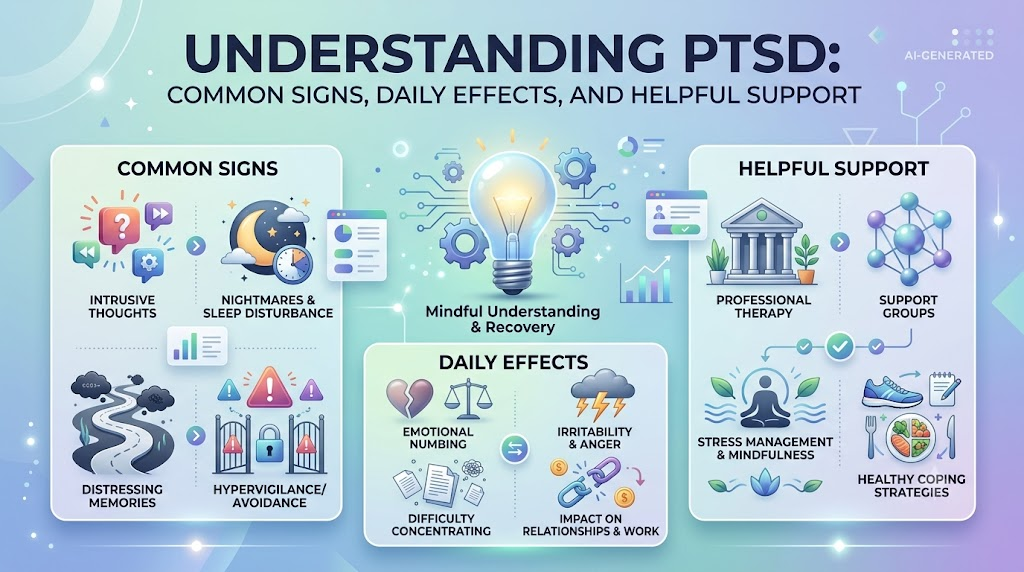
PTSD symptoms can appear in different ways. Some people have unwanted memories of trauma. Others may avoid reminders of what happened.Common symptoms include flashbacks and nightmares. Some people feel fearful, angry, guilty, or numb. Others may feel constantly alert or easily startled.Sleep problems can also occur. Concentration may become harder for some people. These symptoms do not prove that someone has PTSD.
Intrusive Memories and Flashbacks
Intrusive memories can appear without warning. A person may remember parts of a distressing event. These memories may feel unwanted or upsetting.A flashback can feel very real. A person may feel as if the event is happening again. Sounds, places, smells, or other reminders may trigger memories.These experiences can feel frightening. People should not feel ashamed of these reactions. A mental health professional can help assess ongoing symptoms.
Avoidance Symptoms
Avoidance means staying away from reminders. A person may avoid places or people linked to trauma. They may also avoid certain talks, activities, or thoughts.Avoidance can bring short-term relief. However, it may affect daily life over time. Someone may stop doing things they once enjoyed.Avoiding reminders does not mean weakness. It can be a response to fear or distress. Professional support can help people understand these reactions.
Changes in Mood and Thinking
Trauma can affect thoughts and feelings. Some people may feel fear or deep sadness. Others may feel anger, guilt, shame, or emotional numbness.Some people may lose interest in normal activities. They may also feel distant from family or friends. Trust may become harder for some people.These experiences can differ greatly. Having one feeling does not confirm PTSD. A qualified professional can look at the full picture.
Feeling on Edge or Easily Startled
Some people describe PTSD as feeling on edge. They may find it hard to relax. Small sounds may also cause a strong startle response.This can include irritability and trouble sleeping. Some people may have difficulty focusing. They may feel ready for danger even when safe.The medical term for this pattern is hyperarousal. Many other health issues can cause similar symptoms. Professional assessment is important before making conclusions.
PTSD Symptoms and Daily Life
PTSD symptoms may affect sleep and daily routines. Some people may have trouble falling asleep. Others may wake often or have upsetting dreams.Work and school can also become harder. Concentration may drop during stressful periods. Some people may avoid social activities or family events.Relationships can also feel difficult. A person may become distant or easily upset. Not everyone with PTSD has these problems.
PTSD Symptoms in Children and Teens
Trauma responses can look different in young people. Children may become more fearful or clingy. Some may have changes in sleep or behavior.School performance may also change. A child may have trouble focusing or joining normal activities. Younger children may show distress through play or behavior.Teens may become withdrawn or irritable. Parents and caregivers should avoid making quick conclusions. Ongoing concerns deserve attention from a qualified professional.
PTSD Symptoms in Adults
Adults may show many different symptoms. Some may talk openly about their distress. Others may hide or minimize what they feel.People may continue working while struggling inside. They may avoid talking about trauma with others. Some may also have sleep or relationship problems.Taking ongoing distress seriously is important. Asking for help does not mean weakness. Professional support can help explain what may be happening.
PTSD vs Normal Stress After Trauma
Strong reactions can happen after frightening events. Fear, sadness, poor sleep, or worry may happen after trauma. These reactions do not automatically mean PTSD.PTSD involves a pattern of symptoms that may continue. These symptoms can also interfere with normal life. The pattern matters more than one symptom alone.There is no simple online test for PTSD. A qualified mental health professional can assess symptoms. They can also consider personal history and daily functioning.
When Should Someone Seek Professional Help?
Professional support may help when symptoms continue. It may also help when daily life becomes harder. Sleep problems can be one reason to seek support.A person may also need help with work or school. Relationship problems can also be a sign that support may help. Difficulty managing strong emotions is another reason to talk.Someone does not need to wait until life feels impossible. Early support can provide a safe place to talk. A healthcare professional can explain suitable next steps.
How Is PTSD Evaluated?
A professional may ask about symptoms and experiences. They may ask when symptoms started. They may also ask how symptoms affect daily life.Sleep, mood, safety, and medical history may also matter. The professional may ask about work and relationships. These questions help build a clearer picture.A diagnosis requires professional assessment. An online article cannot confirm PTSD. A symptom list should not be used as a self-diagnosis test.
Support and Treatment for PTSD
PTSD can be addressed with professional mental health care. Therapy is one common form of support. Some therapies focus on trauma and related symptoms.Trauma-focused psychotherapy may help some people. Treatment choices depend on personal needs and circumstances. A professional can explain suitable options.Medicines may also be discussed in some cases. People should only use them under proper medical guidance. Never start or stop treatment without professional advice.
Can Online Mental Health Support Help?
Online mental health consultation can make support easier to access. It may reduce travel for some people. It can also offer flexible appointment options.Some people may feel more comfortable talking from home. Online care can also support follow-up conversations. However, online care does not suit every situation.ASKDOCTORLIVE.COM can help people explore online healthcare information and consultation options. Users should choose care based on their needs and safety.
When Online Support May Not Be Enough
Some situations need urgent in-person help. Online support should not replace emergency care when danger is immediate.If someone may hurt themselves or another person, seek urgent help. Contact local emergency services or an appropriate crisis service. Stay with the person when it is safe to do so.Do not wait for an online appointment in an emergency. Quick support can be important during a crisis. Keep communication calm and direct.
How to Prepare for a Mental Health Consultation
Simple preparation can make a consultation easier. Write down the main concerns you want to discuss. You can also note when symptoms began.It may help to track sleep changes. You can also note mood changes and daily problems. Bring a list of current medicines and health conditions.Do not stop or change medicines before the visit. Ask the professional any questions you have. Honest information can help them understand your needs.
Common Stress Reactions vs Possible PTSD-Related Symptoms
| Area | Common Stress Reactions | Possible PTSD-Related Symptoms |
|---|---|---|
| Triggers | May follow stressful situations | May involve trauma reminders |
| Emotions | Worry, fear, or sadness | Ongoing fear, anger, guilt, or numbness |
| Sleep | Temporary sleep changes | Ongoing sleep problems or nightmares |
| Avoidance | May avoid some stressful tasks | May avoid trauma reminders |
| Daily life | Often improves with time | May interfere with normal activities |
| Assessment | May not need mental health assessment | Professional assessment may help |
A Simple General Example
A person may notice ongoing nightmares after trauma. They may also avoid places linked to the event. Poor sleep may then affect work and daily routines.The person may decide to speak with a mental health professional. The professional can ask about symptoms and daily life. They can then discuss suitable support options.This example is general and not a diagnosis. Real experiences can look very different.
How ASKDOCTORLIVE.COM Can Help
ASKDOCTORLIVE.COM can support people exploring online healthcare information and consultation options. It can help users look for suitable healthcare support.Users can prepare their concerns before a consultation. They can also discuss symptoms with a qualified healthcare professional. Personal care decisions should always follow professional advice.ASKDOCTORLIVE.COM does not replace emergency services. It also should not be used to confirm PTSD through an online article.
SEO, AEO, GEO, LLMO, AISEO, and E-E-A-T
Clear health information can help people find useful answers. Question-based headings also make information easier to understand. Short answers can support both readers and search systems.This article uses AEO, GEO, LLMO, and AISEO principles. It gives direct answers to common PTSD questions. It also uses natural terms related to trauma and mental health.E-E-A-T is important for health content. Clear wording and safe limits help readers understand the information. Medical decisions should still come from qualified professionals.
Frequently Asked Questions
1. What are the common symptoms of PTSD?
Common symptoms include unwanted memories, nightmares, and avoidance. Mood changes and sleep problems can also happen.
2. Can PTSD symptoms appear after a traumatic event?
Yes, symptoms can appear after trauma. However, not everyone who experiences trauma develops PTSD.
3. Can PTSD affect sleep?
Yes, some people with trauma symptoms have sleep problems. Nightmares or trouble sleeping may also occur.
4. Can PTSD cause flashbacks?
Some people may experience flashbacks. A flashback can feel like the traumatic event is happening again.
5. What does PTSD avoidance mean?
Avoidance means staying away from reminders of trauma. This may include places, people, activities, or thoughts.
6. Can PTSD affect daily life?
Yes, symptoms may affect work, school, sleep, and relationships. The effects can differ between people.
7. Can children have PTSD symptoms?
Children can have trauma-related symptoms. Changes in behavior, sleep, mood, or school life may occur.
8. Can online mental health support help with PTSD?
Online support may help some people access qualified professionals. However, urgent situations need appropriate emergency care.
9. Can an online article diagnose PTSD?
No. An article cannot diagnose PTSD. A qualified mental health professional must assess symptoms.
10. When should someone seek professional help for PTSD symptoms?
Professional help may be useful when symptoms continue. Support is also important when symptoms disrupt daily life.
Final Thoughts
PTSD symptoms can affect thoughts, feelings, sleep, and behavior. They can also affect work, school, and relationships. Each person’s experience can be different.Strong reactions after trauma do not always mean PTSD. Ongoing or disruptive symptoms deserve professional attention. A qualified mental health professional can provide proper assessment and support.Do not feel ashamed about seeking help. Talking with a trusted professional can be an important step. ASKDOCTORLIVE.COM can also help people explore online healthcare information and consultation options.