Introduction
As a parent, few things are as stressful as watching your child feel under the weather. You likely find yourself balancing the desire to let your child rest at home with the worry of whether they might need professional intervention. Deciding when to take your child to a doctor is a common struggle for families everywhere, especially when symptoms seem vague or change rapidly.Recognizing early warning signs is vital because timely medical care can make a significant difference in how quickly your child recovers. Whether it is a persistent cough, an unusual rash, or simply a feeling that something is just “not right,” having reliable information helps you make informed decisions. For expert guidance whenever you are unsure about your child’s condition, you can explore resources at ASKDOCTORLIVE.
Understanding Children’s Health and Medical Care
Why Regular Pediatric Care Matters
Regular pediatric checkups go beyond treating sickness. They are essential for monitoring growth and development. These visits allow healthcare providers to catch potential issues before they become serious, ensuring your child is meeting their developmental milestones.
Common Childhood Illnesses
Children, especially those in school or daycare, are frequently exposed to common viruses like the common cold, mild stomach bugs, and seasonal allergies. While most of these resolve on their own with rest and hydration, knowing how to manage them while staying alert for complications is key.
Importance of Early Diagnosis
Early diagnosis is the cornerstone of effective pediatric care. By identifying an infection or a developmental delay early, doctors can provide treatments that prevent long-term issues, reduce the duration of illness, and provide parents with peace of mind.
Role of Pediatricians in Child Health
Pediatricians are your partners in parenting. They provide not just medical diagnosis and treatment, but also valuable guidance on nutrition, vaccination schedules, and mental health, helping you navigate the challenges of raising a child.
Signs Your Child May Need to See a Doctor
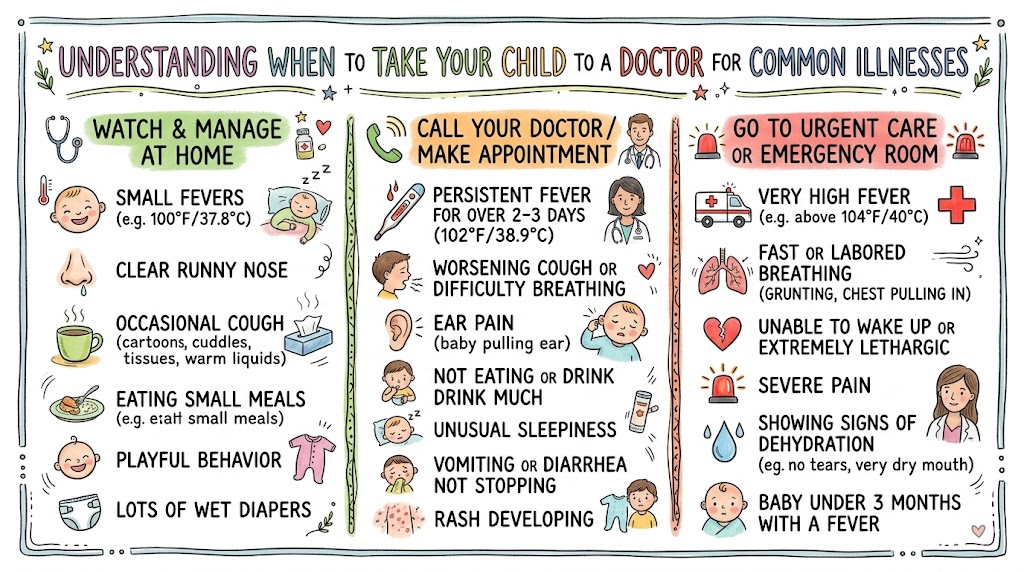
Knowing when to take your child to a doctor often relies on observing changes in behavior. If your child is unusually lethargic, has a fever that does not respond to over-the-counter medicine, or has persistent pain, a consultation is warranted.
Watch for specific physical symptoms such as ear pain, which can indicate an infection, or severe diarrhea that risks dehydration. Skin rashes that appear suddenly or spread rapidly are also good reasons to seek a medical opinion, as they can be symptoms of allergic reactions or viral infections.
Common Symptoms and Recommended Medical Action
| Symptom | Possible Cause | When to Call a Doctor | When Emergency Care Is Needed |
| Fever | Infection | High or persistent fever | Seizures or extreme lethargy |
| Cough | Viral infection | If breathing is labored | Turning blue or gasping |
| Breathing Difficulty | Asthma/Allergy | Wheezing | Cannot speak or breathe |
| Vomiting | Stomach bug | If fluids stay down | Dehydration signs/Blood |
| Diarrhea | Infection | Lasts > 24 hours | Signs of severe dehydration |
| Rash | Allergy/Virus | If spreading rapidly | Swelling of lips/face |
| Ear Pain | Infection | Severe discomfort | High fever + ear drainage |
| Dehydration | Illness | Less wet diapers | Unresponsive or dry mouth |
The table above serves as a general guide, but your own observation is the most powerful tool. If your child’s symptoms do not align with their “normal” behavior, or if they appear significantly worse than previous minor illnesses, calling for a professional opinion is always the safest course of action.
Always remember that pediatric care is about being proactive. A doctor can provide the clarity you need, even if the diagnosis turns out to be minor. It is always better to be cautious when it comes to the well-being of your child.
Emergency Warning Signs Parents Should Never Ignore
Certain symptoms require immediate medical intervention at the nearest emergency room. These include difficulty breathing, where the child’s ribs retract with every breath, or a high fever in infants under three months of age.
Seizures, loss of consciousness, or signs of a severe allergic reaction (such as swelling of the throat or difficulty swallowing) must be treated as medical emergencies. Additionally, if you notice your child’s lips or skin turning blue, or if they are experiencing persistent chest pain, do not wait for a regular appointment—seek emergency help immediately.
When Home Care May Be Enough
Many childhood illnesses are self-limiting. If your child has a mild cold with a clear runny nose but is still active, eating, and drinking, home care—such as rest and extra fluids—is usually sufficient.
Minor cuts and scrapes that stop bleeding with gentle pressure can be managed with soap, water, and a bandage. Similarly, a temporary upset stomach that resolves after one or two episodes, or mild seasonal allergies that respond to simple environmental changes, may not require a professional medical visit.
Routine Pediatric Checkups and Preventive Care
Routine checkups are the bedrock of preventive medicine. During these visits, doctors track growth charts to ensure physical development is on track. Vaccinations are administered according to national guidelines to protect your child from preventable diseases.
These visits are also the perfect time to discuss nutrition and developmental milestones. Your pediatrician can perform vision and hearing screenings, which are vital for early learning, ensuring your child has the best start in their academic and social life.
How to Prepare for a Pediatric Appointment
To get the most out of your visit, come prepared. Keep a brief log of your child’s symptoms, including when they started and any patterns you have noticed. Write down a list of questions, such as concerns about medication or expected recovery time.
Bring a list of any medications or supplements your child is currently taking, along with their basic medical history. Having this information ready helps the pediatrician make a more accurate assessment quickly, allowing you to focus on the care of your child.
Common Mistakes Parents Make
One of the most frequent mistakes is waiting too long when a child is clearly suffering or when symptoms are worsening. Similarly, over-relying on home remedies without understanding the root cause can mask serious issues.
Ignoring persistent symptoms, such as a cough that lasts for weeks, can lead to complications. Additionally, try to avoid self-diagnosing via internet searches, which can often increase anxiety. Finally, skipping follow-up visits can prevent the doctor from confirming that a treatment is working as intended.
Tips for Keeping Children Healthy
- Ensure your child eats a balanced diet with plenty of fruits and vegetables.
- Encourage at least an hour of physical activity every day.
- Keep vaccinations up to date to prevent serious illnesses.
- Establish a consistent sleep schedule appropriate for their age.
- Teach them to wash their hands frequently to reduce germ exposure.
- Limit screen time to encourage outdoor play and social interaction.
- Stay hydrated by offering water throughout the day.
- Model healthy habits like eating nutritious snacks.
- Keep up with dental checkups to prevent oral health issues.
- Ensure they wear helmets and protective gear for sports.
- Practice good hygiene during flu and cold seasons.
- Encourage emotional expression to support mental health.
- Keep household surfaces clean and sanitized.
- Monitor their growth and development milestones regularly.
- Trust your instincts—if something feels wrong, call your doctor.
Latest Advances in Pediatric Care
Pediatric medicine is rapidly evolving. Telemedicine for children now allows parents to get expert advice from home for non-emergency concerns. Early disease detection tools and digital health monitoring allow for better tracking of chronic conditions like asthma or diabetes. Modern treatments are becoming less invasive, focusing on patient comfort and faster recovery times for the little ones we care for.
Frequently Asked Questions (FAQ)
- When is a fever considered too high for a child?A fever is generally defined as a temperature of 100.4°F or higher. However, for an infant under three months, any fever is a reason to call the doctor immediately. For older children, the focus is more on how the child is acting rather than the specific number on the thermometer.
- How do I know if my child is dehydrated?Look for signs like a dry mouth, fewer than four to six wet diapers a day, no tears when crying, or extreme lethargy. If you suspect dehydration, contact your pediatrician promptly to discuss oral rehydration strategies.
- Can I use over-the-counter cough medicine for my child?Most medical associations do not recommend over-the-counter cough and cold medicines for young children due to potential side effects and lack of proven efficacy. Always check with your doctor before giving any medication to a child.
- Why are routine checkups necessary if my child seems healthy?Routine checkups help identify issues that aren’t visible, like hearing loss or developmental delays. They also ensure your child receives timely vaccinations and allow you to build a relationship with your pediatrician.
- How can I tell if my child’s ear pain is serious?Ear pain can be caused by pressure from a cold or an actual infection. If the pain is severe, accompanied by a high fever, or if you see fluid draining from the ear, a medical evaluation is necessary.
- Should I be worried about a mild skin rash?Many rashes in children are harmless, but some can indicate infections or allergic reactions. If the rash spreads rapidly, is accompanied by a fever, or looks like small purple spots, you should seek medical attention.
- How often should my child see a pediatrician?In the first two years of life, checkups are frequent to monitor growth. Afterward, an annual well-child visit is generally recommended to keep track of development, vaccinations, and overall health.
- Is it normal for my child to have a stomach bug frequently?Children are exposed to many germs at school or daycare. While frequent stomach bugs can be common, they should not be persistent. If your child is losing weight or not growing, a doctor should investigate.
- What should I do if my child is acting normally but has a high fever?If the child is playing and drinking fluids, you may be able to monitor them at home. However, if the fever persists for more than 48 hours, it is best to call your pediatrician for guidance.
- How can I prepare my child for a doctor’s visit?Be honest and calm. Use simple language to explain that the doctor is there to help them feel better. Bringing a favorite toy or book can also provide comfort during the waiting time.
- Are vaccines safe for my child?Yes, vaccines are rigorously tested for safety and are the most effective way to protect your child from serious, life-threatening diseases. Consult your doctor if you have specific questions about the schedule.
- When should I go to the emergency room instead of the clinic?Go to the ER for breathing difficulties, seizures, severe bleeding, or any injury that causes a loss of consciousness. The ER is equipped to handle life-threatening situations that require immediate, intensive care.
- Can I consult a doctor online?Yes, many pediatricians now offer telehealth services for non-emergency issues like rashes, minor coughs, or medication questions. This can save time and keep your child away from other sick patients.
- What if my child refuses to take their prescribed medicine?Talk to your doctor about alternative forms, such as chewable tablets or different flavors, or ask for tips on how to mask the taste. Never stop a prescription without talking to the doctor first.
- How can I tell if my child is in pain if they cannot speak yet?Look for signs like prolonged crying, pulling at their ears, a change in appetite, or unusual restlessness. If your child is behaving differently, trust your gut and consult your pediatrician.
Final Conclusion
Understanding when to take your child to a doctor is a fundamental part of the parenting journey. While it is natural to feel anxious when your child is unwell, knowing the difference between minor illnesses that can be managed at home and those that require professional expertise provides a sense of control and confidence. Prioritizing timely pediatric care ensures that your child receives the support they need to recover quickly and continue their healthy development.
Remember, you know your child better than anyone else. If your instincts tell you that something is wrong, do not hesitate to seek a medical opinion. Early diagnosis and proactive communication with your pediatrician are the best ways to prevent small concerns from becoming major challenges. By keeping up with routine checkups, tracking symptoms, and maintaining an open line of communication with your medical team, you are taking the best possible steps to safeguard your child’s long-term health.