what is java
“Why Java”
Java is a versatile and widely-used programming language that has been a popular choice for developers across the globe for several decades. There are several compelling reasons why Java continues to be a preferred language for a wide range of applications. Below are some key reasons why Java stands out:
1. Platform Independence: One of the most significant advantages of Java is its platform independence. Java programs can run on any system that has a Java Virtual Machine (JVM) installed, regardless of the underlying operating system. This “write once, run anywhere” capability makes Java highly portable and versatile.
2. Object-Oriented Programming: Java is an object-oriented programming language, which encourages developers to modularize their code into reusable components known as objects. This approach promotes code reusability, maintainability, and scalability, making it easier to manage large and complex projects.
3. Rich Standard Library: Java comes with a comprehensive standard library that provides a wide range of classes and packages to facilitate common programming tasks. These libraries cover areas such as networking, I/O, data structures, concurrency, GUI development, and more, saving developers time and effort by providing ready-made solutions.
4. Strong Community Support: Java has a vast and active community of developers, enthusiasts, and experts who contribute to its growth and development. This community support ensures that developers have access to a wealth of resources, forums, tutorials, and tools to aid in learning, problem-solving, and staying updated on best practices.
5. Robust and Secure: Java is known for its robustness and reliability, making it a popular choice for developing mission-critical applications in various industries, including finance, healthcare, and e-commerce. Java’s built-in security features, such as sandboxing and automatic memory management through garbage collection, help in creating secure and stable applications.
6. Performance and Scalability: Java’s performance has significantly improved over the years, thanks to optimizations in the JVM and compiler technology. Java applications can be highly performant, especially when leveraging frameworks like Spring or Hibernate. Java’s scalability is also noteworthy, as it can handle high volumes of traffic and data processing efficiently.
In conclusion, Java’s platform independence, object-oriented nature, rich standard library, community support, robustness, security features, performance, and scalability make it a compelling choice for a wide variety of software development projects. Whether you are building web applications, mobile apps, enterprise systems, or embedded software, Java provides a solid foundation and a versatile toolset to bring your ideas to life.

what is java
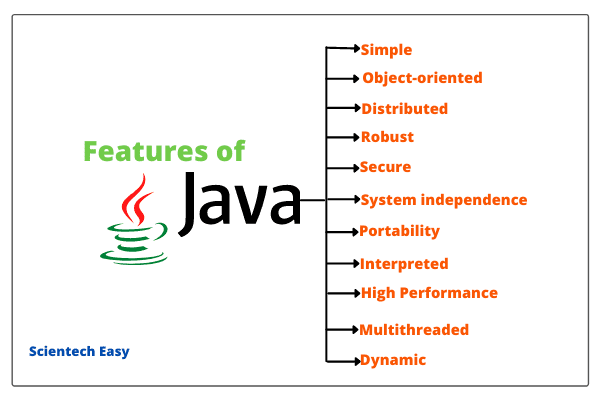
Java is a powerful and versatile programming language that has gained immense popularity since its inception. It offers a wide range of features that make it a preferred choice for developing various applications. Below are some of the key features of Java:
1. Simple and Easy to Learn: Java is designed to be simple and easy to learn, making it an ideal choice for beginners. Its syntax is similar to C and C++, allowing developers to quickly grasp the fundamentals of programming.
2. Object-Oriented: Java is an object-oriented programming language, which means it focuses on creating objects that contain both data and functions. This approach promotes code reusability and modularity, making it easier to maintain and scale applications.
3. Platform-Independent: One of the most significant features of Java is its platform independence. Java programs can run on any device that has a Java Virtual Machine (JVM) installed, regardless of the underlying operating system. This “write once, run anywhere” capability makes Java versatile and widely used in cross-platform applications.
4. Robust and Secure: Java is known for its robustness and security features. It provides built-in mechanisms for handling errors and exceptions, which helps developers write reliable and stable code. Additionally, Java’s security features, such as bytecode verification and access control mechanisms, make it a secure programming language for developing applications.
5. Multithreaded: Java supports multithreading, allowing multiple tasks to run concurrently within a single program. This feature enhances the performance and scalability of Java applications by making efficient use of system resources.
6. Rich Standard Library: Java comes with a rich set of class libraries that provide pre-built functionality for common tasks, such as networking, file handling, and data manipulation. These libraries save developers time and effort by eliminating the need to write code from scratch for basic operations.
7. Dynamic and Extensible: Java supports dynamic loading of classes, allowing applications to load and execute code at runtime. This feature enables developers to extend the functionality of their applications through plugins and libraries, making Java highly extensible.
8. Community Support: Java has a large and active community of developers who contribute to its ecosystem by sharing knowledge, resources, and open-source libraries. The vibrant community support ensures that developers have access to a wealth of resources to help them overcome challenges and stay updated with the latest trends in Java programming.
In summary, the features of Java, such as its simplicity, platform independence, robustness, and community support, make it a versatile and powerful programming language for developing a wide range of applications.