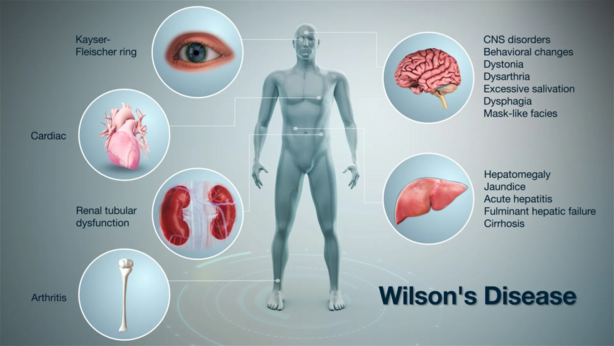
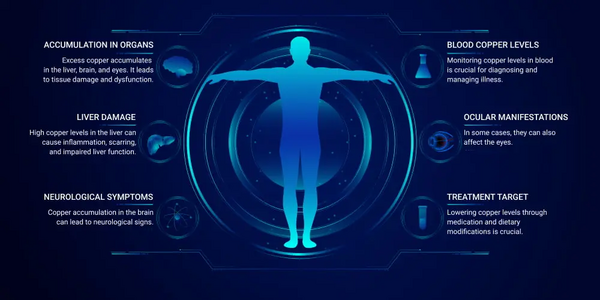
Wilson’s disease, a rare genetic disorder, impairs the body’s ability to eliminate excess copper, leading to its accumulation in vital organs like the liver, brain, and eyes. First identified in 1912 by Dr. Samuel Alexander Kinnier Wilson, this condition remains a challenge for early diagnosis and treatment. While it’s a hereditary condition, its effects can be mitigated with timely medical intervention and lifestyle adjustments.
Causes of Wilson’s Disease
Wilson’s disease occurs due to mutations in the ATP7B gene, responsible for regulating copper transportation in the body. These mutations result in an inability to excrete copper properly, causing its accumulation in tissues.
- Hereditary Transmission: Autosomal recessive inheritance from both parents.
- Liver Dysfunction: Impaired hepatic pathways fail to excrete copper into bile.
- Genetic Carriers: Carriers may not exhibit symptoms but can pass the condition to offspring.
Indications of Wilson’s Disease
Early indications can be vague but may include:
- Fatigue and weakness.
- Abdominal discomfort.
- Personality changes, irritability, or depression.
- Jaundice and swelling in legs or abdomen.
Symptoms of Wilson’s Disease
Symptoms typically appear between the ages of 6 and 35. They vary depending on the organs affected:
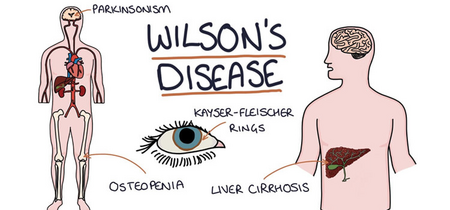
- Liver: Jaundice, cirrhosis, or liver failure.
- Neurological: Tremors, muscle stiffness, speech difficulties.
- Psychiatric: Mood swings, paranoia, or difficulty concentrating.
- Ophthalmological: Kayser-Fleischer rings (copper deposits around the cornea).
Prevention Strategies of Wilson’s Disease
While Wilson’s disease cannot be prevented, certain strategies can reduce its impact:
- Genetic Counseling: Screening families with a history of the condition.
- Early Testing: Regular liver function and genetic tests for at-risk individuals.
- Dietary Changes: Avoiding foods high in copper like shellfish, nuts, and chocolates.
- Regular Monitoring: Lifelong follow-ups to assess copper levels and organ health.
Myths and Facts About Wilson’s Disease
- Myth: Wilson’s disease is contagious.
Fact: It’s a genetic disorder and cannot spread between individuals. - Myth: Copper accumulation only affects the liver.
Fact: It can harm the brain, kidneys, and eyes as well. - Myth: Diet alone can cure Wilson’s disease.
Fact: While diet helps, medical treatments are crucial.
Treatments and Therapy
Medication-Based Treatments
- Chelation Therapy: Medications like penicillamine or trientine bind and remove excess copper.
- Zinc Acetate: Prevents copper absorption in the intestine.
Surgical Treatments
- In severe cases, liver transplantation may be required if liver damage is irreversible.
Physical Therapy and Rehabilitation
- Improves motor skills and mobility in individuals with neurological impairments.
Lifestyle and Behavioral Interventions
- Dietary Adjustments: Avoiding high-copper foods and using low-copper cookware.
- Hydration: Adequate water intake to aid kidney function.
Alternative and Complementary Medicine
- Herbal supplements and acupuncture (under medical supervision) may help reduce stress and improve well-being.
Psychotherapy and Counseling
- Provides emotional support for individuals dealing with psychiatric symptoms or chronic illness-related stress.
Immunizations and Vaccines
- Regular vaccinations to prevent infections in immunocompromised individuals.
Stem Cell Therapy
- Experimental therapies show promise but are not yet widely adopted.
Gene Therapy
- Advances in genetic engineering aim to correct the ATP7B gene mutation.
Top 20 FAQ on Wilson’s Disease
1. What is Wilson’s disease?
Wilson’s disease is a rare genetic disorder that causes excessive copper accumulation in the body, affecting the liver, brain, and other vital organs.
2. How is it diagnosed?
It is diagnosed through a combination of physical examinations, family history, and diagnostic tests like blood tests, liver function tests, and imaging.
3. What tests confirm the disease?
Tests such as serum ceruloplasmin levels, 24-hour urine copper tests, liver biopsy, and genetic testing confirm the diagnosis.
4. Can it be cured completely?
While there is no permanent cure, Wilson’s disease can be effectively managed with lifelong treatment.
5. Who is at risk?
Individuals with a family history of Wilson’s disease or genetic mutations in the ATP7B gene are at risk.
6. Are there lifestyle changes needed?
Yes, dietary restrictions on copper-rich foods, regular medical checkups, and medication adherence are necessary.
7. What are Kayser-Fleischer rings?
These are copper deposits visible around the cornea of the eye, often a key diagnostic feature.
8. How does it affect the brain?
Wilson’s disease can cause neurological symptoms like tremors, muscle stiffness, speech difficulties, and psychiatric disturbances.
9. Can it cause infertility?
In some cases, untreated Wilson’s disease can lead to hormonal imbalances and infertility.
10. How is it managed during pregnancy?
Treatment continues during pregnancy with adjusted doses of medications to avoid harm to the baby and ensure the mother’s health.
11. What is the role of zinc in treatment?
Zinc prevents copper absorption in the intestine and is an essential part of long-term management.
12. Are there home remedies?
While home remedies cannot replace medical treatment, maintaining a copper-restricted diet and staying hydrated can support overall health.
13. What foods should I avoid?
Avoid copper-rich foods such as shellfish, nuts, chocolates, mushrooms, and organ meats.
14. How long does treatment last?
Treatment is lifelong and involves consistent medication and monitoring.
15. What happens if untreated?
If untreated, Wilson’s disease can lead to severe liver damage, neurological disorders, and even death.
16. Can children develop it?
Yes, symptoms can appear in childhood, typically between ages 6 and 18.
17. Does it cause fatigue?
Fatigue is a common symptom due to liver dysfunction and copper accumulation.
18. Is genetic testing mandatory?
While not mandatory, genetic testing is highly recommended for accurate diagnosis and family screening.
19. Are there new treatments available?
Research into gene therapy and stem cell therapy shows promise, but these are still under clinical investigation.
20. Where can I get support?
Support can be found through specialized medical centers, patient advocacy groups, and online communities for rare diseases.
Conclusion
Wilson’s disease, though rare, is manageable with early detection, proper treatment, and regular monitoring. By understanding its causes, symptoms, and therapies, individuals and families can navigate the challenges it presents effectively. If you or a loved one exhibits symptoms or has a family history of the condition, consult a specialist to ensure timely intervention.
Take the first step today—awareness saves lives!
Related video: