Introduction
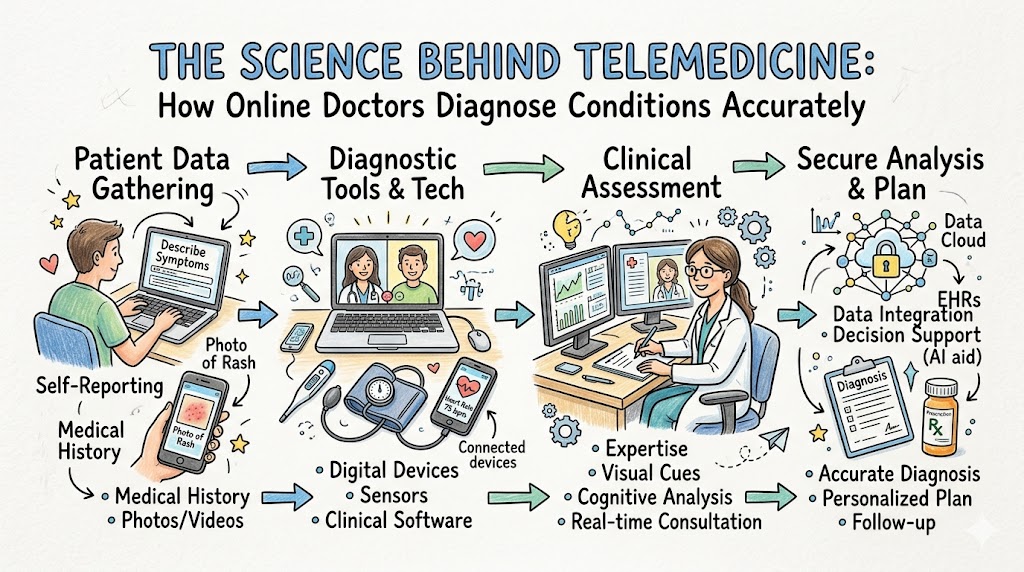
In recent years, the healthcare landscape has shifted dramatically. The rise of digital healthcare has moved the traditional doctor’s office into the comfort of our homes, making medical advice more accessible than ever before. Patients are increasingly turning to virtual consultations, but a common question remains: How online doctors diagnose conditions when they are not in the same room as the patient?At ASKDOCTORLIVE, we understand that clarity is the foundation of trust. By leveraging advanced communication technology, digital medical records, and expert clinical judgment, physicians can gather the necessary information to evaluate health concerns effectively. Understanding this process can help you feel more confident during your next virtual visit. In this guide, we will explore the mechanisms behind remote diagnosis, the importance of clear communication, and how you can make the most of your digital healthcare experience.
What Is an Online Doctor Consultation?
An online doctor consultation is a form of medical care delivered via digital technology. It allows patients to speak with qualified healthcare professionals using video calls, phone calls, or secure messaging systems.
- How it works: Patients schedule an appointment on a platform like AskDoctorLive, enter a virtual waiting room, and connect with a doctor who reviews their history and symptoms.
- Types of services: This includes urgent care (for sudden illnesses), primary care follow-ups, mental health counseling, and dermatological reviews.
- Communication: Doctors use a combination of visual cues (via video), verbal descriptions from the patient, and uploaded digital documents to form a complete clinical picture.
How Online Doctors Diagnose Conditions
The process of remote diagnosis follows a structured medical approach similar to an in-person visit. Doctors utilize a “differential diagnosis” method—a systematic process to identify the most likely cause of your symptoms.
Medical History Review
The first step is a thorough discussion of your medical history. The doctor asks about past surgeries, chronic illnesses, and your current health status to establish a baseline.
Symptom Assessment
The physician will ask detailed, open-ended questions about your symptoms: “When did it start?”, “How severe is the pain?”, and “Does anything make it better or worse?”
Visual Examination
Through high-quality video calls, doctors can observe physical indicators. This is particularly useful for dermatology (skin rashes), eye irritations, or throat issues where the patient can use a light to show the affected area.
Record and Lab Review
Doctors will review any uploaded lab reports, diagnostic imaging (like X-rays), or previous medical notes to gain insight into your health trends.
Follow-Up Evaluation
If a diagnosis is not immediately clear, the doctor may recommend further testing or a follow-up consultation to monitor how your symptoms change over time.
Information Doctors Use During Virtual Consultations
| Information Type | Why It Matters |
| Symptoms | Provides the immediate clues to the current illness. |
| Medical History | Helps rule out pre-existing conditions that might influence diagnosis. |
| Medications | Ensures new treatments do not cause dangerous drug interactions. |
| Lab Reports | Offers objective data (like blood sugar or infection markers). |
| Imaging Reports | Visual evidence of internal structure or conditions. |
| Family History | Highlights genetic predispositions to certain diseases. |
| Lifestyle Factors | Diet, exercise, and stress levels provide context for your health. |
Technologies Used in Online Diagnosis
- Video Consultations: The primary tool for physical observation and face-to-face interaction.
- Secure Messaging: Allows for the exchange of documents and clarifying questions.
- Electronic Health Records (EHR): Keeps a centralized, safe history of your encounters.
- AI-Assisted Tools: Algorithms help doctors screen for common conditions based on symptom inputs.
- Digital Prescriptions: Electronic transmission of prescriptions directly to your local pharmacy.
Conditions Commonly Diagnosed Online
Virtual care is highly effective for many non-emergency conditions:
- Respiratory: Common cold, flu, sinus infections, and bronchitis.
- Dermatology: Rashes, acne, hives, and minor skin infections.
- Primary Care: Allergies, digestive issues (constipation, diarrhea), and urinary tract infections (UTIs).
- Mental Health: Anxiety, mild depression, and stress management.
- Chronic Follow-up: Monitoring diabetes, hypertension, or thyroid medication management.
Benefits of Online Doctor Diagnosis
Telemedicine provides unparalleled benefits for modern patients:
- Convenience: Eliminate travel time and waiting rooms.
- Faster Access: Connect with a provider when you need it, often the same day.
- Ongoing Monitoring: Regular, short check-ins are easier to maintain via telehealth.
- Accessibility: High-quality care for those in remote or rural areas.
Platforms like AskDoctorLive ensure that patients get access to board-certified professionals without the logistical stress of a physical hospital visit.
Limitations of Online Diagnosis
It is important to recognize that virtual care is not a replacement for emergency services. Limitations include:
- Physical Contact: Doctors cannot palpate (touch) an abdomen or listen to heart sounds with a physical stethoscope.
- Complex Diagnostics: Conditions requiring specialized equipment (like CT scans or biopsies) must be handled in-person.
- Technology Barriers: Requires stable internet and a compatible device.
When Patients Should Seek In-Person Care
Seek emergency medical help immediately if you experience:
- Chest pain or pressure
- Sudden shortness of breath or choking
- Symptoms of stroke (sudden weakness on one side, slurred speech)
- High fever accompanied by a stiff neck
- Severe bleeding or compound fractures
- Uncontrollable vomiting
How ASKDOCTORLIVE.COM Helps Patients Access Healthcare
ASKDOCTORLIVE is designed with the patient’s convenience in mind. We connect you with verified medical professionals who are trained in telemedicine best practices. Our platform makes it easy to schedule consultations, upload medical documents securely, and receive professional medical advice without the barriers of traditional healthcare settings. Whether you need a quick health check or ongoing guidance, our service ensures you are supported.
Common Misconceptions About Online Diagnosis
- Myth: “Online doctors aren’t ‘real’ doctors.” Fact: They are board-certified professionals with the same credentials as in-person physicians.
- Myth: “Everything is misdiagnosed.” Fact: Telemedicine is highly effective for common, non-acute conditions.
- Myth: “Technology is too complicated.” Fact: Modern platforms are designed to be intuitive and user-friendly for all ages.
Future of Telemedicine
The future includes AI-powered diagnostic assistants that can pre-analyze symptoms before you even speak to a doctor. We are also seeing a rise in remote monitoring devices (connected blood pressure cuffs and glucose monitors) that stream data directly to your physician, allowing for a level of proactive care that was previously impossible.
Expert Tips for Getting an Accurate Online Diagnosis
- Prepare your notes: Write down your symptoms and their timeline before the call.
- Gather documents: Have your lab reports or previous records ready to upload.
- Be in a quiet, well-lit space: Good lighting helps the doctor conduct a better visual examination.
- Be honest: Share all medications and health history details accurately.
FAQs
Q1. How do online doctors diagnose conditions?
A: Through a mix of symptom discussion, medical history review, visual observation, and evaluation of lab reports.
Q2. Are online diagnoses accurate?
A: Yes, for many common conditions, research shows they are highly accurate when provided by certified professionals.
Q3. Can doctors prescribe medication online?
A: Yes, if the diagnosis warrants it, doctors can send prescriptions to your pharmacy.
Q4. What conditions can be treated virtually?
A: Allergies, skin issues, respiratory infections, and mild digestive or mental health concerns.
Q5. Do online doctors review lab reports?
A: Absolutely. Sharing your reports allows the doctor to provide a more evidence-based assessment.
Q6. What happens if the doctor cannot diagnose me?
A: They will refer you to an in-person specialist or clinic for further testing.
Q7. Is my information safe?
A: Yes, reputable platforms use secure, encrypted technology to protect your data.
Q8. Can children use telehealth?
A: Yes, with a parent or guardian present.
Q9. Do I need an appointment?
A: Many services offer on-demand care, but booking helps ensure availability.
Q10. Is it expensive?
A: Often, virtual consultations are more affordable than urgent care or ER visits.
Q11. Can they treat chronic conditions?
A: Yes, for follow-ups and medication management.
Q12. What if the internet disconnects?
A: Most platforms have procedures to reconnect or continue by phone.
Q13. Are the doctors board-certified?
A: At AskDoctorLive, our providers are verified and qualified medical experts.
Q14. How long does a consultation take?
A: It varies, but usually ranges from 15 to 30 minutes.
Q15. Can I get a doctor’s note?
A: Yes, if the provider finds it medically appropriate.
Conclusion
As we look toward the future of healthcare, the convenience of virtual consultation stands as a testament to how technology can improve human lives. Understanding how online doctors diagnose conditions helps demystify the process and empowers patients to take control of their well-being. By relying on patient history, visual cues, and clinical data, virtual healthcare providers deliver the same standard of professional care you would expect in a traditional office, but with added speed and accessibility.
At ASKDOCTORLIVE.COM, we are dedicated to providing a platform that prioritizes accurate diagnosis and compassionate care. Remember, the accuracy of a remote diagnosis relies heavily on the quality of information provided by the patient. Being prepared, honest, and clear in your communication is the best way to get the most out of your medical consultation. While telemedicine has its limitations, its ability to manage common illnesses and provide prompt medical guidance is revolutionary. As digital healthcare continues to evolve with AI and remote monitoring, its role in our daily lives will only continue to grow, making medical advice just a click away for everyone.