Introduction
Hypertension, or high blood pressure, is frequently referred to as the “silent killer” for a reason. In most cases, it develops without warning, showing no overt symptoms until significant damage has already occurred within the cardiovascular system. Every day, millions of people walk around with elevated blood pressure, unaware that their heart, arteries, kidneys, and brain are under constant, quiet strain. Because of its asymptomatic nature, high blood pressure often goes undiagnosed or, worse, ignored until a major health event—like a stroke or heart attack—occurs.
The landscape of healthcare is shifting toward a model of empowerment and accessibility. Through the integration of home-based monitoring and the rise of digital healthcare platforms, patients are no longer passive recipients of care; they are active partners in their health journeys. This is where resources like ASKDOCTORLIVE become invaluable, offering a bridge between complex medical needs and the simplicity of home-based care. By utilizing telemedicine, patients can receive professional guidance on their home readings and lifestyle modifications without the constant need for clinical visits.
What is Hypertension?
At its core, blood pressure is the force of your blood pushing against the walls of your arteries as your heart pumps it throughout your body. Hypertension is defined as a consistent elevation of this force beyond the normal range. When this pressure remains high over time, it creates wear and tear on the delicate inner linings of your blood vessels, leading to complications.
Blood pressure is measured using two numbers:
- Systolic Pressure (Top Number): The pressure in your arteries when your heart beats.
- Diastolic Pressure (Bottom Number): The pressure in your arteries when your heart rests between beats.
A healthy reading is generally considered to be below 120/80 mmHg. When the systolic number creeps above 130 or the diastolic above 80, clinicians begin to monitor for hypertension. The condition develops for many reasons, often involving the thickening of artery walls, increased volume of blood, or the heart having to work harder against stiffened vessels.
Table 1: Blood Pressure Categories
| Category | Systolic | Diastolic |
| Normal | Below 120 | Below 80 |
| Elevated | 120–129 | Below 80 |
| Hypertension | 130–139 | 80–89 |
| Severe Hypertension | 140 or higher | 90 or higher |
Common Causes of Hypertension
Understanding the “why” behind high blood pressure is the first step toward effective management. Genetics play a significant role; if both your parents had hypertension, your likelihood of developing it is substantially higher. However, genetics do not dictate your destiny.
Lifestyle factors are often the primary drivers. High sodium intake causes the body to retain excess fluid, increasing the volume of blood and thus the pressure against artery walls. A sedentary lifestyle weakens the heart muscle, making it less efficient at pumping, which can lead to higher pressure. Furthermore, chronic stress triggers the release of hormones that temporarily spike blood pressure; if this stress is perpetual, the pressure remains elevated.
Other significant contributors include:
- Obesity: Excess weight requires more blood to supply oxygen and nutrients to tissues, increasing the pressure in your arteries.
- Smoking: Tobacco chemicals immediately narrow blood vessels and damage their inner linings.
- Diabetes and Kidney Disease: These conditions often affect the circulatory system and fluid balance, leading to secondary hypertension.
- Aging: As we age, our arteries naturally lose some of their elasticity, becoming stiffer and more prone to pressure buildup.
Signs, Symptoms & Complications
One of the most dangerous aspects of hypertension is that it is frequently “silent.” Many people experience no symptoms at all for years. When symptoms do appear, they are often vague—a dull headache, occasional dizziness, or a slight feeling of fatigue.
Do not wait for symptoms to act. The true danger lies in the complications that arise from untreated pressure. Prolonged hypertension can lead to:
- Stroke: By weakening or damaging blood vessels in the brain, causing them to narrow, rupture, or leak.
- Heart Attack: By damaging the coronary arteries, reducing blood flow to the heart muscle.
- Kidney Damage: High pressure can destroy the microscopic filters (nephrons) in your kidneys, leading to renal failure.
- Vision Loss: By damaging the tiny blood vessels that supply the retina.
Home Blood Pressure Monitoring
Home blood pressure monitoring is the gold standard for managing hypertension effectively. It provides your doctor with a much clearer picture of your health than a single “white coat” reading taken at the clinic, which can often be artificially high due to stress.
To monitor correctly:
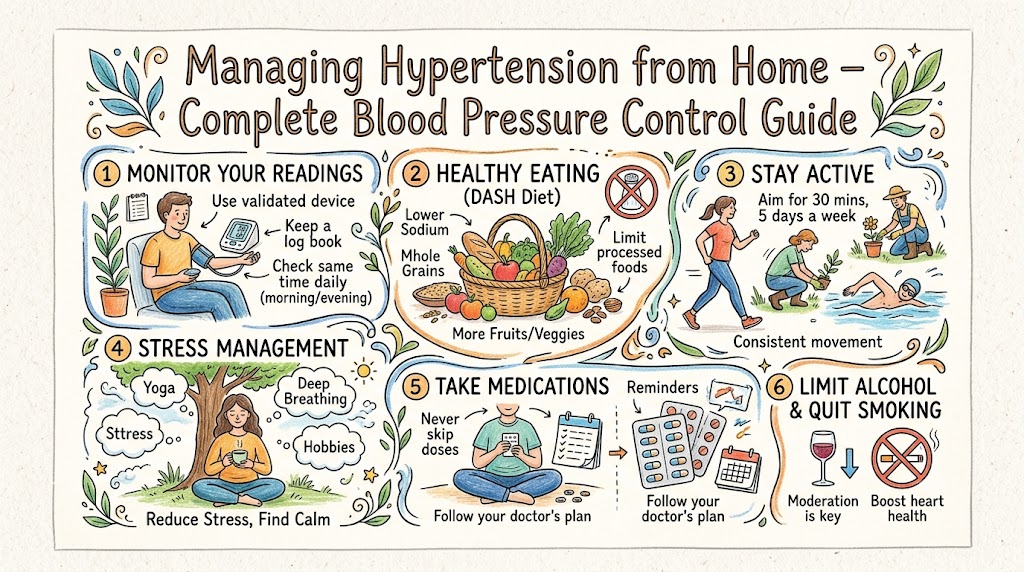
- Choose a validated monitor: Ensure it uses an upper-arm cuff rather than a wrist device for accuracy.
- Sit correctly: Sit with your back supported, feet flat on the floor (do not cross your legs), and your arm supported at heart level.
- Be still: Sit quietly for at least 5 minutes before taking the reading.
- Consistency: Measure at the same time each day, such as once in the morning and once in the evening.
Table 2: Home Blood Pressure Monitoring Checklist
| Step | Importance |
| Sit Quietly | Ensures resting baseline |
| Use Correct Cuff | Prevents inaccurate readings |
| Record Readings | Identifies patterns/trends |
| Follow Schedule | Provides reliable data |
| Share with Doctor | Facilitates clinical decisions |
Lifestyle Changes for Managing Hypertension
Managing hypertension from home is highly effective through sustainable lifestyle changes. The goal is to reduce the workload on your heart.
Healthy Diet and Sodium Reduction
Adopt the DASH (Dietary Approaches to Stop Hypertension) diet, which emphasizes fruits, vegetables, whole grains, and lean proteins. Most importantly, slash your sodium intake. Most excess sodium comes from processed foods, not the salt shaker. Read labels and aim for less than 2,300 mg of sodium daily.
Physical Activity
Aim for at least 150 minutes of moderate aerobic activity (like brisk walking or swimming) per week. This strengthens your heart, allowing it to pump with less effort.
Stress Management and Sleep
Chronic stress keeps your body in “fight or flight” mode. Incorporate mindfulness, deep breathing, or yoga. Additionally, ensure you get 7–9 hours of quality sleep, as sleep deprivation is linked to persistent high blood pressure.
Medication Management at Home
If your doctor prescribes medication, it is essential to take it exactly as directed, even if you feel fine. These medications do not “fix” the hypertension instantly; they manage it. Missing doses allows your pressure to spike, undermining your progress. If you experience side effects, do not simply stop the drug; consult your healthcare provider to discuss alternative options or dosage adjustments.
Telemedicine for Hypertension Care
Telemedicine has revolutionized how we manage chronic conditions. Through services like AskDoctorLive, you can easily share your logged blood pressure readings with a specialist. This allows for real-time adjustments to your care plan without the need for frequent travel. It makes managing hypertension from home seamless, supportive, and highly personalized.
Table 3: Benefits of Telemedicine
| Benefit | Patient Advantage |
| Convenience | Saves time and travel effort |
| Faster Access | Get expert advice when needed |
| Better Monitoring | Frequent check-ins improve compliance |
| Cost Savings | Reduces unnecessary clinic overheads |
Diet Plan for Blood Pressure Control
Focus on potassium-rich foods like bananas, spinach, and sweet potatoes, as potassium helps your body excrete sodium and eases tension in your blood vessel walls. Limit alcohol, as it can increase blood pressure and render medications less effective. Prioritize whole foods over pre-packaged meals.
Exercise & Heart Health
Exercise does not need to be strenuous to be effective. The key is consistency. A 30-minute brisk walk daily can significantly lower your resting blood pressure over time. Always start slowly and consult your doctor before beginning a new, high-intensity regimen.
Emergency Warning Signs
While most hypertension is managed through daily habits, there are times when your body is in crisis. A “hypertensive emergency” is when your blood pressure is extremely high and is accompanied by damage to your organs.
Table 4: When to Seek Immediate Medical Help
| Symptom | Action |
| Chest Pain | Call Emergency Services |
| Sudden Stroke Symptoms | Immediate Emergency Attention |
| Severe Breathlessness | Emergency Evaluation |
| Sudden Vision Loss/Blurring | Urgent Assessment |
Real-Life Success Stories
We have seen patients transform their lives through small, incremental changes. One patient, struggling with hypertension for years, found success by simply replacing soda with water and adding a 20-minute evening walk. By using telemedicine for monthly progress reviews, they felt encouraged and held accountable, leading to a massive improvement in their long-term health metrics.
Future of Home Hypertension Management
The future is here. Smart monitors now sync automatically with your smartphone, sending data directly to your doctor’s dashboard. Wearables track your activity and stress markers in real-time, providing a holistic view of your heart health that was once only possible in a hospital setting.
FAQs
- What is hypertension?
It is a medical condition where the force of blood against artery walls is consistently too high. - Can hypertension be managed at home?
Yes, through diligent monitoring, diet, exercise, and regular medical check-ins. - How often should I check my blood pressure?
Generally, twice daily—once in the morning and once in the evening—or as advised by your doctor. - What foods help lower blood pressure?
Foods rich in potassium, magnesium, and fiber, such as leafy greens, legumes, and whole grains. - Does stress increase blood pressure?
Yes, chronic stress keeps the body’s “stress hormones” elevated, which strains the heart. - Is exercise safe?
For most, yes. Consult your doctor, start low, and progress gradually to ensure safety. - Can telemedicine help?
Absolutely; it allows for consistent monitoring and professional adjustment of treatment plans from your home. - What symptoms require emergency care?
Chest pain, severe headache, confusion, or sudden vision loss. - How much salt is too much?
Most health organizations recommend capping intake at 2,300 mg, or 1,500 mg if you have existing hypertension. - Can weight loss help?
Yes, even losing 5% of your body weight can significantly reduce blood pressure. - Are home monitors accurate?
Yes, if you use a clinically validated, upper-arm monitor and follow instructions. - Can hypertension be cured?
It is often a chronic condition, but it can be managed so effectively that it no longer poses a major risk. - How important is medication?
It is critical for those whose pressure cannot be controlled by lifestyle alone. - Can poor sleep affect blood pressure?
Yes, sleep deprivation disrupts the body’s natural blood pressure regulation cycles. - When should I see a doctor?
If your readings are consistently above your target range, you should consult your healthcare provider immediately.
Final Conclusion
Managing hypertension from home is not just about avoiding a crisis; it is about investing in your future. By choosing to monitor your health, adjust your diet, stay active, and engage with professional support, you are reclaiming your vitality. Hypertension is a condition that requires persistence, but it is one that yields to consistent, positive habits.Remember that you are never alone in this process. With the guidance of medical professionals and the support of modern digital tools, you have the resources to keep your heart healthy and strong. Take it one day, and one reading, at a time. Your journey to a healthier heart starts today—be consistent, be patient, and prioritize your well-being.