Introduction
Accidents can happen when least expected, often catching families off guard in the comfort of their own homes. Whether it is a kitchen slip, a playground scrape, or a sudden nosebleed, knowing how to respond quickly and calmly can make all the difference. First aid knowledge is a valuable asset for any household, empowering individuals to take immediate action while supporting a person until professional medical help becomes available.For trusted health education, reliable medical information, and emergency preparedness guidance, readers can explore ASKDOCTORLIVE.
What Is First Aid?
First aid is the immediate care provided to someone with an injury or sudden illness before professional medical help arrives.The primary goals of first aid are to preserve life, prevent the condition from worsening, and promote recovery. It is important to remember that first aid is an initial response and does not replace formal medical treatment. Serious emergencies require immediate emergency medical services (cpr.heart.org).Acting quickly and safely requires a clear head and a basic understanding of human anatomy and safety protocols. By stabilizing a situation during those crucial first few minutes, you can significantly improve comfort and safety outcomes.
Common Home Emergencies
Household accidents cover a broad range of incidents that vary in severity. Recognizing what you are dealing with helps determine the right course of action.
Cuts and Scrapes
Daily activities in the kitchen, garage, or garden can easily lead to minor lacerations or abrasions. Proper cleaning and bandaging prevent secondary bacterial infections.
Minor Burns
Touching hot cookware, styling tools, or hot liquids can cause painful skin burns that require immediate cooling and protective coverage.
Nosebleeds
Dry indoor air, minor trauma, or allergies can cause sudden nasal bleeding, which can usually be managed with proper positioning and steady pressure.
Sprains and Strains
Awkward twists during household chores or recreational activities can stretch or tear ligaments and muscles around joints.
Choking
Food or small objects can block the airway, creating an immediate breathing obstruction that requires swift, decisive action.
Falls
Slips on wet floors, stairs, or rugs can lead to bruising, sprains, or more severe skeletal injuries, particularly among children and older adults.
Insect Bites and Stings
Stings from bees, wasps, or mosquitoes can trigger local discomfort, swelling, or, in sensitive individuals, allergic reactions.
Minor Head Injuries
Bumping your head against cabinets or furniture can cause localized swelling and minor headaches, though severe symptoms require urgent evaluation.
Electric Shock
Faulty appliances or exposed wiring can deliver dangerous electrical currents, demanding extreme caution and immediate safety shutoffs.
Poisoning
Accidental ingestion of cleaning chemicals, improper doses of medications, or spoiled food requires rapid identification and poison control contact.
First Aid Response Comparison Table
| Emergency | Immediate First Aid | When to Seek Medical Help |
| Minor Cuts | Clean wound and apply a sterile bandage | Deep or uncontrolled bleeding |
| Minor Burns | Cool under running water | Large, deep, or severe burns |
| Nosebleeds | Lean forward and apply pressure | Bleeding lasting more than 20 minutes |
| Sprains | Rest, ice, compression, elevation | Severe swelling or inability to bear weight |
| Choking | Encourage coughing if possible | Person cannot breathe or becomes unconscious |
| Insect Sting | Remove stinger if present and apply a cold compress | Signs of severe allergic reaction |
Essential First Aid Kit for Every Home
A well-stocked first aid kit is a cornerstone of home emergency preparedness. Keeping supplies organized and accessible ensures you are never scrambling for tools when an accident occurs.
- Adhesive Bandages: Various sizes for covering minor cuts and scrapes.
- Sterile Gauze: Pads and rolls for absorbing blood and dressing larger wounds.
- Adhesive Tape: Secures gauze pads and bandages firmly in place.
- Antiseptic Solution: Cleanses skin around wounds to reduce infection risks.
- Disposable Gloves: Protects both the caregiver and the injured person from contamination.
- Elastic Bandage: Provides support and compression for sprains and strains.
- Instant Cold Packs: Reduces swelling and numbs pain from bumps and bruises.
- Digital Thermometer: Monitors body temperature accurately during sudden illnesses.
- Scissors and Tweezers: Cuts tape, clothing, or gauze, and safely removes splinters.
- Emergency Contact List: Clearly written phone numbers for local emergency services, family, and poison control.
As highlighted by MedlinePlus, keeping these supplies in a designated, easily accessible location is essential for every household.
Step-by-Step First Aid Tips
Knowing the correct sequence of steps for common injuries ensures safe and effective care.
Treating Cuts and Scrapes
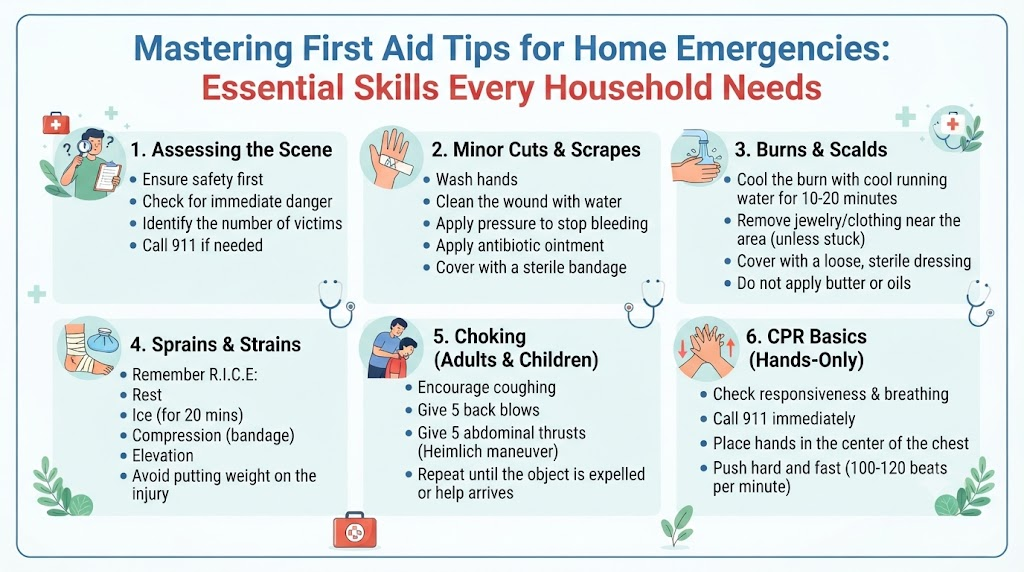
Wash your hands thoroughly before touching the wound. Rinse the cut with clean, running tap water to remove dirt. Gently pat dry and apply a thin layer of protective ointment if available, then cover with a sterile bandage.
Managing Minor Burns
Immediately hold the burned area under cool, running tap water for 10 to 20 minutes. Never use ice, butter, or greasy ointments. Cover the burn loosely with a clean, non-stick sterile bandage.
Handling Nosebleeds
Sit upright and lean slightly forward. Pinch the soft part of the nose just below the bridge for 10 continuous minutes without releasing. Breathing through the mouth during this time helps maintain steady pressure.
Responding to Choking
Encourage the person to cough if they can breathe and speak. If the airway is completely blocked, deliver five back blows between the shoulder blades followed by five abdominal thrusts (the Heimlich maneuver) until the object is expelled or help arrives.
Caring for Sprains
Remember the RICE method: Rest the injured joint, apply a cold pack (Ice) wrapped in cloth for 15 minutes, wrap with an elastic bandage for Compression, and keep the limb elevated above heart level.
Managing Minor Bleeding
Place a clean cloth or sterile gauze directly over the bleeding site. Apply firm, steady palm pressure until clotting occurs. Elevate the injured area if possible to slow blood flow.
Responding to Fainting
If someone feels faint, have them lie down flat on their back and elevate their legs slightly. Loosen tight clothing around the neck and ensure fresh air circulation. Allow them to rest before standing up slowly.
Handling Minor Allergic Reactions
Wash any localized skin contact area with soap and water. Apply a cool compress to reduce itching and swelling. Monitor closely for any spreading rash or difficulty breathing.
When to Call Emergency Medical Services
Certain medical situations exceed the scope of basic first aid and require immediate professional intervention. Life-threatening emergencies require immediate emergency medical services rather than home treatment (MedlinePlus).
- Unconsciousness or unresponsiveness.
- Difficulty breathing or severe shortness of breath.
- Severe chest pain or pressure.
- Heavy or uncontrolled bleeding that does not stop after direct pressure.
- Stroke symptoms, such as sudden facial drooping or slurred speech.
- Severe burns covering large areas of the body.
- Suspected spinal injuries or paralysis.
- Seizures lasting several minutes or recurring without recovery.
- Severe allergic reactions involving throat swelling or wheezing.
Preventing Home Emergencies
Proactive safety measures can significantly reduce the frequency and severity of accidents around the house.
- Childproofing the Home: Install safety gates, outlet covers, and cabinet locks to protect curious toddlers.
- Safe Kitchen Practices: Turn pot handles inward on the stove and keep hot liquids away from counter edges.
- Proper Medication Storage: Keep all prescription drugs and household cleaners locked securely out of reach of children.
- Fire Safety: Test smoke detectors monthly and keep fire extinguishers accessible in kitchen areas.
- Electrical Safety: Replace frayed cords immediately and avoid overloading electrical outlets.
- Fall Prevention: Secure loose rugs, clear clutter from hallways, and ensure adequate lighting on stairs.
- Safe Use of Household Chemicals: Never mix cleaning products together and store them in original containers.
Common First Aid Mistakes to Avoid
- Applying Ice Directly to Burns: Extreme cold can cause further tissue damage. Always use cool running water instead.
- Using Home Remedies Such as Butter or Toothpaste on Burns: These substances trap heat and introduce bacteria, increasing infection risks.
- Tilting the Head Backward During a Nosebleed: This causes blood to drain down the throat, risking choking or stomach irritation.
- Removing Deeply Embedded Objects from Wounds: Pulling out objects can trigger severe bleeding; leave removal to medical professionals.
- Delaying Emergency Care During Serious Symptoms: Waiting to see if chest pain or severe breathing issues resolve on their own puts lives at risk.
Preparing Your Family for Emergencies
- Learn CPR and Basic First Aid: Enroll in certified local classes to build hands-on competency.
- Keep Emergency Numbers Available: Post local emergency numbers on the refrigerator and save them in mobile phones.
- Practice an Emergency Plan: Conduct family discussions on fire evacuation routes and safe meeting spots.
- Check First Aid Supplies Regularly: Inspect your kit twice a year to replace expired medications and used items.
- Teach Children Age-Appropriate Safety Skills: Show kids how to call emergency services and explain when to ask an adult for help.
How ASKDOCTORLIVE Helps Patients
Accessing clear and dependable health information is vital for effective emergency preparedness. Platforms like ASKDOCTORLIVE support families by offering:
- First Aid Education: Providing straightforward guides on managing common household injuries.
- Health Awareness: Raising community understanding of safety and injury prevention.
- Reliable Medical Information: Delivering factual, easy-to-understand educational content.
- Emergency Preparedness Guidance: Equipping households with actionable steps for unexpected crises.
- Patient Education Resources: Helping readers understand when professional medical care is required.
- Informed Healthcare Decisions: Empowering individuals to act safely and confidently during health situations.
Common Myths vs Facts
| Myth | Fact |
| Butter helps heal burns | Cool running water is recommended for minor burns |
| Every injury can be treated at home | Some injuries require immediate medical care |
| First aid replaces professional treatment | First aid is the initial response until medical care is available |
| You should tilt your head back during a nosebleed | Leaning forward helps reduce swallowing of blood |
Real-Life Educational Scenarios
Scenario 1: Treating a Child’s Minor Cut
While playing in the yard, a child scrapes their knee on the pavement. The parent calmly washes their hands, cleans the scrape gently with clean running water, applies a mild antiseptic, and covers the area with a colorful sterile bandage, comforting the child throughout the process.
Scenario 2: Cooling a Kitchen Burn
While cooking dinner, a home cook accidentally touches a hot baking sheet, sustaining a minor burn on their hand. They immediately walk to the sink and hold the burn under cool, running tap water for fifteen minutes, followed by a loose sterile dressing to protect the skin.
Scenario 3: Responding to a Choking Emergency
During a family dinner, an adult begins choking on food and cannot speak. Another family member immediately recognizes the sign of complete blockage, delivers effective back blows and abdominal thrusts while a third person calls emergency services for professional backup.
Scenario 4: Using a First Aid Kit Before Visiting a Clinic
A family member twists their ankle while gardening. The household retrieves their first aid kit, applies an instant cold pack, wraps the ankle gently with an elastic bandage, and elevates it before scheduling a visit with an outpatient healthcare provider for evaluation.
FAQs (15 Questions)
1. What is first aid?
First aid is the immediate assistance given to an injured or suddenly ill person before professional medical help arrives.
2. Why is first aid important?
It helps preserve life, prevents injuries from worsening, and promotes faster recovery during the critical moments after an accident.
3. What should every home first aid kit contain?
Essential items include adhesive bandages, sterile gauze, antiseptic solution, disposable gloves, an elastic bandage, tweezers, and a digital thermometer.
4. How should I treat a minor burn?
Cool the burn under running tap water for 10 to 20 minutes and cover it loosely with a clean, sterile dressing.
5. What is the correct way to stop a nosebleed?
Sit upright, lean slightly forward, and pinch the soft part of the nose continuously for 10 minutes.
6. When should I seek emergency medical care?
Seek immediate emergency help for severe chest pain, breathing difficulties, unconsciousness, uncontrolled bleeding, or major trauma.
7. How should I respond to choking?
Encourage coughing if the airway is partially blocked. If blocked completely, deliver back blows and abdominal thrusts.
8. What should I do after a fall?
Check for responsiveness and injuries. If the person can move without pain, help them rest. Seek medical care if there is severe pain or dizziness.
9. How can I prevent infections in minor wounds?
Wash wounds thoroughly with clean water, apply an antiseptic, and keep them covered with a clean bandage until healed.
10. What should I do during an allergic reaction?
Wash any skin irritant away, apply a cool compress, and seek emergency care if breathing difficulty or swelling occurs.
11. Should everyone learn CPR?
Yes, basic CPR training equips individuals with life-saving skills that can be applied in sudden cardiac arrest emergencies.
12. How often should I check my first aid kit?
Inspect your first aid kit at least every six months to replenish used supplies and check for expired products.
13. Can first aid replace hospital treatment?
No, first aid is strictly an initial stabilization measure and does not substitute for professional medical evaluation and treatment.
14. How can families prepare for home emergencies?
Families can prepare by building a first aid kit, learning basic skills, posting emergency contacts, and practicing safety plans.
15. How does ASKDOCTORLIVE help readers learn about first aid and emergency preparedness?
ASKDOCTORLIVE provides reliable educational resources, safety guides, and tips to help households navigate emergencies with confidence.
Final Thoughts
Having a foundational understanding of basic first aid is essential for maintaining safety and peace of mind within any household. Equipping your home with a well-stocked first aid kit and knowing how to respond calmly to everyday accidents ensures you are prepared when the unexpected happens. While minor injuries can often be managed safely at home, recognizing critical warning signs and seeking professional medical care promptly remains vital for protecting long-term health.