Introduction
Accidents happen in everyday life. Whether it is a splash of hot oil while cooking dinner, a steam burn from a kettle, or a slip of the knife while chopping vegetables, minor burns and cuts are among the most frequent household injuries. Because these events occur suddenly, knowing how to respond calmly and effectively makes a significant difference in how well an injury heals.For reliable health resources and guidance, platforms like ASKDOCTORLIVE offer educational information that empowers individuals, families, and caregivers to make well-informed healthcare choices.In this guide, you will learn the fundamental steps of first aid for minor cuts and burns, how to spot early signs of infection, common home remedy mistakes to avoid, and practical strategies to childproof your home and prevent everyday kitchen accidents.
Understanding Minor Burns and Cuts
Knowing the structure of human skin helps clarify why specific first aid techniques work best.
+------------------------------------------------------------------------+
|                          LAYERS OF HUMAN SKIN                          |
+------------------------------------------------------------------------+
|  1. EPIDERMIS  : Outer protective barrier (Affected in 1st Degree)     |
|  2. DERMIS     : Nerves, vessels, collagen (Affected in 2nd Degree)    |
|  3. SUBCUTIS   : Deep fatty tissue, large vessels (3rd Degree/Deep)    |
+------------------------------------------------------------------------+
Anatomy of Minor Injuries
The skin consists of three primary layers: the outer epidermis, the middle dermis, and the deeper subcutaneous tissue. A minor burn generally involves the epidermis (a first-degree burn) or the top portion of the dermis (a superficial second-degree burn). These burns cause pain, redness, and occasional blistering, but they do not damage deep underlying tissues.
A minor cut is a small, superficial break in the skin that affects the epidermis and outer dermis. It may bleed moderately, but the bleeding can be controlled within a few minutes of applying gentle, direct pressure.
Superficial vs. Serious Injuries
It is important to distinguish between minor injuries that can be treated at home and severe conditions that require emergency medical care:
- Superficial Injuries: Small in size, painful primarily on the surface, clean-edged, and stop bleeding quickly with light pressure.
- Serious Injuries: Deep, gaping wounds, injuries caused by high-voltage electricity or caustic chemicals, burns covering large body areas, or cuts that expose fat, muscle, or tendon.
Why Early First Aid Matters
When an injury occurs, proper immediate care supports the body’s primary healing phases:
- Hemostasis: The body rapidly forms a clot to stop active bleeding.
- Inflammation: Immune cells clear away debris and combat invading bacteria.
- Proliferation: New tissue and blood vessels form to close the gap.
- Remodeling: Collagen restructures to restore skin strength.
By keeping wounds clean, cooled, and covered, first aid protects the body during these initial phases, lowering infection risks and promoting faster healing.
Types of Minor Burns
Understanding the depth and cause of a burn helps you choose the right first aid approach.
                +---------------------------------+
                |      CLASSIFYING MINOR BURNS    |
                +----------------+----------------+
                                 |
         +-----------------------+-----------------------+
         |                                               |
+--------v-------+                              +--------v-------+
|  FIRST-DEGREE  |                              | SECOND-DEGREE  |
+--------+-------+                              +--------+-------+
| • Outer Epidermis                             | • Epidermis + Dermis
| • Redness & Dryness                           | • Blisters & Swelling
| • No Blisters                                 | • Pain & Sensitivity
+----------------+                              +----------------+
First-Degree Burns
First-degree burns affect only the outermost layer of skin (epidermis). The area appears red, dry, and sensitive to touch, but no blisters form. A typical example is mild sunburn or brief contact with a warm iron. These burns usually heal within 3 to 7 days without leaving permanent scars.
Small Superficial Second-Degree Burns
Second-degree burns extend through the outer layer and enter the upper dermis. These injuries often present with clear, fluid-filled blisters, localized swelling, and significant tenderness. When the burn area is smaller than 2 to 3 inches in diameter and does not involve critical areas like the face or hands, it can generally be managed with home first aid.
Common Causes of Everyday Burns
- Hot Liquids: Accidental spills of boiling water, coffee, or hot soups.
- Hot Cookware: Touching hot pans, oven racks, or appliance heating elements.
- Steam Outbursts: Opening microwave containers or lifting pot lids carelessly.
- Sun Exposure: Prolonged ultraviolet exposure without adequate sun protection.
Types of Minor Cuts
Cuts and scrapes come in several forms depending on how the skin was damaged.
+------------------------------------------------------------------------+
|                         TYPES OF MINOR CUTS                            |
+------------------------------------------------------------------------+
|  • Small Knife Cuts   : Clean, straight incisions from kitchen tools  |
|  • Paper Cuts         : Shallow, highly sensitive dermal tears          |
|  • Kitchen Abrasions  : Minor surface grazes from graters or peeler   |
|  • Superficial Scrapes: Surface skin loss from falls or friction        |
+------------------------------------------------------------------------+
- Small Knife Cuts: Straight, clean-edged incisions caused by sharp kitchen blades or tools.
- Paper Cuts: Shallow tears that expose dermal nerve endings, often causing disproportionate pain relative to their size.
- Kitchen Abrasions: Superficial scrapes caused by accidental contact with cheese graters, vegetable peelers, or coarse surfaces.
- Minor Scrapes (Excoriations): Grazes resulting from friction against rough surfaces, commonly seen on knees and elbows after outdoor falls.
Burns and Cuts Comparison Table
| Injury Type | Common Symptoms | Basic First Aid |
| First-Degree Burn | Redness, localized heat, dry skin, mild pain | Cool with running water, apply petroleum jelly, cover loosely with clean dressing |
| Superficial Second-Degree Burn | Fluid-filled blisters, severe pain, swelling | Cool with water, protect intact blisters, apply petroleum jelly, use non-stick dressing |
| Minor Cut | Active bleeding, break in skin, minor sting | Wash hands, apply direct pressure, clean with mild soap/water, apply sterile bandage |
| Superficial Scrape | Surface skin layer loss, minor oozing, soreness | Flush dirt out thoroughly, keep area moist with petroleum jelly, cover with non-stick pad |
First Aid for Minor Burns
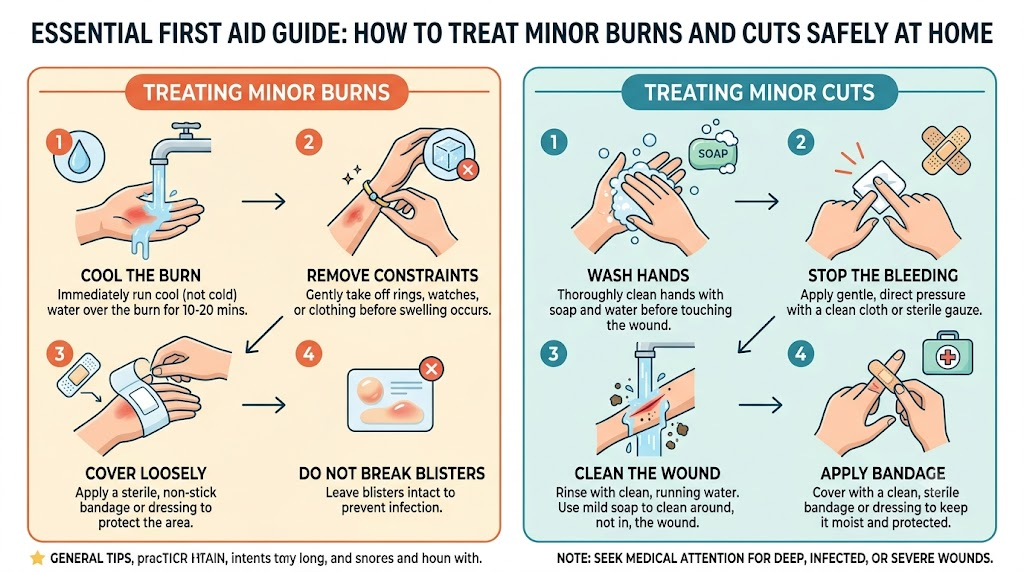
When caring for a minor thermal burn, act quickly and follow these essential steps:
  [1. Move Away from Heat] ──► [2. Cool with Running Water (10-15 min)]
                                                │
                                                ▼
  [4. Cover with Non-Stick Pad] ◄── [3. Apply Petroleum Jelly]
1. Move Away from the Heat Source
Immediately remove the person or affected limb from the heat source to prevent further tissue injury.
2. Cool the Burn with Running Water
Hold the burned area under cool, running tap water for 10 to 15 minutes. Cooling lowers the skin temperature, stops the burn from extending deeper into tissue, and provides natural pain relief. Avoid using freezing cold water or ice.
3. Remove Restrictive Items
Gently remove rings, watches, tight clothing, or bracelets near the burn site before localized swelling begins.
4. Moisturize and Protect
After cooling and gently patting the area dry with a clean cloth, apply a thin layer of plain petroleum jelly to keep the skin moist. Cover the burn loosely with a sterile, non-stick gauze dressing to protect it from dirt and friction.
5. Manage Mild Pain
Over-the-counter pain relievers, used according to package directions, can help ease discomfort during the first day or two.
First Aid for Minor Cuts
Follow these structured steps to manage minor cuts and scrapes safely:
[1. Wash Hands] ──► [2. Stop Bleeding] ──► [3. Clean Wound] ──► [4. Protect & Cover]
1. Wash Your Hands
Always wash your hands thoroughly with clean water and soap before touching any open wound to prevent introducing bacteria.
2. Stop the Bleeding
Apply gentle, direct pressure to the wound using a clean cloth or sterile gauze pad for a few minutes. Elevating the injured area above heart level can also help slow bleeding.
3. Clean the Wound Thoroughly
Rinse the cut under lukewarm, running tap water to remove dirt, debris, and surface bacteria. Gently wash the surrounding skin with mild soap, taking care not to get soap directly in the open wound, which can cause irritation.
4. Moisturize and Dress
Apply a small layer of petroleum jelly to keep the wound environment moist, which aids cellular healing and prevents the bandage from sticking. Secure a sterile adhesive bandage or non-stick pad over the cut.
Essential First Aid Kit Checklist
Having a well-stocked first aid kit readily accessible at home, in the kitchen, or in your vehicle ensures you are prepared for minor emergencies.
| Item | Purpose |
| Sterile Gauze Pads | Cushions wounds, stops bleeding, and absorbs drainage |
| Adhesive Bandages (Assorted Sizes) | Protects small cuts, paper cuts, and minor scrapes |
| Non-Stick Sterile Dressings | Covers burns and delicate skin tears without adhering |
| Hypoallergenic Medical Tape | Secures gauze pads and dressings in place |
| Sterile Saline Solution | Safely flushes dirt and debris out of open wounds |
| Plain Petroleum Jelly | Maintains wound moisture to support healing |
| Disposable Nitrile Gloves | Protects both caregiver and patient from cross-contamination |
| Digital Thermometer | Monitors for fever, a potential sign of developing infection |
| Blunt-Tipped Scissors & Tweezers | Cuts tape/dressings safely and removes small surface debris |
Common Mistakes to Avoid
Well-intentioned first aid mistakes can delay healing or lead to infection. Avoid these common errors:
+-----------------------------------------------------------------------+
|                       UNHEALTHY FIRST AID HABITS                      |
+-----------------------------------------------------------------------+
|  x Applying Ice Directly    --> Causes frostbite & worsens tissue death|
|  x Household Remedies       --> Butter, oil, toothpaste trap heat      |
|  x Popping Burn Blisters    --> Destroys barrier, increases infection  |
|  x Using Harsh Chemicals    --> Alcohol/peroxide damage healing cells   |
|  x Leaving Wounds Uncovered --> Exposes open skin to dirt & bacteria  |
+-----------------------------------------------------------------------+
- Applying Ice Directly: Freezing temperatures constrict blood vessels and can cause additional tissue damage (frostbite) on top of the thermal burn.
- Applying Butter, Oils, or Toothpaste: Traditional remedies like butter, mayonnaise, toothpaste, or lard trap heat inside the skin and create a breeding ground for bacteria.
- Popping Fluid-Filled Blisters: Blisters act as natural, sterile bandages. Popping them exposes raw underlying tissue to external bacteria.
- Using Harsh Antiseptics: Pouring rubbing alcohol, hydrogen peroxide, or iodine directly into fresh cuts irritates tissue and slows down cellular repair.
- Leaving Wounds Uncovered to “Air Out”: Exposed wounds dry out, form hard crusty scabs, and heal more slowly than wounds kept clean, moist, and covered.
Preventing Infection
Infection is the most common complication of home-treated injuries. Protecting the skin barrier is key to prevention.
                      +---------------------------+
                      |   INFECTION PREVENTION    |
                      +-------------+-------------+
                                    |
          +-------------------------+-------------------------+
          |                                                   |
+---------v--------+                                 +--------v--------+
| HYGIENE ROUTINE  |                                 | MONITOR SIGNS   |
+---------+--------+                                 +--------+--------+
| • Clean hands    |                                 | • Increasing Redness
| • Daily dressings|                                 | • Throbbing Pain|
| • Keep area dry  |                                 | • Pus / Warmth  |
+------------------+                                 +-----------------+
- Maintain Good Hand Hygiene: Always wash your hands before and after handling a wound or changing dressings.
- Change Dressings Daily: Replace bandages every day, or sooner if they become wet, dirty, or loose.
- Monitor for Warning Signs: Check the injury daily during bandage changes. Watch for:
- Redness spreading outward from the wound edges.
- Increased swelling, firmness, or localized warmth.
- Worsening or throbbing pain.
- Yellow or greenish pus draining from the injury.
- Red streaks traveling up the limb.
- Fever, chills, or general feeling of illness.
If any of these signs develop, consult a healthcare professional promptly.
When to Seek Medical Care
While minor injuries can be managed safely at home, certain burns and cuts require immediate evaluation by a doctor or emergency room.
+------------------------------------------------------------------------+
|                       WHEN TO CALL A DOCTOR                            |
+------------------------------------------------------------------------+
|  BURNS NEEDING MEDICAL CARE:                                           |
|  • Larger than 3 inches in diameter                                    |
|  • Located on face, hands, feet, groin, or major joints                |
|  • Caused by chemicals, electricity, or high-voltage sources           |
|  • White, charred, dark brown, or numb skin (3rd Degree)              |
+------------------------------------------------------------------------+
|  CUTS NEEDING MEDICAL CARE:                                            |
|  • Bleeding continuously after 10–15 minutes of direct pressure          |
|  • Deep, gaping, or showing fat, muscle, or bone                       |
|  • Caused by rusty metal, animal bites, or human bites                 |
|  • Located on eyelids or across joints that bend                       |
+------------------------------------------------------------------------+
Burns Requiring Professional Evaluation
- Burns larger than 2 to 3 inches in diameter.
- Any burn on the face, hands, feet, groin, buttocks, or major joints.
- Burns caused by high-voltage electricity or industrial chemicals.
- Full-thickness burns where skin appears charred, white, leathery, or painless (indicating nerve damage).
Cuts Requiring Professional Evaluation
- Wounds that continue bleeding after 10 to 15 minutes of continuous direct pressure.
- Deep, jagged, or gaping cuts that cannot be held closed easily.
- Injuries exposing underlying yellow fat, red muscle tissue, or bone.
- Wounds caused by animal bites, human bites, or dirty, rusty metal objects.
- Cuts located directly on eyelids or flexible joint areas.
Note on Tetanus: If a cut is deep or dirty and you have not had a tetanus booster within the last 5 to 10 years, consult a healthcare provider within 48 hours.
Healing and Recovery
Understanding what to expect during recovery helps you care for your skin as it heals.
  [Days 1-3: Inflammation Phase] ──► Pain, mild swelling, clotting
  [Days 4-14: Proliferation Phase] ──► New tissue forms, wound contracts
  [Weeks-Months: Remodeling Phase] ──► Collagen reorganizes, scar fades
Expected Healing Timelines
- First-Degree Burns: Typically resolve completely within 3 to 7 days without scarring.
- Superficial Second-Degree Burns: Usually heal within 10 to 21 days as new skin forms under intact blisters.
- Minor Cuts and Scrapes: Surface closure typically occurs within 7 to 10 days, though complete underlying remodeling takes weeks.
Scar Prevention Strategies
- Keep healing tissue moist with plain petroleum jelly under a sterile bandage.
- Avoid picking at scabs or peeling dry, healing skin, which can re-injure tissue and increase scarring.
- Protect newly healed skin from direct sunlight by applying a broad-spectrum sunscreen (SPF 30 or higher) once the outer skin layer has fully closed. Sunlight can cause permanent hyperpigmentation (darkening) of fresh scars.
Preventing Burns and Cuts at Home
Simple safety measures around the home can prevent many common burn and cut injuries before they happen.
+------------------------------------------------------------------------+
|                        HOME SAFETY CHECKLIST                           |
+------------------------------------------------------------------------+
|  KITCHEN          : Turn pot handles inward; keep sharp knives stored  |
|  BATHROOM         : Set water heater temperature below 120°F (49°C)    |
|  CHILD SAFETY     : Keep hot drinks and appliances out of reach        |
|  GENERAL SAFETY   : Wear cut-resistant gloves for garden work          |
+------------------------------------------------------------------------+
Kitchen Safety
- Turn pot and pan handles inward, away from the stove edge, so they cannot be accidentally bumped or pulled down by children.
- Use dry oven mitts when handling hot pans—moist cloths transfer heat rapidly via steam.
- Open microwave containers and pot lids away from your face to avoid sudden steam releases.
- Always cut away from your body on a stable, non-slip cutting board.
Bathroom & General Home Safety
- Set your home water heater thermostat below 120°F (49°C) to prevent accidental tap water scalds.
- Store sharp kitchen tools, scissors, razors, and matches securely out of reach of young children.
- Keep hot drinks and steaming bowls away from table edges and placemats that children can pull down.
How ASKDOCTORLIVE Helps Patients
When home injuries occur, having access to accurate health information gives you the confidence to act quickly. ASKDOCTORLIVE serves as an educational platform designed to keep families informed about everyday health topics.
+------------------------------------------------------------------------+
|                       ASKDOCTORLIVE RESOURCES                          |
+------------------------------------------------------------------------+
|  [First Aid Guides]    --> Step-by-step instructions for home care     |
|  [Symptom Awareness]   --> Guidance on identifying infection signs      |
|  [Preventive Care]     --> Practical family safety and injury tips     |
|  [Educational Content] --> Simple, clear healthcare information        |
+------------------------------------------------------------------------+
Through ASKDOCTORLIVE, readers can access educational guides on first aid, wound care, home safety, and preventive health. By breaking down complex medical guidelines into easy-to-understand advice, the platform helps individuals manage minor injuries safely at home while recognizing when professional care is necessary.
Common Myths vs. Facts
| Myth | Fact |
| Butter or oil cools down a burn. | Oils trap heat inside the skin, prolonging tissue damage and increasing infection risks. Cool running water is the correct first step. |
| Ice should be applied to fresh burns. | Ice constricts blood flow and can freeze delicate, injured skin cells, worsening tissue damage. |
| Cuts heal faster when left open to the air. | Open cuts dry out, form hard scabs, and heal slower than wounds kept clean, moist, and covered with a sterile dressing. |
| Hydrogen peroxide is best for cleaning cuts. | Hydrogen peroxide damages newly forming skin cells and healthy tissue; mild soap and running water are safer and more effective. |
Real-Life Educational Scenarios
Scenario 1: Managing a Kitchen Thermal Burn
A home cook accidentally touches a hot baking sheet. Realizing the skin is red and painful, they immediately run cool tap water over their hand for 12 minutes. Afterward, they apply a thin coat of plain petroleum jelly, cover the area loosely with a sterile non-stick pad, and avoid using home remedies like butter. The burn heals smoothly within a week without complications.
Scenario 2: First Aid for a Playground Scrape
A young child falls on a gravel path, scraping their knee. Their parent washes their hands, cleans the scrape gently under cool running water to remove dirt, and pat-dries the skin. They apply a thin layer of petroleum jelly, cover the area with a flexible bandage, and replace the dressing daily. The scrape closes cleanly over the next week.
Scenario 3: Safely Handling a Kitchen Knife Cut
While cutting vegetables, a home cook sustains a small cut on their finger. They apply direct pressure with clean gauze for 3 minutes until bleeding stops. They rinse the cut thoroughly under tap water, apply petroleum jelly, and secure an adhesive bandage over the wound. They monitor the finger daily for signs of infection until it is fully healed.
Scenario 4: Recognizing When Medical Care Is Needed
A gardener cuts their forearm on a rusty outdoor tool, leaving a deep, gaping wound that continues to bleed despite 15 minutes of direct pressure. Recognizing that the cut is deep and may require stitches or a tetanus update, they seek care at an urgent care clinic, demonstrating the importance of knowing when to seek professional medical help.
Frequently Asked Questions (FAQs)
1.What is considered a minor burn?
A minor burn includes first-degree burns (redness, no blisters) and small, superficial second-degree burns (small blisters) that are less than 2 to 3 inches in diameter and do not involve sensitive areas like the face, hands, feet, or groin.
2.How long should I run cool water over a burn?
Run cool tap water over the burn for 10 to 15 minutes immediately after the injury occurs to lower skin temperature and stop ongoing heat damage.
3.Should I ever apply ice to a burn?
No. Applying ice or ice water directly to burned skin can cause frostbite and further tissue damage.
4.Can I pop a burn blister?
No. Intact blisters serve as a natural, sterile barrier against bacteria. Popping them increases the risk of wound infection.
5.How should I clean a minor cut?
Rinse the wound under cool or lukewarm running tap water to wash away dirt and debris. Clean the surrounding skin with mild soap, avoiding getting soap directly inside the cut.
6.Should I use hydrogen peroxide or rubbing alcohol on cuts?
No. Both hydrogen peroxide and alcohol irritate exposed tissue and can delay the natural healing process. Clean water and mild soap are recommended.
7.How often should I change a bandage?
Change dressings daily, or sooner if the bandage becomes wet, dirty, or loose.
8.What are the main signs of an infected wound?
Watch for spreading redness, localized warmth, worsening pain, increased swelling, yellow or green pus, or a fever.
9.When should I see a doctor for a cut?
Seek medical care if a cut does not stop bleeding after 10 to 15 minutes of firm pressure, is deep or gaping, exposes fat or muscle, was caused by an animal bite or dirty object, or shows signs of infection.
10.How long do minor burns take to heal?
Minor first-degree burns typically heal within 3 to 7 days, while small superficial second-degree burns take about 10 to 21 days.
11.How long do minor cuts take to heal?
Most minor surface cuts close and heal within 7 to 10 days.
12.How can I reduce scarring from a minor injury?
Keep the wound clean, moist with plain petroleum jelly, and protected under a bandage while healing. Avoid picking at scabs, and apply sunscreen to the healed skin once it has closed.
13.What should every home first aid kit contain?
Essential items include sterile gauze pads, adhesive bandages, non-stick dressings, medical tape, sterile saline solution, plain petroleum jelly, disposable gloves, scissors, tweezers, and a digital thermometer.
14.How can I prevent burns and cuts while cooking?
Turn pot handles inward on the stove, open steaming lids away from your face, cut away from your body on a secure cutting board, and keep sharp tools stored safely.
15.How does ASKDOCTORLIVE support patient health education?
ASKDOCTORLIVE provides easy-to-read articles, first aid instructions, and preventive healthcare guidance that empower readers to manage minor health issues safely and seek medical care when appropriate.
Final Thoughts
Minor burns and cuts are part of daily life, but knowing how to respond quickly with proper first aid helps ensure fast, safe healing. By cooling burns with running water, cleaning cuts gently, keeping wounds moist and covered, and avoiding harmful home remedies, you protect your skin and lower the risk of infection.Equally important is knowing when an injury goes beyond home care. Deep cuts, extensive burns, severe pain, or signs of infection warrant professional medical attention. Keeping a well-stocked first aid kit at home ensures you are always prepared to care for your family safely.