Introduction
Employee mentoring helps people learn from the experience of their coworkers. A new team member may learn useful work habits from an experienced employee. Another worker may need guidance before taking on new responsibilities. These conversations can help employees build confidence and understand their roles.
However, mentoring needs time and coordination. Mentors and employees must find suitable meeting times around their normal duties. Managers may also need to arrange regular sessions without leaving important tasks uncovered.
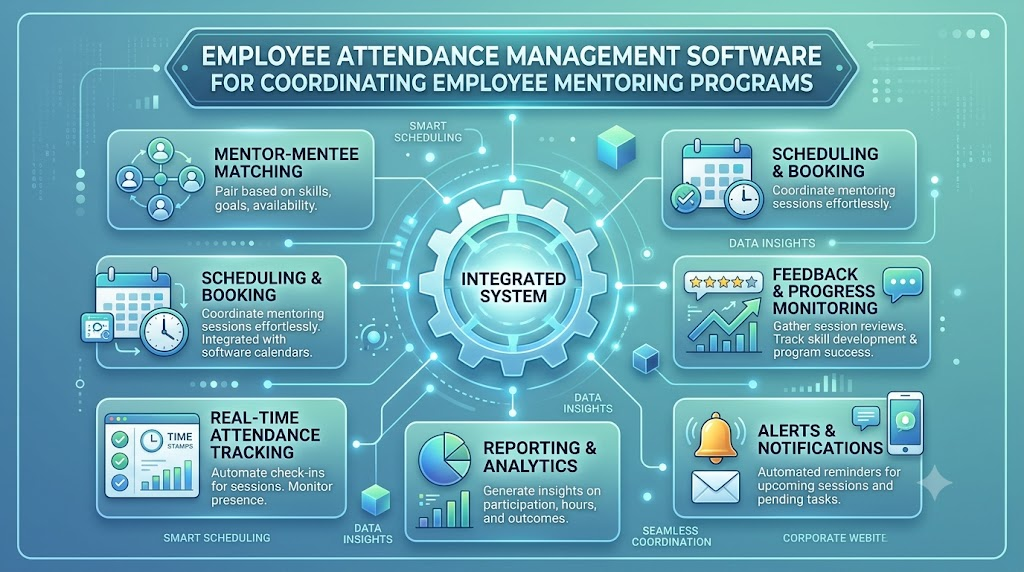
Employee Attendance Management Software can help businesses organize attendance records while planning these activities. It gives managers useful information about employee presence and availability. This information can support mentoring schedules, especially when several teams participate.
Attendance records alone cannot show whether a mentoring meeting took place. Businesses still need a simple way to record sessions, agreed actions, and follow-up dates.
InOrOff focuses on employee attendance and leave management. Its role in this process is to help businesses organize workforce records while they manage mentoring activities separately.
What Is an Employee Mentoring Program?
An employee mentoring program connects a person who needs guidance with someone who has relevant experience. The relationship may focus on job skills, workplace communication, career development, or learning a new responsibility.
Mentoring does not always require a formal classroom. It may involve short conversations, practical demonstrations, regular meetings, or shared work activities.
A workplace mentoring program usually includes:
- A clear purpose for each mentoring relationship.
- Suitable mentors and participating employees.
- Agreed meeting times.
- Regular progress discussions.
- A simple record of planned sessions.
- Follow-up actions when needed.
- A way to review the program.
The program should fit the employee’s actual work. A mentor should not be expected to neglect normal responsibilities to attend meetings. The same applies to the employee receiving guidance.
A clear schedule helps both people prepare. It also helps managers understand when mentoring activities may affect daily staffing.
Why Mentoring Requires Better Schedule Coordination
Mentoring meetings often compete with everyday work. Employees may need to answer customer questions, complete tasks, attend team meetings, or support other coworkers.
When nobody coordinates these commitments, mentoring sessions can become irregular. A meeting may be cancelled because the mentor is busy. Another session may be missed because the employee is absent.
These problems do not always mean that people lack interest. Sometimes, the schedule simply does not match the team’s workload.
Employee Attendance Management Software can help managers review attendance information before setting meeting times. They can check employee presence and identify dates that may be unsuitable.
Managers should also consider shift schedules, approved leave, and important deadlines. A mentoring session should fit the team’s real working conditions.
The aim is to make mentoring easier to attend, rather than adding another difficult task to the workday.
Employee Attendance Management Software for Mentoring Schedules
Mentoring programs work better when meetings have a clear place in the work schedule. Employees should know when a session will happen and whether they need to prepare anything.
Employee Attendance Management Software can help managers review attendance patterns and current availability, depending on the platform’s features. This information may help them choose suitable times for regular mentoring sessions.
For example, a manager may notice that a mentor works on a different schedule from the employee. The manager can then look for an appropriate time when both people are available.
Useful scheduling practices include:
- Agreeing on a regular meeting time.
- Checking work schedules before confirming sessions.
- Allowing time for urgent duties.
- Sharing meeting details in advance.
- Recording changes to planned sessions.
- Reviewing attendance information when sessions are rescheduled.
The mentoring program should also explain who is responsible for arranging meetings. This avoids confusion when a mentor becomes unavailable.
A consistent schedule gives both people a clearer expectation. It also makes follow-up easier for the manager.
Employee Check In Check Out Software and Mentoring Sessions
Mentoring meetings may happen at the start of a shift, during working hours, or near the end of the day. Managers need to understand how these sessions fit into normal work.
Employee Check In Check Out Software can record employee arrival and departure times when supported by the system. These records may help managers understand attendance around scheduled mentoring activities.
However, check-in information does not confirm that a mentoring session happened. An employee may be present at work but unable to attend the meeting. A mentor may also leave a session early because of an urgent task.
Businesses should use a separate calendar or meeting record to track mentoring sessions. The record can include the planned date, participants, and whether the meeting was completed or rescheduled.
Keep the process simple. A short record is often enough to show whether a follow-up is needed.
This separation helps managers avoid treating normal attendance data as proof of mentoring participation.
Employee Leave Management Software for Mentor Availability
Mentoring depends on both people being available. If a mentor takes planned leave, the employee may need another meeting date.
Employee Leave Management Software helps businesses organize leave requests and absence records. Managers can review this information before confirming mentoring sessions.
For example, an employee may have a regular meeting with a senior coworker. If the coworker has approved leave on the planned date, the manager can help arrange another time.
The process should respect approved leave. Mentoring should not create unnecessary pressure for employees to change personal plans.
Businesses can improve coordination by:
- Checking approved leave before scheduling meetings.
- Telling participants when a session changes.
- Avoiding repeated changes to the same appointment.
- Agreeing on a backup date when practical.
- Keeping meeting notes in an approved location.
Managers should also consider unexpected absences. A mentoring plan needs enough flexibility to handle changes without becoming difficult to maintain.
Clear leave information helps teams plan around these situations.
Attendance and Leave Management System for Cross-Team Mentoring
Some mentoring programs involve employees from different departments. A finance employee may learn from an experienced colleague in another team. A customer support worker may meet someone from operations.
These arrangements can be valuable, but they also make scheduling more complicated. Each department may have different working hours, busy periods, and leave plans.
An Attendance and Leave Management System can help managers review relevant attendance and leave information when coordinating meetings. It may make it easier to identify suitable times for people from different teams.
Before starting a cross-team program, managers should agree on a few basic rules.
First, decide who arranges each meeting. Next, confirm how schedule changes will be communicated. Then, choose a suitable place to record meeting dates and follow-up actions.
Managers should not assume that every employee has the same schedule. They should check the actual arrangements for each participant.
When responsibilities are clear, cross-team mentoring becomes easier to organize. Employees can focus more on learning and less on arranging appointments.
Leave Approval Workflow Software and Mentoring Commitments
Employees may request leave on a day when they have a mentoring meeting. A manager may also need to review a request from someone who supports several colleagues.
Leave Approval Workflow Software can help organize leave requests and approval steps, depending on the available features. This can give managers a clearer view of pending and approved absences.
For mentoring programs, the main benefit is better planning. Managers can identify possible conflicts before confirming meeting dates.
For example, a mentor may have several scheduled sessions during the same week. If a leave request affects those sessions, the manager can decide how to communicate changes and arrange suitable alternatives.
Businesses should keep leave decisions separate from mentoring progress. An employee should not be treated as disengaged simply because an approved absence affects a meeting.
A clear approval process supports fair scheduling and reduces misunderstandings between mentors, employees, and managers.
PTO Tracking Software for Long-Term Mentoring Plans
Some mentoring relationships last several months. Regular meetings may continue while employees take planned time off during the same period.
PTO Tracking Software helps businesses maintain paid time off records, depending on the platform and company setup. Managers can use this information to plan meetings around known absences.
Long-term mentoring does not require every session to happen on the same day each week. The schedule can allow reasonable flexibility when work or leave plans change.
A practical approach includes setting an expected meeting frequency and reviewing the next few sessions in advance. If a participant will be away, both people can agree on a suitable alternative.
PTO information should be accurate and clearly understood. Managers should distinguish between requested leave, approved leave, and changed dates.
This approach helps preserve continuity without making mentoring schedules too rigid.
Employee Leave Balance Tracker and Meeting Planning
An Employee Leave Balance Tracker helps employees and managers review available leave information when the system supports that feature. It may help employees plan time off around work commitments and scheduled activities.
Mentoring programs should not require employees to use personal leave just to attend a normal work-related session. Businesses should establish clear expectations about how mentoring time fits into the working day.
Leave balance information is useful for planning, but it does not show whether a mentoring meeting was completed. These records serve different purposes.
Managers can make the process clearer by sharing meeting schedules early. Employees can then identify possible conflicts and communicate them before the session date.
If a meeting needs to move, the participants should agree on another suitable time. The change should also be reflected in the meeting calendar.
Clear communication helps mentoring remain a useful part of work rather than an extra source of pressure.
Time and Attendance Software for Small Business Mentoring
Small businesses may not have a dedicated employee development team. Owners, supervisors, or experienced staff may organize mentoring alongside their normal duties.
Time and Attendance Software for Small Business can help managers maintain attendance records and review staff availability. This information can support simple mentoring plans without requiring a complicated administrative process.
A small business can start with a few basic steps:
- Identify which employees want mentoring.
- Match participants based on relevant experience.
- Set realistic meeting times.
- Check availability before confirming sessions.
- Keep short notes about agreed actions.
- Review the arrangement after a suitable period.
The business should choose a process that fits its team size. It does not need to create lengthy reports for every conversation.
However, managers should protect private discussions. Personal feedback and sensitive employee concerns should not be placed in general attendance records.
Keeping attendance and mentoring information separate makes the process easier to manage and understand.
Office IP Attendance System and In-Office Mentoring
Some businesses use an Office IP Attendance System to support attendance recording through approved office networks. Such a setup may help manage attendance rules for employees working at a particular location.
It does not confirm that two employees met or completed a mentoring session. It only supports attendance recording according to the system’s configuration.
In-office mentoring may take place in a meeting room, shared workspace, or employee’s normal work area. The session itself should be recorded through the business’s chosen calendar or meeting process.
Managers should explain the attendance procedure to all participants. This is especially important when employees attend sessions away from their usual desks.
If mentoring happens outside the office, the normal office network may not be relevant to that activity. Businesses should check their own policies and available software features before setting attendance rules.
The key is to use each tool for the task it is designed to support.
Payroll Ready Attendance Software and Mentoring Time Records
Businesses may need clear working-time records when employees attend mentoring sessions during their normal duties. Accurate attendance information can support internal reviews and external payroll preparation.
Payroll Ready Attendance Software is a search phrase used by businesses looking for attendance records that may support payroll processes. It does not guarantee that a platform includes payroll processing.
InOrOff.com focuses on employee attendance and leave management rather than functioning as payroll software. Businesses should check which reporting and export options are available before connecting attendance information to other systems.
Mentoring notes should not be mixed unnecessarily with payroll records. Managers generally need attendance information for time records, while mentoring participants may need a separate record of agreed actions.
If mentoring takes place outside normal working hours, the business should follow its established procedures and applicable requirements. It should not assume that every mentoring arrangement is treated the same way.
Clear records help teams understand their responsibilities without combining unrelated information.
Tools at a Glance
| Tool Type | What It Does | Who It Helps |
|---|---|---|
| Attendance platform | Organizes employee attendance information | Managers and HR teams |
| Leave management tool | Maintains leave requests and records | Employees and supervisors |
| Shared calendar | Shows planned mentoring meetings | Mentors and participants |
| Meeting record | Tracks completed or rescheduled sessions | Program coordinators |
| Action tracker | Lists agreed next steps | Mentors and employees |
| Reminder tool | Helps participants remember upcoming meetings | Mentoring partners |
Businesses can use separate tools or existing workplace systems. The right setup depends on team size, available features, privacy needs, and how often mentoring takes place.
Before introducing a new platform, review the current process. A tool should solve a clear problem rather than create extra administration.
Common Mistakes in Employee Mentoring Coordination
A mentoring program can lose momentum when the process becomes unclear. Businesses can avoid several common problems.
1. Scheduling meetings without checking availability
A calendar invitation does not guarantee that both people can attend. Check work schedules and known absences before confirming the time.
2. Making sessions too difficult to attend
Meetings that regularly conflict with urgent duties may be missed. Choose realistic times that suit both participants.
3. Treating attendance as proof of mentoring
An employee may be present at work without attending the session. Maintain a separate meeting record.
4. Ignoring approved leave
A mentor or employee may be unavailable on a planned date. Check leave information and arrange another time when needed.
5. Failing to assign responsibility
Participants may assume someone else will arrange the next meeting. Decide who sends invitations and updates the calendar.
6. Recording too much personal information
Mentoring discussions can involve sensitive feedback. Keep notes relevant, professional, and accessible only to authorized people.
7. Cancelling without rescheduling
Repeated cancellations can weaken the relationship. When possible, agree on another date instead of leaving the meeting unresolved.
8. Giving mentors too many participants
An experienced employee may have limited time. Consider workload before assigning several mentoring relationships.
9. Forgetting agreed actions
A useful conversation may lead to practice tasks or follow-up questions. Record suitable action points and review them at the next meeting.
10. Using attendance software for unrelated tasks
Attendance tools do not automatically manage every part of mentoring. Use a suitable calendar or program record for meeting details and progress.
A Simple Example of Mentoring Coordination
Imagine a small company that wants experienced employees to support newer team members. Each pair agrees to meet regularly and discuss practical work questions.
The manager first reviews the employees’ schedules. The manager checks attendance arrangements and known leave dates before proposing meeting times.
Both participants receive a calendar invitation. After the meeting, they record whether it took place and note any agreed follow-up actions in the company’s approved system.
If one person is unavailable, they contact each other and choose another date. The manager reviews the schedule when needed but does not need access to every private conversation.
The attendance platform continues to handle normal attendance and leave records. The calendar manages meeting times, while the mentoring record captures relevant actions.
This arrangement keeps responsibilities clear. It also allows mentoring to fit into daily work without turning a helpful relationship into a complicated reporting task.
How InOrOff Can Help
InOrOff focuses on employee attendance and leave management. These functions can help businesses organize attendance records and understand employee availability.
When a company runs a mentoring program, managers may use attendance and leave information to support meeting coordination. They can review relevant schedules before arranging sessions and account for planned absences when needed.
A separate calendar can handle invitations and rescheduling. A dedicated mentoring record can track completed sessions and agreed actions.
Businesses should confirm the current features available in InOrOff.com before relying on specific functions, reports, or integrations. The platform should be used according to its supported attendance and leave management capabilities.
A well-organized Attendance and Leave Management System can support the administrative side of mentoring. Clear responsibilities, sensible schedules, and respectful communication remain essential to the program’s success.
Frequently Asked Questions
1. What is Employee Attendance Management Software used for in mentoring programs?
Employee Attendance Management Software helps businesses organize employee attendance records. Managers can review availability when planning mentoring sessions. The software does not automatically confirm that a meeting happened or show what participants learned. A separate calendar or meeting record should track session completion and any agreed follow-up actions.
2. Can Employee Check In Check Out Software record mentoring meetings?
Employee Check In Check Out Software records employee arrival and departure information when the platform supports those features. It cannot confirm that a mentoring conversation took place. Businesses should record mentoring meetings separately, using a calendar or suitable tracking process. This keeps attendance information distinct from employee development activities.
3. How does Employee Leave Management Software help mentors and employees?
Employee Leave Management Software helps managers organize leave requests and absence records. These details can help identify scheduling conflicts before mentoring meetings are confirmed. If a participant has approved leave, the meeting can be moved to a suitable date. Clear communication helps both people maintain the mentoring arrangement.
4. What is an Attendance and Leave Management System?
An Attendance and Leave Management System organizes attendance and leave information through a shared process or platform. Managers can use these records to review employee availability. For mentoring programs, this information supports scheduling decisions. Meeting invitations, discussion notes, and mentoring progress usually require a separate process.
5. Is Time and Attendance Software for Small Business useful for mentoring?
Time and Attendance Software for Small Business can help supervisors review staff attendance and work schedules. This information may help them choose suitable meeting times for mentors and participants. Small businesses can combine attendance records with a shared calendar and a simple action tracker to manage mentoring without unnecessary administration.
6. How can Leave Approval Workflow Software support mentoring schedules?
Leave Approval Workflow Software helps organize leave requests and their approval status. Managers can review pending or approved absences when arranging meetings. This can reduce scheduling conflicts and help participants receive timely updates. Mentoring decisions should remain separate from leave approvals, and employees should follow established workplace procedures.
7. Can PTO Tracking Software help organize regular mentoring sessions?
PTO Tracking Software helps businesses maintain paid time off records when supported by the platform. Managers can review planned absences before arranging recurring mentoring meetings. If a participant will be away, the pair can agree on another date. The tool supports availability planning but does not track mentoring progress by itself.
8. What is an Employee Leave Balance Tracker?
An Employee Leave Balance Tracker helps employees and managers review available leave information, depending on the system’s features. It can support planning around scheduled meetings and other work commitments. It does not confirm mentoring participation. Businesses should keep leave balances, attendance records, and mentoring notes in the appropriate records.
9. What should businesses check when choosing Payroll Ready Attendance Software?
Businesses should review attendance features, reporting options, export formats, and compatibility with their existing payroll process. The phrase Payroll Ready Attendance Software does not guarantee that a product provides payroll processing. Mentoring notes should normally remain separate from payroll records unless the business has a clear, appropriate reason to connect them.
10. Can InOrOff manage an entire employee mentoring program?
InOrOff focuses on employee attendance and leave management. These functions can help businesses review availability when scheduling mentoring activities. A full mentoring program may also need a calendar, meeting records, and an action tracker. Businesses should check the platform’s current features before deciding which tasks it can support directly.
Final Thoughts
Employee mentoring can help people learn from experienced coworkers and build useful workplace skills. However, regular meetings need sensible planning. Managers should consider work schedules, approved leave, and the responsibilities of both participants.
Employee Attendance Management Software can support scheduling by organizing attendance information. Employee Leave Management Software can help managers account for planned absences. Separate calendars and mentoring records can track meetings and agreed actions.
The process does not need to be complicated. Start with clear responsibilities, realistic meeting times, and simple follow-up steps. Protect private discussions and avoid treating attendance as proof of mentoring progress.
When the administrative details are organized, mentors and employees can spend more time learning and less time resolving scheduling problems.