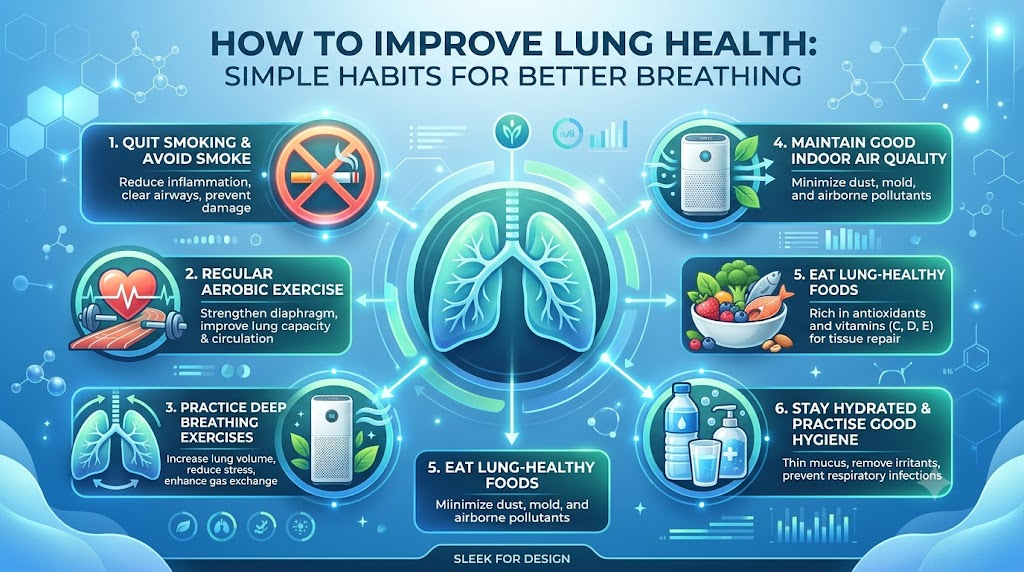
Healthy lungs help you breathe, move, and enjoy daily life. They bring oxygen into your body and remove carbon dioxide. Your body needs this process to work well every day.
The good news is that simple habits can support lung health. Avoiding smoke, staying active, reducing air pollution, and preventing infections can all help. These steps cannot prevent every lung disease, but they can lower some risks.
This guide from ASKDOCTORLIVE explains how to improve lung health through daily habits. You will learn about exercise, breathing techniques, healthy food, clean air, and medical checkups. You will also learn which breathing problems need medical care.
What Does Good Lung Health Mean?
Your lungs are two soft organs inside your chest. They work with your airways and breathing muscles to help you breathe. Air enters through your nose or mouth and travels down the airways into the lungs.
Inside the lungs, tiny air sacs called alveoli allow oxygen to pass into the blood. The blood carries oxygen to the body’s cells. At the same time, carbon dioxide moves from the blood into the lungs and leaves when you breathe out.
Healthy airways allow air to move with less difficulty. Strong breathing muscles also help your body take in and release air.
Good lung health supports walking, climbing stairs, working, and other daily tasks. However, lung function can change with age, illness, smoking, and exposure to harmful substances. Healthy habits can support your lungs, but they cannot prevent every breathing problem.
Why Is It Important to Improve Lung Health?
Your body needs oxygen to produce energy and keep its organs working. When breathing becomes difficult, simple tasks may feel harder. Good lung health helps you stay active and manage everyday activities.
Protecting your lungs also means limiting contact with smoke, dust, and harmful fumes. These substances can irritate the airways and may increase the risk of certain lung problems.
Several conditions can affect breathing:
- Asthma: The airways become swollen and narrow, which can cause wheezing and breathlessness.
- Chronic obstructive pulmonary disease (COPD): This long-term condition makes it harder to move air out of the lungs.
- Respiratory infections: Some infections affect the airways or lungs and can cause coughing, fever, or breathing problems.
- Other lung diseases: Some conditions affect the lung tissue or the way oxygen enters the blood.
Lifestyle changes can support general health, but they do not cure these conditions. People with ongoing symptoms should seek medical advice and follow their treatment plan.
Stop Smoking and Avoid Secondhand Smoke
Smoking is one of the main preventable causes of lung damage. Tobacco smoke contains harmful substances that irritate the airways and damage lung tissue. Over time, smoking increases the risk of COPD and lung cancer.
Secondhand smoke can also harm people who do not smoke. Keeping your home and car smoke-free helps reduce this exposure.
Here are some useful steps:
- Avoid starting to smoke.
- Seek help if you want to quit.
- Ask family and friends not to smoke around you.
- Avoid smoky indoor spaces when possible.
- Do not treat vaping as a harmless choice. Vape products can expose the lungs to harmful substances.
Quitting smoking can benefit your health at any age. You may notice changes in coughing or breathing over time, although the results vary. Some existing lung damage may not fully heal.
If quitting feels difficult, speak with a healthcare professional about support. Counselling and suitable stop-smoking treatments can help. A setback does not mean you have failed; you can try again.
Reduce Indoor and Outdoor Air Pollution
Air pollution can irritate the airways and affect lung health. Common sources include traffic fumes, smoke, dust, cooking fumes, and some cleaning products. People with asthma or other lung conditions may be more sensitive to these irritants.
You can take steps to reduce your exposure:
- Check local air-quality information before outdoor exercise.
- Choose routes away from busy roads when possible.
- Avoid burning rubbish or other materials.
- Keep indoor spaces clean and reduce dust buildup.
- Use cooking exhaust fans that vent outdoors, where available.
- Follow product labels when using cleaning products.
- Avoid mixing cleaning chemicals.
- Use suitable protective equipment when required at work.
Ventilation can improve indoor air, but the right approach depends on outdoor conditions. Opening windows may bring polluted air inside when outdoor pollution is severe. Follow local health advice during poor air quality.
If you live near a busy road or work around dust, small changes can still help. Reduce exposure where possible and discuss ongoing concerns with a healthcare professional.
Exercise Regularly to Support Lung Health
Regular physical activity helps your heart and muscles use oxygen more efficiently. It can make daily tasks feel easier and improve stamina. Exercise supports fitness, but it does not automatically increase lung size or reverse lung damage.
Choose activities that suit your health and fitness level. Useful options include:
- Walking at a comfortable pace.
- Cycling on a safe route.
- Swimming if it is suitable for you.
- Gentle stretching.
- Light strength exercises.
- Dancing or other enjoyable movement.
Start slowly if you have not exercised for a while. Add time or effort as your fitness improves. Adults can work toward about 150 minutes of moderate activity each week, if appropriate for their health.
You can divide this time into shorter sessions. Even a brief walk is a useful starting point.
If you have a lung condition, chest pain, or unexplained breathlessness, ask a healthcare professional about safe activity. Stop exercising and seek advice if symptoms are new or worsen. Severe breathing difficulty or chest pain needs urgent medical attention.
Learn About Breathing Exercises
Some breathing techniques can help people manage breathing discomfort. They are often used as part of care for certain lung conditions. However, they do not cure lung disease or replace prescribed medicine.
Pursed-Lip Breathing
This technique may help some people slow their breathing and feel more in control.
- Sit in a comfortable position and relax your shoulders.
- Breathe in gently through your nose.
- Pucker your lips as if you are about to whistle.
- Breathe out slowly through your lips.
- Keep the breath out longer than the breath in, without forcing it.
Use gentle breaths rather than taking very deep breaths. Stop if you feel dizzy or uncomfortable.
Diaphragmatic Breathing
The diaphragm is a muscle below the lungs that helps you breathe. This exercise focuses on relaxed movement of the abdomen.
- Sit or lie in a comfortable position.
- Place one hand on your chest and the other on your abdomen.
- Breathe in gently through your nose.
- Let your abdomen rise as you breathe in.
- Breathe out slowly and allow your abdomen to fall.
Some people find this method helpful for practising relaxed breathing. If you have ongoing breathlessness, ask a clinician whether these exercises are suitable for you.
Eat a Balanced Diet and Drink Enough Water
A balanced diet supports your lungs and your overall health. Your body needs a mix of nutrients to keep muscles, organs, and the immune system working well.
Try to include these foods in your daily meals:
- Fruits and vegetables: Choose different colours and types to get a range of nutrients.
- Whole grains: Oats, brown rice, and whole-wheat bread provide fibre and energy.
- Protein foods: Beans, lentils, eggs, fish, and other suitable sources help maintain muscles.
- Healthy fats: Nuts, seeds, and suitable oils can form part of a balanced diet.
Drink enough water to meet your body’s needs. Water helps keep mucus, the substance that lines the airways, from becoming too thick. Your fluid needs may vary with your health, activity, and the weather.
No single food, juice, herb, or supplement can clean or detox your lungs. Avoid restrictive diets that promise to repair lung damage. If you have a medical condition that affects your diet or fluid intake, follow your healthcare professional’s advice.
Get Enough Sleep and Manage Stress
Good sleep supports your immune system and general health. Most adults need around seven to nine hours of sleep each night, although individual needs vary.
Try these simple habits:
- Go to bed and wake up at similar times each day.
- Keep your bedroom quiet and comfortable.
- Reduce screen use before bedtime if it affects your sleep.
- Avoid heavy meals close to bedtime if they disturb your rest.
- Practise gentle relaxation when you feel stressed.
Stress can make some people feel more breathless or notice their breathing more. Slow, relaxed breathing may help you feel calmer, but it does not treat an underlying lung condition.
Loud snoring, pauses in breathing during sleep, or ongoing daytime tiredness may be signs of a sleep problem. Speak with a healthcare professional if these symptoms continue.
Prevent Respiratory Infections
Some infections affect the nose, throat, airways, or lungs. Certain infections can become serious, especially in older adults and people with long-term health conditions.
Good hygiene and suitable preventive care can help reduce the risk of some infections.
- Wash your hands with soap and water regularly.
- Cover your mouth and nose when coughing or sneezing.
- Improve indoor ventilation when outdoor air conditions allow.
- Avoid close contact with people who are clearly unwell when possible.
- Follow advice about recommended vaccines.
- Rest and follow medical advice when recovering from an infection.
Vaccines may help protect against certain infections that can affect the lungs. The right vaccines depend on your age, medical history, location, and other risk factors. Ask a healthcare professional which ones are suitable for you.
If you have a lung condition, ask your clinician how to manage infections and when to seek help. Do not stop prescribed treatment when you develop a cough or cold without medical advice.
Protect Your Lungs at Home and at Work
Airborne hazards can affect your lungs even if you do not smoke. Dust, chemical fumes, mould, and smoke may irritate the airways or cause health problems after repeated exposure.
At home, clean dusty surfaces regularly and address damp areas that allow mould to grow. Use cleaning products according to their labels. Never mix products such as bleach and ammonia, as this can create dangerous fumes.
At work, follow safety rules when handling dust, chemicals, or other airborne hazards. Use the correct protective equipment and make sure it fits and is suitable for the hazard. A basic face covering may not protect against every type of dust or chemical.
Tell your supervisor or occupational health team if you notice repeated exposure or breathing symptoms linked to your workplace. Early action may help reduce further exposure.
Attend Regular Health Checkups
Health checkups give you a chance to discuss breathing concerns and other risk factors. You do not need to wait until symptoms become severe before asking for help.
Tell your healthcare professional if you have:
- A cough that continues or keeps returning.
- Wheezing or chest tightness.
- Shortness of breath during normal activities.
- Repeated chest infections.
- Past or current exposure to smoke, dust, or chemicals.
- A personal or family history of lung disease.
Depending on your symptoms, a clinician may recommend lung-function testing. One common test, called spirometry, measures how much air you can breathe out and how quickly you can do it.
Not everyone needs routine lung scans or breathing tests. Screening and testing depend on personal risk factors and medical guidance. If you already have asthma, COPD, or another lung condition, keep your follow-up appointments and follow your treatment plan.
Know the Warning Signs of Lung Problems
Breathing symptoms can have many causes. Some are mild, while others need prompt medical attention. Pay attention to symptoms that are new, persistent, or getting worse.
The table below explains when to seek help. It is a general guide, not a way to diagnose a condition.
| Symptom | Recommended action | Level of urgency |
|---|---|---|
| Mild cough that is improving | Monitor symptoms and seek advice if it persists | Depends on duration and other symptoms |
| Ongoing cough or repeated wheezing | Arrange a medical assessment | Prompt assessment |
| New or worsening shortness of breath | Seek medical advice promptly | Urgent, depending on severity |
| Coughing up blood | Obtain urgent medical assessment | Urgent |
| Severe breathing difficulty or blue/grey lips | Contact emergency services immediately | Emergency |
Other warning signs include repeated respiratory infections, chest discomfort, and unexplained weight loss alongside breathing symptoms. These symptoms may have causes other than lung disease, but they should not be ignored.
Seek emergency medical help for severe breathing difficulty, blue or grey lips, fainting, or severe chest pain. Do not delay urgent care to try home remedies or breathing exercises.
Common Myths About Improving Lung Health
Misleading health advice can make it harder to choose safe habits. These facts can help you separate useful steps from unsupported claims.
- Myth: Certain foods detox the lungs.
Fact: No single food or drink can cleanse the lungs of damage or pollution. A balanced diet supports general health. - Myth: Deep breathing exercises cure lung disease.
Fact: Some techniques may help people manage breathing, but they do not cure the underlying condition. - Myth: Only smokers develop lung problems.
Fact: Pollution, infections, workplace hazards, and other factors can also affect lung health. - Myth: Feeling healthy means the lungs cannot have a problem.
Fact: Some lung conditions develop slowly and may cause few early symptoms.
Focus on reliable advice, healthy daily habits, and medical care when needed.
A Simple Daily Routine for Better Lung Health
You do not need to change every part of your life at once. Start with a few habits that fit your health, schedule, and surroundings.
Here are some practical actions you can take each day:
- In the morning: Check air quality if pollution is a concern in your area. Avoid smoke and strong fumes.
- During the day: Walk or take part in another suitable activity. Start with a comfortable amount of movement.
- At meals: Choose a mix of vegetables, fruits, whole grains, and protein foods.
- At home or work: Reduce contact with dust, smoke, and harmful chemicals.
- When needed: Practise a breathing technique recommended by your healthcare professional.
- In the evening: Make time for rest and follow a regular sleep routine.
The following table sums up useful habits and the actions you can take.
Daily Habits That Support Lung Health
| Daily habit | How it helps | Practical action |
|---|---|---|
| Avoid tobacco smoke | Reduces exposure to harmful substances | Do not smoke and avoid secondhand smoke |
| Stay active | Supports heart and lung fitness | Walk or choose another suitable activity |
| Reduce pollution exposure | Limits contact with airborne irritants | Check air quality and avoid heavy traffic when possible |
| Eat balanced meals | Supports overall health | Include varied foods from different food groups |
| Prevent infections | Reduces the risk of some respiratory illnesses | Practise good hygiene and follow vaccine advice |
| Attend checkups | Helps address symptoms and risk factors | Discuss ongoing breathing concerns with a clinician |
Small, steady changes can support long-term health. Choose habits you can maintain, and keep following any treatment plan your clinician has given you.
Frequently Asked Questions
1. How can I improve my lung health naturally?
Avoid smoking, limit exposure to polluted air, stay active, and eat balanced meals. Good sleep and steps to prevent infections also support general health. These habits cannot prevent every lung condition or reverse all lung damage. If you have ongoing breathing problems, seek medical advice instead of relying on home remedies.
2. Which daily habits help keep the lungs healthy?
The most useful habits include avoiding tobacco smoke, reducing exposure to dust and fumes, exercising at a suitable level, and maintaining good hygiene. Balanced meals and regular sleep support overall health, too. People with existing lung conditions should follow their prescribed treatment and ask their clinician about extra precautions.
3. Can walking improve lung health?
Yes. Walking helps improve fitness and trains the body to use oxygen more efficiently. Start at a comfortable pace and increase your walking time gradually. Walking does not cure lung disease or repair all lung damage. If you have chest pain or unexplained breathlessness, ask a healthcare professional before increasing your activity.
4. Do breathing exercises improve lung function?
Some breathing exercises may help people control their breathing and manage discomfort, especially when used as part of a care plan. Pursed-lip breathing is one example. These techniques do not cure lung disease or replace prescribed medicines. Ask a healthcare professional which methods suit your condition, and stop if symptoms worsen.
5. Which foods support overall lung health?
A balanced diet with fruits, vegetables, whole grains, and suitable protein sources supports general health. Drinking enough water also helps meet your body’s needs. No single food, juice, or supplement can detox or cleanse the lungs. If you have special dietary needs, follow advice from your healthcare professional.
6. How does smoking affect the lungs?
Tobacco smoke contains harmful substances that damage lung tissue and irritate the airways. Smoking increases the risk of COPD, lung cancer, and other health problems. Secondhand smoke can also cause harm. Quitting smoking can improve health at any age, and professional support can make quitting easier.
7. Can air pollution damage lung health?
Yes. Air pollution can irritate the airways and may worsen symptoms in people with asthma or other lung conditions. Long-term exposure to some pollutants can also raise health risks. Check local air-quality information, reduce exposure when possible, and follow public-health advice during periods of poor air quality.
8. How can I protect my lungs at home?
Keep indoor spaces as clean and well ventilated as conditions allow. Avoid smoking indoors, reduce dust buildup, address dampness and mould, and use cleaning products safely. Never mix cleaning chemicals. If outdoor pollution is severe, check local advice before opening windows. Reduce other sources of smoke and fumes when possible.
9. When should I see a doctor about breathing problems?
Seek medical advice for a persistent cough, repeated wheezing, ongoing breathlessness, coughing up blood, or repeated chest infections. Get urgent assessment for new or worsening symptoms. Severe breathing difficulty, blue or grey lips, fainting, or severe chest pain requires emergency care. Do not delay help while trying home remedies.
10. Can lung health improve after quitting smoking?
Yes. Quitting smoking reduces further exposure to harmful substances and offers health benefits over time. Coughing and breathing symptoms may improve, but the amount of change varies between people. Some damage may be permanent. Quitting is still worthwhile, even after many years of smoking. A healthcare professional can help you find support.
Conclusion
Learning how to improve lung health starts with simple, steady habits. Avoid smoke, reduce exposure to pollution, stay active, eat balanced meals, and take steps to prevent infections. Get medical advice for ongoing breathing problems and seek emergency care for severe symptoms. These actions support lung health, but they do not replace treatment when a medical condition is present.