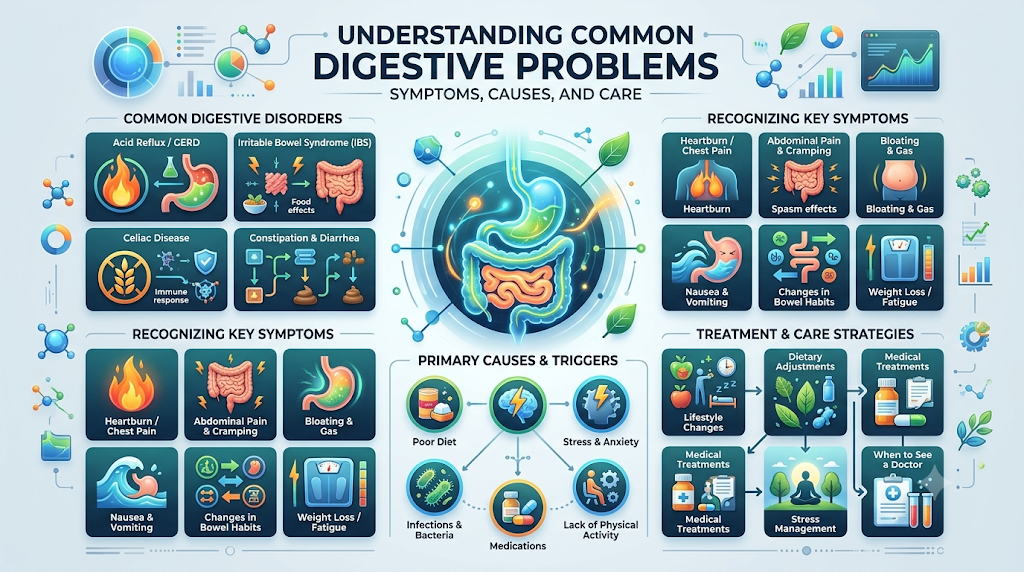
Introduction
Digestive problems can affect anyone. Some people experience bloating after meals. Others deal with heartburn, stomach pain, constipation, or diarrhea. These problems can make everyday activities uncomfortable.
The digestive system breaks food into nutrients. The body uses these nutrients for energy, growth, and repair. When digestion does not work well, different symptoms can appear.
Occasional stomach discomfort may happen after certain meals or minor illnesses. However, repeated, severe, or unusual symptoms may need medical attention.
Understanding common digestive problems helps people recognize changes in their health. It also helps them make better choices about food, daily habits, and medical care.
ASKDOCTORLIVE.COM is a healthcare information resource where readers can explore general health topics. This article explains common digestive conditions, their symptoms, possible causes, and basic care options.
Understand How the Digestive System Works
The digestive system includes several organs. Each organ has a special role in breaking down food and absorbing nutrients.
The process begins in the mouth. Teeth break food into smaller pieces, while saliva helps soften it. Food then moves through the esophagus, a tube that connects the mouth to the stomach.
The stomach uses digestive juices to break food down further. The partly digested food then enters the small intestine.
The small intestine absorbs most nutrients. These nutrients enter the bloodstream and travel throughout the body.
Next, food waste moves into the large intestine. This organ absorbs water and helps form solid stools.
Other organs also support digestion:
- Liver: Produces bile, which helps digest fats.
- Pancreas: Makes enzymes that break down food.
- Gallbladder: Stores bile and releases it when needed.
Healthy digestion helps the body receive nutrients and remove waste. Problems in different parts of this system can cause different symptoms.
Acid Reflux and Heartburn
Acid reflux happens when stomach contents move back into the esophagus. This can cause a burning feeling in the chest called heartburn.
Some people also notice a sour or bitter taste. Others feel fluid coming back into their mouth.
Common symptoms include:
- Burning discomfort in the chest.
- Sour or bitter taste.
- Frequent burping.
- Symptoms after large meals.
- Discomfort when lying down.
- Throat irritation or coughing in some people.
Certain habits can make reflux worse. Large meals, fatty foods, smoking, and lying down soon after eating may contribute. Individual food triggers can also differ.
Eating smaller meals may help some people. Avoiding personal triggers and staying upright after eating can also reduce symptoms.
Some people need medicines to control stomach acid. A doctor can suggest suitable treatment after reviewing the symptoms.
Frequent reflux may be a sign of gastroesophageal reflux disease (GERD). Persistent symptoms should not be ignored.
Chest pain should never automatically be treated as heartburn. Sudden or severe chest pain, especially with sweating, breathing difficulty, or pain spreading to the arm or jaw, needs emergency assessment.
Indigestion and Dyspepsia
Indigestion is discomfort in the upper abdomen. Doctors may also call it dyspepsia.
It can happen during or after meals. Some people feel full after eating only a small amount.
Common symptoms include:
- Upper abdominal discomfort or burning.
- Feeling full too quickly.
- Uncomfortable fullness after eating.
- Nausea.
- Belching and bloating.
Eating too quickly or having large meals may contribute. Some medicines can also irritate the stomach.
Other possible causes include stomach ulcers and inflammation. In some people, no clear structural cause is found. This may be called functional dyspepsia.
Eating slowly and choosing smaller meals may help. Avoiding foods that trigger discomfort can also be useful.
Persistent indigestion needs medical assessment. A doctor may check for ulcers, infection, medicine effects, or other digestive conditions.
Constipation
Constipation means having difficulty passing stools. Bowel movements may become less frequent or harder than usual.
Common signs include:
- Hard or dry stools.
- Straining during bowel movements.
- Passing stools less often than usual.
- A feeling of incomplete emptying.
- Abdominal discomfort or bloating.
Low fiber intake, inadequate fluid intake, and limited movement can contribute. Certain medicines and health conditions may also cause constipation.
Some simple habits can support regular bowel movements:
- Add fiber-rich foods gradually.
- Drink suitable amounts of water.
- Eat fruits, vegetables, and whole grains.
- Stay physically active.
- Follow a regular toilet routine.
- Avoid delaying the urge to pass stool.
Do not increase fiber suddenly. A rapid increase may make gas and bloating worse.
A doctor may recommend a suitable laxative when needed. Avoid frequent self-treatment without understanding the cause.
Sudden severe abdominal pain, vomiting, or inability to pass stool or gas needs urgent medical assessment.
Diarrhea and Loose Stools
Diarrhea means passing loose or watery stools more often than normal. It may happen suddenly or continue for a longer period.
Common symptoms include:
- Frequent watery stools.
- Abdominal cramps.
- Urgent bowel movements.
- Nausea or vomiting.
- Fever in some cases.
Common causes include stomach infections, food poisoning, food intolerance, and medicine side effects. Some digestive disorders can also cause repeated diarrhea.
The main concern is fluid loss. Drinking suitable fluids helps replace water and salts lost through stools.
Oral rehydration solution (ORS) can help replace lost fluids and electrolytes. It is especially useful when diarrhea causes significant fluid loss.
Seek medical advice if diarrhea continues, becomes severe, or includes blood. Signs of dehydration also need attention. These may include dry mouth, dizziness, reduced urination, and unusual weakness.
Children, older adults, and people with other health conditions may become dehydrated more quickly.
Bloating and Excess Gas
Bloating is a feeling of fullness or swelling in the abdomen. It may happen when gas builds up in the digestive tract.
People may also notice frequent burping or passing gas. Some experience discomfort after meals.
Common contributing factors include:
- Eating too quickly.
- Drinking fizzy beverages.
- Swallowing air while eating.
- Eating certain gas-producing foods.
- Constipation.
- Food intolerance.
- Some digestive disorders.
Eating slowly may help reduce swallowed air. Smaller meals and regular movement may also improve comfort.
Keep track of foods that seem to trigger symptoms. However, avoid removing many foods without understanding the cause.
Persistent or worsening bloating needs medical assessment. Seek advice sooner if it occurs with vomiting, weight loss, or ongoing abdominal pain.
Irritable Bowel Syndrome (IBS)
Irritable bowel syndrome is a digestive disorder involving communication between the gut and brain. It can affect how the intestines work.
IBS does not cause the same symptoms in everyone. Some people mainly experience constipation. Others have diarrhea or a mixture of both.
Common symptoms include:
- Repeated abdominal pain.
- Bloating and gas.
- Constipation.
- Diarrhea.
- Changes in bowel habits.
- Pain that may improve after passing stool.
Stress, certain foods, and changes in gut movement may affect symptoms. However, the exact cause is not fully understood.
Doctors review symptoms and medical history when assessing possible IBS. They may order tests to check for other conditions when needed.
Treatment depends on the person’s symptoms. It may include dietary changes, stress management, medicines, and other support.
Not everyone with IBS needs the same diet. A restrictive eating plan should be discussed with a qualified healthcare professional.
Food Intolerance and Food Sensitivity
Food intolerance happens when the body has difficulty digesting or processing a certain food. It can cause digestive symptoms after eating.
Lactose intolerance is one common example. People with this condition have difficulty digesting lactose, a natural sugar in milk.
Possible symptoms include:
- Bloating.
- Gas.
- Stomach cramps.
- Diarrhea.
- Nausea.
Symptoms may depend on the food and the amount eaten. Other foods may also trigger digestive discomfort in some people.
Food intolerance is different from food allergy. An allergy involves the immune system and can cause serious reactions.
Allergy symptoms may include hives, swelling, breathing difficulty, or vomiting. Severe breathing problems or throat swelling require emergency help.
Keep a food and symptom record to identify possible patterns. Do not remove major food groups without medical or dietitian advice. Unnecessary restrictions can lead to nutritional problems.
Stomach Infections and Food Poisoning
Stomach infections can occur after consuming contaminated food or water. They may also spread through contact with an infected person.
Food poisoning is a common cause of sudden digestive illness. Bacteria, viruses, and other germs can cause these infections.
Possible symptoms include:
- Nausea.
- Vomiting.
- Diarrhea.
- Stomach cramps.
- Fever in some cases.
Many mild infections improve with supportive care. Replacing lost fluids is especially important.
Wash hands before preparing or eating food. Use safe drinking water and store food at suitable temperatures. Cook food properly and avoid eating spoiled items.
Antibiotics are not needed for every stomach infection. Treatment depends on the cause and the person’s condition. A doctor can decide whether specific medicine or testing is necessary.
Seek medical help for severe symptoms, blood in stools, persistent vomiting, or dehydration.
How Doctors Diagnose Digestive Problems
Digestive symptoms can have several possible causes. A doctor begins by asking about symptoms and medical history.
You may be asked:
- When did the symptoms begin?
- How often do they occur?
- Which foods seem to trigger them?
- Are you taking any medicines?
- Have your bowel habits changed?
- Have you noticed weight loss or bleeding?
The doctor may perform a physical examination. They may also suggest tests based on the symptoms.
Possible tests include:
- Blood tests: Check for anemia, inflammation, or other health concerns.
- Stool tests: Look for infection, blood, or other changes.
- Breath tests: Help assess selected problems, such as lactose intolerance.
- Ultrasound: Produces images of organs inside the abdomen.
- Endoscopy: Uses a thin camera to examine the upper digestive tract.
- Colonoscopy: Examines the inside of the large intestine.
Not everyone needs all these tests. The doctor chooses tests based on the symptoms and possible causes.
Everyday Habits That Support Digestive Health
Healthy daily habits can support normal digestion. They may also help some people manage mild digestive symptoms.
Try these practical steps:
- Eat a varied and balanced diet.
- Add fiber-rich foods gradually.
- Drink enough fluids.
- Stay physically active.
- Chew food properly and eat slowly.
- Maintain regular meal habits.
- Get enough sleep.
- Find healthy ways to manage stress.
- Wash hands before preparing food.
- Store and cook food safely.
- Avoid smoking and limit alcohol.
Notice how your body responds to different foods. A food diary may help identify personal triggers.
Remember that healthy habits cannot prevent or cure every digestive disorder. Persistent symptoms may still need medical treatment.
When Should You See a Doctor?
Occasional digestive discomfort may improve on its own. However, repeated or unusual symptoms deserve attention.
Arrange a medical assessment if you experience:
- Repeated or persistent abdominal pain.
- Frequent heartburn or indigestion.
- Long-lasting changes in bowel habits.
- Unexplained weight loss.
- Difficulty or pain when swallowing.
- Repeated vomiting.
- Blood in your stool.
- Black, tarry stools.
- Persistent diarrhea or constipation.
- Signs of dehydration.
Some symptoms need emergency care. These include sudden severe abdominal pain, vomiting blood, heavy rectal bleeding, fainting, or severe breathing difficulty.
Do not delay emergency care to try home remedies. Seek immediate medical help.
A gastroenterologist is a doctor who specializes in digestive system conditions. Your primary care doctor may refer you when specialist assessment is needed.
Table 1: Common Digestive Problems and Their Symptoms
| Digestive problem | Common symptoms | Possible contributing factors |
|---|---|---|
| Acid reflux | Heartburn, sour taste, fluid coming up | Large meals, lying down after eating |
| Indigestion | Upper abdominal discomfort, early fullness, nausea | Eating habits, medicines, ulcers |
| Constipation | Hard stools, straining, infrequent bowel movements | Low fiber, dehydration, inactivity |
| Diarrhea | Loose stools, cramps, urgency | Infections, food intolerance, medicines |
| Bloating | Abdominal fullness, gas, burping | Swallowed air, constipation, food triggers |
| IBS | Abdominal pain, bloating, bowel changes | Gut-brain interaction and individual triggers |
| Food intolerance | Gas, cramps, bloating, diarrhea | Difficulty processing certain foods |
Table 2: Digestive Symptoms and When to Seek Medical Advice
| Symptom | What it may indicate | Recommended action |
|---|---|---|
| Persistent heartburn | GERD or another digestive condition | Arrange a medical assessment. |
| Repeated abdominal pain | Digestive or other health problems | Consult a doctor. |
| Ongoing bowel changes | IBS or another bowel condition | Arrange a medical assessment. |
| Blood in stool | Bleeding or bowel disease | Seek prompt medical assessment. |
| Unexplained weight loss | Possible underlying illness | Arrange a medical assessment promptly. |
| Dehydration | Significant fluid loss | Seek urgent medical advice. |
| Sudden severe abdominal pain | Possible serious abdominal emergency | Seek emergency care immediately. |
Frequently Asked Questions
1. What are the most common digestive problems?
Common digestive problems include acid reflux, indigestion, constipation, diarrhea, bloating, IBS, and food intolerance. Their symptoms can overlap, but their causes may differ. Some problems are temporary, while others need ongoing care. Repeated or severe symptoms should be assessed by a healthcare professional.
2. What causes frequent bloating and gas?
Frequent bloating and gas may result from eating quickly, swallowing air, constipation, or certain foods. Food intolerance and digestive disorders can also contribute. Keeping a food and symptom diary may help identify patterns. Persistent bloating, especially with weight loss or pain, needs medical assessment.
3. How can I tell if I have acid reflux or indigestion?
Acid reflux often causes burning in the chest and a sour taste. Indigestion usually causes discomfort or fullness in the upper abdomen. Both can happen after meals. Their symptoms sometimes overlap, so repeated discomfort should be discussed with a doctor rather than self-diagnosed.
4. What foods can help support healthy digestion?
A varied diet with fruits, vegetables, whole grains, and suitable protein sources can support digestion. Fiber helps maintain regular bowel movements. Drink enough fluids and add fiber gradually. People with specific digestive conditions may need individual food advice from a doctor or dietitian.
5. What are the common causes of constipation?
Constipation may occur due to low fiber intake, inadequate fluids, limited movement, or changes in daily routines. Some medicines and health conditions can also contribute. Gradually increasing fiber, staying active, and maintaining a regular toilet routine may help improve bowel habits.
6. When should diarrhea become a medical concern?
Seek medical advice if diarrhea is severe, persistent, or accompanied by blood, fever, or significant abdominal pain. Signs of dehydration include dizziness, dry mouth, and reduced urination. Children and older adults may need earlier assessment because fluid loss can affect them more quickly.
7. Can stress affect the digestive system?
Yes. Stress can affect communication between the brain and gut. Some people experience more bloating, abdominal discomfort, constipation, or diarrhea during stressful periods. Relaxation, sleep, and regular activity may help. However, ongoing symptoms should still be assessed to check for other causes.
8. What is the difference between IBS and food intolerance?
IBS is a digestive disorder involving gut-brain interaction and changes in bowel habits. Food intolerance means difficulty digesting or processing certain foods. Both can cause bloating, cramps, and diarrhea. A healthcare professional can help identify the cause and suggest suitable management.
9. Which tests can help diagnose digestive disorders?
Doctors may use blood tests, stool tests, breath tests, ultrasound, endoscopy, or colonoscopy. The choice depends on symptoms and medical history. Not everyone needs these tests. A doctor first assesses the person’s condition and then decides which investigations may be useful.
10. When should I consult a gastroenterologist for stomach problems?
Consider seeing a gastroenterologist when digestive symptoms continue, return frequently, or do not improve with initial care. Blood in stools, unexplained weight loss, swallowing problems, and persistent bowel changes also need assessment. Your primary care doctor can help decide whether specialist care is needed.
Final Thoughts
Digestive problems can have many causes. Understanding their symptoms can help you recognize when something needs attention.
Balanced eating, suitable hydration, regular activity, and safe food habits can support digestive health. However, these habits do not replace medical assessment when symptoms persist.
Avoid guessing the cause of repeated stomach problems. Seek professional advice for severe, unusual, or ongoing symptoms. Emergency warning signs always need immediate care.
AskDoctorLive.com is a healthcare information resource for readers who want to explore general medical topics. Learning about common digestive problems is a useful step toward making informed decisions about your health.