Introduction
Irritable bowel syndrome (IBS) is a common digestive condition. It affects how the intestines work and can cause repeated stomach discomfort.People with IBS may experience abdominal pain, bloating, gas, constipation, or diarrhea. Some people have both constipation and diarrhea at different times.Symptoms can come and go. They may also change with food choices, stress, sleep, and daily habits.
Learning how to manage IBS symptoms can make everyday life easier. The right approach often includes understanding personal triggers, choosing suitable foods, staying active, and getting medical support.IBS is a long-term condition, but many people can manage it well. A suitable care ASKDOCTORLIVE plan can help reduce discomfort and improve daily comfort.
What Is Irritable Bowel Syndrome (IBS)?
Irritable bowel syndrome is a condition that affects the digestive system. It mainly changes how the intestines move and respond to food and other signals.The intestines help break down food and move waste through the body. In people with IBS, these movements may become too fast or too slow.The gut may also become more sensitive. This means normal digestion can sometimes cause pain, cramps, or bloating.IBS is a real health condition. It is not simply caused by worrying or imagining symptoms.
IBS differs from inflammatory bowel diseases (IBD), such as Crohn’s disease and ulcerative colitis. IBD can cause visible inflammation and damage in the digestive tract. IBS does not usually cause this type of damage.Symptoms vary between people. Some mainly experience constipation, while others deal with diarrhea or both.The exact cause of IBS is not fully understood. Gut movement, nerve sensitivity, changes in gut bacteria, previous infections, and brain-gut communication may all play a role.
Common Symptoms of IBS
IBS can affect people in different ways. Symptoms may become worse after certain meals or during stressful periods.
Common IBS symptoms include:
- Abdominal pain: Pain or cramps in the stomach area.
- Bloating: A swollen or full feeling in the abdomen.
- Excess gas: More burping or passing gas than usual.
- Diarrhea: Loose or watery stools.
- Constipation: Hard stools or difficulty passing them.
- Changing bowel habits: Moving between constipation and diarrhea.
- Changes in stool appearance: Stools may become harder, softer, or more frequent.
- Incomplete emptying: Feeling that the bowel has not emptied fully.
Some people feel better after passing stool. Others notice pain before or after a bowel movement.
Symptoms may improve for a while and then return. Not everyone experiences all these problems.
Different Types of IBS
Doctors often group IBS into different types. The main difference is the person’s usual bowel movement pattern.
IBS with Constipation (IBS-C)
People with IBS-C mainly experience constipation. Their stools may become hard, dry, or difficult to pass.
They may also experience bloating, stomach cramps, and straining during bowel movements.
IBS with Diarrhea (IBS-D)
IBS-D mainly causes loose or watery stools. People may need to use the bathroom more often.
Some may experience sudden urgency, especially after eating.
IBS with Mixed Bowel Habits (IBS-M)
People with IBS-M experience both constipation and diarrhea. Their bowel habits may change from one day to another.
Unclassified IBS (IBS-U)
Some people have IBS symptoms that do not fit neatly into the other groups. Doctors may classify these cases as unclassified IBS.
Knowing the IBS type can help doctors plan suitable treatment.
IBS Types and Common Symptoms
| IBS Type | Main Bowel Pattern | Common Experiences |
|---|---|---|
| IBS-C | Constipation is more common | Hard stools, straining, and abdominal discomfort |
| IBS-D | Diarrhea is more common | Loose stools, urgency, and frequent bowel movements |
| IBS-M | Constipation and diarrhea alternate | Changes between hard and loose stools |
| IBS-U | Does not fit the other main groups | IBS symptoms with a less defined bowel pattern |
A healthcare professional can help identify the pattern. Symptoms may change over time.
Common IBS Triggers
IBS triggers are different for each person. Something that causes discomfort in one person may not affect another.
Understanding personal triggers is an important part of IBS symptoms management.
Common possible triggers include:
Certain Foods and Drinks: Some people notice symptoms after eating specific foods. These may include dairy products, onions, beans, or certain fruits.
Large Meals: Eating too much at once may increase bloating and stomach discomfort.
- Caffeine: Coffee, tea, and energy drinks may affect bowel activity in some people.
- Alcohol: Alcohol can irritate the digestive system and worsen symptoms in some individuals.
- High-Fat Foods: Fried foods and heavy meals may trigger discomfort.
- Fermentable Carbohydrates: Some carbohydrates are harder to absorb. They may increase gas and bloating.
- Stress: Emotional pressure may affect communication between the brain and digestive system.
- Poor Sleep: Irregular sleep may make symptom control more difficult.
- Hormonal Changes: Some people notice changes in IBS symptoms around their menstrual cycle.
- Previous Digestive Infections: IBS symptoms can sometimes begin after a stomach or intestinal infection.
Keeping a food and symptom diary can help identify patterns. Avoid removing several food groups without suitable advice.
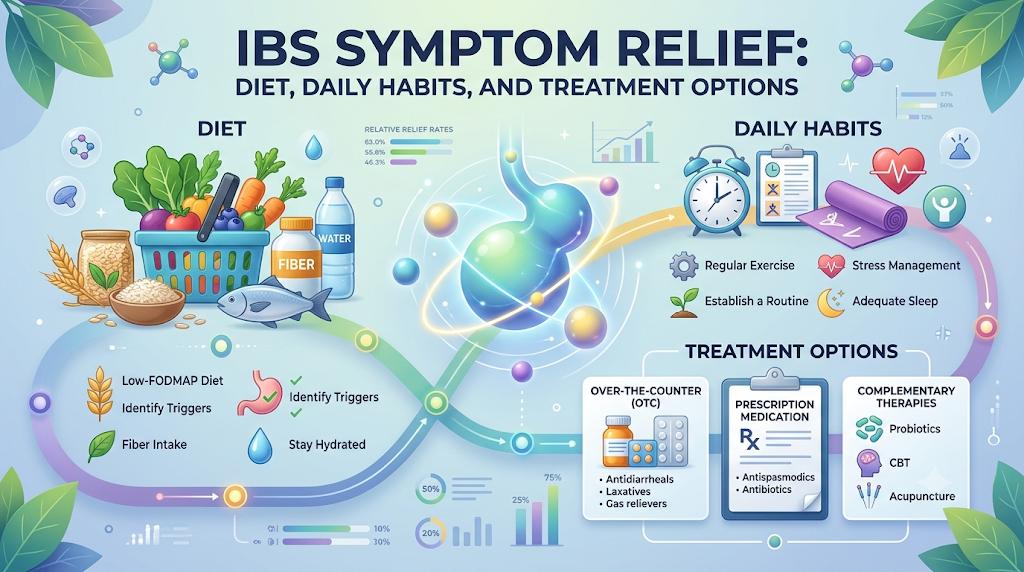
How to Manage IBS Symptoms Through Diet
Food choices can affect IBS symptoms. However, there is no single diet that works for everyone.
Small and steady changes may help improve digestive comfort.
Here are some useful IBS diet tips:
Eat Regular Meals
Try to eat meals at similar times each day. Avoid skipping meals when possible.
Eat Slowly
Chew food well and avoid rushing through meals. Eating slowly may help reduce swallowed air and discomfort.
Drink Enough Water
Water supports normal digestion. It may also help people who experience constipation.
Notice Personal Food Triggers
Pay attention to foods that repeatedly cause bloating, cramps, or changes in bowel movements.
Manage Fatty Foods
Some people find that fried and greasy meals make symptoms worse. Monitor your response to these foods.
Choose Fiber Carefully
Fiber can help with constipation, but too much may increase gas. Soluble fiber, found in foods such as oats, may be easier for some people to tolerate.
Avoid Sudden Diet Changes
Make one change at a time. This helps you understand which changes actually improve your symptoms.
A doctor or dietitian can help you create a balanced eating plan.
Understanding the Low-FODMAP Diet
The low-FODMAP diet is one approach used to manage IBS symptoms.
FODMAPs are certain short-chain carbohydrates. Some people do not absorb them well in the small intestine.
These carbohydrates can draw water into the bowel and produce gas. This may increase bloating, pain, and changes in bowel movements.
The low-FODMAP diet usually has three stages.
Stage 1: Elimination
Certain high-FODMAP foods are reduced for a short period. This helps doctors and dietitians assess whether these foods affect symptoms.
This stage should not become a permanent restrictive diet.
Stage 2: Reintroduction
Foods are added back one group at a time. This helps identify which types cause discomfort and which are tolerated.
Stage 3: Personalization
The diet is adjusted according to individual results. The goal is to include as many suitable foods as possible.
The low-FODMAP diet is not right for everyone. Following it without guidance may lead to unnecessary food restrictions.
A registered dietitian with IBS experience can help protect nutritional balance during the process.
Lifestyle Changes That May Help Control IBS
Daily habits can affect digestive comfort. A healthy routine may help people manage symptoms more easily.
Consider these practical changes:
- Stay physically active: Walking, cycling, and gentle exercise may support normal bowel movement.
- Follow a sleep routine: Try to sleep and wake at regular times.
- Eat at regular times: Consistent meals may help create a predictable digestive routine.
- Drink enough fluids: Suitable fluid intake supports digestion.
- Monitor caffeine: Reduce caffeine if it repeatedly triggers symptoms.
- Avoid smoking: Smoking can affect overall digestive and general health.
- Eat without rushing: Take enough time to enjoy your meals.
- Plan bathroom breaks: Give yourself enough time instead of rushing.
You do not need to change everything at once. Start with one or two habits and build from there.
The Role of Stress and Mental Well-Being
The brain and digestive system communicate with each other. This connection is often called the brain-gut connection.
Stress can affect how the intestines move. It may also increase sensitivity to pain and discomfort.
This does not mean IBS is only a psychological problem. IBS involves real changes in digestive function and gut sensitivity.
Some useful stress management approaches include:
- Deep Breathing: Slow breathing may help the body relax during stressful moments.
- Relaxation Exercises: Simple relaxation routines may support emotional well-being.
- Gentle Yoga: Suitable yoga movements may help reduce tension.
- Mindfulness: Taking a few quiet minutes can help manage daily stress.
- Regular Sleep: Good sleep habits may support better symptom control.
- Cognitive Behavioral Therapy (CBT): This therapy helps people understand and manage thoughts and behaviors linked to stress and symptoms.
- Gut-Directed Psychological Therapies: These approaches may help selected people with ongoing IBS symptoms.
If stress strongly affects your symptoms, discuss suitable support with a healthcare professional.
Medical Treatments for IBS
Lifestyle and food changes may not control every IBS symptom. Some people need medical treatment to feel better.
The doctor chooses treatment based on symptoms and IBS type.
Common medical approaches include:
Medicines for Constipation
Some treatments help soften stools or improve bowel movements. They may be useful for people with IBS-C.
Medicines for Diarrhea
Certain medicines can help reduce loose stools and bowel urgency. They may be considered for people with IBS-D.
Treatments for Abdominal Pain
Doctors may recommend medicines that relax intestinal muscles. These can help reduce cramps and stomach discomfort.
Medicines for Persistent Symptoms
Some prescription treatments target specific IBS symptoms. The choice depends on the patient’s condition and medical history.
Psychological Therapies
CBT and gut-directed therapies may help people with ongoing symptoms. They can support better symptom management.
Treatment of Related Problems
Doctors may also assess other digestive concerns. Treating an identified related condition may improve overall comfort.
Not every treatment works for everyone. Never start, stop, or change prescribed medicines without medical advice.
When Should Someone See a Doctor?
Recurring digestive problems should not always be blamed on IBS. Some symptoms may point to another health condition.
Speak with a healthcare professional if digestive symptoms continue or affect daily activities.
Watch for these warning signs:
- Blood in the stool.
- Unexplained weight loss.
- Persistent fever.
- Anemia or low blood levels.
- Severe or worsening abdominal pain.
- Symptoms that regularly wake you from sleep.
- A new or lasting change in bowel habits.
- A family history of bowel cancer.
- A family history of inflammatory bowel disease.
- A family history of celiac disease.
Some symptoms need urgent medical attention. Heavy bleeding, fainting, severe pain, and signs of dehydration should not be ignored.
A doctor can assess these symptoms and decide whether further tests are needed.
How Is IBS Diagnosed?
There is no single test that confirms IBS in every patient. Doctors usually review symptoms, medical history, and examination findings.
They may use accepted symptom criteria to identify IBS. These criteria consider recurring abdominal pain and changes in bowel habits.
The assessment may include:
Review of Symptoms
The doctor asks about abdominal pain, bloating, constipation, and diarrhea. They may also ask how long symptoms have been present.
Medical and Family History
Information about previous illnesses and family health can help guide the assessment.
Physical Examination
A physical examination may help identify tenderness or other signs that need attention.
Blood Tests
Blood tests may help check for anemia, celiac disease, or other conditions.
Stool Tests
Stool samples may be checked when infection or bowel inflammation is suspected.
Celiac Disease Testing
Some patients may need blood tests for celiac disease. This condition can cause digestive symptoms that resemble IBS.
Further Investigations
Additional tests may be needed if warning signs are present. A colonoscopy is not necessary for every person with suspected IBS.
The doctor decides which tests are useful. The aim is to confirm the likely cause and rule out important conditions.
Creating a Personal IBS Management Plan
Managing IBS becomes easier when you follow a plan that suits your symptoms and daily routine.
You do not need to try every diet or treatment at once. Small changes can help you understand what works.
Here are some useful steps:
1. Record Your Symptoms
Write down when stomach pain, bloating, constipation, or diarrhea occurs. Note how severe the symptoms feel.
2. Track Your Food Choices
Keep a simple food diary. Record meals, drinks, and any symptoms that follow.
3. Identify Possible Triggers
Look for repeated patterns instead of avoiding foods after one uncomfortable meal.
4. Make Gradual Diet Changes
Try one suitable food change at a time. Avoid strict food restrictions without professional advice.
5. Follow an Activity Routine
Choose physical activities that feel comfortable. Regular walking can be a useful starting point.
6. Manage Sleep and Stress
Maintain regular sleep times. Include relaxation activities that fit your daily routine.
7. Follow Medical Advice
Take prescribed treatments as directed. Discuss any side effects or changes in symptoms with your doctor.
8. Review Your Progress
Attend follow-up visits when recommended. Your doctor may adjust the plan as your symptoms change.
A personal IBS management plan should support daily comfort and balanced nutrition. It should also remain flexible as your needs change.
Frequently Asked Questions
1. What is the fastest way to manage IBS symptoms?
The fastest approach depends on the symptoms. Eating smaller meals, avoiding known triggers, and drinking enough water may help some people. Suitable medicines may also provide relief. However, there is no single quick solution for everyone. Speak with a doctor if symptoms are severe or continue.
2. What foods should people with IBS consider limiting?
Some people notice symptoms after eating onions, garlic, beans, certain fruits, dairy products, or fatty foods. Caffeine and alcohol may also trigger discomfort. However, food reactions differ between individuals. Keep a food diary and discuss repeated problems with a dietitian before removing major food groups.
3. Can stress make IBS symptoms worse?
Yes, stress can make IBS symptoms worse in some people. The brain and digestive system communicate through the brain-gut connection. Stress may affect bowel movement and pain sensitivity. Relaxation, better sleep, and suitable psychological therapies may help support symptom management.
4. Is the low-FODMAP diet helpful for IBS?
The low-FODMAP diet may reduce bloating, gas, and abdominal pain in some people. It involves temporarily reducing certain carbohydrates and then adding them back carefully. The strict stage should not continue forever. A trained dietitian can help make the diet safe and balanced.
5. What is the difference between IBS-C and IBS-D?
IBS-C mainly causes constipation, including hard stools and difficulty passing them. IBS-D mainly causes diarrhea, loose stools, and frequent bathroom visits. Both types can cause abdominal pain and bloating. A doctor can assess bowel habits and help identify the suitable treatment.
6. Can exercise help reduce IBS symptoms?
Regular physical activity may support bowel movement and general digestive health. Walking, cycling, and gentle yoga are possible options. Start with an activity that feels comfortable and increase it gradually. Exercise may help some people, but it does not replace medical treatment when needed.
7. Does IBS cause permanent damage to the intestines?
IBS does not usually cause visible damage or permanent inflammation in the intestines. This is different from conditions such as Crohn’s disease and ulcerative colitis. However, ongoing symptoms can affect daily comfort and quality of life. Seek medical advice if symptoms change or warning signs appear.
8. When should someone with IBS symptoms see a doctor?
See a doctor if digestive symptoms keep returning or affect daily life. Blood in the stool, unexplained weight loss, anemia, fever, or worsening pain need medical assessment. Heavy bleeding, fainting, severe pain, or dehydration may require urgent care.
9. Can IBS symptoms improve over time?
Yes, IBS symptoms may improve with suitable care and lifestyle changes. Some people experience long periods with fewer symptoms. Others may have symptoms that return from time to time. Identifying personal triggers and following a suitable treatment plan can help improve daily comfort.
10. What is the best way to identify personal IBS triggers?
A food and symptom diary is a useful starting point. Record what you eat, when symptoms occur, and changes in bowel habits. Look for repeated patterns over time. A dietitian can help assess possible triggers and suggest safe food changes without unnecessary restrictions.
Final Thoughts
Living with IBS can be challenging, but suitable care can make daily life easier.Understanding personal triggers, eating balanced meals, staying active, and managing stress can support digestive comfort. Medical treatment may also help when lifestyle changes are not enough.Remember that IBS management is different for everyone. Avoid strict diets or unverified remedies without professional advice.If symptoms continue or warning signs appear, consult a qualified healthcare professional.