Introduction
Children can be active, playful, forgetful, or easily distracted. These behaviors can be normal parts of growing up.But some children have ongoing problems with attention, activity, or self-control. These problems may affect school, home life, or friendships.ADHD means attention-deficit/hyperactivity disorder. It can affect how a child pays attention, controls actions, and manages activity.
ADHD symptoms can look different in each child. Some children mainly struggle with attention. Others mainly struggle with activity and impulse control.Parents should not try to diagnose ADHD at home. A qualified healthcare provider can look at the full picture.AskDoctorLive can help parents learn more about child health concerns. Parents can use this information to prepare for useful healthcare talks.
What Is ADHD?
ADHD is a condition that can affect attention and self-control. It can also affect how active a child feels or acts.A child with ADHD may have trouble staying focused. They may also forget tasks or lose things often.
Some children fidget a lot or find sitting still hard. Others may speak often or act before thinking.
ADHD does not look the same in every child. One child may have mostly attention problems. Another may have mostly hyperactive or impulsive behavior.Hyperactive means having a strong need to move or stay active. Impulsive means acting quickly without thinking about what may happen.
Children can show these behaviors sometimes. That does not mean they have ADHD.
Healthcare providers look at how often symptoms happen. They also look at how much these symptoms affect daily life.
Common ADHD Symptoms in Children
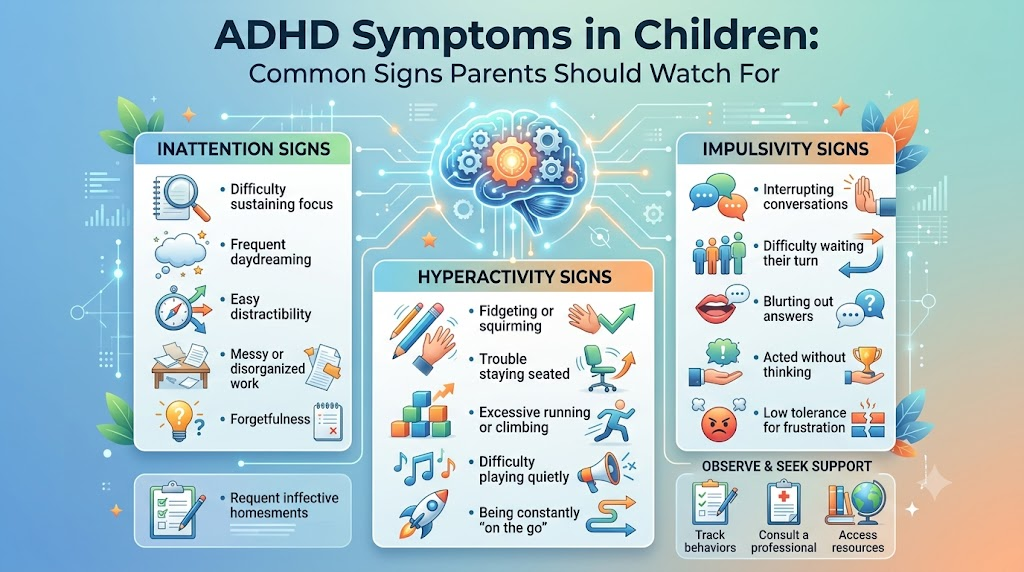
ADHD symptoms often fall into three main areas. These areas include attention problems, hyperactivity, and impulsive behavior.A child with attention problems may lose focus during tasks. They may also become distracted by small sounds or events.They may forget homework or lose school items. They may also start tasks but have trouble finishing them.Some children have trouble following instructions. For example, they may hear an instruction but forget part of it.Children with hyperactive behavior may fidget often. They may tap their hands, move their feet, or leave their seat.Some children talk a lot or find quiet play hard. They may seem to always need something to do.Impulsive children may interrupt others often. They may also have trouble waiting for their turn.They may act before thinking about the result. For example, they may grab something without asking first.
Common Signs Parents May Notice
| Simple Example | Where It May Be Seen |
|---|---|
| Looks away during homework | Home or school |
| Forgets daily tasks | Home or school |
| Misplaces pencils or books | School |
| Moves hands or feet often | Home or school |
| Talks while others speak | Home or school |
| Becomes upset while waiting | Home or school |
Signs Parents May Notice at Home
Parents may notice ADHD signs during daily routines. Homework, chores, meals, and bedtime can show these challenges.A child may struggle to sit through homework. They may start one task and move to another.Some children need many reminders for simple routines. They may forget to brush their teeth or pack their school bag.A child may also lose things often. Books, pencils, toys, and clothes may go missing.
Some children have trouble listening from start to finish. They may look away or begin another activity.
Waiting can also be difficult. A child may interrupt family talks or become upset when asked to wait.
These behaviors can happen in many children. The key concern is when they happen often and cause problems.Parents can keep simple notes about these behaviors. This can help a healthcare provider understand the child’s daily routine.
Signs Teachers May Notice at School
Teachers see children during learning and group activities. They may notice behaviors that parents do not see at home.A child may have trouble staying focused during lessons. They may also become distracted by nearby sounds or classmates.Some children start schoolwork but do not finish it. They may need repeated reminders to complete simple tasks.A child may forget instructions soon after hearing them. They may also lose books, pencils, or other school items.Some children leave their seat often. Others may interrupt classmates or have trouble waiting their turn.Teachers may also notice problems with staying organized. School tasks may become harder when several steps are involved.Information from school can help healthcare providers understand the child. Information from home can also add useful details.
Looking at both settings gives a clearer picture. It can also help rule out other possible causes.
When Symptoms May Need More Attention
Children can be restless, forgetful, and distracted at times. These behaviors do not automatically mean ADHD.Concerns may need more attention when they continue over time. They may also matter more when they cause problems in daily life.For example, a child may often miss instructions at school. The same child may also struggle with routines at home.Problems with friends can also matter. A child may interrupt often or struggle to wait during group play.Healthcare providers look at the child’s age and situation. They also consider what is normal for that child’s development.
One behavior alone does not prove ADHD. The full pattern matters when a provider checks for ADHD.
Parents should avoid judging or blaming the child. Support and calm communication can make daily challenges easier.
Other Problems Can Look Like ADHD
Some other problems can cause signs that look like ADHD. Sleep problems can make children tired and less focused.Anxiety can also affect attention. A worried child may find it hard to focus on schoolwork.
Learning problems may make certain school tasks difficult. A child may seem distracted when the task feels too hard.Hearing or vision problems can also affect classroom behavior. The child may miss instructions or avoid certain activities.Other health or emotional concerns can also affect behavior. This is why parents should avoid self-diagnosis.A healthcare provider can review the child’s full history. They can also look for other possible causes.
How ADHD Is Diagnosed
There is no single test that can diagnose ADHD. A healthcare provider uses several types of information.
The provider may ask parents about the child’s behavior. They may also ask about school, home life, and daily routines.The provider may talk with teachers or review school information. This can show how the child behaves in different settings.Behavior rating forms may also help. These forms ask about common behaviors and how often they happen.The provider may review the child’s health and development. They may also check for other concerns.Hearing and vision checks may help when needed. These checks can rule out problems that affect attention.ADHD symptoms usually need to cause real problems in daily life. They also need to appear in more than one setting.A qualified healthcare provider makes the diagnosis. Parents should not use online checklists as a final diagnosis.
What Parents Can Do
Parents can start by writing down the behaviors they notice. Write simple details about what happened and when.Talk with the child’s teacher about school concerns. Ask about attention, schoolwork, behavior, and friendships.Keep notes about home routines too. Include homework, chores, sleep, and other daily activities.Share the child’s health history with the healthcare provider. Mention any other concerns that may affect behavior.
sk questions about the next steps. A healthcare provider can explain what checks may help.Most importantly, avoid blaming the child. ADHD symptoms are not a sign that a child is simply lazy or bad.
Use calm reminders and clear routines at home. Praise your child when they complete tasks or follow directions.
Why Early Support Matters
Early attention can help families understand ongoing behavior concerns. It can also help children get useful support.Support may involve parents, teachers, healthcare providers, or other professionals. Each person can help in a different way.Teachers may use simple classroom supports. Parents may use clear routines and reminders at home.Healthcare providers can help families understand the child’s needs. They can also explain what steps may come next.Support does not mean a child has failed. It means adults are working together to help the child.Every child has different needs and strengths. A caring approach can help children feel understood and supported.
Frequently Asked Questions About ADHD Symptoms in Children
1. What are common signs of ADHD in children?
Common signs include trouble focusing, forgetfulness, fidgeting, and impulsive actions. Some children also struggle with waiting or finishing tasks.
2. Is being active always a sign of ADHD?
No. Many children are active and restless at times. ADHD involves ongoing patterns that cause problems in daily life.
3. Can ADHD affect schoolwork?
Yes. Attention problems can make schoolwork harder. A child may forget instructions, lose items, or struggle to finish tasks.
4. Can ADHD symptoms look different in girls and boys?
Yes. Children can show different patterns of symptoms. Some children may have more attention problems, while others show more active behavior.
5. Can sleep problems look like ADHD?
Yes. Poor sleep can affect attention, mood, and behavior. A healthcare provider can check for sleep problems and other causes.
6. Is there one test for ADHD?
No. There is no single test for ADHD. Providers use behavior information, health history, and other checks.
7. Who can evaluate a child for ADHD?
A qualified healthcare provider can assess possible ADHD. The right provider can vary based on the child’s needs and local care options.
8. Can teachers help identify possible symptoms?
Yes. Teachers can share useful information about classroom behavior. Their observations can help providers understand the child’s behavior at school.
9. Should parents diagnose ADHD at home?
No. Parents can notice and record symptoms at home. A qualified healthcare provider should make the diagnosis.
10. When should parents talk with a healthcare provider?
Talk with a provider when concerns continue or affect daily life. School, home, or friendship problems may also be useful reasons to seek advice.
Final Thoughts
Children can be active, forgetful, or distracted without having ADHD. What matters is the pattern, how often it happens, and how much it affects daily life.ADHD can affect attention, activity, and impulse control. Signs may appear at home, school, or both places.Parents should avoid self-diagnosis and avoid blaming the child. A qualified healthcare provider can look at the full picture and check for other causes.
If concerns continue, keep simple notes and talk with the child’s teacher. Then share these concerns with a healthcare provider for the next steps.