Introduction
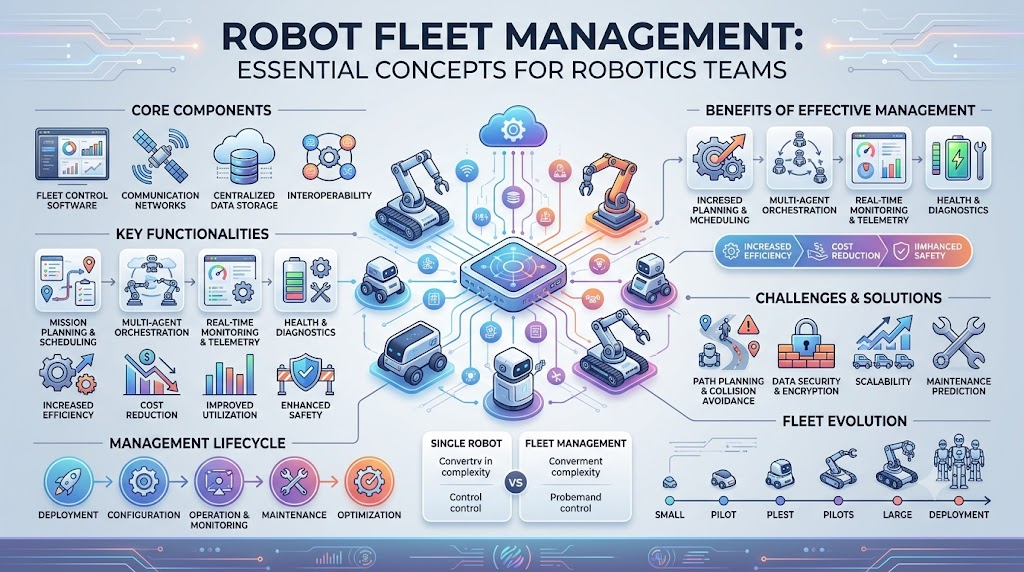
Robot fleet management helps teams control many robots from one system. It gives teams a clear view of robot work. It also helps them find and fix problems fast.
Many businesses now use robots for daily tasks. Warehouses use robots to move goods. Factories use robots to handle repeated work. Robot fleet management makes these systems easier to run. It helps teams save time and reduce delays.
A good fleet system can track robot health, tasks, location, and status. This gives teams better control over daily robot work. It also helps robots work together in a safe way.
What Is Robot Fleet Management?
Robot fleet management is a system for managing many robots. It helps teams control robots from one central place. Teams can check each robot without checking them one by one.
The system can show robot status, task progress, battery level, and location. It can also show robots that need help. This makes daily work easier for robot operators.
For example, a warehouse may use 50 mobile robots. Workers can use one dashboard to check all 50 robots. They can see which robots are busy, idle, charging, or facing errors.
How Does Robot Fleet Management Work?
A fleet system connects robots with a central control platform. Each robot sends data about its work and health. The platform collects this data and shows it to the team.
The system can also send tasks to different robots. It can decide which robot should handle each task. This choice may depend on location, battery level, or current workload.
For example, one robot may need to move a box. Another robot may be closer to the box. The system can assign the task to the closer robot. This can reduce travel time and improve work flow.
Why Is Robot Fleet Management Important?
Managing many robots can become hard without a central system. Teams may need to check each robot by hand. This can waste time and make problems harder to find.
Fleet management gives teams one place to watch robot activity. It can help teams spot slow robots and system errors. It can also show which robots need charging or repair.
Imagine a warehouse with 100 robots. One robot stops during a busy shift. The fleet system can show its location and error. A worker can then fix the issue without checking every robot.
Robot Task Assignment
Robot task assignment helps teams send the right job to the right robot. The system can use data from each robot before making an assignment. This can include location, battery level, and current task.
Smart task assignment can reduce wasted travel. It can also help balance work across the fleet. This keeps some robots from doing too much work while others remain idle.
For example, three robots may need to deliver goods. The system checks their location and status. It then gives each robot a suitable task. This helps the robots complete more work in less time.
Robot Health Monitoring
Robot health monitoring helps teams watch the condition of each robot. The system can collect data from sensors and robot devices. Teams can use this data to find signs of trouble.
Health checks can include battery status, temperature, errors, and system activity. Regular monitoring helps teams find small problems early. This may reduce sudden stops during important work.
For example, a robot may show a weak battery before it fails. The team can send it to charge early. Another robot can then take over its task. This keeps work moving with less delay.
Battery and Charging Management
Battery control is an important part of fleet management. Mobile robots need enough power to complete their tasks. Poor charging plans can cause delays and stop work.
A fleet system can track battery levels across many robots. It can also help decide when robots should charge. This allows teams to keep enough robots ready for work.
For example, ten robots may need power during a busy shift. The system can send low-battery robots to charging stations. Other robots can continue working while they charge. This creates a smoother work cycle.
Robot Traffic Management
Many robots may share the same space. Without good traffic control, robots can slow down or block each other. Fleet management helps control robot movement in busy areas.
The system can plan routes and manage shared paths. It can help robots avoid certain areas when needed. This reduces unnecessary stops and movement problems.
For example, a warehouse may have one narrow path. Several robots may need to use it. The fleet system can manage their movement. This helps robots pass through the area in a safe order.
Benefits of Robot Fleet Management
Robot fleet management can improve daily robot operations. It gives teams better visibility and control. It can also reduce manual work and help teams respond faster.
The main benefits often include:
- Better robot visibility
- Faster problem detection
- Smarter task assignment
- Better battery planning
- Less robot downtime
- Improved work flow
- Easier fleet control
These benefits become more useful as the fleet grows. Managing five robots may be simple by hand. Managing hundreds of robots needs better tools and clear control.
Challenges in Robot Fleet Management
Robot fleet management also comes with some challenges. Different robots may use different software and hardware. This can make system integration harder for teams.
Large fleets can also create more data and more system events. Teams need clear dashboards to understand this data. They also need good security to protect robot systems.
Training is another important part of fleet management. Workers must know how to use the system and handle alerts. Good training helps teams respond to robot problems with less delay.
Robot Fleet Management in Warehouses
Warehouses are one of the main areas where fleet management helps. Robots can move boxes, bring items, and support order work. Fleet software helps coordinate these tasks.
A warehouse may have robots working in different areas. Some may move goods while others may charge. The fleet system can track all of them from one place.
This gives warehouse teams better control during busy periods. They can see where robots are working. They can also find delays and respond to problems faster.
Robot Fleet Management in Manufacturing
Factories can also use fleet management for many robot tasks. Robots may move parts, carry materials, or support production lines. A central system can help teams track this work.
Factories often need steady and reliable operations. A robot problem can affect other work areas. Fleet monitoring helps teams find issues before they cause larger delays.
For example, a robot may stop while moving parts to a production area. The system can show the robot status and location. Workers can respond quickly and keep the production process moving.
The Role of RobotOps
RobotOps brings software and operations practices into robot management. It helps teams manage robots in a more organized way. The goal is to make robot systems easier to operate and maintain.
RobotOps can support monitoring, deployment, updates, logs, alerts, and troubleshooting. These tools help teams manage robot systems as they grow. They also improve visibility across the robot environment.
For example, a team may manage robots in several warehouses. RobotOps can give the team one view of system health. This makes it easier to find problems across different locations.
How AI Can Improve Fleet Management
AI can help fleet systems make smarter decisions. It can study robot data and find patterns. Teams can then use these patterns to improve robot operations.
AI can also help with route planning and task assignment. It may identify better ways to use available robots. It can also help predict some equipment problems.
For example, AI may notice that one robot often reports battery issues. The system can alert the team before a major failure. This gives workers time to inspect or service the robot.
How to Choose a Fleet Management System
Teams should first understand their robot needs. They should look at fleet size, robot types, work areas, and daily tasks. These factors can affect the type of system they need.
The system should also be easy for workers to use. Clear dashboards can help teams understand robot status quickly. Good alert tools can help workers respond to problems.
Teams should also think about future growth. A system that works for ten robots may not suit 500 robots. The chosen platform should support larger fleets and new robot types.
Future of Robot Fleet Management
Robot fleets will likely become larger and more common. Businesses may use robots across warehouses, factories, stores, and other work areas. This will increase the need for better fleet control.
Future systems may use more AI and automation. Robots may share more data with fleet platforms. Systems may also become better at predicting faults and planning tasks.
The main goal will remain simple. Teams need robots that work well with less manual effort. Better fleet management can help businesses reach that goal.
Conclusion
Robot fleet management helps teams control many robots from one system. It improves visibility, task control, battery planning, and robot monitoring. It can also help teams find problems before they cause major delays.
As robot fleets grow, manual control becomes harder. A strong fleet system gives teams better tools for daily operations. It helps workers manage robots in a clear and organized way.
RobotOps adds another layer of support for growing robot systems. With good monitoring, planning, and automation, teams can build more reliable robot operations. This can help businesses use robots with greater control and confidence.