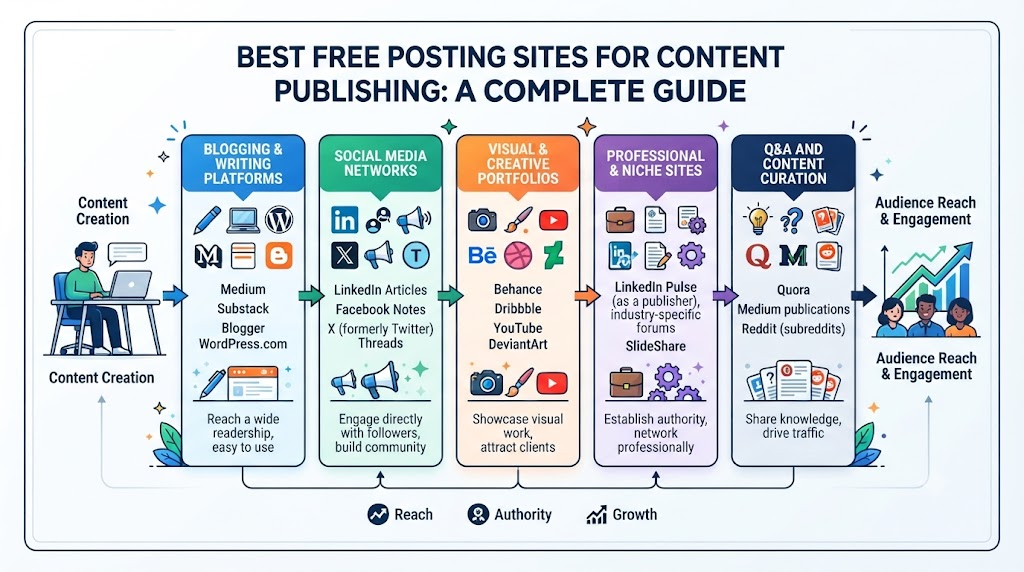
The digital landscape relies on consistent, high-value publishing to drive authority, search visibility, and audience connection. Whether you are an independent blogger, a growing startup, an experienced marketer, or a software engineer sharing technical insights, distributing your writing across the web is essential for sustainable growth. However, publishing exclusively on your primary domain often limits your immediate reach, especially in the early stages of building brand awareness. In this comprehensive guide, you will learn about the main categories of public distribution channels, evaluate factors for selecting platforms, discover best practices for ethical publishing, and explore how using a targeted content publishing platform finder like FreePostFinder simplifies content distribution.
WHAT ARE FREE CONTENT PUBLISHING PLATFORMS?
Understanding how modern distribution channels operate is the first step toward building an effective web strategy.
What They Are
Free content publishing platforms are web-based channels, media sites, directories, and interactive networks that allow creators to publish written, visual, or media-based content at no monetary cost. These platforms host your submissions on their infrastructure, making your ideas instantly accessible to their existing readership and web crawlers.
How They Work
Most free content publishing platforms operate on user-generated or open-access models. Users register an account, complete a contributor profile, and submit content through a web-based editor or CMS dashboard. Submissions are processed either automatically or via manual editorial moderation. Once live, these websites to post content for free index on search engine results pages (SERPs) and circulate throughout the host platform’s internal discovery channels.
Why They Matter
Building an organic audience solely through a new, standalone domain can take months or even years. Utilizing established open-access networks allows you to piggyback on established domain authority, active user bases, and robust indexing infrastructure. This accelerates your visibility while complementing your owned media channels.
Benefits for Individuals and Businesses
- Cost-Effective Visibility: Reach global audiences without upfront media spend.
- Diversified Traffic Sources: Reduce reliance on a single marketing channel.
- Search Engine Footprint: Expand the total number of indexed keywords associated with your personal or company brand.
- Networking Opportunities: Connect with niche communities, industry peers, and prospective clients.
WHY CHOOSING THE RIGHT PLATFORM IS IMPORTANT
Distributing material without a strategic matching process yields minimal return. Selecting the appropriate venue directly impacts your organic reach and credibility.
Better Audience Reach
Not all traffic carries equal value. Publishing technical tutorials on a general lifestyle hub will yield low engagement regardless of article quality. Matching your message with a platform’s core demographic ensures your insights reach readers who care about your subject matter.
Improved Visibility and SEO Opportunities
Search engines like Google prioritize content based on search intent, context, and domain trustworthiness. Aligning your writing with reputable platforms ensures your articles index quickly and rank for competitive long-tail search phrases. Following guidelines set by industry authorities like Google Search Central regarding original context and structured data guarantees your off-site efforts complement your primary search strategy.
Higher Engagement and Stronger Online Presence
Niche-focused communities foster real discussions. When your articles land on platforms tailored to specific interests, readers are far more likely to leave comments, bookmark your posts, and share your insights across social media channels. Over time, this consistent multi-channel footprint builds personal and corporate brand equity.
Long-Term Content Value
Evergreen assets published on high-authority platforms continue attracting referral traffic and organic search clicks for years. Treating off-site publishing as a long-term equity investment—rather than a short-term traffic growth hack—yields sustainable digital dividends.
TYPES OF FREE POSTING SITES
Navigating online channels is much easier when you group platforms by format, audience intent, and publishing structure.
+-------------------------------------------------------------------+
|               DIGITAL PUBLISHING ECOSYSTEM                        |
+-------------------------------------------------------------------+
|  [Articles & Blogs]   -->  Long-Form Insights & Authority        |
|  [Forums & QA]        -->  Community Engagement & Discussion      |
|  [Business Listings]  -->  Local SEO & Structured NAP Data        |
|  [Video & Media]      -->  Visual Storytelling & Demonstrations   |
+-------------------------------------------------------------------+
Free Article Posting Sites
These platforms cater to long-form, opinion-driven, analytical, or educational writing. They typically feature clean typography, minimal site bloat, and built-in editorial curation feeds that showcase high-performing articles to broader platform members.
Free Blog Posting Sites
Ideal for independent writers, personal brand builders, and storytelling, free blogging platforms allow users to construct custom public micro-blogs. They offer personal profile hubs, RSS feeds, subscription management features, and tag-based discovery systems.
Free Forum Posting Sites
Forums and discussion boards focus on conversational, community-driven content exchange. Users start threads, answer technical questions, and participate in peer-based problem solving. Success here requires offering helpful, unselfish responses rather than promotional broadcasts.
Free Business Listing Sites
Business directories allow companies to establish public profiles displaying verified contact details, operational hours, location maps, service descriptions, and website links. These structured pages are vital for local search optimization and brand verification.
Free Video Posting Sites
Video-hosting platforms support visual storytelling, product demonstrations, tutorials, and corporate webinars. Video content often ranks prominently on Google search pages, making visual channels an effective complement to written content.
Community Publishing Platforms
These networks blend blogging features with interactive social dynamics. Readers can upvote, save, comment on, and share posts. Algorithm-driven recommendation engines reward genuinely engaging posts by pushing them to trending homepages.
Directory Submission Platforms
Web and resource directories organize tools, software products, companies, and content assets into structured hierarchy trees. Submitting listings to well-maintained directories helps interested users locate specialized resources within specific market niches.
Knowledge Sharing Platforms
Q&A portals, wiki engines, and documentation networks fall under this umbrella. These platforms center around providing direct, factual answers to specific user questions. They work best for showcasing deep domain expertise and technical thought leadership.
HOW TO CHOOSE THE BEST PLATFORM FOR YOUR CONTENT
Selecting where to invest your content creation efforts requires systematically evaluating several key platform metrics:
- Content Format Compatibility: Ensure the target interface supports your formatting requirements, such as code blocks, technical tables, high-resolution imagery, or embedded media.
- Audience Demographics: Review existing top-performing posts on the target site to verify that its user base matches your ideal customer profile or target reader.
- Publishing Guidelines & Moderation: Always read platform submission rules. Channels with active moderation policies usually maintain higher site quality, protecting your brand from spam-heavy neighborhoods.
- Domain Metrics & Indexing Speed: Check whether the platform’s content is regularly indexed by major search engines. High-authority channels ensure your content appears in search results quickly.
- Community Engagement Levels: Assess whether posts on the platform receive real comments and active discussion, or if the platform acts solely as a static repository.
- Long-Term Visibility: Opt for established platforms with proven track records rather than unverified popup networks that may disappear without notice.
FREEPOSTFINDER AS A CONTENT PUBLISHING PLATFORM FINDER
Finding high-quality, relevant distribution channels manually can take hours of continuous research. This is where FreePostFinder serves as an invaluable content publishing platform finder for modern content creators.
+--------------------------------------------------------------------+
|                       FREEPOSTFINDER HUB                           |
+--------------------------------------------------------------------+
|  [Filter by Category]  -->  Blogs, Articles, Directories, Forums   |
|  [Compare Metrics]     -->  Authority, Rules, Requirements         |
|  [Direct Publishing]   -->  Targeted, High-Impact Distribution     |
+--------------------------------------------------------------------+
Rather than searching through endless search engine results pages, marketers and writers can utilize FreePostFinder to streamline platform research and selection.
- Smart Platform Discovery: Access a curated database of verified web channels, categorized by target niche and content format.
- Category-Based Search: Easily filter through specialized hubs by exploring designated Blog Categories and tailored Forum Categories.
- Advanced Filtering Tools: Save research time using dedicated Search & Filter Tools designed to pinpoint channels matching your exact editorial criteria.
- Platform Comparison Metrics: Compare publishing requirements, target demographics, and submission policies across multiple channels using comprehensive Platform Comparison Pages.
- Clear Guidelines & Rule Awareness: Review verified submission policies before writing, minimizing the risk of post rejection or account flags.
BEST PRACTICES FOR PUBLISHING CONTENT ONLINE
To maximize your return on effort while protecting your online reputation, follow these established digital publishing principles supported by organizations like the Content Marketing Institute:
- Prioritize Originality: Always craft authentic, insightful perspectives. Avoid copy-pasting identical text across dozens of sites, as duplicate text weakens organic visibility.
- Focus on Audience Value: Address specific pain points, answer pressing questions, and deliver clear solutions. Avoid using open-access channels purely for aggressive sales pitches.
- Follow Site Rules Thoroughly: Adhere strictly to word counts, link guidelines, formatting rules, and visual asset sizes required by each target platform.
- Craft Clear, Descriptive Headlines: Write headlines that clearly state what the reader will learn. Avoid sensationalist clickbait titles that misrepresent your content.
- Optimize Layout and Structure: Format your writing with bold key terms, logical bullet points, and distinct subheadings to ensure high visual scannability.
- Maintain an Active Author Profile: Complete author bio sections thoroughly, adding professional avatars and relevant social handles to build real E-E-A-T (Experience, Expertise, Authoritativeness, and Trustworthiness).
- Keep Content Updated: Periodically revisit high-performing off-site posts to refresh outdated statistics, fix dead links, and keep the information accurate.
COMMON MISTAKES TO AVOID
Avoid these common publishing pitfalls that hurt long-term visibility and damage online trust:
- Cross-Posting Identical Copy: Distributing raw duplicate text across multiple platforms dilutes search indexing and can trigger search engine duplicate content filters.
- Ignoring Platform Rules: Failing to read community guidelines often results in account suspension or immediate post removal.
- Over-Promotional Writing: Treating educational community hubs as broadcast channels for press releases alienates readers and moderation teams alike.
- Neglecting Post Layout: Submitting unformatted, wall-of-text blocks leads to immediate bounce rates and minimal audience retention.
- Keyword Stuffing: Artificially inserting search phrases into your text ruins readability and violates standard search guidelines, as highlighted in technical literature on the Mozilla Developer Network.
- Spamming Discussion Threads: Dropping low-effort, thin comments solely to post website links degrades your brand image and damages real community trust.
PLATFORM CATEGORY COMPARISON
This structural breakdown compares key operational differences across standard public distribution channels:
| Platform Type | Best For | Typical Content Format | Target Audience | Key Benefits |
| Article Sites | Thought Leadership | Long-form analysis, guides | Industry professionals | High domain metrics, strong indexing |
| Blogging Hubs | Brand Building | Personal stories, essays | General readers, loyal fans | Profile ownership, custom layout options |
| Forum Boards | Q&A, Networking | Short posts, discussion threads | Specialized communities | High interaction, direct peer feedback |
| Business Listings | Local SEO | NAP details, service overviews | Prospective customers | Structured data, local search visibility |
| Video Sites | Demos, Tutorials | Video clips, visual guides | Visual learners | High SERP feature integration |
WHO CAN BENEFIT FROM FREE CONTENT PUBLISHING?
Dynamic multi-channel publishing provides substantial strategic value across diverse roles and industries.
Bloggers and Writers
Independent authors expand their reader bases beyond personal subscriber lists, driving interested visitors back to their primary blogs through valuable external contributions.
Businesses and Startups
Early-stage companies build brand presence and establish industry context by publishing informative whitepapers, operational insights, and local directory profiles.
Content Marketers and Agencies
Digital marketing teams improve client content reach, diversify traffic channels, and deliver measurable organic performance through structured content distribution strategies.
Developers and Tech Professionals
Engineers and open-source contributors build strong professional portfolios by sharing code walkthroughs, architecture breakdowns, and troubleshooting guides on technical community hubs.
Educators, Students, and Influencers
Subject-matter experts, academic professionals, and digital creators build credibility, share educational insights, and grow personal brands by publishing insightful content online.
FUTURE OF DIGITAL PUBLISHING
Digital content distribution continues to evolve alongside shifting reader habits, web standards maintained by the W3C, and emerging search technologies.
+-------------------------------------------------------------------+
|               FUTURE DIGITAL PUBLISHING TRENDS                    |
+-------------------------------------------------------------------+
|  * Decentralized & Creator-Owned Micro-Publishing                 |
|  * Community-Driven Curation over Pure Algorithmic Feeds         |
|  * High Demand for First-Hand Human Experience & Verification     |
|  * Integrated Multi-Format Distribution (Text + Video + Audio)    |
+-------------------------------------------------------------------+
Key trends shaping the future of off-site publishing include:
- Emphasis on Authentic Experience: Search algorithms and readers increasingly prioritize genuine personal experience over generic, synthesized summaries.
- Community-Led Curation: Moderated, specialized niche boards are gaining popularity over bloated, unmoderated general networks.
- Integrated Multi-Format Feeds: Leading networks now seamlessly blend written articles, short-form video snippets, and dynamic discussion threads within unified platform interfaces.
- Smart Channel Discovery: Automated platform directories and research hubs will continue replacing manual search methods, helping creators make faster, data-backed publishing decisions.
HOW FREEPOSTFINDER HELPS USERS PUBLISH SMARTER
Navigating the expansive digital landscape requires direct, transparent data. FreePostFinder bridges the gap between creators and quality web platforms by offering:
- Centralized Platform Research: Eliminate manual search clutter by using an organized directory tailored for digital publishing research.
- Structured Niche Directories: Discover targeted channels using specialized lists such as Business Listing Categories and Video Platform Categories.
- Clear Guideline Transparency: Access clear moderation policies and platform guidelines upfront to ensure higher acceptance rates.
- Actionable Learning Resources: Consult in-depth Publishing Guides to refine your content distribution strategy across various formats.
- Data-Backed Channel Selection: Save time by comparing platform metrics to ensure your writing lands on active, authoritative networks.
FREQUENTLY ASKED QUESTIONS (FAQ)
1.What are free posting sites?
Free posting sites are web platforms, directories, community hubs, and media portals that allow creators, businesses, and marketers to publish written, visual, or audio content at no monetary cost. These platforms host your submissions, making them accessible to their existing audience and search engine crawlers.
2.Where can I post content for free?
You can post content for free across various channels depending on your goals. Common options include general blogging networks, specialized industry forums, open-access article hubs, video sharing platforms, and structured business directories. Using a platform finder simplifies discovering active sites that match your niche.
3.What are free article posting sites?
Free article posting sites are hosted web channels that focus on long-form, educational, or analytical written content. They provide editorial templates that support formatted text, subheadings, and imagery, making them ideal for publishing guides, thought leadership pieces, and detailed industry insights.
4.Which free blog posting sites are best for beginners?
The best free blog posting sites for beginners feature intuitive visual editors, zero setup costs, hosted domain structures, and built-in reader feeds. Ideal platforms allow new writers to set up a profile and start publishing articles instantly without needing technical web development skills.
5.How do free business listing sites help SEO?
Free business listing sites improve local search visibility by displaying structured Name, Address, and Phone (NAP) details alongside business descriptions and website links. Search engines use these consistent directory entries to verify company location, legitimacy, and operational details.
6.What are free forum posting sites?
Free forum posting sites are discussion-focused online message boards organized around specific topics or industries. Users participate by starting new threads, asking technical questions, and offering answers, making them excellent platforms for direct community engagement and networking.
7.Which free video posting sites are worth using?
High-value free video posting sites feature high user engagement, reliable streaming infrastructure, and strong indexing on search engine results pages. Choosing platforms with native mobile viewing support and descriptive tagging features ensures your video content reaches its intended audience efficiently.
8.How do I choose the right publishing platform?
To choose the right platform, evaluate your content format, target audience demographic, site moderation rules, domain authority, and community activity. Matching your content’s subject matter with a platform that serves an interested, active audience produces the highest engagement and visibility.
9.Is FreePostFinder suitable for businesses and creators?
Yes, FreePostFinder is designed for businesses, startups, independent bloggers, agencies, marketers, and developers. It serves as a central discovery engine that helps users find, compare, and select verified publishing platforms tailored to their specific industry and content formats.
10.How can I avoid content rejection on publishing platforms?
To avoid rejection, carefully review each platform’s community guidelines before submitting. Write original, high-quality content that provides genuine value, format your posts clearly with headings, avoid excessive external linking, and never post self-promotional sales copy on discussion-focused sites.
CONCLUSION
Finding the best free posting sites for content publishing is a core component of any effective digital marketing and content distribution strategy. Publishing high-quality writing across authoritative article hubs, active niche forums, structured business directories, and popular blogging networks enables creators and organizations to expand their reach, build brand authority, and connect with engaged audiences worldwide.Success in off-site publishing relies on prioritizing strategic platform selection over pure submission volume.