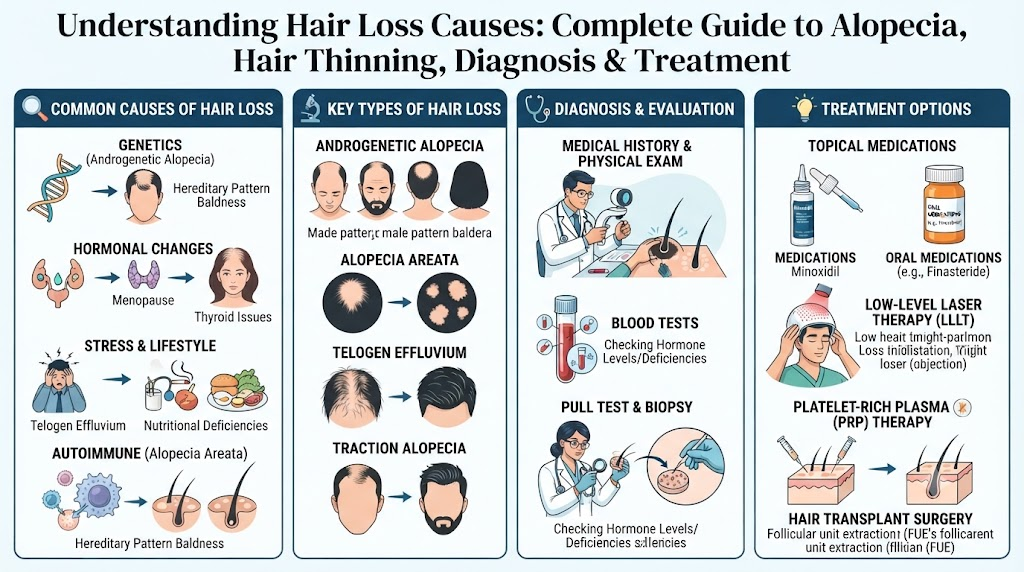
Hair loss is a universal concern that affects millions of people across the globe, impacting both men and women of various ages. Noticing extra strands in the shower drain or a widening part can evoke immediate worry and uncertainty.At ASKDOCTORLIVE, we believe that empowered patients make the best healthcare decisions. This comprehensive educational guide explores the science of hair growth, common causes of hair thinning, diagnostic approaches, treatment strategies, and when to seek professional care.
What Is Hair Loss?
Alopecia is the medical term for hair loss or baldness. To understand when hair loss becomes abnormal, it helps to look at the natural hair growth cycle, which consists of three distinct phases:
- Anagen (Growth Phase): Active hair growth lasting anywhere from two to six years.
- Catagen (Transition Phase): A short transitional period lasting about two weeks where hair growth slows.
- Telogen (Resting Phase): A resting period lasting a few months before the hair naturally sheds to make room for new growth.
People normally lose around 50–100 hairs each day as part of the normal hair cycle. Hair loss becomes noticeable when new hair does not replace the shed hair or when shedding increases significantly. Hair loss can be temporary—resolving once an underlying trigger is addressed—or permanent, depending on the root cause.
Common Causes of Hair Loss
Hair loss is rarely caused by a single factor. Recognizing the diverse triggers can help patients and doctors pinpoint the right approach.
Hereditary (Male & Female Pattern Hair Loss)
Hereditary (androgenetic) alopecia is the most common cause of hair loss worldwide, while stress, illness, surgery, childbirth, and medications can also trigger temporary shedding. It is driven by a combination of genetics and hormones that gradually shrink hair follicles.
Hormonal Changes
Shifting hormone levels significantly impact hair density. Conditions like polycystic ovary syndrome (PCOS) or hormonal imbalances can disrupt normal growth cycles.
Pregnancy and Postpartum Hair Loss
High hormone levels during pregnancy keep hairs in an extended growth phase. After childbirth, hormone levels drop sharply, leading to sudden, temporary shedding known as postpartum telogen effluvium.
Menopause
As estrogen and progesterone levels decline during menopause, many women notice increased hair thinning or a shift in hairline patterns.
Thyroid Disorders
Both hypothyroidism (underactive thyroid) and hyperthyroidism (overactive thyroid) can disrupt the body’s metabolic balance, leading to widespread hair shedding.
Nutritional Deficiencies
The hair follicle is a metabolically active structure that requires proper fuel. Deficiencies in key nutrients can impair hair production.
- Iron Deficiency: Low ferritin stores can trigger diffuse hair shedding, particularly in premenopausal women.
- Vitamin Deficiencies: Inadequate intake of vitamin D, zinc, or essential proteins can compromise hair health.
Chronic Stress
Severe emotional or physical stress can force a large number of hair follicles into the resting phase prematurely, resulting in noticeable shedding months later.
Telogen Effluvium
A form of temporary hair shedding triggered by major life events, severe illnesses, high fevers, rapid weight loss, or major surgeries.
Alopecia Areata
An autoimmune condition where the body’s immune system mistakenly attacks hair follicles, resulting in smooth, round, patchy hair loss on the scalp or body.
Certain Medications
Medications prescribed for cancer, arthritis, depression, heart problems, high blood pressure, and gout can sometimes list hair thinning as a potential side effect.
Tight Hairstyles (Traction Alopecia)
Constantly wearing tight ponytails, braids, cornrows, or extensions places continuous mechanical tension on hair roots, damaging follicles over time.
Scalp Infections
Fungal infections (such as tinea capitis) or severe inflammatory skin conditions can damage hair follicles and cause localized hair loss.
Aging
As people age, hair growth naturally slows down, individual hair strands become finer, and overall scalp density decreases.
Types of Hair Loss Comparison Table
| Hair Loss Type | Common Cause | Typical Pattern |
| Androgenetic Alopecia | Genetics and hormones | Gradual thinning (receding hairline or widening part) |
| Telogen Effluvium | Stress, illness, surgery, or fever | Diffuse, widespread shedding across the scalp |
| Alopecia Areata | Autoimmune condition | Patchy, smooth round bald spots |
| Traction Alopecia | Tight hairstyles and mechanical tension | Hairline thinning or breakage around edges |
| Anagen Effluvium | Chemotherapy or toxic medications | Rapid, widespread hair loss during the growth phase |
| Scarring Alopecia | Inflammatory skin disorders | Permanent follicle damage with scar tissue |
Signs That Require Medical Evaluation
While losing a few extra hairs during seasonal changes is normal, certain signs warrant professional medical attention:
- Sudden Hair Loss: Rapid thinning or clumps of hair falling out overnight.
- Patchy Bald Spots: The sudden appearance of circular or irregular bald patches.
- Excessive Daily Shedding: Consistently losing significantly more than the normal daily amount.
- Hair Loss with Scalp Pain: Discomfort, burning, or tenderness on the scalp.
- Itching or Scaling: Persistent flaking, redness, pus, or scaling alongside hair loss.
- Hair Loss with Weight Changes: Unexplained weight fluctuations accompanying hair thinning.
- Hair Loss After Starting New Medication: Coinciding with the introduction of a prescription drug.
- Eyebrow or Eyelash Hair Loss: Thinning hair in areas other than the scalp.
How Dermatologists Diagnose Hair Loss
Accurate diagnosis is the cornerstone of effective hair loss management. Diagnosis focuses on identifying the underlying cause rather than treating hair loss as a single condition.
- Medical History: Reviewing family history, lifestyle factors, diet, hair care routines, and recent illnesses.
- Scalp Examination: Closely inspecting the scalp, hair density, and follicle openings using specialized lighting.
- Hair Pull Test: Gently tugging on a small group of hairs to assess how easily they shed.
- Dermoscopy (Trichoscopy): Using a specialized handheld magnifier to examine hair shafts, scalp skin, and follicular health up close.
- Blood Tests: Laboratory workups to check for underlying systemic issues.
- Thyroid Testing: Evaluating hormone levels to rule out thyroid imbalances.
- Iron Studies: Measuring serum ferritin and iron levels to check for deficiency.
- Scalp Biopsy: Taking a tiny tissue sample of the scalp for laboratory analysis when complex or scarring alopecia is suspected.
Treatment Options
Because causes vary widely, treatment depends strictly on the underlying diagnosis. Early intervention often improves outcomes.
- Lifestyle Changes: Managing stress, improving sleep hygiene, and adopting gentle hair care practices.
- Nutritional Correction: Addressing diagnosed vitamin or mineral deficiencies with targeted dietary changes or physician-guided supplementation.
- Prescription Medications: Topical or oral therapies designed to slow hair loss and stimulate follicular activity in pattern baldness.
- Topical Treatments: Over-the-counter or prescription solutions applied directly to the scalp.
- Oral Medications: Pills prescribed to block specific hormones or modulate immune responses when appropriate.
- Corticosteroid Therapy: Injections or topical creams used to calm inflammation in conditions like alopecia areata.
- PRP (Platelet-Rich Plasma) Therapy: Using concentrated growth factors from the patient’s own blood to stimulate follicular health in selected cases.
- Low-Level Laser Therapy: Devices that use light energy to stimulate cellular activity in hair follicles.
- Hair Transplant Surgery: Surgical relocation of healthy hair follicles for eligible patients with stable pattern hair loss.
- Management of Underlying Medical Conditions: Treating thyroid disorders, autoimmune issues, or nutritional gaps to restore normal hair growth.
Healthy Habits That Support Hair Health
Maintaining a healthy scalp and nourishing your body creates an optimal environment for hair growth:
- Eat a balanced diet rich in whole foods, lean proteins, and healthy fats.
- Ensure adequate protein intake, as hair strands are primarily made of keratin protein.
- Incorporate iron-rich foods like leafy greens, lean meats, beans, and lentils.
- Practice stress management techniques such as meditation, yoga, or regular physical exercise.
- Practice gentle hair care, using wide-tooth combs and sulfate-free shampoos.
- Avoid excessive heat styling, bleaching, or harsh chemical treatments.
- Avoid overly tight hairstyles that pull at the roots.
- Treat scalp conditions like dandruff or dermatitis promptly.
- Schedule regular medical check-ups to monitor overall health and wellness.
How to Choose the Right Dermatology Hospital or Clinic
When seeking professional help for hair and scalp concerns, finding the right clinic makes a significant difference:
- Board-Certified Dermatologists: Specialists with rigorous training in skin, hair, and nail disorders.
- Hair and Scalp Specialists: Clinicians with specific expertise in trichology and hair loss conditions.
- Advanced Diagnostic Facilities: Access to dermoscopy, laboratory testing, and biopsy services.
- Individualized Treatment Plans: Customized care tailored to your unique diagnosis and lifestyle.
- Evidence-Based Therapies: Treatments backed by scientific research and clinical trials.
- Long-Term Follow-Up Care: Ongoing monitoring to evaluate treatment effectiveness and adjust plans as needed.
Clinic Selection Checklist
| Feature | Why It Matters |
| Experienced Dermatologists | Ensures accurate diagnosis and safe care |
| Hair & Scalp Expertise | Provides targeted treatment for complex conditions |
| Diagnostic Testing | Identifies the root cause rather than guessing |
| Personalized Care | Creates appropriate management strategies |
| Follow-Up Services | Monitors progress and long-term results |
| Evidence-Based Treatments | Delivers safer and more effective care |
Possible Complications of Untreated Hair Loss
Ignoring persistent hair loss or delaying professional consultation can lead to several challenges:
- Progressive Thinning: Allowing hereditary or progressive conditions to advance unchecked.
- Permanent Follicle Damage: In scarring alopecias, untreated inflammation can destroy hair follicles permanently.
- Psychological Impact: Experiencing emotional distress, anxiety, or lowered self-esteem.
- Reduced Self-Confidence: Feeling self-conscious in social or professional settings.
- Delayed Diagnosis of Underlying Medical Conditions: Missing early signs of systemic issues like thyroid disease or autoimmune disorders.
How ASKDOCTORLIVE Helps Patients
Navigating health information online can be overwhelming. ASKDOCTORLIVE is designed to be a reliable educational resource for individuals seeking clarity:
- Dermatology Education: Providing clear, science-backed explanations of skin and hair conditions.
- Hair Health Information: Breaking down complex medical terms into easy-to-understand guides.
- Skin and Scalp Care Resources: Offering practical tips for everyday scalp maintenance.
- Patient Awareness: Helping readers recognize when to consult qualified professionals.
- Healthcare Guidance: Assisting families and individuals in making informed decisions about care.
- Empowering Readers: Fostering proactive health management through accessible education.
Common Mistakes People Make
When faced with hair loss, it is easy to fall into common traps that delay recovery:
- Self-Diagnosing Hair Loss: Assuming all hair loss is hereditary without professional testing. Solution: Consult a dermatologist to confirm the exact diagnosis.
- Using Unproven Products: Spending money on unverified internet remedies or miracle growth serums. Solution: Stick to evidence-based treatments recommended by specialists.
- Ignoring Persistent Shedding: Waiting years before seeking medical evaluation. Solution: Address sudden or persistent hair changes early.
- Delaying Dermatologist Consultation: Trying to fix complex medical conditions with home remedies alone. Solution: Seek professional advice when shedding does not improve.
- Overusing Supplements Without Confirmed Deficiency: Taking high-dose vitamins blindly. Solution: Get blood tests done before starting targeted supplementation.
- Continuing Hairstyles That Strain the Hair: Keeping tight buns or braids despite noticing hairline thinning. Solution: Choose looser hairstyles that eliminate scalp tension.
Common Myths vs Facts
| Myth | Fact |
| Hair loss is only caused by aging | Genetics, hormones, illness, medications, stress, and many other factors contribute to hair loss at any age |
| Washing hair causes hair loss | Washing simply washes away hairs that have already shed and detached during the resting phase |
| Every type of hair loss is permanent | Many forms of hair loss, such as telogen effluvium and alopecia areata, are temporary or highly treatable |
| Biotin helps everyone with hair loss | Biotin supplements primarily help when an actual deficiency exists, rather than curing all types of hair thinning |
Real-Life Educational Scenarios
To see how these concepts apply in daily life, consider these common educational examples:
Scenario 1: Early Intervention for Pattern Thinning
A patient in their thirties notices a gradual receding hairline. Instead of ignoring it, they consult a dermatologist early. Through diagnostic evaluation, androgenetic alopecia is confirmed, and a personalized topical treatment plan is initiated to preserve existing hair density.
Scenario 2: Recovery from Post-Illness Shedding
Someone experiences a high fever and severe illness, followed a few months later by noticeable diffuse shedding. A dermatologist diagnoses telogen effluvium, reassures the patient that the condition is temporary, and recommends stress reduction and balanced nutrition to support natural recovery.
Scenario 3: Specialist Care for Alopecia Areata
A young adult notices a smooth, round bald patch on the scalp. Seeking specialist evaluation, they receive a diagnosis of alopecia areata. The dermatologist prescribes targeted topical corticosteroid therapy, and hair growth gradually resumes within a few months.
Frequently Asked Questions
1. What causes hair loss?
Hair loss is caused by a variety of factors, including genetics, hormonal shifts, autoimmune disorders, nutritional deficiencies, stress, medications, and scalp conditions.
2. How much hair shedding is considered normal?
Losing between 50 and 100 hairs per day is considered a normal part of the healthy hair growth cycle.
3. What is androgenetic alopecia?
Androgenetic alopecia, commonly known as male or female pattern baldness, is a hereditary condition driven by genetics and hormones.
4. What is telogen effluvium?
Telogen effluvium is a temporary form of hair shedding triggered by severe stress, illness, rapid weight loss, or childbirth.
5. Can stress cause hair loss?
Yes, high levels of physical or emotional stress can push large numbers of hair follicles into a resting phase, leading to noticeable shedding months later.
6. Can thyroid disorders lead to hair loss?
Yes, both underactive and overactive thyroid conditions can disrupt the body’s metabolic balance and cause widespread hair thinning.
7. Does pregnancy affect hair growth?
Pregnancy hormones often extend the hair growth phase, frequently leading to temporary postpartum shedding after delivery.
8. What is alopecia areata?
Alopecia areata is an autoimmune disorder where the immune system attacks hair follicles, causing patchy hair loss on the scalp or body.
9. Which blood tests may be recommended?
Doctors frequently order complete blood counts, thyroid panels (TSH), ferritin levels, and vitamin D tests to check for underlying causes.
10. When should I see a dermatologist?
You should consult a dermatologist if you experience sudden hair loss, patchy bald spots, scalp pain, scaling, or excessive daily shedding.
11. Are hair loss treatments effective?
Yes, many treatments can slow hair loss, promote regrowth, and manage underlying conditions, especially when started early.
12. Can nutritional deficiencies cause hair thinning?
Yes, low levels of iron, zinc, vitamin D, and essential proteins can compromise hair follicle health and lead to shedding.
13. How can I protect my scalp and hair?
Protect your hair by eating a balanced diet, avoiding tight hairstyles, practicing gentle hair care, and managing stress effectively.
14. How do dermatologists diagnose hair loss?
Dermatologists diagnose hair loss through medical history reviews, scalp examinations, pull tests, dermoscopy, and targeted blood work or biopsies.
15. How does ASKDOCTORLIVE help patients understand hair loss causes?
It provides reliable educational resources, dermatology guides, and expert-reviewed information to help patients make informed decisions about hair and scalp health.
Final Thoughts
Understanding the root cause of hair loss is the most important step toward regaining confidence and protecting your scalp health. Whether dealing with hereditary thinning, temporary stress-related shedding, or an autoimmune condition, early diagnosis and evidence-based treatment make a significant difference.We encourage you to explore ASKDOCTORLIVE for trusted information about hair loss, scalp disorders, dermatology care, and patient education. Always consult qualified dermatologists for persistent or unexplained hair loss to receive professional diagnosis and treatment recommendations tailored to your individual needs.