Introduction
Located along the banks of the Phalgu River (historically known as the Niranjana), Bodh Gaya stands as one of the world’s most significant spiritual and historical destinations. It is here, beneath the ancient Bodhi Tree, that Prince Siddhartha Gautama attained enlightenment and became the Buddha. Today, Bodh Gaya attracts pilgrims, history enthusiasts, and travelers from around the globe seeking quiet reflection and rich cultural heritage. Beyond its central shrine, the town offers a distinct international atmosphere through diverse monasteries built by Buddhist communities worldwide. This detailed Bodh Gaya travel guide covers essential historical context, major attractions, practical routes, regional food, and step-by-step itineraries to help you plan a smooth and meaningful trip with Mera Apna Bihar.
Overview of Bodh Gaya
Bodh Gaya is a key pilgrimage center located in the Gaya district of Bihar. Recognized globally for its spiritual relevance, the town centers around the UNESCO World Heritage Site of the Mahabodhi Temple Complex. While it retains a calm atmosphere, Bodh Gaya serves as a lively cultural crossroads where ancient Indian heritage meets international traditions. Visitors to the town encounter architectural styles, monastic practices, and cultural displays representing Thailand, Japan, Bhutan, Sri Lanka, Tibet, and Myanmar, all situated within a compact, walkable area.
Why Is Bodh Gaya Important?
Spiritual and Historical Significance
Bodh Gaya is the birthplace of Buddhism’s foundational teachings. Around the 6th century BCE, Siddhartha Gautama meditated under a Sacred Fig tree (Ficus religiosa) here until he reached supreme enlightenment. This event transformed the location into a central node for spiritual learning and philosophical discourse in ancient India.
Architectural and Archaeological Heritage
The town houses brick temple structures that reflect early Indian architectural evolution. The Mahabodhi Temple itself is one of the oldest brick structures surviving in eastern India, providing crucial insights into historical construction techniques and artistic styles spanning from the Mauryan period through the Gupta era.
Global Cultural Relevance
Bodh Gaya acts as a meeting point for international Buddhist traditions. The presence of diplomatic and religious missions from various nations has created a unique local environment where distinct architectural styles, languages, and cultural customs coexist.
Key Attractions and Tourist Places in Bodh Gaya
1. Mahabodhi Temple Complex
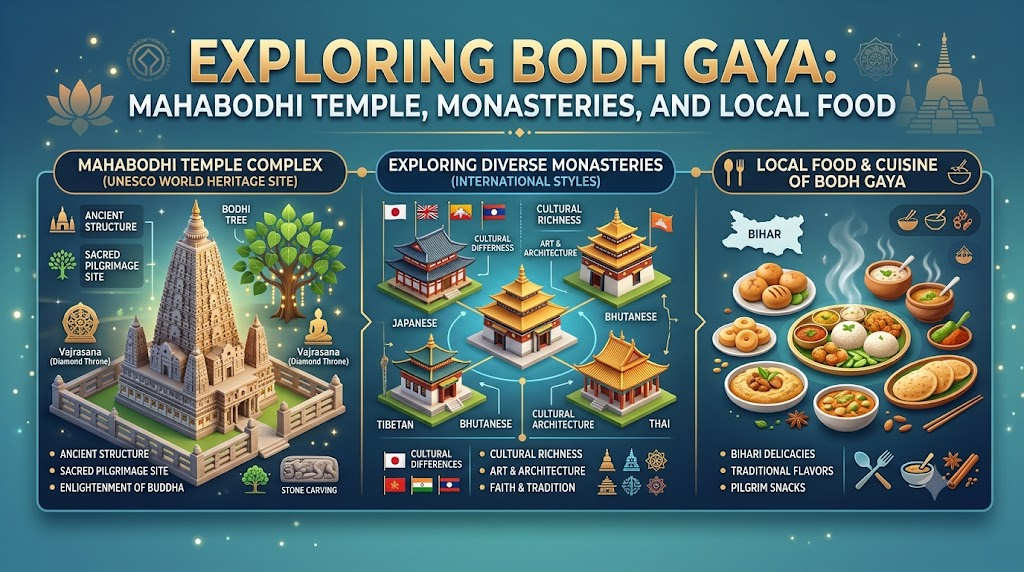
The grand 55-meter tall spire of the Mahabodhi Temple dominates the town’s skyline. Built originally by Emperor Ashoka in the 3rd century BCE and substantially rebuilt during the Gupta period, the temple complex features intricate stone carving, ancient railings, and a large gilded Buddha statue in the inner sanctum.
2. The Sacred Bodhi Tree
Located directly behind the main temple, this tree is believed to be a direct descendant of the original tree under which the Buddha meditated. A carved sandstone slab known as the Vajrasana (Diamond Throne) marks the exact spot of enlightenment.
3. The Great Buddha Statue
Standing at approximately 25 meters (80 feet) tall, this impressive stone statue depicts the Buddha seated in a meditative posture on a lotus blossom. Designed in a Japanese architectural style, it was carved from sandstone blocks and unveiled in the late 20th century.
4. International Monasteries and Temples
- Thai Temple & Monastery: Recognized by its sloping golden roofs, curved eaves, and traditional Thai architectural detail.
- Japanese Temple (Indosan Nipponji): Features clean wooden construction, tranquil Zen gardens, and paintings illustrating events from the Buddha’s life.
- Royal Bhutan Monastery: Showcases elaborate traditional Bhutanese carvings, colorful frescoes, and detailed clay statues.
- Tibetan Monastery: Known for its vibrant prayer wheels, detailed thangka paintings, and rich interior decorations.
5. Archaeological Museum, Bodh Gaya
Maintained by the Archaeological Survey of India (ASI), this museum holds a collection of ancient Buddhist sculptures, terracotta items, antique coins, and carved stone railings salvaged from early temple structures.
Cultural and Historical Heritage
Ancient Links and Royal Patronage
Bodh Gaya’s history is tied to the expansion of the Magadha region. Following Emperor Ashoka’s conversion to Buddhism, the site received royal patronage, leading to the construction of original shrines and monasteries. Later rulers from the Shunga, Kushan, and Gupta dynasties continued to restore and expand the site’s monuments.
Regional Cultural Context
While Bodh Gaya possesses an international tourism profile, it remains rooted in the broader culture of Bihar’s Magadh region. Local customs, regional festivals, and traditional hospitality intersect with the daily routines of visiting monks and international travelers.
Bihar Festivals and Local Celebrations
- Buddha Jayanti (Vaisakha Purnima): Celebrated in April or May, this festival marks the birth, enlightenment, and passing (Parinirvana) of the Buddha. The Mahabodhi Temple complex is decorated with lights, prayer meetings take place, and colorful processions move through town.
- Pitru Paksha Mela: Occurring in nearby Gaya along the Phalgu River during September or October, this traditional Hindu festival involves ancestral rites (Pind Daan). Many visitors combine their visit to Gaya with a stay in Bodh Gaya.
- Kagyu Monlam and Special Prayer Gatherings: During the winter months (December through February), various monastic traditions host annual prayer festivals, drawing large gatherings of monks and visitors for chanting and spiritual teachings.
Suggested Bodh Gaya Travel Itineraries
1-Day Travel Itinerary
- Morning: Visit the Mahabodhi Temple Complex early to observe morning prayers and spend quiet time near the Bodhi Tree.
- Midday: Explore the ASI Archaeological Museum and stop for lunch at a local cafe or traditional restaurant.
- Afternoon: Visit the Great Buddha Statue, followed by the Thai Temple and the Japanese Temple.
- Evening: Attend the evening prayer service at the Mahabodhi Temple when the structure is lit up.
2-Day Travel Itinerary
- Day 1: Follow the 1-Day Itinerary covering the core temple complex, museum, and nearby central monasteries.
- Day 2:
- Morning: Visit the Bhutanese, Tibetan, and Vietnamese monasteries located slightly further from the center.
- Afternoon: Take a short drive across the river to Sujata Kuti (Bakror), dedicated to the village maiden Sujata who offered rice milk to Siddhartha Gautama.
- Evening: Explore local handicraft markets and enjoy regional food.
How to Reach Bodh Gaya
By Air
Gaya Airport (GAY) is located roughly 10–12 km from Bodh Gaya. It operates seasonal international flights and select domestic connections. Alternatively, Jay Prakash Narayan Airport (PAT) in Patna is approximately 115–125 km away and offers direct connections to major Indian cities.
By Rail
Gaya Junction (GAYA) is the main railway station, located about 16 km from Bodh Gaya. It is connected to major rail hubs across India, including New Delhi, Kolkata, Varanasi, and Patna. Taxis, auto-rickshaws, and shared transport options are readily available outside the station.
By Road
Bodh Gaya connects directly via road to major regional centers. Regular state bus services, private coaches, and taxi options operate between Patna, Gaya, Rajgir, Nalanda, and Varanasi.
Best Time to Visit
- October to March (Peak Season): The climate is pleasant and mild, making it comfortable for walking and sightseeing. This period also coincides with various international monastic gatherings.
- April to June (Summer): Temperatures can be warm. Early morning and late evening visits are recommended if traveling during these months.
- July to September (Monsoon): The region receives moderate rainfall, turning the surrounding landscape green and offering a quieter travel environment with fewer crowds.
Local Food and Culinary Experiences
Visitors to Bodh Gaya can sample both local Bihari items and international options:
- Regional Dishes: Litti Chokha (baked wheat balls stuffed with spiced gram flour, served with mashed vegetables), Sattu drinks, and local sweet delicacies like Tilkut and Anarsa (especially popular in neighboring Gaya).
- International Offerings: Due to the international tourist base, numerous small cafes and restaurants near the temple complex serve Tibetan momos and thukpa, Thai soups, Japanese tea, and varied continental options.
Nearby Attractions
- Gaya City (approx. 16 km): Known for the historic Vishnupad Temple and sacred ghats along the Phalgu River.
- Dungeshwari Cave Temples (Mahakala Caves, approx. 12–15 km): Located on a nearby hill, these caves mark the site where Siddhartha Gautama practiced austere meditation prior to reaching Bodh Gaya.
- Rajgir and Nalanda (approx. 70–90 km): Easily accessible for a extended regional trip featuring the ancient Nalanda University ruins and the Vishwa Shanti Stupa in Rajgir.
Practical Examples for Planning Your Trip
Scenario A: Weekend Trip for a Couple
A couple traveling from Patna can take an early morning train or drive to Gaya, check into a hotel in Bodh Gaya by noon, and spend the afternoon exploring the Mahabodhi Temple and Great Buddha Statue. Day two can be spent visiting international monasteries and Sujata Kuti before returning home in the evening.
Scenario B: Solo Culture & History Enthusiast
A solo traveler can spend two full days exploring the ASI Museum, taking detailed tours of monastic architecture, observing evening chanting sessions, and visiting nearby historical sites like Dungeshwari Caves using local auto-rickshaws.
Destination Decision-Making Framework
To help decide how to structure your visit to Bodh Gaya, consider the following factors:
- Primary Interest: Focus on the Mahabodhi Temple and local museums if interested in ancient history; focus on varied monasteries if interested in global architectural styles.
- Travel Duration: A 1-day trip covers the primary temple and two major monasteries; a 2-day trip allows a comfortable pace that includes nearby rural landmarks like Sujata Kuti and Dungeshwari Caves.
- Mobility Needs: The central area around the Mahabodhi Temple is largely pedestrianized and flat, making it accessible for walking. Auto-rickshaws are useful for reaching locations slightly further out.
Common Travel Mistakes to Avoid
- Rushing Through the Main Temple: Allocating insufficient time to sit and observe the calm surroundings of the Mahabodhi Temple complex.
- Not Checking Security Guidelines: Electronic items, large bags, and mobile phones are restricted inside the inner sanctuary of the Mahabodhi Temple; use the designated locker facilities provided near the entrance.
- Ignoring Footwear Rules: Shoes must be removed before entering temple premises. Bringing a pair of socks can be helpful during warmer months when outdoor stone floors absorb heat.
- Underestimating Travel Time: While distances within Bodh Gaya are short, traffic between Gaya Junction and Bodh Gaya during peak festival days can add to travel times.
Bodh Gaya Destination Comparison
| Destination / Landmark | Primary Focus | Suggested Duration | Key Highlight |
| Mahabodhi Temple | Spiritual & Heritage | 2–3 hours | Ancient brick structure, Sacred Bodhi Tree |
| Great Buddha Statue | Monument & Photography | 30–45 mins | 80-foot carved stone Buddha in lotus pose |
| International Monasteries | Architecture & Culture | 2–4 hours | Thai, Japanese, Bhutanese, and Tibetan styles |
| ASI Archaeological Museum | History & Relics | 1–2 hours | Ancient stone sculptures and historical railings |
| Sujata Kuti (Bakror) | History & Rural Exploration | 1–2 hours | Ancient brick stupa dedicated to Sujata |
Practical Tips / Key Takeaways
- Verify Information: Check official temple entrance guidelines and museum opening days prior to your visit.
- Dress Respectfully: Choose modest clothing suitable for religious sites.
- Manage Belongings: Store restricted items safely in official lockers at the Mahabodhi Temple gate.
- Stay Hydrated: Carry water during daytime sightseeing, especially from March through June.
- Plan Local Transport: Agree on auto-rickshaw fares beforehand when traveling to sites outside the main town center.
Frequently Asked Questions (FAQs)
1. What is the main attraction in Bodh Gaya?
The main attraction is the UNESCO World Heritage Site of the Mahabodhi Temple Complex, which houses the ancient temple structure and the Sacred Bodhi Tree under which Buddha attained enlightenment.
2. How far is Bodh Gaya from Gaya Railway Station?
Bodh Gaya is located approximately 16 km from Gaya Junction railway station. Local taxis, auto-rickshaws, and buses frequently run along this route.
3. Is there an airport in Bodh Gaya?
Gaya Airport is located about 10–12 km from Bodh Gaya. It handles select domestic flights and seasonal international services. The nearest major domestic airport is in Patna (around 120 km away).
4. How many days are sufficient to explore Bodh Gaya?
A 1 to 2-day stay is generally sufficient to explore the primary temple complex, major international monasteries, local museum, and nearby historical monuments comfortably.
5. Are photography and mobile phones allowed inside the Mahabodhi Temple?
Mobile phones are strictly prohibited inside the main temple premises. Cameras may be allowed upon purchasing an official camera permit at the entrance office, subject to security rules.
6. What is the best time of year to visit Bodh Gaya?
The most popular time to visit is between October and March, when the weather is cool and conducive to sightseeing and attending outdoor spiritual events.
7. Can non-Buddhists visit the temples in Bodh Gaya?
Yes, Bodh Gaya welcomes visitors of all faiths and backgrounds. Visitors are expected to follow basic decorum, dress modestly, and respect local guidelines.
8. What local food is famous in and around Bodh Gaya?
Visitors can enjoy traditional Bihari dishes such as Litti Chokha alongside famous regional sweets from nearby Gaya like Tilkut. Numerous local cafes also serve international cuisine.
9. Is Bodh Gaya safe for solo travelers?
Yes, Bodh Gaya is generally a welcoming and safe destination for solo travelers. Standard travel precautions regarding personal belongings and evening travel should be observed.
10. What nearby places can be combined with a Bodh Gaya tour?
Travelers often combine Bodh Gaya with visits to Gaya City, the Dungeshwari Cave Temples, Rajgir, Nalanda, and Patna to complete a broader circuit of Bihar’s heritage destinations.
Conclusion
Bodh Gaya remains one of eastern India’s most compelling destinations, blending rich historical architecture, deep spiritual heritage, and international cultural influences. Whether you are walking through the peaceful gardens of the Mahabodhi Temple, admiring monastic architecture from across Asia, or exploring regional flavors, the town offers a rewarding travel experience. For more detailed destination guides, travel itineraries, and regional insights across Bihar, explore authentic stories and updates on Mera Apna Bihar. Ensure you check current opening schedules and local guidelines before setting out on your journey.