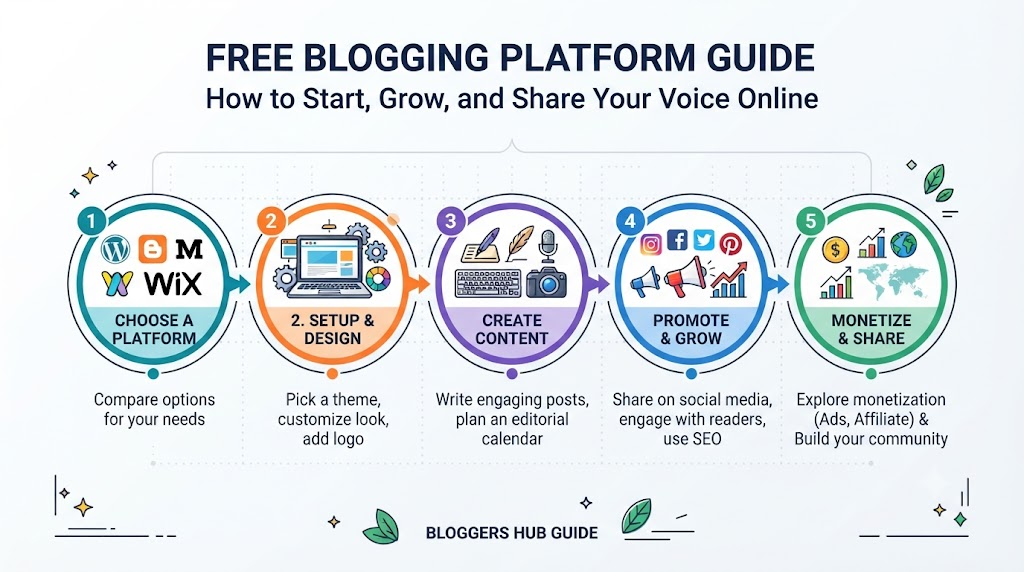
Blogging remains one of the most powerful mediums for sharing ideas, building authority, and connecting with a global audience. Whether you are an aspiring author trying to reach a wider readership, a professional showcasing your subject-matter expertise, or a business owner building an audience, online publishing provides an accessible path to digital success.In this comprehensive guide, we will break down everything you need to know about starting, managing, and scaling an online blog. You will learn the core features of modern publishing systems, discover how to start a blog without technical friction, compare free and paid solutions, and see how platforms like iBlogUp empower new writers to publish content effortlessly.
What Is a Blogging Platform?
At its core, a blogging platform is a specialized content management software that allows individuals and organizations to create, edit, manage, and publish written content on the web without writing code.
+-----------------------------------------------------------------------+
|                       HOW A BLOGGING PLATFORM WORKS                   |
+-----------------------------------------------------------------------+
|  1. WRITER           2. DASHBOARD          3. SYSTEM       4. READERS |
| [ Drafts Content ] -> [ Rich Text Editor ] -> [ Auto-Format] -> [ Global] |
|                       [ Media Uploads   ]    [ & Hosting   ]    [ Access] |
+-----------------------------------------------------------------------+
Understanding Modern Publishing Systems
In the early days of the web, publishing an article required manually editing HTML files and uploading them via FTP servers. Modern systems abstract away all technical hurdles. They provide intuitive dashboard interfaces where you write text, insert media, add category tags, and hit “Publish.” The platform automatically handles formatting, database storage, mobile responsiveness, and page rendering.
Why People Start Blogs
People write online for diverse reasons, including:
- Creative Expression: Sharing personal journeys, creative short stories, or poetry.
- Thought Leadership: Positioning oneself as an industry expert by sharing actionable insight.
- Audience Building: Developing an engaged newsletter subscriber list or social media following.
- Organic Search Visibility: Driving web traffic through high-quality SEO-focused articles.
By choosing a dedicated online blogging platform, you give your writing a centralized home that you control completely.
Why Blogging Remains Vital for Online Success
Despite the rise of short-form video and social media channels, long-form written content remains the cornerstone of information discovery on the internet. Search engines rely heavily on text-based content to understand user intent and deliver answers.
1. Personal Branding
Your personal brand is your digital resume. Publishing high-quality articles consistently establishes credibility, showcases your communication skills, and attracts career, freelance, or consulting opportunities.
2. Knowledge Sharing and Education
Writing helps organize your internal thoughts. By breaking down complex topics into beginner-friendly guides, you reinforce your own learning while providing genuine value to readers worldwide.
3. Portfolio Development
For freelancers, copywriters, and marketers, a live blog serves as proof of work. Instead of sending static PDF samples, you can share links to live, indexed articles that demonstrate engagement.
4. Community and Network Growth
Publishing online acts as a magnet for like-minded individuals. Readers who resonate with your perspectives leave comments, share your posts, and open doors for collaborative opportunities.
Step-by-Step Guide: How to Start a Blog for Free
Launching your personal publication does not require upfront capital or a degree in computer science. Follow this straightforward step-by-step framework to launch your blog today.
+-----------------------------------------------------------------------+
|                     8-STEP BLOG LAUNCH FRAMEWORK                      |
+-----------------------------------------------------------------------+
| [1. Platform Selection] -> [2. Account Setup]  -> [3. Niche Selection] |
| [4. Subdomain Claim ] -> [5. Content Strategy] -> [6. Article Writing] |
| [7. Publishing Step ] -> [8. Audience Sharing]                        |
+-----------------------------------------------------------------------+
Step 1: Select a Free Blogging Platform
Choose a service that balances simplicity, features, and growth potential. Look for platforms offering clean user interfaces, fast performance, and built-in distribution networks.
Step 2: Register Your Free Account
Sign up using your email address or social login credentials. Verify your account to access the publishing dashboard.
Step 3: Choose Your Blog Name and Niche
Select a recognizable name that reflects your topic focus. Whether you cover software engineering, culinary arts, or personal development, maintaining a clear niche helps search engines understand your target audience.
Step 4: Claim Your Free Subdomain
Most standard free services provide a custom web address (e.g., yourname.iblogup.com). A clean subdomain gives your publication a professional look immediately without requiring a domain registration fee.
Step 5: Outline Your Content Strategy
Brainstorm 5 to 10 topic ideas that address real questions your target readers ask. Reference search guidelines like Google Search Central to learn how search engines index and rank educational content.
Step 6: Draft Your First Article
Focus on clarity, structure, and reader value. Break long ideas into short paragraphs, use bulleted lists, and include descriptive headings to improve readability.
Step 7: Publish and Optimize
Apply basic SEO principles—such as including your main keyword in the title and meta description—and hit publish to make your article live to the public.
Step 8: Share Across Digital Channels
Distribute your published links across professional networks, social channels, and relevant online forums to drive your first wave of traffic.
Core Features of an Effective Free Blogging Platform
When selecting where to host your writing, ensure the service provides essential features designed for long-term content management:
+-----------------------------------------------------------------------+
|                    ESSENTIAL PLATFORM FEATURES                        |
+-----------------------------------------------------------------------+
| [ No-Code Builder ]  [ Integrated Subdomain ]  [ Multi-Author Support ] |
| [ Free Web Hosting]  [ Fast Responsive Layout]  [ SEO Controls Engine ] |
+-----------------------------------------------------------------------+
- Zero-Code Interface: You should never need to touch HTML, CSS, or PHP files to format an article.
- Complimentary Web Hosting: Reliable server infrastructure ensures your blog remains online 24/7 without hidden hosting fees.
- Fast, Mobile-Responsive Design: Content should automatically render cleanly on desktop displays, tablets, and smartphones.
- Built-in Distribution Networks: Features like community feeds, categories, and reader recommendation algorithms help new posts gain immediate visibility.
- Multi-Author Collaboration: The ability to invite guest writers or manage editorial teams within a unified dashboard.
Free Blogging Platforms vs. Paid Platforms
Before committing to a setup, compare the functional tradeoffs between free publishing tools and self-hosted, paid alternatives.
| Evaluation Metric | Free Blogging Platform | Self-Hosted / Paid Solution |
| Upfront Cost | $0 (Free forever options) | $50 – $300/year (Hosting + Domain) |
| Technical Knowledge | None required (Instant setup) | Intermediate to Advanced |
| Maintenance | Handled by platform engineers | User handles updates & security |
| Custom Subdomain | Included automatically | Must be purchased separately |
| Setup Time | Under 5 minutes | 1 to 3 hours |
| Security & Backups | Managed centrally | Requires manual plugin configuration |
| Best For | Beginners, writers, educators | Large businesses, custom web apps |
Who Benefits from Using a Blogging Platform?
Publishing online is valuable across diverse professions and personal interests:
“The goal of content creation is not simply to publish articles, but to build an enduring digital asset that compounds trust over time.”
- Writers and Storytellers: Test narrative ideas, publish serial short stories, and cultivate a community of dedicated fans.
- Students and Educators: Document research summaries, organize study guides, and share educational materials publicly.
- Job Seekers and Professionals: Highlight practical project experience and build an industry presence that stands out to recruiters. Reference learning assets from platforms like HubSpot Academy to refine your digital communication approach.
- Small Business Owners: Educate potential clients on industry challenges, outline product solutions, and build organic search traffic without heavy advertising budgets.
Personal Blogging vs. Community Blogging
Understanding structural differences in online publishing helps you choose the right growth path:
+-----------------------------------------------------------------------+
|                  PUBLISHING MODEL ARCHITECTURE                        |
+-----------------------------------------------------------------------+
| PERSONAL BLOGGING MODEL               COMMUNITY BLOGGING MODEL        |
| [ Your Subdomain ]                   [ Global Discovery Feed ]        |
|        |                                         |                    |
| [ Isolation Growth ]                 [ Cross-Pollinated Readers ]     |
| (Requires external marketing)        (Built-in community audience)   |
+-----------------------------------------------------------------------+
Personal Blogging
In a traditional personal blog model, your content exists on an independent site. You maintain total control over your brand, but you must drive 100% of your web traffic through external marketing, social media sharing, or search engine optimization.
Community and Multi-Author Blogging
A community-driven publishing system mixes personal ownership with built-in networking. While you retain your distinct writer profile and personal subdomain, your articles are simultaneously indexed inside a central content ecosystem. This cross-pollination exposes your posts to established platform readers, dramatically speeding up audience acquisition.
How iBlogUp Empowers Modern Content Creators
iBlogUp is designed to eliminate technical barriers for writers worldwide. By combining personal subdomains with community distribution features, it provides an all-in-one publishing solution.
- Instant Setup: Launch your publication without configuring servers or installing third-party plugins.
- Complimentary Custom Subdomains: Receive a dedicated sub-domain address instantly upon sign-up.
- Streamlined Article Management: Focus entirely on your message using a clean, distraction-free writing environment.
- Collaborative Capabilities: Easily invite guest contributors or establish a multi-author magazine.
- Integrated Reader Discovery: Tap into an active global audience through interest-based category directories.
Practical Rules for Building a Sustainable Blog
Writing your first post is only the beginning. To grow a loyal audience, apply these practical content strategies:
1. Maintain Topic Focus
Establish a clear niche early. If your articles range from software tips to pet care without structure, search engines and readers will struggle to understand your primary expertise.
2. Follow Clean Formatting Practices
Online readers scan text quickly. Keep paragraphs under four lines, use descriptive subheadings, use bullet points for lists, and highlight key concepts with bold text. Adhere to web formatting standards outlined by the W3C Web Standards Project.
3. Write Descriptive Headings
Ensure every heading accurately previews the content below it. Headings should inform the reader while incorporating relevant sub-topic phrases naturally.
4. Create an Editorial Schedule
Publishing one quality article every week consistently builds far more search engine authority than publishing five posts in a single day followed by months of inactivity.
Common Mistakes New Bloggers Should Avoid
Avoid these frequent traps that stall long-term audience growth:
+-----------------------------------------------------------------------+
|                     4 PITFALLS TO AVOID IN BLOGGING                   |
+-----------------------------------------------------------------------+
| [ Inconsistent Schedule ]  ---> Solution: Set a weekly publishing goal|
| [ Overly Generic Titles ]  ---> Solution: Focus on user benefit       |
| [ Neglecting Formatting ]  ---> Solution: Use short, scannable text  |
| [ Quitting Too Early   ]   ---> Solution: Allow 3-6 months for growth |
+-----------------------------------------------------------------------+
- Inconsistent Publishing Routines: Going silent for long stretches hurts reader retention and signals to search crawlers that your publication may be inactive.
- Ignoring On-Page Structure: Dense walls of text without headings or list breakups cause high bounce rates.
- Expecting Instant Traffic: Organic search indexing and community trust require time to develop. Stay consistent for several months before judging early results.
- Failing to Engage Readers: When visitors leave thoughtful comments, respond promptly to foster an active community around your brand.
Timeless Trends in Digital Publishing
While publishing tools evolve, the underlying mechanics of successful blogging remain grounded in evergreen principles:
- Rise of Independent Voice: Readers increasingly seek authentic, personal perspectives over generic corporate copy.
- Direct-to-Audience Publishing: Combining public blog posts with direct subscription models allows creators to build sustainable digital relationships.
- Emphasis on Quality Experience: Platforms that prioritize fast loading times, clean typography, and ad-free reading experiences retain reader attention longer.
Frequently Asked Questions (FAQ)
1.What is a free blogging platform?
A free blogging platform is an online content management tool that lets you create, design, and publish written articles on the web without paying software licensing or web hosting fees. These platforms supply the backend infrastructure, server storage, and editing interface, allowing writers to focus entirely on writing and content creation.
2.How do I choose the best free blogging tool as a complete beginner?
Select a platform that prioritizes simplicity, mobile responsiveness, clean formatting, and no-code administration. Look for services that offer a free subdomain, built-in publishing tools, and integrated community discovery features so your content gets discovered quickly without requiring paid promotion.
3.Can I launch a professional blog without knowing how to code?
Yes. Modern online publishing systems use visual, block-based, or rich-text editors that work just like standard word processing software. You can write text, format headings, insert images, and publish articles with simple point-and-click tools, eliminating any need for HTML or CSS knowledge.
4.What is a free subdomain, and how does it work for my blog?
A subdomain is a secondary web address tied to a main domain name (e.g., yourbrand.iblogup.com). It gives your blog a unique web identity on the internet without forcing you to purchase a standalone custom domain name, making it ideal for starting a publication with zero financial investment.
5.What is the difference between a personal blog and a community blog platform?
A personal blog functions as an isolated digital island where you are entirely responsible for driving external visitors to your address. A community blogging platform connects individual blogs inside a shared ecosystem, making your posts visible to existing platform readers through centralized search feeds and topic categories.
6.Is it possible for multiple authors to manage one blog together?
Yes. Many modern publishing tools include multi-author capabilities. This allows account owners to invite guest contributors, editors, and co-writers to draft, edit, and publish posts within a shared publication management dashboard.
7.How does free web hosting work for new bloggers?
Free web hosting means the platform stores your blog files, images, and database entries on its enterprise servers at no charge to you. The platform manages server security, performance optimization, uptime, and system backups automatically behind the scenes.
8.Can I transition my writing portfolio into a business using a blog?
Publishing educational articles regularly showcases your professional expertise to prospective employers, consulting clients, and business partners. Over time, a well-maintained blog can generate inbound client inquiries, speaking requests, book deals, or digital product sales.
9.Is long-form written blogging still relevant alongside social media video?
Written content remains the primary foundation of search engine discovery. Millions of internet users query search engines daily for detailed guides, tutorials, and deep explanations. Long-form blog posts provide detailed value that short social media videos cannot replicate.
10.How long does it take for search engines to index a new blog post?
New blog posts published on structured, mobile-optimized platforms are typically indexed by search engine crawlers within a few days. Maintaining a consistent publishing schedule speeds up indexing frequency over time.
Conclusion
Starting a blog remains one of the most effective ways to express your ideas, establish industry authority, build a personal brand, and reach a global audience. While technical barriers and hosting costs previously made launching a publication difficult, modern publishing systems have simplified the process.By leveraging a simple free blogging platform, you eliminate setup friction and focus on what truly matters: producing quality content that educates, entertains, and inspires readers. Whether you write as a hobbyist or aim to build a professional digital brand, consistency and reader value are your greatest assets.