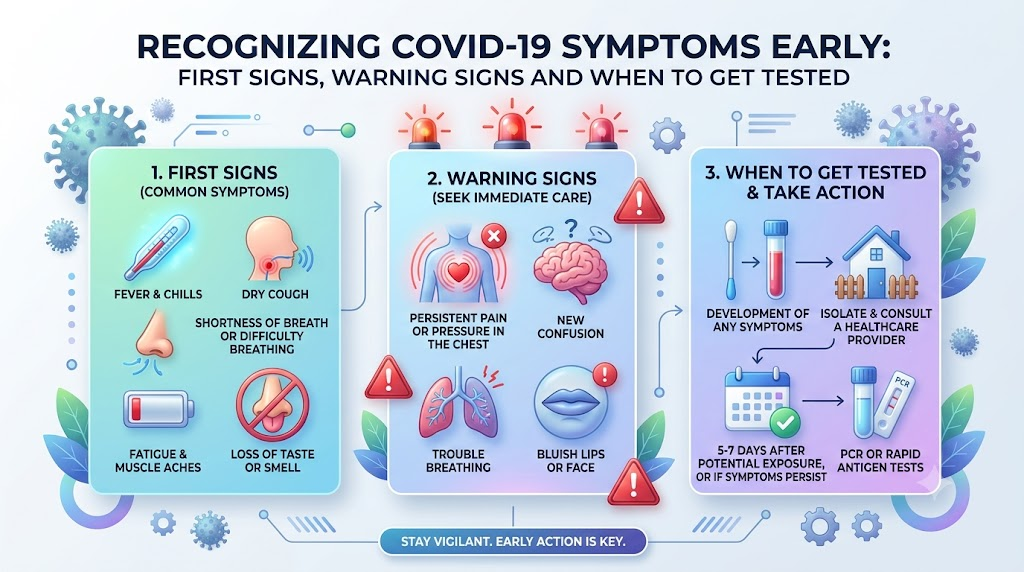
COVID-19 is an illness that can affect the lungs and other parts of the body. It is caused by a virus called SARS-CoV-2. Some people develop mild symptoms, while others may become seriously ill.
Recognizing COVID-19 symptoms early can help people take the right steps. It can also reduce the chance of spreading the infection to others. Early action is especially important for older adults and people with certain health conditions.
Symptoms can vary from person to person. Some people develop a sore throat or cough first. Others may notice fever, tiredness, or body aches. A few people may have no clear symptoms at all.
Knowing the early signs can help you make better health decisions. This article explains common symptoms, testing options, and warning signs. ASKDOCTORLIVE also offers a place to explore general health information and build health awareness.
What Is COVID-19?
COVID-19 is an infectious illness caused by the SARS-CoV-2 virus. It mainly affects the respiratory system, which includes the nose, throat, and lungs.
The virus can spread when an infected person releases tiny particles while breathing, talking, coughing, or sneezing. Other people may breathe in these particles and become infected.
COVID-19 can affect different parts of the body. Some people develop breathing problems, while others experience digestive issues or body aches.
The level of illness can also vary. Some people have mild symptoms and recover at home. Others may need medical care or hospital treatment.
Symptoms alone cannot confirm COVID-19. Other illnesses, such as flu and common colds, can cause similar problems. Testing may be needed to identify the infection.
Early COVID-19 Symptoms to Watch For
The early symptoms of COVID-19 can look different in each person. Some symptoms may appear alone, while others develop together.
Common COVID-19 symptoms include:
- Fever or chills: You may feel unusually hot, cold, or shaky.
- Sore throat: Your throat may feel painful or irritated.
- Cough: You may develop a new or repeated cough.
- Runny or blocked nose: Your nose may feel stuffy or produce extra mucus.
- Unusual tiredness: You may feel weak even after resting.
- Headache: You may notice pain or pressure in your head.
- Body aches: Your muscles may feel sore or uncomfortable.
- Changes in taste or smell: Food may taste different, or smells may become weaker.
- Nausea or vomiting: You may feel sick or vomit.
- Diarrhea: You may have loose or watery bowel movements.
Not everyone develops all these symptoms. Some people experience only a few mild signs.
The following table explains common symptoms and what to watch for.
Table 1: Common COVID-19 Symptoms and What They May Feel Like
| Symptom | How It May Feel | What to Watch For |
|---|---|---|
| Fever or chills | Feeling hot, cold, or shivery | New or continuing fever |
| Sore throat | Pain or irritation when swallowing | New throat discomfort |
| Cough | Repeated coughing | Cough that worsens |
| Fatigue | Unusual tiredness | Difficulty with normal activities |
| Headache | Pain or pressure in the head | New or persistent headache |
| Digestive symptoms | Nausea, vomiting, or diarrhea | Symptoms that continue or worsen |
These symptoms can also occur with other infections. Pay attention to new symptoms, especially after known exposure.
How COVID-19 Symptoms May Develop
COVID-19 symptoms do not follow the same pattern in everyone. Some people notice changes within a short time. Others develop symptoms more gradually.
The illness may begin with mild signs. A person might first notice a sore throat, headache, or unusual tiredness.
Other symptoms may appear later. These can include coughing, fever, nasal congestion, and body aches.
Some people improve with time and recover without serious problems. Others may develop worsening symptoms that need medical attention.
A person can also carry the virus without noticing any symptoms. This means someone may have an infection without feeling sick.
Do not depend on a fixed symptom timeline. The course of illness can change with age, health conditions, and other factors.
Mild Symptoms That People Often Overlook
Mild COVID-19 symptoms can easily be mistaken for an ordinary cold. People may continue their daily activities because they do not feel seriously ill.
However, new or unexplained symptoms deserve attention.
Some mild signs include:
- A slight sore throat: Your throat may feel dry or uncomfortable.
- Mild fever: Your body temperature may rise slightly.
- Headaches: You may notice a new headache during the day.
- Nasal congestion: Your nose may become blocked.
- Unusual tiredness: Normal activities may feel more tiring.
- Body aches: You may feel soreness without heavy physical activity.
- Mild stomach problems: You may experience nausea or loose stools.
These symptoms do not always mean COVID-19. They can also happen with other viral infections.
Pay extra attention if symptoms appear after contact with someone who has COVID-19. Consider testing and reduce close contact with others while unwell.
COVID-19 Symptoms Compared With Cold and Flu
COVID-19, influenza, and common colds are respiratory illnesses. They can cause several similar symptoms.
A cold often causes a runny nose, sneezing, and a sore throat. Flu may cause fever, chills, body aches, and strong tiredness.
COVID-19 can also cause these symptoms. Some people experience changes in taste or smell. Others develop breathing problems or digestive symptoms.
However, these patterns are not reliable ways to identify an infection. A person cannot always tell COVID-19 apart from flu or a cold by symptoms alone.
Testing can help identify the cause. Some laboratory tests can check for more than one respiratory virus.
If symptoms are severe or you have health risks, contact a healthcare professional.
When Should You Get Tested for COVID-19?
Testing can help identify COVID-19 and guide your next steps. It may be useful when you develop possible symptoms or have been exposed to an infected person.
Consider testing in these situations:
- You develop a new sore throat, cough, or fever.
- You experience unexplained body aches or tiredness.
- You have close contact with someone who has COVID-19.
- You live with someone at higher risk of severe illness.
- A healthcare professional recommends testing.
There are two common types of COVID-19 tests.
Rapid Antigen Tests
Rapid antigen tests look for certain proteins from the virus. They can provide results within a short time. Some are available for home use.
These tests are convenient, but they may miss an infection during its early stages. A negative result does not always mean you are free from COVID-19.
Molecular Tests (PCR)
Molecular tests look for genetic material from the virus. Polymerase chain reaction (PCR) is one common type.
These tests are generally more sensitive than rapid antigen tests. They may be performed in a laboratory or at a testing facility.
Understanding Test Results
A positive result usually means the virus has been detected. Follow health guidance and take steps to protect others.
A negative rapid test may not rule out infection. If you have symptoms, follow the test instructions about repeat testing. For many home antigen tests, another test is recommended after 48 hours.
Contact a healthcare professional if symptoms continue or you are unsure about your results.
Who Is at Higher Risk of Severe COVID-19?
Anyone can develop serious COVID-19. However, some people have a greater chance of severe illness.
These groups may include:
- Older adults: The risk of severe illness increases with age.
- People with heart conditions: Certain heart problems can increase health risks.
- People with lung disease: Chronic breathing conditions may increase the risk.
- People with diabetes: Poorly controlled blood sugar can affect health.
- People with kidney or liver disease: These conditions may increase complications.
- People with weakened immune systems: Their bodies may have more difficulty fighting infections.
- People with obesity: Certain weight-related health risks can affect illness severity.
- Pregnant individuals: Pregnancy can increase the risk of severe respiratory illness.
Having a risk factor does not mean someone will develop severe COVID-19. It means extra care may be needed.
People in higher-risk groups should contact a healthcare professional early after symptoms appear. Some treatments work best when started within a few days.
Do not wait for symptoms to become severe before asking for medical advice.
COVID-19 Warning Signs That Need Immediate Medical Attention
Most people with mild COVID-19 do not need emergency treatment. However, some warning signs require immediate medical attention.
Watch for these serious symptoms:
- Difficulty breathing: The person struggles to breathe or feels severe breathlessness.
- Persistent chest pain or pressure: Chest discomfort continues or does not go away.
- New confusion: The person becomes unusually confused or cannot think clearly.
- Inability to wake: The person cannot wake up or stay awake.
- Changes in skin or lips: The lips, skin, or nail beds may look pale, gray, or bluish.
These signs can indicate a serious medical problem. Do not wait for a COVID-19 test result.
Contact local emergency services or seek emergency care immediately. Follow instructions from emergency professionals.
Other severe or rapidly worsening symptoms also need urgent medical assessment.
What to Do When You Notice Possible COVID-19 Symptoms
Taking sensible steps can protect your health and reduce the spread of infection.
Follow these practical steps when you notice possible symptoms:
1. Stay Home When Unwell
Reduce close contact with other people while you are sick. Avoid unnecessary visits and crowded places.
2. Consider Getting Tested
Use an appropriate COVID-19 test. Follow the instructions and local health guidance.
3. Wear a Well-Fitting Mask
Wear a suitable mask when sharing indoor spaces with others. This is especially helpful around people at higher risk.
4. Improve Indoor Ventilation
Open windows when possible. Better airflow can help reduce the amount of virus in shared indoor spaces.
5. Cover Coughs and Sneezes
Use a tissue or your elbow when coughing or sneezing. Dispose of used tissues properly.
6. Wash Your Hands
Wash your hands regularly with soap and water. Avoid touching your eyes, nose, and mouth with unwashed hands.
7. Monitor Your Symptoms
Pay attention to changes in your breathing, temperature, and energy levels.
8. Contact a Healthcare Professional
Seek advice if symptoms become worse or you have risk factors for severe illness.
Do not rely on unproven home remedies. Avoid taking prescription medicines without medical advice.
How to Protect Family Members and Other People
COVID-19 can spread between people through shared air. Taking simple precautions can lower the risk of infection.
If you feel unwell, try to limit close contact with family members. Stay in a separate room when possible.
Wear a well-fitting mask in shared spaces when appropriate. This can help reduce the spread of respiratory particles.
Keep rooms well ventilated. Open windows or use suitable air-cleaning systems when available.
Wash your hands after coughing, sneezing, or handling used tissues. Clean frequently touched surfaces when needed.
Avoid visiting older adults or people with weakened immune systems while you have symptoms.
Follow current local public health advice about staying home and returning to normal activities. Guidance may differ between locations and health situations.
Small steps can help protect people around you, especially those at higher risk.
How AskDoctorLive Can Support Health Awareness
Good health information helps people make informed decisions. Understanding common symptoms can also help readers know when professional care may be needed.
AskDoctorLive.com provides a place for readers to explore general healthcare information. Learning about common illnesses, symptoms, and health concerns can improve everyday health awareness.
Readers should use reliable medical guidance when making health decisions. Online information cannot replace a proper medical examination or diagnosis.
If symptoms are severe, contact a healthcare professional rather than relying only on online information.
Frequently Asked Questions
1. What are the earliest symptoms of COVID-19?
Early symptoms may include a sore throat, fever, cough, headache, or unusual tiredness. Some people first notice a runny nose or body aches. Symptoms vary between individuals. Not everyone develops the same signs, and testing may be needed to confirm an infection.
2. Can COVID-19 start with only a sore throat?
Yes. Some people notice a sore throat before other symptoms appear. Others may have only mild throat discomfort. However, a sore throat can also result from allergies or other infections. Consider testing if COVID-19 is possible, especially after a known exposure.
3. Can someone have COVID-19 without a fever?
Yes. Fever is not present in every COVID-19 infection. Some people experience coughing, headaches, tiredness, or nasal congestion without a raised temperature. Others may have no noticeable symptoms. The absence of fever does not rule out COVID-19.
4. How can I tell COVID-19 apart from a common cold?
It can be difficult to tell them apart because many symptoms overlap. Both can cause coughing, sore throats, and blocked noses. COVID-19 may also affect taste or smell, but this is not always present. Testing is a more reliable way to identify the infection.
5. When should I take a COVID-19 test after symptoms begin?
If you develop possible COVID-19 symptoms, consider taking a test promptly. A rapid antigen test can be used at home. If the result is negative, follow the manufacturer’s instructions about repeat testing. Contact a healthcare professional if symptoms continue or you have health risks.
6. Can a rapid COVID-19 test be negative even when someone is infected?
Yes. Rapid antigen tests may miss an infection, especially during its early stages. A negative result does not completely rule out COVID-19. Follow the recommended repeat-testing instructions or ask a healthcare professional whether a molecular test is appropriate.
7. Can COVID-19 cause stomach problems?
Yes. Some people experience nausea, vomiting, or diarrhea during COVID-19. Digestive symptoms may occur with or without common respiratory symptoms. However, stomach problems can have many other causes. Seek medical advice if symptoms are severe, continue, or cause signs of dehydration.
8. Who is more likely to develop severe COVID-19?
Older adults and people with certain health conditions have a higher risk. These include heart disease, lung disease, diabetes, kidney disease, and weakened immunity. Pregnancy may also increase certain risks. People in these groups should seek medical advice early when symptoms develop.
9. Which COVID-19 symptoms need emergency medical attention?
Difficulty breathing, persistent chest pain, new confusion, and inability to wake or stay awake are serious warning signs. Pale, gray, or bluish lips or skin also need urgent attention. Contact local emergency services immediately if these symptoms appear. Do not wait for test results.
10. Can a person spread COVID-19 before noticing symptoms?
Yes. A person may spread the virus before symptoms begin. Some infected people never develop noticeable symptoms but can still spread the infection. This is why ventilation, suitable masks, hand hygiene, and other preventive steps are useful when infection is possible.
Conclusion
Recognizing COVID-19 symptoms early can help people take sensible steps. A sore throat, cough, fever, headache, or unusual tiredness may be an early sign.
However, symptoms alone cannot confirm COVID-19. Testing can help identify the infection and guide further action.
People should stay home when unwell and take steps to protect others. Those at higher risk should contact a healthcare professional early.
Never ignore serious warning signs such as breathing difficulty or chest pressure. Seek emergency medical care immediately when these symptoms appear.
Learning about COVID-19 symptoms helps individuals and families make informed health decisions. Visit AskDoctorLive.com to explore more general health information and improve your understanding of common health concerns.