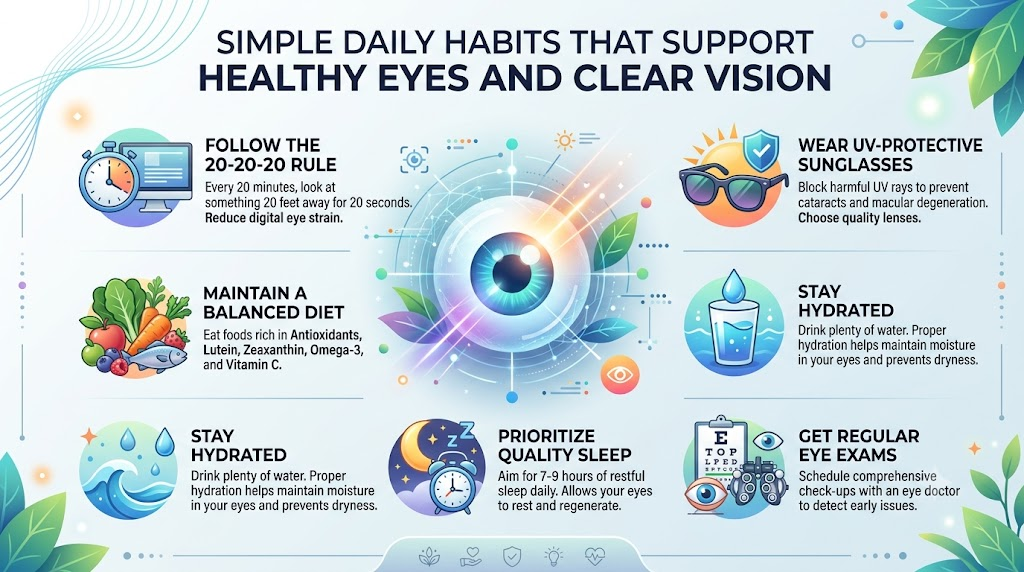
Healthy vision helps us read, learn, work, walk, and enjoy life. Our eyes also work hard during screen use and outdoor activities. Small daily habits can support eye comfort and eye health. These habits include good lighting, screen breaks, safe eye care, and healthy food. They can help children, adults, and older people. Healthy habits do not replace professional eye care. For health information and doctor guidance, visit ASKDOCTORLIVE.
Why Healthy Vision Matters
Good vision supports many daily tasks. Children need clear vision for learning and play. Adults need it for work, driving, reading, and using devices. Older adults also rely on vision for safe movement.
Eye health can change with age. Some health problems can also affect the eyes. So, daily vision care is useful at every age. Good habits can support comfort, safety, and healthy eyes.
Give Your Eyes Regular Screen Breaks
Long screen use can make eyes feel tired. This is often called digital eye strain. Common signs include dryness, tired eyes, blurred vision, and headaches.
A simple habit is the 20-20-20 rule. After about 20 minutes, look far away for 20 seconds. This can give the eyes a short break.
Screen breaks may improve comfort during long tasks. However, they do not prevent every eye problem. Ongoing symptoms should be discussed with an eye professional.
Use Good Lighting
Good lighting can make reading more comfortable. It can also reduce strong glare from screens. Try to keep your work area bright enough for easy viewing.
Avoid placing a bright light directly behind or beside your screen. Strong reflections can make screens harder to see. Very dark rooms may also feel uncomfortable during screen use.
Simple lighting changes can support better daily eye care. Adjust the light when your eyes feel tired.
Keep a Comfortable Screen Distance
Screen position can affect visual comfort. Keep your screen at a comfortable distance. You should be able to read without leaning too close.
The screen should also feel easy to view. Avoid placing it at an awkward height or angle. Small changes can make long screen tasks more comfortable.
Take breaks during long work sessions. Also change your focus from near tasks when possible.
Blink Often
Blinking helps spread tears across the eye surface. This helps keep the eyes moist and comfortable. People may blink less while focusing on screens.
Try to blink naturally during long screen sessions. Short breaks can also help. Look away from the screen and relax your eyes.
Do not ignore ongoing dryness or irritation. An eye doctor can check the cause when symptoms continue.
Protect Your Eyes From Sunlight
Strong sunlight exposes the eyes to ultraviolet rays. UV rays can affect eye health over time. Simple outdoor protection can help reduce this exposure.
Sunglasses with suitable UV protection can be useful outdoors. A hat or cap can also provide extra shade. These habits are helpful during bright outdoor activities.
Eye protection does not prevent every eye condition. Still, it is a useful part of daily eye care.
Eat for Overall Eye Health
A balanced diet supports the whole body. It also provides nutrients that help normal body function. Healthy eating is part of healthy vision habits.
Useful food choices include:
- Leafy green vegetables
- Fruits
- Eggs
- Fish
- Nuts
- Beans
- Whole grains
No single food can protect against every eye disease. A varied diet is a better daily habit. Supplements are also not needed by everyone.
Stay Hydrated
Water supports normal body functions. Some people may notice more dryness when they do not drink enough. Regular fluids can support general health.
However, extra water does not treat every dry-eye problem. Ongoing dryness may have many causes. An eye professional can assess persistent symptoms.
Get Enough Sleep
Sleep supports overall health and daily comfort. Poor sleep can leave the eyes feeling tired. It may also make long screen tasks feel harder.
Try to keep a regular sleep routine. Give your eyes a break from screens before bedtime. Good sleep habits can support daily eye comfort.
Use Contact Lenses Safely
Contact lenses need careful handling. Always wash your hands before touching your lenses. Follow the care instructions given for your lenses.
Use the recommended lens solution. Replace lenses as directed by your eye professional or lens instructions. Never share contact lenses with another person.
Good contact lens hygiene can reduce avoidable eye risks. Redness, pain, or vision changes need professional attention.
Never Share Eye Makeup
Sharing eye makeup can spread germs. This can increase the risk of eye irritation or infection. Keep personal eye products for your own use.
Keep makeup tools clean. Replace old products according to their product instructions. Avoid using products that look changed or damaged.
Never use unsafe home remedies around the eyes. The eye is delicate and needs gentle care.
Protect Your Eyes During Work and Sports
Eye safety matters during many activities. Sports, repairs, and construction work may involve flying objects. Dust and other particles can also reach the eyes.
Protective eyewear can help during risky tasks. This can include home repairs and laboratory work. Follow safety advice for the activity.
Do not look directly at strong sunlight. Eye protection is especially important during activities with a higher injury risk.
Keep Your Hands Away From Your Eyes
Clean hands are important for good eye hygiene. Touching the eyes with dirty hands can move germs. Frequent rubbing can also increase irritation for some people.
Try not to rub your eyes often. If something bothers your eye, use gentle care. Persistent irritation should be checked by an eye professional.
Do Not Ignore Changes in Vision
Some vision changes need urgent medical attention. Sudden symptoms can have serious causes. Do not wait for severe symptoms to disappear.
Seek urgent care for signs such as:
- Sudden vision loss
- New flashes
- Many new floaters
- A dark curtain or shadow
- Severe eye pain
- Sudden double vision
- Significant eye injury
- Severe redness with vision changes
Sudden or major vision changes need prompt medical assessment.
Regular Eye Exams
Regular eye checks can help find vision problems. They may also help detect some eye conditions. The right exam schedule can differ between people.
Age, health, family history, and symptoms can affect exam needs. An eye doctor can suggest suitable care based on these factors.
Do not wait for poor vision before seeking an eye check. ASKDOCTORLIVE.COM can help people prepare useful questions for a doctor.
Eye Health for Children
Children need simple and safe eye habits. Outdoor activity can support an active lifestyle. Good lighting can also make reading more comfortable.
Children should use screens with regular breaks. Eye protection is also useful during sports. Vision checks may be advised as children grow.
Children may not always notice vision problems. Parents and teachers can watch for changes. New concerns should be discussed with an eye professional.
Eye Health for Adults
Adults often spend many hours on screens. Work can also involve reading or close tasks. Regular breaks can support eye comfort.
Adults should also use good lighting at work. Outdoor UV protection is another useful habit. Contact lens users should follow safe lens care.
Healthy food and regular eye checks also matter. These habits support overall vision care without replacing medical care.
Eye Health for Older Adults
Some eye conditions become more common with age. This does not mean every older adult will develop one. Regular eye care can help monitor changes.
New vision problems should not be ignored. An eye professional can assess changes and explain possible causes.
Good lighting can also support safer daily activities. Outdoor protection remains useful at every age.
Health Conditions That Can Affect Vision
Some health conditions can affect eye health. Examples include diabetes, high blood pressure, and thyroid problems. Some autoimmune conditions can also affect the eyes.
Managing overall health can support eye health. Follow the care plan given by the treating medical team. Regular eye checks may also be useful.
Do not assume a vision change comes from screen use. New or ongoing changes need proper assessment.
Common Eye Care Mistakes
Some simple habits can create avoidable risks. Common mistakes include:
- Rubbing the eyes often
- Sharing contact lenses
- Using expired eye products
- Ignoring sudden vision changes
- Using screens without breaks
- Looking directly at strong sunlight
- Using unapproved home remedies
Changing these habits can support safer eye care. Professional advice is important when symptoms continue.
One Simple Daily Eye Care Comparison
| Daily Habit | How It May Help |
|---|---|
| Screen breaks | May reduce eye strain |
| Good lighting | Can improve visual comfort |
| UV protection | Helps reduce UV exposure |
| Healthy food | Supports overall health |
| Eye exams | Can help detect vision problems |
When Should Someone See an Eye Doctor?
Professional eye care may be needed for new vision changes. Persistent blurred vision also needs attention. Repeated eye pain or redness should not be ignored.
Frequent headaches with vision problems may need assessment. Difficulty seeing clearly can also have many causes. An eye doctor can check these concerns.
Sudden vision loss needs urgent medical care. Severe eye pain or injury also needs urgent attention. New flashes or many floaters should be checked promptly.
How ASKDOCTORLIVE.COM Can Help
Finding clear health information can be useful before a doctor visit. ASKDOCTORLIVE.COM helps people explore health topics and prepare medical questions.
The platform also offers online doctor guidance for suitable non-emergency concerns. This can help people understand what questions to ask.
Online care cannot replace an emergency eye check. It also cannot replace an in-person exam when one is needed. Sudden or severe eye symptoms need urgent medical care.
Practical Example
A person spends many hours on a computer each day. Their eyes feel tired by evening. They start taking screen breaks and improve their lighting.
Their symptoms continue despite these changes. They then seek professional eye care. This shows why healthy habits and proper medical assessment both matter.
Frequently Asked Questions
1. How can I protect my vision every day?
Take screen breaks and use good lighting. Protect your eyes outdoors and follow safe eye habits.
2. Does screen time affect eye health?
Long screen use may cause eye strain. Regular breaks can help improve comfort.
3. What is the 20-20-20 rule for eye care?
After about 20 minutes, look far away. Look for about 20 seconds before returning to work.
4. How can I protect my eyes from sunlight?
Use suitable UV-protective sunglasses outdoors. A hat or cap can also provide shade.
5. What foods support healthy eyes?
A balanced diet supports overall health. Include vegetables, fruits, eggs, fish, nuts, beans, and whole grains.
6. Is blinking important during screen use?
Yes. Blinking helps spread tears across the eye surface. People may blink less while using screens.
7. How can contact lens users protect their eyes?
Wash your hands before handling lenses. Follow the recommended lens care instructions.
8. How often should someone have an eye exam?
The right schedule differs between people. Age, health, family history, and symptoms can affect exam needs.
9. What eye symptoms need urgent medical attention?
Sudden vision loss, severe eye pain, major injury, and sudden vision changes need urgent care.
10. Can daily habits prevent all eye diseases?
No. Healthy habits can support eye health. They cannot prevent every eye disease.
Final Thoughts
Small daily habits can support eye comfort and overall eye health. Screen breaks, good lighting, safe outdoor habits, and healthy food can help.Contact lens hygiene and eye safety are also important. Regular eye checks can help find vision problems early.Healthy habits do not replace professional eye care. Seek help for persistent symptoms or sudden vision changes. For health information and doctor guidance, ASKDOCTORLIVE.COM can help people prepare for better healthcare discussions.