Introduction
A peptic ulcer is a sore that develops inside the stomach or upper small intestine. It happens when the protective lining becomes damaged. These sores are also called stomach ulcers or duodenal ulcers.
People with ulcers may experience burning stomach pain, nausea, bloating, or indigestion. Some people may have no clear symptoms. The discomfort can affect eating, sleeping, and daily activities.
Two common causes are Helicobacter pylori (H. pylori) infection and regular use of certain pain medicines. Finding the actual cause is important for proper treatment.
The good news is that most peptic ulcers can heal with suitable medical care. Medicines, safe eating habits, and healthy lifestyle changes can support recovery.
At AskDoctorLive, readers can explore health information to better understand common medical concerns. This article explains practical tips for ulcer management, treatment options, food choices, and warning signs that need medical attention.
Understand What Causes Peptic Ulcers
Peptic ulcers develop when the protective lining of the stomach or upper small intestine becomes damaged. Stomach ulcers form inside the stomach. Duodenal ulcers develop in the first part of the small intestine.
The digestive system normally protects itself from stomach acid. However, certain infections and medicines can weaken this protection.
H. pylori infection
H. pylori is a type of bacteria that can live in the stomach. It can damage the protective lining and cause inflammation. Over time, this may lead to an ulcer.
Regular use of certain pain medicines
Non-steroidal anti-inflammatory drugs (NSAIDs) can increase ulcer risk. These medicines include ibuprofen, aspirin, and naproxen. Regular use may reduce the stomach’s natural protection.
Other possible causes
Less common causes include certain medical conditions that increase stomach acid. Some serious illnesses may also affect the digestive lining.
Spicy food and emotional stress are not the main causes of most peptic ulcers. However, they may worsen symptoms in some people.
Understanding the cause helps doctors choose suitable treatment.
Recognize Common Ulcer Symptoms
Peptic ulcer symptoms can differ from person to person. Some people experience mild discomfort. Others may have repeated stomach pain that affects daily activities.
The most common symptom is burning or aching pain in the upper abdomen. It may occur between meals or during the night. Some people feel better or worse after eating.
Other possible symptoms include:
- Nausea or an upset stomach.
- Bloating and frequent belching.
- Feeling full after eating small amounts.
- Reduced appetite.
- Indigestion or stomach discomfort.
- Occasional vomiting.
Some people with peptic ulcers have very few symptoms. Others may not notice any discomfort until complications develop.
These symptoms do not always mean someone has an ulcer. Other digestive conditions can cause similar problems. Consult a doctor if stomach discomfort keeps returning or does not improve.
Get the Right Medical Diagnosis
Correct diagnosis is an important part of ulcer management. Stomach pain can have many causes. A doctor needs to identify the reason before choosing treatment.
The doctor may ask about your symptoms, eating habits, and medical history. They may also review your medicines. Tell them about painkillers and other drugs you use regularly.
H. pylori breath test
This test checks for signs of H. pylori infection. You provide a breath sample after drinking a special test liquid. The test can help identify an active infection.
Stool test
A stool sample can help detect H. pylori. Doctors may use this test to check for infection or confirm that treatment worked.
Upper gastrointestinal endoscopy
An endoscopy allows a doctor to examine the upper digestive system. A thin tube with a small camera passes through the mouth. It helps doctors look for ulcers and other problems.
Sometimes, the doctor may collect a small tissue sample. This is called a biopsy.
The right test depends on your symptoms, age, medical history, and risk factors. Follow your doctor’s advice about testing and preparation.
Follow the Prescribed Ulcer Treatment Plan
Ulcer treatment depends on its cause and severity. Doctors choose medicines based on the diagnosis. The main goal is to reduce irritation and allow the damaged lining to heal.
Proton pump inhibitors
Proton pump inhibitors (PPIs) reduce the amount of acid produced by the stomach. They give the ulcer a better chance to heal. Doctors commonly prescribe these medicines for peptic ulcers.
Other acid-reducing medicines
Some patients may receive other medicines that reduce stomach acid. The choice depends on the person’s condition and treatment needs.
Antibiotics for H. pylori
H. pylori infection usually requires a combination of antibiotics and acid-reducing medicine. Some treatment plans include additional medicines. Doctors select the right combination based on medical needs and local antibiotic resistance.
Always complete the prescribed course. Stopping antibiotics early may cause treatment failure. Never use leftover antibiotics from an earlier illness.
Your doctor may recommend another breath or stool test after treatment. This helps confirm that the infection has cleared.
Do not stop treatment simply because your symptoms improve. Follow the complete medical plan.
Manage Medicines That May Cause Ulcers
Certain pain medicines can damage the stomach lining. NSAIDs are a common reason for medicine-related ulcers. The risk may increase with regular use or higher doses.
Examples include:
- Ibuprofen.
- Naproxen.
- Aspirin.
If you have an ulcer, discuss these medicines with your doctor. They may stop or change the medicine when appropriate. They may also adjust the dose or recommend protective treatment.
Some patients need to continue aspirin for heart or blood vessel protection. In such cases, doctors may plan safer ways to manage ulcer risk.
Never stop prescribed aspirin or other important medicines without medical advice. Avoid combining different painkillers without guidance.
Safe medicine use is an important part of stomach ulcer management.
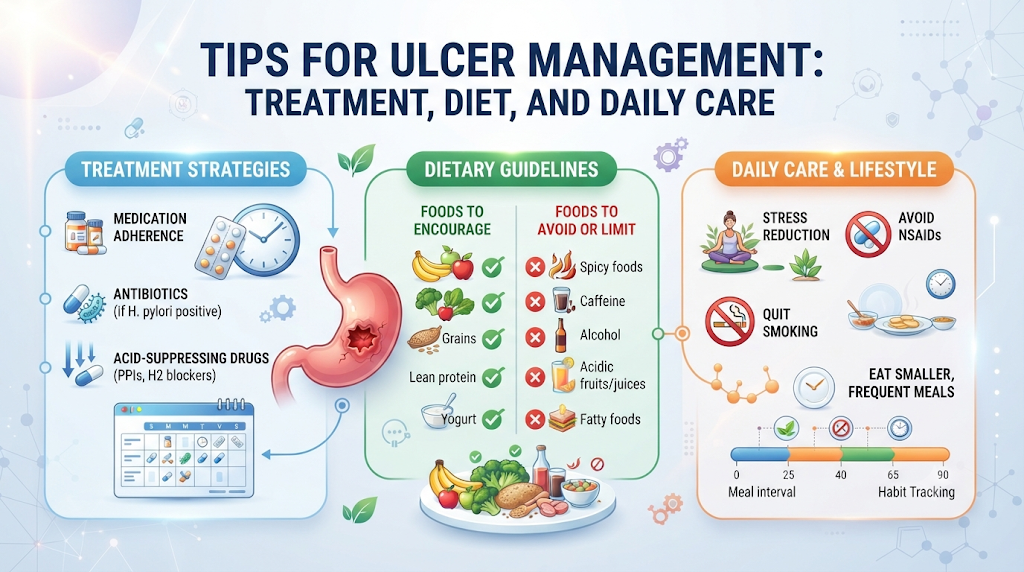
Choose Foods That Support General Digestive Health
Food choices can affect how comfortable you feel during ulcer recovery. However, no special diet has been proven to cure peptic ulcers.
A balanced diet supports general health. It also provides nutrients needed by the body. Choose foods that your stomach can tolerate comfortably.
Useful food choices may include:
- Fruits: Bananas, apples, and other fruits you tolerate.
- Vegetables: Carrots, spinach, and cooked vegetables.
- Whole grains: Oats, brown rice, and whole-wheat foods.
- Protein: Eggs, fish, beans, lentils, and tofu.
- Dairy products: Milk or curd if they suit your digestion.
Some people notice more discomfort after spicy, fatty, or acidic foods. Coffee and other drinks may also trigger symptoms in certain individuals.
Notice how different foods affect your body. Avoid only those that clearly worsen your symptoms.
Do not follow an unnecessarily restrictive diet. Food changes should support medical care, not replace it.
Develop Healthy Eating Habits
Eating habits can influence digestive comfort. Some people feel better when they eat smaller meals. Others prefer their usual meal pattern.
Choose a routine that feels comfortable for your body. Eat slowly and avoid rushing through meals. Chew food properly before swallowing.
Large meals may increase discomfort in some people. If eating close to bedtime causes symptoms, try having dinner earlier.
Keep track of foods that cause repeated discomfort. This can help you discuss personal triggers with your doctor.
There is no single meal schedule for everyone. Milk, bland foods, and home remedies cannot reliably heal ulcers.
Follow a balanced eating pattern alongside your prescribed treatment.
Make Lifestyle Changes That Support Recovery
Healthy lifestyle habits can support general health during ulcer treatment. They may also help reduce symptoms in some people.
Stop smoking
Smoking can interfere with ulcer healing. It may also increase the risk of ulcer complications. Quitting smoking is an important step toward better digestive health.
Ask a healthcare professional about suitable quitting support.
Limit alcohol
Alcohol may irritate the stomach lining. It can also worsen discomfort for some people. Avoid or limit alcohol, especially if it triggers symptoms or conflicts with your medicines.
Manage daily stress
Stress is not the main cause of most peptic ulcers. However, it may affect how some people experience digestive symptoms.
Try simple activities such as walking, breathing exercises, or relaxation. Choose methods that fit your daily routine.
Follow medical advice
Take medicines as prescribed. Attend follow-up appointments and complete recommended tests. Tell your doctor if symptoms continue or new problems develop.
Lifestyle changes support treatment but cannot replace prescribed ulcer medicines.
Understand Possible Ulcer Complications
Most peptic ulcers improve with proper medical treatment. However, untreated or severe ulcers can sometimes cause serious problems.
Bleeding ulcers
An ulcer can damage a blood vessel and cause bleeding. Some people may notice black, tarry stools. Others may vomit blood or material that looks like coffee grounds.
Perforation
A perforation happens when an ulcer creates a hole in the stomach or intestinal wall. This can cause sudden, severe abdominal pain. It is a medical emergency.
Blockage
Swelling or scarring near an ulcer can sometimes block food from passing normally. This may cause repeated vomiting, fullness, and difficulty eating.
Watch for these important warning signs:
- Vomiting blood.
- Black, tarry stools.
- Sudden and severe abdominal pain.
- Fainting or severe dizziness.
- Vomit that looks like coffee grounds.
Seek immediate emergency medical care if any of these signs occur. Do not wait for symptoms to improve at home.
Know When to Seek Medical Advice
Recurring stomach discomfort should not be ignored. A doctor can check whether an ulcer or another digestive condition is causing the symptoms.
Arrange a medical assessment if you experience repeated upper abdominal pain. You should also seek advice for ongoing indigestion or unexplained nausea.
Other symptoms that need medical review include:
- Repeated vomiting.
- Unexplained weight loss.
- Difficulty swallowing.
- Reduced appetite.
- Symptoms that continue after treatment.
- Repeated stomach discomfort that affects daily life.
A gastroenterologist is a doctor who specializes in digestive system conditions. They can assess ongoing or complicated ulcer problems.
People with diagnosed ulcers should attend follow-up visits. If symptoms continue after treatment, further assessment may be needed.
Seek emergency care for bleeding signs or sudden severe abdominal pain. Early medical attention can help prevent serious complications.
Common Ulcer Causes and Medical Management
Peptic ulcers can develop for different reasons. The following table explains common causes and possible medical approaches.
| Possible Cause | How It Affects the Stomach or Intestine | Medical Management |
|---|---|---|
| H. pylori infection | Damages the protective lining and causes inflammation. | Prescribed antibiotics with acid-reducing medicines. |
| NSAID use | Weakens natural protection against stomach acid. | Doctor-guided medicine changes and acid protection when needed. |
| Less common causes | Certain medical conditions may increase acid or damage the lining. | Further tests and treatment based on the underlying cause. |
Treatment decisions depend on medical assessment. Do not start or change medicines without professional guidance.
Daily Habits That Support Ulcer Management
Healthy daily habits can make ulcer care easier. They may also help reduce discomfort during recovery.
| Daily Habit | Helpful Action | Important Reminder |
|---|---|---|
| Balanced eating | Include fruits, vegetables, grains, and suitable protein. | No special diet cures an ulcer. |
| Personal food triggers | Notice foods and drinks that worsen symptoms. | Avoid unnecessary food restrictions. |
| Smoking cessation | Seek support to stop smoking. | Smoking may interfere with ulcer healing. |
| Alcohol limits | Avoid or limit alcohol if it causes discomfort. | Consider medicine interactions and medical advice. |
| Medicine safety | Take prescribed medicines correctly. | Do not stop essential medicines yourself. |
| Stress management | Try walking, relaxation, and regular sleep. | Stress is not the main cause of most ulcers. |
| Follow-up care | Attend appointments and recommended tests. | Confirm that treatment has worked when advised. |
Frequently Asked Questions
1. What is the best way to manage a stomach ulcer?
The best approach is to identify the cause and follow medical treatment. Doctors may prescribe acid-reducing medicines or antibiotics for H. pylori infection. Avoid medicines that may worsen ulcers unless your doctor approves them. Balanced eating and healthy habits can also support recovery.
2. What are the most common causes of peptic ulcers?
The two main causes are H. pylori infection and regular use of NSAID pain medicines. Examples include ibuprofen, aspirin, and naproxen. These factors can damage the protective stomach lining. A doctor can help identify the cause and recommend suitable treatment.
3. Can certain foods make ulcer symptoms worse?
Yes, some foods may increase discomfort in certain people. Spicy foods, fatty meals, coffee, and acidic foods can trigger symptoms for some patients. However, triggers differ between individuals. Notice which foods affect you and discuss ongoing symptoms with your doctor.
4. Is there a special diet for people with stomach ulcers?
No special diet has been proven to cure stomach ulcers. A balanced diet with fruits, vegetables, whole grains, and suitable protein supports general health. Choose foods you tolerate comfortably. Avoid unnecessary restrictions and follow your prescribed medical treatment.
5. How long does a stomach ulcer take to heal?
Healing time depends on the ulcer’s cause, size, and treatment. Many ulcers heal within several weeks with appropriate medicine. H. pylori infections also require a complete antibiotic course. Follow-up testing may be needed to confirm that the infection has cleared.
6. Can H. pylori infection cause stomach ulcers?
Yes, H. pylori is a common cause of peptic ulcers. This bacteria can damage the protective stomach lining. Doctors may use breath or stool tests to detect it. Treatment usually includes prescribed antibiotics and acid-reducing medicines.
7. Should people with ulcers avoid painkillers like ibuprofen?
Ibuprofen and similar NSAIDs can increase ulcer risk and worsen existing ulcers. Speak with your doctor before using these medicines. Never stop prescribed aspirin or other important medicines without medical advice. Your doctor can discuss safer options for managing pain.
8. Can stress make ulcer symptoms worse?
Stress is not the main cause of most peptic ulcers. However, it may increase discomfort or affect digestive symptoms in some people. Walking, relaxation, and regular sleep may help manage daily stress. Medical treatment remains important for healing an ulcer.
9. What are the warning signs of a bleeding ulcer?
Warning signs include black, tarry stools and vomiting blood. Vomit may also look like coffee grounds. Fainting, severe dizziness, or sudden weakness can occur with blood loss. Seek immediate emergency medical care if these symptoms appear.
10. When should someone with ulcer symptoms see a gastroenterologist?
See a gastroenterologist if stomach pain keeps returning or does not improve. Repeated vomiting, unexplained weight loss, and difficulty swallowing also need medical assessment. People with ongoing symptoms after treatment may need further tests. Seek emergency care for bleeding or sudden severe abdominal pain.
Final Thoughts
Managing a peptic ulcer starts with finding its actual cause. H. pylori infection and NSAID use need different treatment approaches. Correct diagnosis helps doctors choose suitable medicines.
Take prescribed medicines as directed. Complete the full H. pylori treatment course when needed. Follow safe eating habits and avoid personal food triggers.
Do not stop important medicines without medical advice. Attend follow-up appointments and report symptoms that continue or become worse.
Remember that most peptic ulcers can heal with proper medical care. Small lifestyle changes can support your recovery. With the right treatment and regular medical guidance, you can take positive steps toward better digestive health.