Introduction
Focus means giving your mind to one task. Concentration helps you stay with that task. Many people struggle to focus at times. Poor sleep, stress, phones, and busy routines can play a role. Hunger and low mood can also make focus harder. A simple routine may help you improve focus naturally. Small changes can also support better concentration over time. AskDoctorLive.com offers simple health information for everyday health needs. You can use trusted health information to make informed choices. AskDoctorLive You do not need perfect focus every day. Your needs may also change from day to day. Try one small habit first. Then add another habit when it feels easy.
What Are Focus and Concentration?
Focus means paying attention to one thing. Concentration means staying with that task for some time. Your brain must block many other thoughts and signals. This can become harder during stress or tiredness.For example, you may read a page but forget it. Your phone may keep pulling your attention away. A noisy room may also break your focus. Short tasks can feel easier than long tasks. Simple focus habits may help you stay on track.
Why Do People Have Trouble Focusing?
Many things can affect concentration. Poor sleep, stress, hunger, and dehydration may play a role. Too much screen time can also add more distractions. A busy routine may make tasks feel harder.Anxiety and low mood can affect attention too. Some health problems may cause similar changes. Trouble focusing does not always mean ADHD. If problems continue, talk with a healthcare professional.
| Common problem | Simple step |
|---|---|
| Poor sleep | Keep regular sleep habits |
| Phone alerts | Turn off non-essential alerts |
| Too many tasks | Pick one task first |
| Stress | Take a short calming break |
| Hunger | Eat regular balanced meals |
Get Enough Good Sleep
Sleep helps the brain rest and work well. Good sleep can support attention and memory. Sleep needs vary by age and person. Adults commonly need at least seven hours each night.Try sleeping and waking at similar times. Keep your bedroom calm, dark, and comfortable. Reduce bright screens before bed when possible. A calm bedtime routine may also help. If sleep problems continue, ask a healthcare professional for help.
Create a Simple Daily Routine
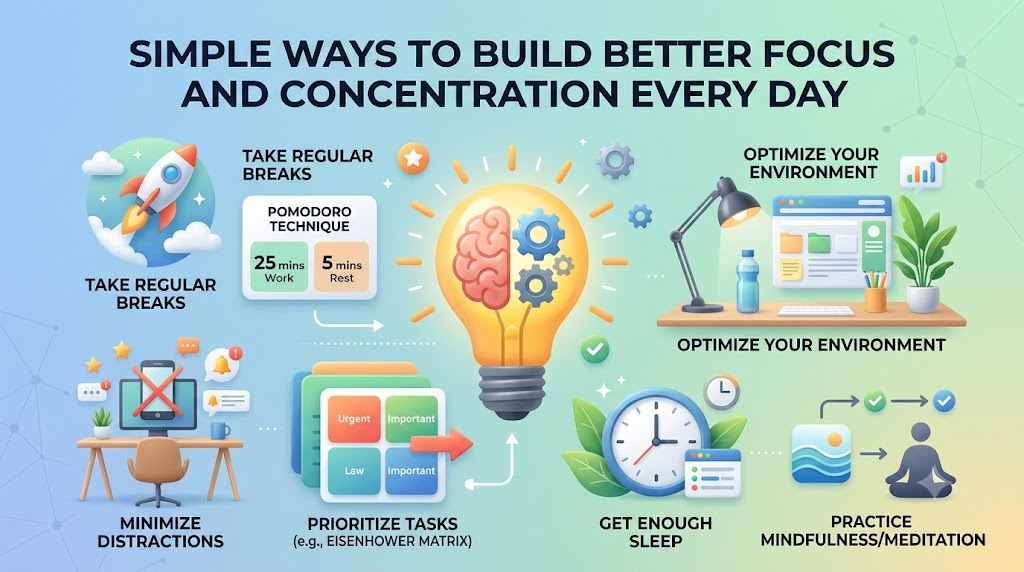
A simple routine can make daily tasks easier. It can also reduce the number of choices you make. Start by choosing one or two important tasks. Avoid filling your whole day with hard goals.For example, plan your morning before work or study. Choose one main task for your first work period. Then plan food, movement, breaks, and other tasks. This simple structure can support better focus.
Work on One Task at a Time
Doing many tasks at once can make work harder. Your attention must keep moving between different tasks. This may slow your work and increase mistakes. Instead, choose one clear task.Break large tasks into small steps. For example, do not write “study science.” Choose “read one science chapter” instead. Small goals can make work feel less difficult. They can also help you improve study focus.
Take Short Breaks
Long tasks can make your attention feel tired. Short breaks can give your mind time to reset. You can walk, stretch, drink water, or rest your eyes.There is no single break plan for everyone. Try shorter work periods if you lose focus quickly. Try longer periods if you can stay focused comfortably. The goal is to work steadily without pushing yourself too hard.
Reduce Digital Distractions
Phone alerts can break your attention many times. Social media and messages can do the same. Extra browser tabs may also pull your mind away. Small changes can help reduce these interruptions.Turn off alerts that you do not need. Keep your phone away during important tasks. Close unused tabs on your computer. You can also check messages at set times. Choose the focus techniques that fit your daily needs.
Use Healthy Food and Water Habits
Your brain needs energy to support daily activities. Regular meals can help you avoid hunger-related tiredness. Drinking enough fluids also supports normal body function. Some people may feel distracted when they skip meals.Choose balanced meals when possible. Include vegetables, fruits, whole grains, protein foods, and healthy fats. You do not need special foods for better focus. Avoid relying on supplements or “instant focus” products without medical advice.
Exercise and Daily Movement
Regular movement supports overall physical and mental health. It may also help you feel more ready for daily tasks. Walking, cycling, stretching, and other activities can fit many routines.Choose movement that feels safe and enjoyable. Even simple activity can break up long sitting periods. You can take a short walk between tasks. Exercise alone does not treat attention disorders. Still, healthy movement can support healthy focus habits.
Manage Stress and Mental Overload
Stress can make it harder to stay focused. Your mind may keep thinking about problems instead. Large task lists can also create mental overload. Simple steps may help you feel more organized.Try slow breathing or a short walk. Write down worries that keep returning to your mind. Break large tasks into smaller steps. You can also talk with someone you trust. Stress control takes practice and may not work the same way for everyone.
Improve Focus While Studying or Working
Start each study or work period with one clear goal. Keep the items you need close by. Remove distractions before you begin. Then work for a comfortable period and take a break.
Simple task lists can help you track progress. You can also review what you finished before stopping. These habits may improve study focus and work concentration. They also support clear planning, which can reduce mental clutter.
Simple focus checklist:
- Choose one clear task.
- Remove avoidable distractions.
- Keep needed items nearby.
- Take a short break.
- Review your progress.
When Poor Concentration Needs Medical Attention
Occasional difficulty concentrating is common. Long-lasting problems may need closer attention. Consider medical help when focus problems affect daily life. This includes school, work, relationships, or basic tasks.Also seek help when problems keep getting worse. Strong anxiety, low mood, or major sleep problems matter too. Many conditions can cause concentration problems. A healthcare professional can review your symptoms and possible causes.
Understanding ADHD and Focus Problems
ADHD is a condition that can affect attention. It may also affect organization, activity, or impulse control. ADHD symptoms are usually ongoing and can affect daily life. They may also appear in more than one setting.Having trouble focusing sometimes does not mean ADHD. Tiredness and stress can cause similar problems. A professional evaluation is needed for diagnosis. Do not use online symptoms alone to diagnose yourself.
Simple Daily Plan for Better Focus
- Start your morning by choosing one important task. Keep your phone away while doing that task. Work for a comfortable period, then take a short break. Add some movement during the day.
- Eat regular balanced meals and drink enough fluids. Keep distractions low during important work. In the evening, slow down and prepare for sleep. You can change this routine to fit your needs.
- These habits support clear answers and practical health advice. They also follow useful AEO and GEO ideas. Clear wording helps people and search systems understand health content. LLMO and AISEO also favor direct, useful answers. Good health writing should show E-E-A-T through careful, honest information.
Frequently Asked Questions About Improving Focus and Concentration
What is the best way to improve focus?
Start with good sleep, fewer distractions, simple goals, regular meals, and short breaks.
How can I improve concentration while studying?
Choose one small study goal. Keep your phone away and take planned breaks.
Does sleep affect concentration?
Yes. Poor sleep can make attention and memory harder during the day.
Can exercise help with focus?
Regular movement supports overall health. It may also help you feel more ready to work.
Can stress make it harder to concentrate?
Yes. Stress can fill your mind with worries and make tasks harder.
How can I reduce phone distractions?
Turn off non-essential alerts. Keep your phone away during important work or study.
Can food affect concentration?
Regular balanced meals support energy and health. Skipping meals may make some people feel tired.
When should I see a doctor about poor concentration?
Seek help when problems last, worsen, or affect work, school, relationships, or daily tasks.
Does poor focus always mean ADHD?
No. Sleep problems, stress, mood changes, and other conditions can also affect focus.
Can focus improve with daily habits?
Yes, healthy habits may support better focus. Results can differ from person to person.
Final Thoughts
Better focus often starts with simple daily habits. Get enough sleep and follow a steady routine. Move your body and eat regular balanced meals. Reduce phone alerts and other distractions. Take breaks when your mind feels tired.Also, give yourself time to build new habits. No single focus method works for everyone. If concentration problems continue, seek professional advice. AskDoctorLive.com can also help readers find clear health information for everyday questions.